- Loading...
I have seen supplier choices fail when a convenient label—factory, agent, or trader—is treated as proof of technical capability.
A custom garment hardware supplier should combine category expertise, development, production control, sampling, and quality management. A transparent sourcing partner may be more suitable when the program spans unrelated categories or requires extensive local coordination.

The supplier’s business type matters, but it is only the starting point. The stronger decision comes from matching product complexity, internal management capacity, manufacturing processes, order volume, and delivery structure to a supplier that can control the complete path from design intent to repeat production.
How Do Direct Manufacturers, Trading Companies, and Sourcing Agents Differ?
Similar quotations can conceal very different relationships with the factory, technical team, production records, and final responsibility for defects or delays.
A direct manufacturer controls production, a trading company resells factory output, and a sourcing agent coordinates suppliers on the brand’s behalf. The best model depends on required transparency, category breadth, internal sourcing resources, and the amount of technical control the program demands.
Map Each Supplier Model to Real Responsibility
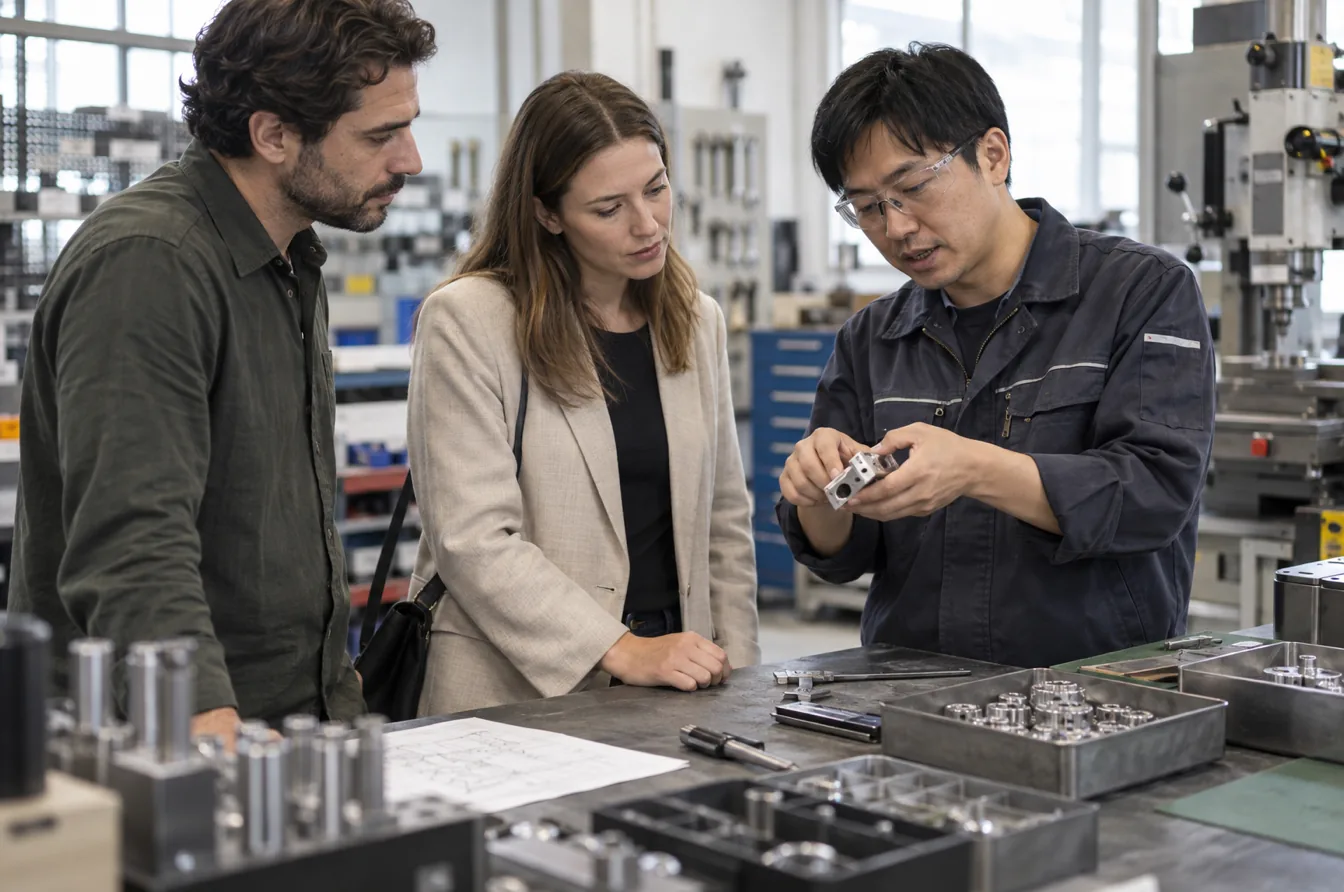
A direct manufacturer gives the brand the shortest communication path to the engineering and production teams. Questions about geometry, material, attachment, tooling, finishing, or defects can move directly to the people responsible for the process. This structure can improve visibility and reduce duplicated explanations, but it also requires a complete brief and disciplined follow-up from the brand or garment factory.
A trading company normally buys from one or more factories and resells the finished components. This model can simplify product selection, export coordination, and mixed-category purchasing. The limitation is that the actual production site, technical decision maker, and subcontracted process may remain less visible. A trading company can still perform well, but its value depends on technical competence and control rather than the convenience of a single contact.
A sourcing agent acts on behalf of the brand to identify, compare, and coordinate manufacturers. This is useful when the program includes many unrelated processes or when local factory follow-up would otherwise consume excessive internal time. The arrangement needs a clear definition of factory disclosure, fee structure, inspection responsibility, communication authority, and ownership of development records.
| Supplier model | Main strength | Main trade-off | Best-fit situation |
|---|---|---|---|
| Direct manufacturer | Short technical path and clearer production visibility | Requires stronger internal specification and follow-up | Repeat custom hardware within a defined process family |
| Trading company | Convenient purchasing across multiple items | Less direct visibility into production and process changes | Standard or lightly customized components |
| Sourcing agent | Supplier search, coordination, and local follow-up | Added management layer and service cost | Multi-category programs with limited local resources |
| Specialist trim partner | Combines development, category knowledge, and coordinated supply | Capability must be verified for each product family | Branded collections requiring design and production support |
Match the Model to the Brand’s Operating Capacity
Supplier selection should begin with an honest assessment of the work that remains on the buyer’s side. A direct factory relationship does not remove the need for controlled drawings, material definitions, finish references, sample comments, approval records, quantity releases, and delivery planning. It simply places those responsibilities closer to the production team.
Brands with experienced product developers and sourcing staff can often manage this relationship efficiently. The team can identify missing information, close technical questions, compare revisions, and respond quickly when production needs a decision. A smaller team may gain more value from a competent sourcing partner that coordinates these tasks across several factories.
The lowest quoted unit price therefore does not always create the lowest project cost. Repeated samples, missed approvals, unclear changes, delayed garment assembly, and inconsistent repeat orders can consume more value than the difference between two quotations. The preferred model is the one that keeps responsibilities visible and gives every decision a clear owner.
Why Is a Specialized OEM/ODM Hardware Manufacturer Often the Best Choice for Custom Accessories?
A large catalogue can look reassuring, but it does not prove that the supplier understands the specific processes behind a custom component.
A specialized OEM/ODM manufacturer is often the strongest choice because it combines category-specific engineering with custom design development. The team can convert drawings, reference samples, or early concepts into suitable materials, tooling, finishes, attachment systems, prototypes, and repeatable production instructions.

Prioritize Category Depth Before Catalogue Size
Garment hardware is not one manufacturing category. A die-cast zipper pull, stamped eyelet, machined buckle, jeans button, spring-loaded clasp, engraved plate, and mixed-material ornament may require different equipment, tooling logic, finishing access, assembly methods, and inspection points. A supplier that performs well with one family should not automatically be approved for every other family.
Category depth becomes visible in the questions asked before quotation. A zipper specialist should examine slider compatibility, puller connection, chain type, movement, and the way the finished zipper will be sewn into the garment. A jeans-button specialist should review cap construction, tack dimensions, fabric thickness, reinforcement, and attachment conditions. A buckle manufacturer should examine strap width, material thickness, load direction, movement, and clearance.
The strongest shortlist is therefore built around process relevance rather than the number of catalogue pages. Comparable projects, retained samples, tooling examples, failure analysis, and production records provide more useful evidence than a broad assortment of unrelated products.
| Product family | Capability to verify | Typical hidden risk |
|---|---|---|
| Buttons and rivets | Cap, shank or tack construction, attachment setup, finish control | Loose attachment, rotation, fabric damage, or deformed caps |
| Buckles and clasps | Strap interface, movement, assembly, load path, edge condition | Binding, sharp contact areas, or incorrect clearance |
| Zipper pulls and sliders | Slider compatibility, connection geometry, movement, logo execution | Detachment, restricted movement, or mismatch with zipper components |
| Logo plates and labels | Flatness, mounting method, logo clarity, edge finishing | Distortion, weak attachment, or inconsistent visible finish |
| Mixed-material decorations | Joining sequence, material interaction, finishing order | Separation, surface damage, or inconsistent assembly |
Distinguish OEM Execution From ODM Development
OEM service is most suitable when the brand already has a controlled design package. The supplier’s task is to review manufacturability, produce the agreed tooling, develop samples, and reproduce the approved specification. Strong execution depends on the ability to identify contradictions rather than silently filling gaps with assumptions.
ODM support becomes valuable when the design direction is clear but the production solution is still open. A concept sketch, mood board, reference component, or logo may need to become a practical structure with defined dimensions, rear construction, attachment, material, finish, and cost. The supplier must balance visual intent with process limits without weakening the brand’s distinctive details.
Many projects contain both modes. The visible face may follow an exact drawing, while the hidden attachment is developed jointly. The supplier should document which decisions came from the brand, which were proposed during engineering, and which version was finally approved. This prevents later confusion over design ownership, repeat-order changes, and the authority of the current sample.
What In-House Design, Tooling, and Finishing Capabilities Should a Hardware Supplier Have?
The phrase “in-house” is useful only when the actual production route and responsibility at every handoff can be demonstrated.
A capable supplier should control design review, drawings, tooling, prototypes, process selection, finishing references, assembly, inspection, and revision records. Some operations may use approved specialist partners, but technical ownership and corrective responsibility must remain clear throughout the project.
Map the Actual Production Route
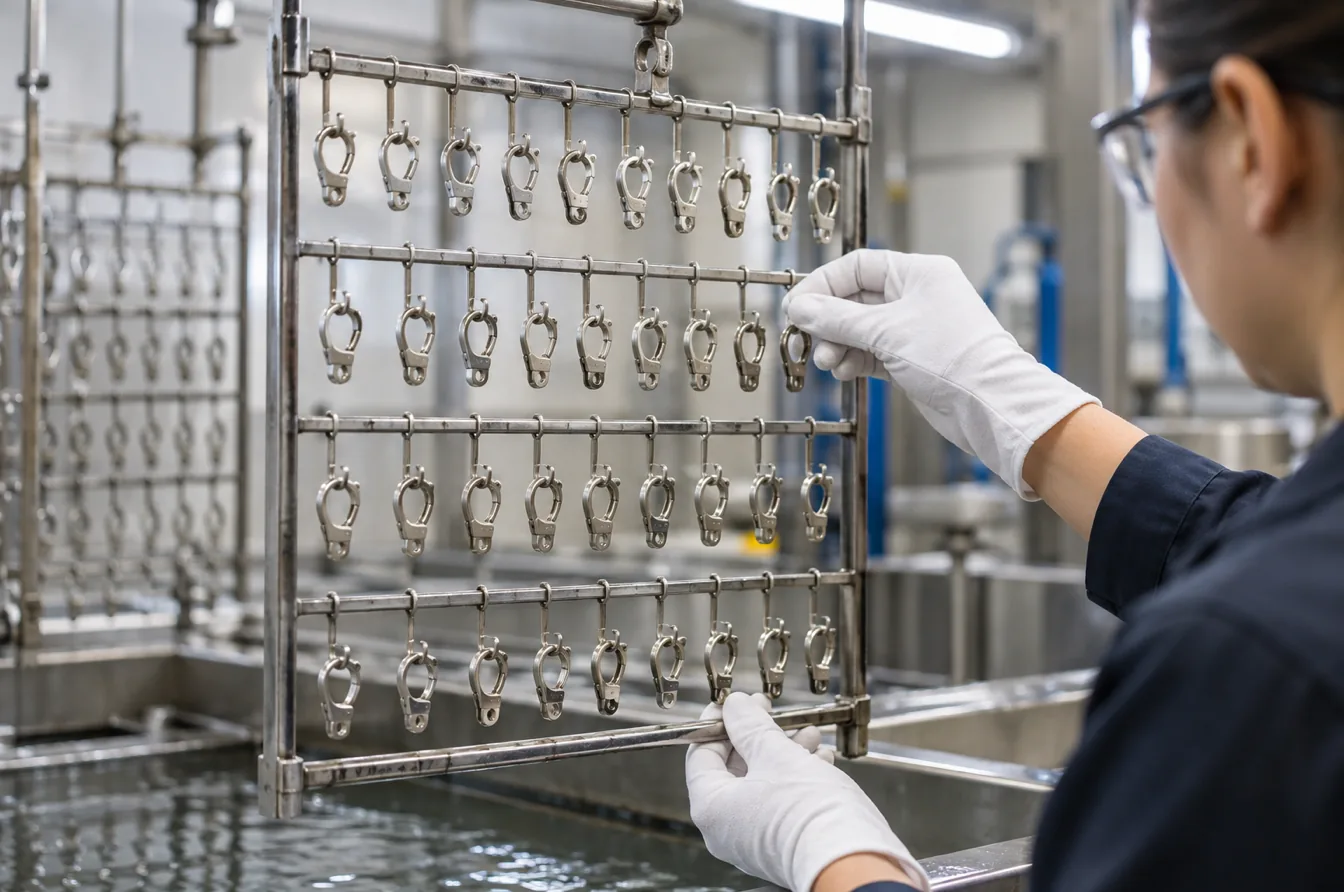
The supplier should be able to explain how a design moves from the first brief to finished packed components. This route may include artwork preparation, two-dimensional drawings, three-dimensional modeling, tooling, casting or stamping, trimming, machining, polishing, surface finishing, color application, assembly, inspection, and protective packing. Not every product requires every step, but every required step needs an identified owner.
Outsourcing a specialist operation is not automatically a weakness. Certain finishes, precision processes, or material treatments may be handled more effectively by a dedicated partner. The risk appears when the handoff is hidden, the specification becomes simplified, or responsibility for a defect is divided between companies. The primary supplier must still control instructions, approved references, incoming checks, rework decisions, and corrective action.
A live production review or a complete process record should connect the physical component to this route. The most useful evidence shows the tool, intermediate part, finish stage, assembly method, inspection point, and packing method for a comparable product. Generic factory photographs provide much less information.
| Production stage | Evidence to examine | Control question |
|---|---|---|
| Design review | Marked brief, drawings, open-question list | Were missing or conflicting requirements identified? |
| Tooling | Tool plan, ownership record, trial output | Who maintains the tool and approves changes? |
| Forming and machining | Process route and intermediate samples | Are critical dimensions controlled before finishing? |
| Surface finishing | Approved reference and batch comparison method | How are color, gloss, texture, and coverage maintained? |
| Assembly | Work instruction and functional check | Are mating parts and movement checked consistently? |
| Final inspection | Inspection criteria and defect records | Are appearance, dimensions, function, and packing reviewed? |
Test the Supplier’s Engineering Response
A capable supplier does more than confirm that a design is possible. The technical team should identify features that affect release from tooling, wall thickness, edge definition, polishing access, finish build-up, attachment strength, movement, and assembly sequence. A strong response explains the risk, proposes options, and shows the effect of each option on appearance, cost, timing, or function.
Revision control is equally important. Every drawing, model, finish reference, and physical sample should carry a part identity and revision status. When a logo depth, opening dimension, rear post, texture, or finish area changes, the accepted change must return to the current production package. Messages and marked photographs can support a review, but they should not become the only record of the final decision.
A small trial development can reveal these habits before a major program is committed. Candidate suppliers can receive the same controlled brief and be evaluated on the questions raised, assumptions made, proposed production route, sample accuracy, revision discipline, and clarity of the final quotation. This practical evidence is more useful than an unsupported claim of full service.
How Can Fashion Brands Verify Material, Testing, and Quality-Control Capabilities Before Bulk Production?
A polished sample may show what a supplier can make once, but bulk production requires evidence that the same result can be repeated.
Verification should connect the exact material, construction, finish, attachment, and end use to a defined test and inspection plan. The approved sample must then become a controlled production standard supported by current drawings, references, measurable checkpoints, and documented release decisions.
Build Verification Around the Actual Application
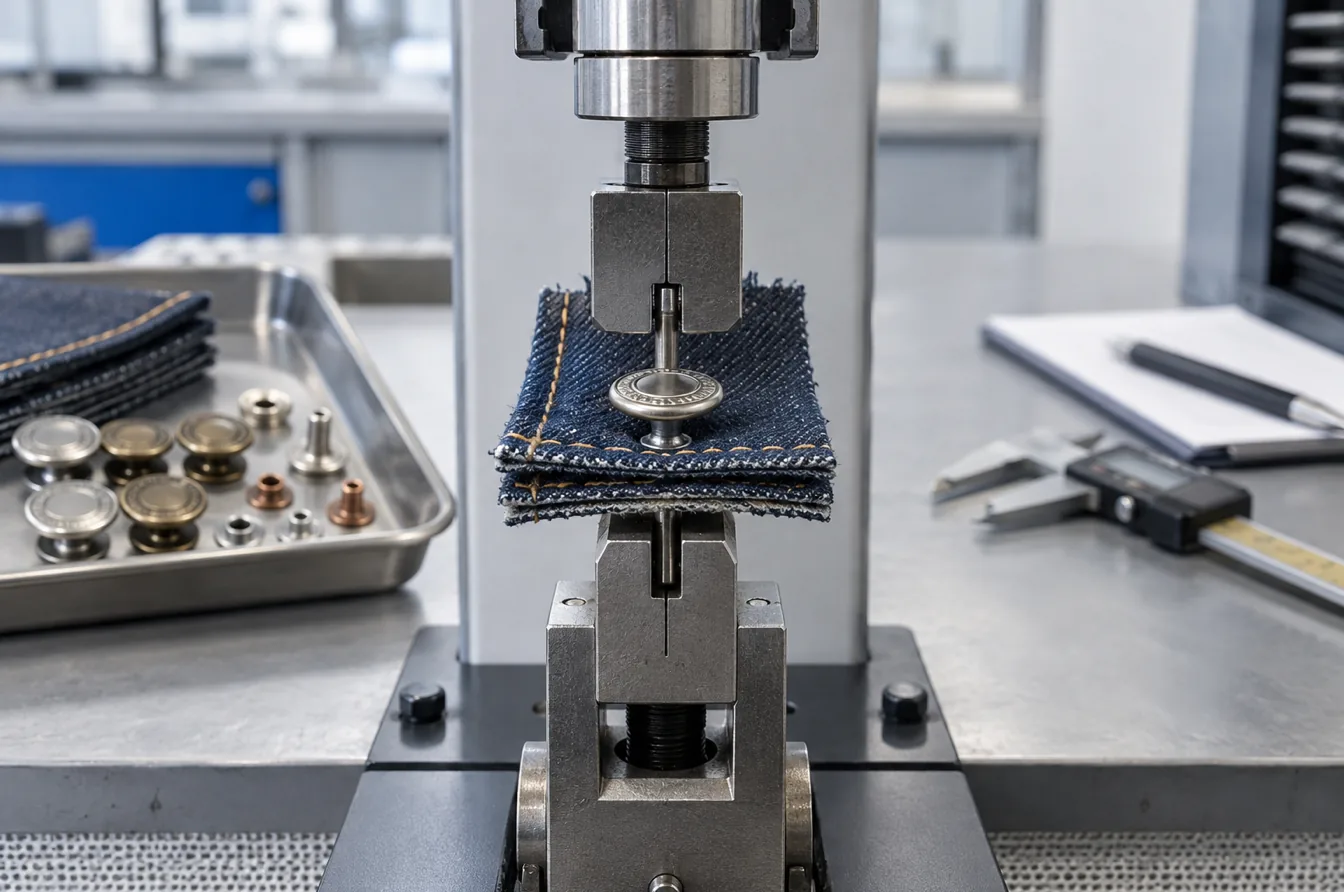
Material and testing decisions should begin with the component’s work in the finished product. A decorative plate on a structured jacket faces different conditions from a swimsuit connector, handbag clasp, jeans rivet, or zipper pull on frequently washed sportswear. Material name alone cannot define performance because geometry, surface preparation, finish, attachment, and surrounding fabric also affect the result.
The verification plan should identify the important failure modes for that application. Relevant checks may include dimensional fit, opening and closing action, pull or torque resistance, attachment security, edge condition, finish adhesion, abrasion, color stability, moisture exposure, washing, and interaction with the final material. Only applicable checks should be selected; a long generic list can distract from the risks that matter most.
Reports and inspection records should identify the exact product version tested. The part number, drawing revision, base material, finish, sample stage, and date should match the component intended for production. Evidence from a different construction or finish may provide background information, but it should not be treated as proof for the current order.
| Application factor | Question to answer | Possible verification method |
|---|---|---|
| Attachment | Does the component remain secure without damaging the substrate? | Applied sample and controlled attachment check |
| Movement | Does the clasp, buckle, slider, or hinge operate consistently? | Repeated functional review and dimensional check |
| Surface | Does the visible finish retain the approved appearance? | Reference comparison and application-specific wear exposure |
| Environment | Will moisture, washing, friction, or storage affect performance? | Exposure based on the intended garment use |
| Assembly | Do mating parts fit without excessive force or clearance? | Fit check using production-intent components |
Convert the Approved Sample Into a Production Standard
Sample approval should close specific questions rather than provide a general statement that the component looks acceptable. The approval record should identify the exact sample, drawing revision, material, finish reference, logo treatment, attachment method, open issues, and accepted deviations. Any conditional approval needs a responsible owner and a closure date before bulk release.
The physical sample alone is not enough. It shows the combined result but does not explain the process settings, material identity, dimensions, finish sequence, or inspection method that created it. Those details need to remain connected through the current drawing, material record, finish standard, inspection instruction, and approved packing method.
A production-intent trial is especially valuable for custom components. It reveals whether normal operators, tooling cavities, batch sizes, finishing racks, and assembly methods can reproduce the development sample. The trial also allows inspection criteria to be tested before full output accumulates. Bulk production should begin only when the approved standard, current documents, and actual process route agree.
What MOQ, Sampling, Lead-Time, and Delivery Terms Should Fashion Brands Compare?
A low minimum and a short delivery promise can be attractive, but both numbers become misleading when their assumptions remain undefined.
Commercial comparison should separate prototype quantity, bulk MOQ, tooling and setup charges, sample stages, production milestones, inspection time, shipping terms, and repeat-order conditions. The useful quotation is the one that exposes the full operating model behind the unit price.
Read MOQ as Production Economics
MOQ is rarely one universal number. It can change by design, size, finish, color, material, mold, assembly route, and packing requirement. A supplier may accept a small development quantity but require a larger bulk run. Several colorways may each carry a separate minimum because they use different finish batches or production setups.
Tooling also changes the calculation. A custom logo part may require a dedicated mold, stamping die, fixture, or assembly tool before any production unit exists. The quotation should state tooling cost, ownership, storage, maintenance, expected reuse, and the conditions that would require modification or replacement. A low unit price can be misleading when tooling and setup costs are hidden elsewhere.
Repeat-order economics deserve equal attention. A strong supplier should explain whether later orders retain the same minimum, whether several finishes can share a production run, and how unused raw material or reserved stock is handled. This information helps the brand decide whether the supplier fits both the launch quantity and the expected growth path.
| Commercial item | Information to confirm | Risk when unclear |
|---|---|---|
| Prototype quantity | Number of samples, finish options, and revision rounds | Development cost expands without control |
| Bulk MOQ | Minimum by design, size, color, finish, and delivery | Order quantity does not match the assortment plan |
| Tooling | Cost, ownership, storage, maintenance, and change policy | Repeat orders create unexpected charges or disputes |
| Unit price | Included process, inspection, packing, and delivery basis | Quotations appear comparable when scope differs |
| Repeat order | Minimum, price review, retained standards, and tool status | Later batches drift in cost, appearance, or timing |
Convert Lead Time and Delivery Terms Into a Milestone Plan
Lead time should be divided into brief confirmation, engineering review, tooling, first sample, revisions, finish approval, production preparation, bulk manufacturing, inspection, packing, and transport. The schedule should also identify which stages depend on brand approval. A fast supplier response has little value when the project repeatedly waits for incomplete artwork or unresolved sample comments.
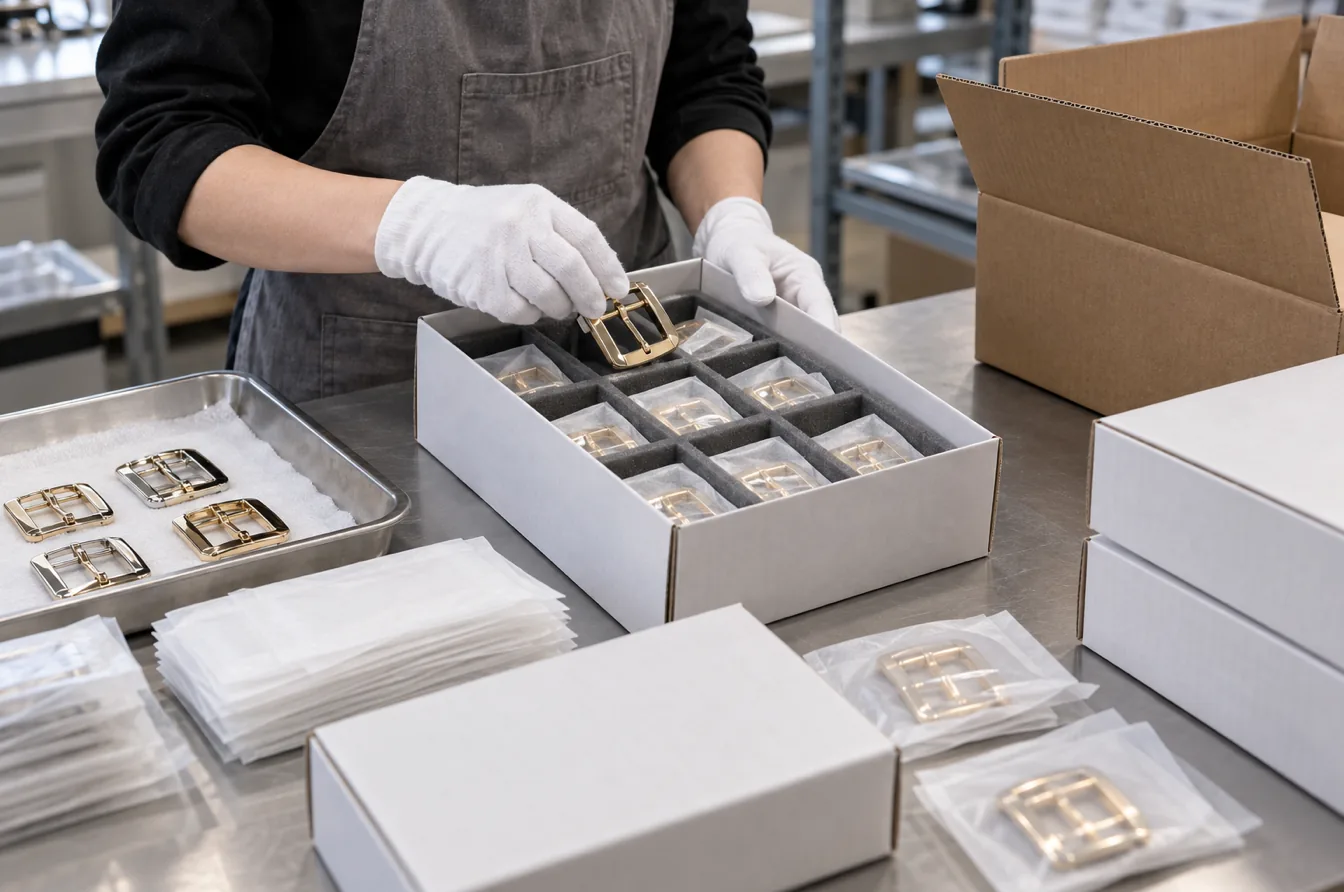
The agreed delivery basis must define where cost and responsibility transfer. Quotation terms, pickup point, export handling, freight, import arrangements, delivery destination, insurance, and required documents should be understood before prices are compared. Packaging requirements also matter because polished or plated hardware can be damaged by contact, movement, moisture, or unsuitable storage during transit.
The ordering chain needs the same clarity. The brand may approve the design, the garment factory may release quantities, and another party may arrange transport or payment. The supplier should know who can approve changes, who issues the purchase order, where the components must arrive, and who handles claims. A technically strong supplier becomes operationally reliable only when these responsibilities are fixed before production.
Conclusion
Prioritize the supplier that combines relevant category depth, transparent process control, disciplined development, repeatable quality, and commercial terms that fit the brand’s operating model.