- Loading...
A buckle can look luxurious in a render yet feel ordinary once its weight, edges, movement, and finish are experienced together.
Brass often creates a richer natural feel, while zinc alloy offers greater freedom for sculptural shapes and decorative finishes. The more premium choice depends on the buckle’s design, garment weight, wearing experience, surface quality, and intended aging character.
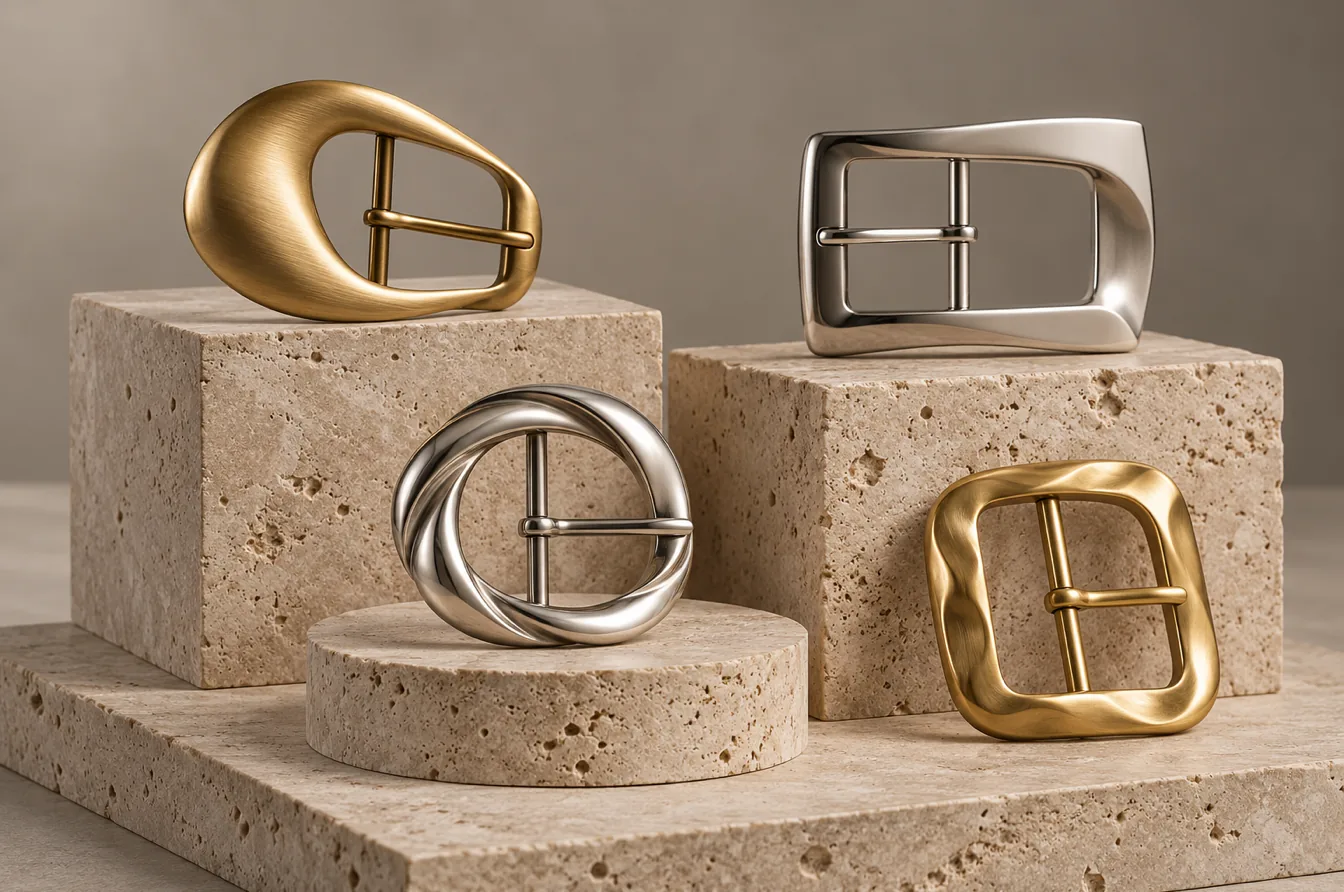
I have seen both metals succeed in premium collections and both fail when the material was selected by reputation alone. The strongest result comes from matching the metal to the complete product experience.
What Makes a Metal Buckle Look and Feel Premium on Women’s Apparel?
A polished gold color can attract attention, but it cannot hide weak proportions, harsh edges, loose movement, or unsuitable weight.
A premium women’s fashion buckle presents a coherent combination of silhouette, scale, edge quality, finish depth, operating feel, and compatibility with the garment. Material contributes to that impression, but it cannot compensate for poor design or inconsistent production.
Premium Quality Is Read Through a System of Cues
The first cue is proportion. A buckle should appear intentional beside the belt, strap, waistband, cuff, or decorative panel that supports it. A frame that is too thick can feel heavy and industrial, while one that is too thin may look weak even when it performs correctly. The relationship between the outer silhouette, opening, pin, bar, logo, and attachment points must feel balanced.
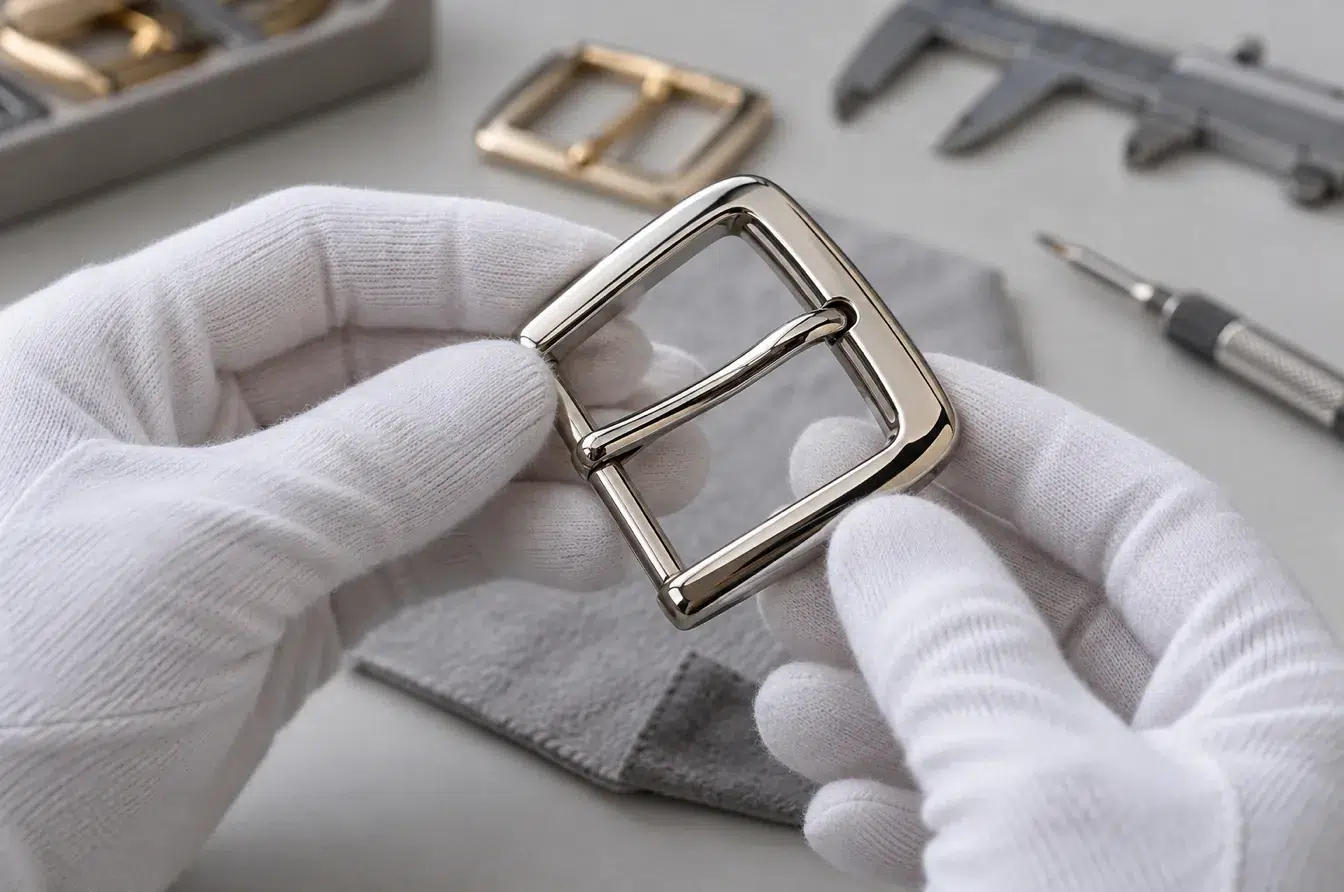
The second cue is refinement at close range. Clean transitions, controlled radii, smooth undersides, clear logo edges, and consistent gaps suggest that the buckle was developed as a product rather than treated as a generic trim. These details are especially visible on women’s apparel because the hardware often sits near soft fabrics, smooth leather, or carefully finished seams.
The third cue is coherence. Color, gloss, texture, and visual weight should support the collection. A bright mirror finish may suit a sharp evening piece but overpower washed fabric or natural leather. A satin, brushed, or softly aged surface may communicate more value when the garment language is quiet. Premium appearance comes from agreement between the buckle and the product, not maximum shine.
| Evaluation cue | Premium signal | Common warning sign |
|---|---|---|
| Proportion | Balanced frame, opening, pin, and attachment | Oversized mass or weak-looking sections |
| Edge quality | Smooth radii and comfortable contact surfaces | Sharp corners, burrs, or uneven polishing |
| Logo execution | Clear detail with controlled depth | Soft lettering, filled recesses, or distorted spacing |
| Finish | Even color and deliberate gloss or texture | Cloudiness, color drift, pits, or visible polishing waves |
| Movement | Stable, smooth, and appropriately firm | Rattle, looseness, scraping, or inconsistent resistance |
The Finished Garment Must Be the Decision Surface
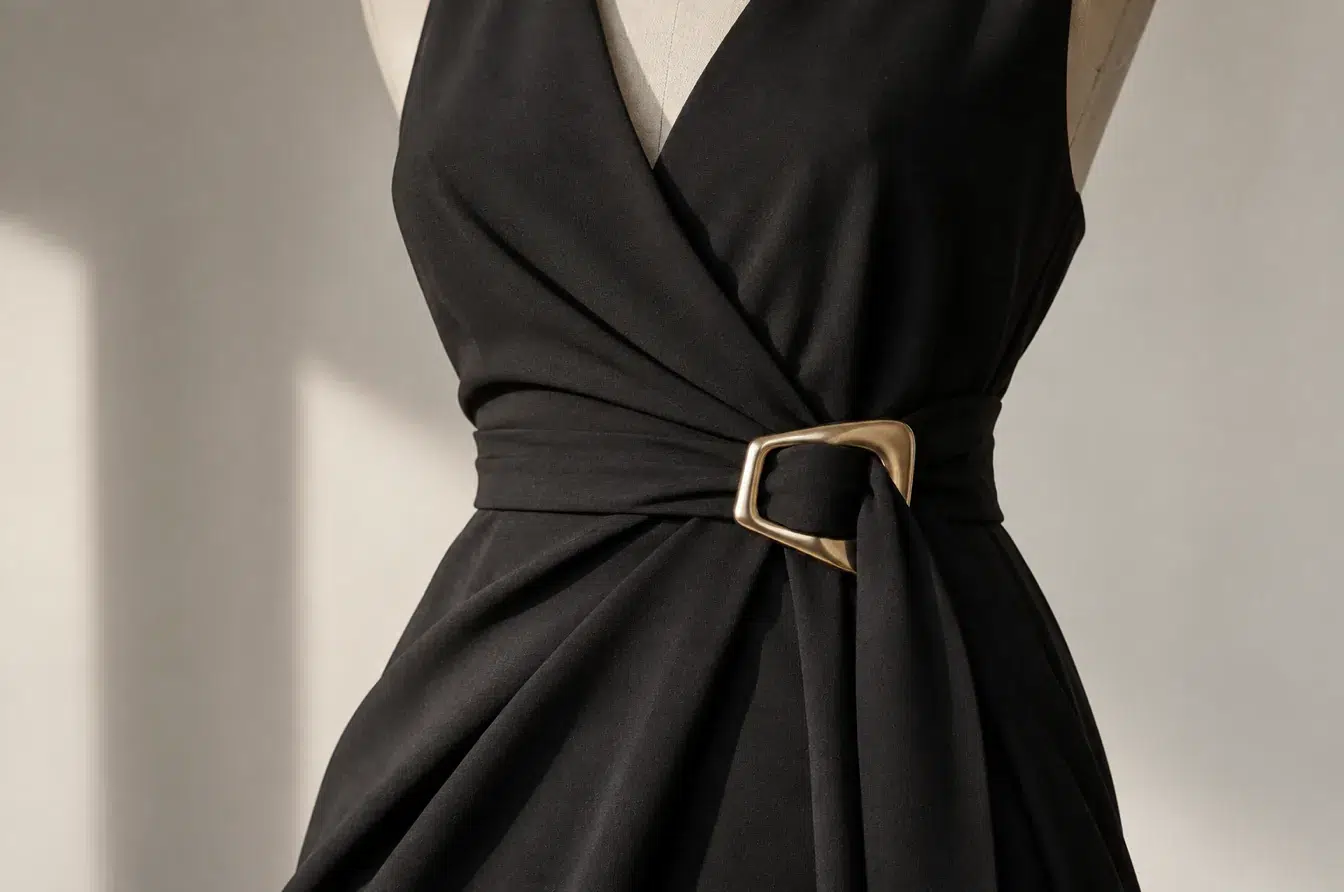
A loose buckle sample does not reveal how the hardware will behave on the final garment. Fabric thickness, reinforcement, strap width, fold construction, stitch position, and hardware weight can all change the result. A buckle that feels satisfyingly substantial in the hand may pull down a soft waistband or cause a narrow strap to twist. A lighter buckle may look more refined once it preserves the intended drape.
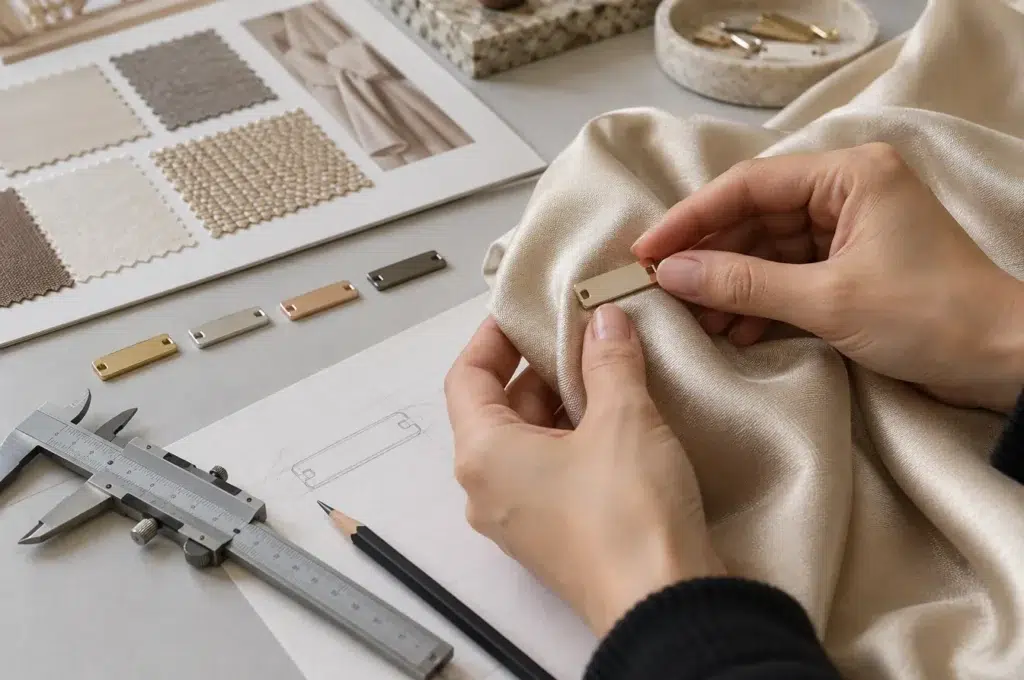
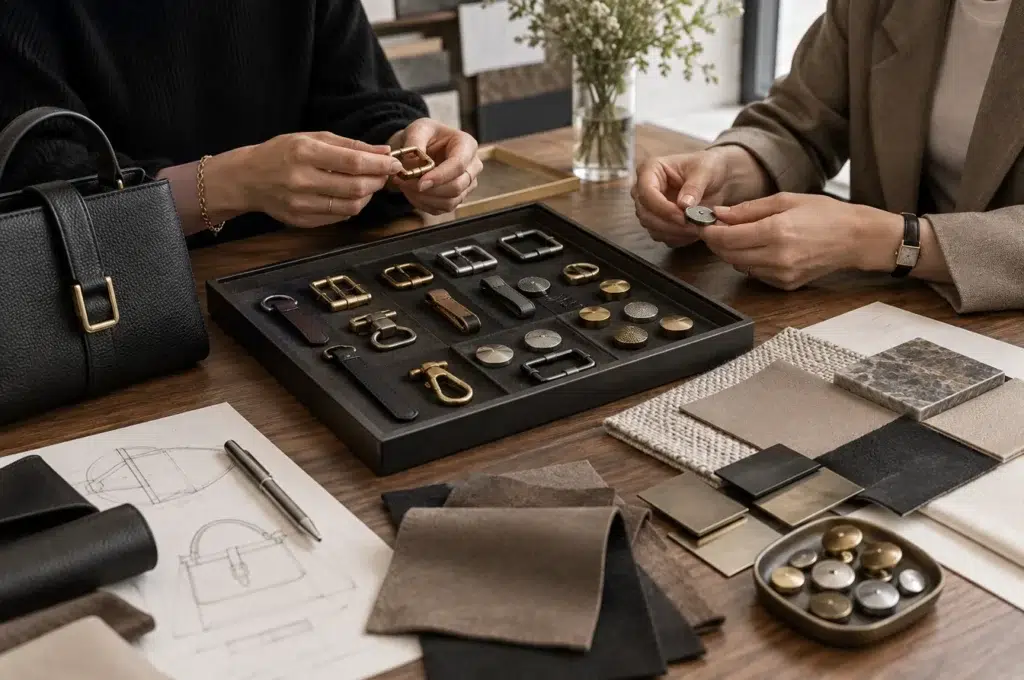
The same principle applies to color. Metal finishes should be reviewed beside the actual fabric, leather, thread, zipper, buttons, and other trims under consistent lighting. Warm gold can shift against cool white fabric. A dark antique finish can lose definition beside black leather. Matching separate components by finish name alone can produce a hardware family with different tones and gloss levels.
Functional behavior also affects perceived value. The pin should enter the hole cleanly, the frame should remain stable, and moving parts should operate without scraping adjacent surfaces. The reverse side should not catch lining or create pressure against the body. A premium buckle is therefore not only a decorative front face. It is a complete interface between material, construction, movement, and the person wearing the garment.
How Do Zinc Alloy and Brass Differ in Weight, Touch, and Visual Depth?
Brass is often assumed to be superior because it feels heavier, but excessive mass can work against comfort, balance, and garment drape.
Brass generally feels denser and warmer, with color that belongs to the metal itself. Zinc alloy is usually lighter for a comparable form and gains most of its visible character from shape, polishing, plating, coating, or an intentional surface texture.
Weight Should Support the Garment Rather Than Prove Quality
The substantial feel of brass can be valuable for a signature belt buckle, jacket closure, or structured leather accessory. When the buckle is handled, its mass can suggest permanence and material integrity. This effect is strongest when the construction is compact and the garment has enough body to support it. The natural metal also gives designers the option of exposing polished brass, protecting it, or allowing it to develop a more aged character.
Women’s apparel often creates a different design problem. A large decorative buckle may sit on a soft dress, a narrow belt, a light coat, or a draped panel. In those applications, additional weight can change the hang of the garment, pull the closure out of alignment, or create discomfort during movement. A lighter zinc-alloy construction can provide visual scale without demanding the same support from the textile.
Part geometry must remain part of the comparison. A hollowed or carefully sectioned brass design may weigh less than expected, while a thick zinc-alloy buckle can still feel substantial. Finished samples should therefore be compared at the intended size, wall structure, attachment, and finish. Material density alone does not determine the wearing experience.
| Product condition | Brass tendency | Zinc-alloy tendency | Main decision |
|---|---|---|---|
| Compact signature buckle | Strong, substantial hand feel | Moderate weight with broad styling options | Whether natural material presence matters |
| Oversized decorative buckle | Can become heavy quickly | Easier to manage at larger visual scale | Drape, balance, and comfort |
| Lightweight fabric | May require added reinforcement | Often easier to integrate | Pulling, sagging, and attachment stress |
| Structured leather or tailoring | Weight can reinforce a premium impression | Can still look refined with strong finishing | Desired touch and long-term surface behavior |
Touch, Temperature, and Sound Shape the Experience
Premium judgment is often formed before the material is consciously identified. Brass can feel cool at first contact and then warm in the hand. Its mass can make a closure action feel deliberate, and the color beneath a polished surface gives small scratches a different visual character from a coated gray base metal. These qualities support products built around permanence, craftsmanship, and natural material change.
Zinc alloy creates its premium impression differently. The cast form can integrate soft curves, sculpted relief, hidden ribs, shaped recesses, and decorative volume. A good surface system can then control brightness, color, and touch. The finished buckle may feel lighter, but that can be appropriate when the garment is designed for ease, movement, or a larger statement shape.
Sound also deserves attention. Thin sections, loose pins, or poorly fitted moving parts can create a hollow rattle regardless of the metal. Controlled clearances and stable contact surfaces make a buckle feel quieter and more precise. The comparison should therefore include opening and closing the buckle on the real strap, moving the garment, touching the visible surfaces, and listening for unwanted movement. Premium feel is multisensory, and no single material property can create it alone.
Which Material Better Supports Fine Details and Custom Finishes?
A premium concept can lose its character when the chosen process softens the logo, limits relief, or makes the finish difficult to control.
Zinc alloy is usually the stronger starting point for deep relief, organic shapes, integrated logos, and complex decorative geometry. Brass is especially effective for cleaner profiles, restrained details, crisp formed elements, and designs that benefit from natural metal character.
Zinc Alloy Rewards Sculptural and Integrated Design
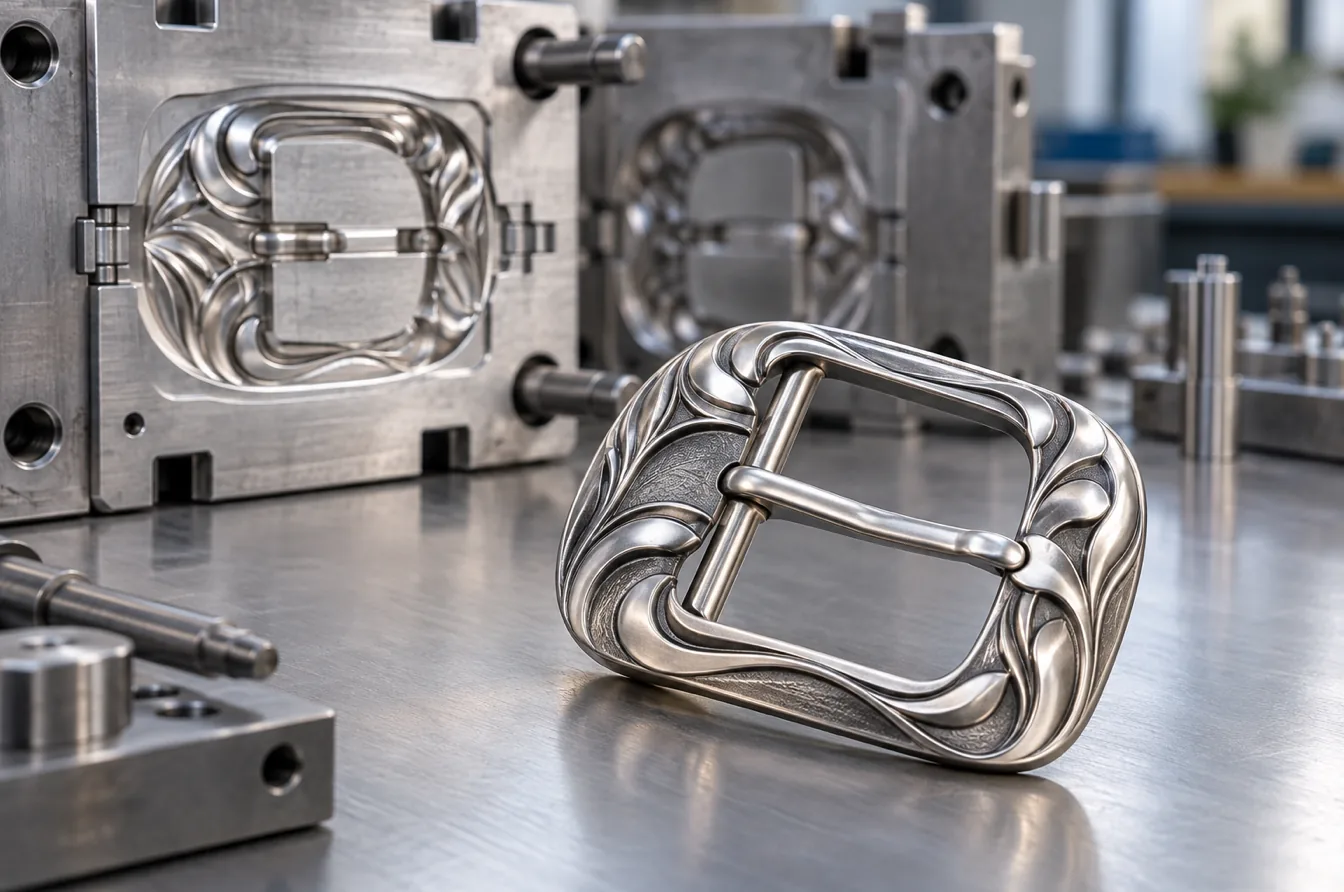
Pressure die casting allows zinc alloy to flow into a dedicated tool and reproduce complex three-dimensional forms efficiently. This supports raised and recessed branding, curved frames, textured fields, decorative cutouts, shaped attachment features, and transitions that would require more secondary work in another metal. The ability to combine several visual and functional features in one part is a major advantage for statement buckles.
That freedom must still be controlled. Very deep recesses can become difficult to polish and finish evenly. Sharp corners may collect excessive coating on exposed edges while receiving less coverage in protected areas. Thick intersections can create surface problems, and poorly positioned gates or ejector points can leave marks on visible faces. A detailed design therefore needs a casting and finishing review before the tool is released.
Brass follows a different design language. It performs well in stamped, formed, coined, machined, forged, or suitable cast constructions, depending on the grade and geometry. Clean frames, engraved marks, flatter relief, precise cut profiles, and restrained jewelry-like components can use this strength. Brass should not be forced into complex volume merely to retain a premium material label when zinc alloy would produce the shape more clearly.
| Design requirement | Stronger starting point | Reason | Development caution |
|---|---|---|---|
| Deep sculpted relief | Zinc alloy | Efficient reproduction of complex volume | Protect polish access and finish coverage |
| Organic statement shape | Zinc alloy | High freedom in custom tooling | Control wall transitions and visible tool marks |
| Crisp flat or coined detail | Brass | Clean formed or struck character | Match the alloy and process to the detail |
| Natural warm metal surface | Brass | Base metal supplies the visible color | Define whether tarnish or patina is acceptable |
| Broad decorative color range | Zinc alloy | Compatible with many finish directions | Specify the complete surface system |
Finish Quality Begins in the CAD and Tooling Stage
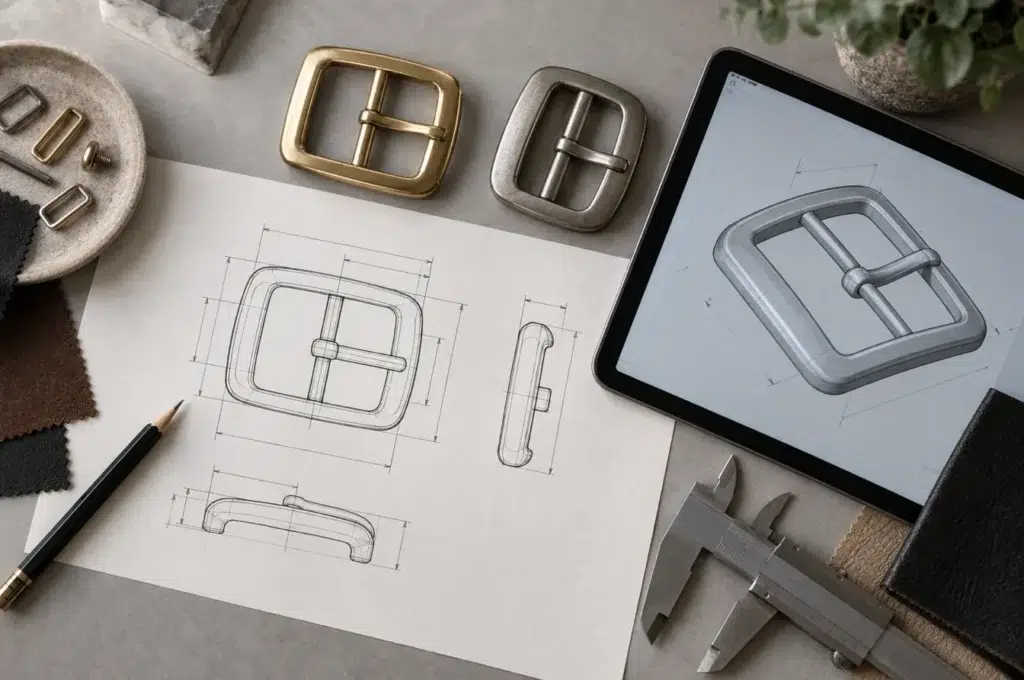
Surface finish is often discussed after the buckle shape has been approved, but geometry already determines how easily the part can be polished, plated, coated, and inspected. Large mirror-polished flat areas can reveal subtle waves. Deep narrow channels can be difficult to clean and may receive uneven decorative coverage. Sharp external edges can become overbuilt or vulnerable to contact wear. Hidden pockets can retain process liquid or residue.
The design should identify the main visible face, secondary visible areas, wear zones, rack or holding points, parting lines, gates, ejector locations, and surfaces that contact fabric or skin. Gentle radii and accessible recesses often improve both appearance and repeatability. A texture can also hide small variations more effectively than a perfect mirror surface, especially on a complex cast form.
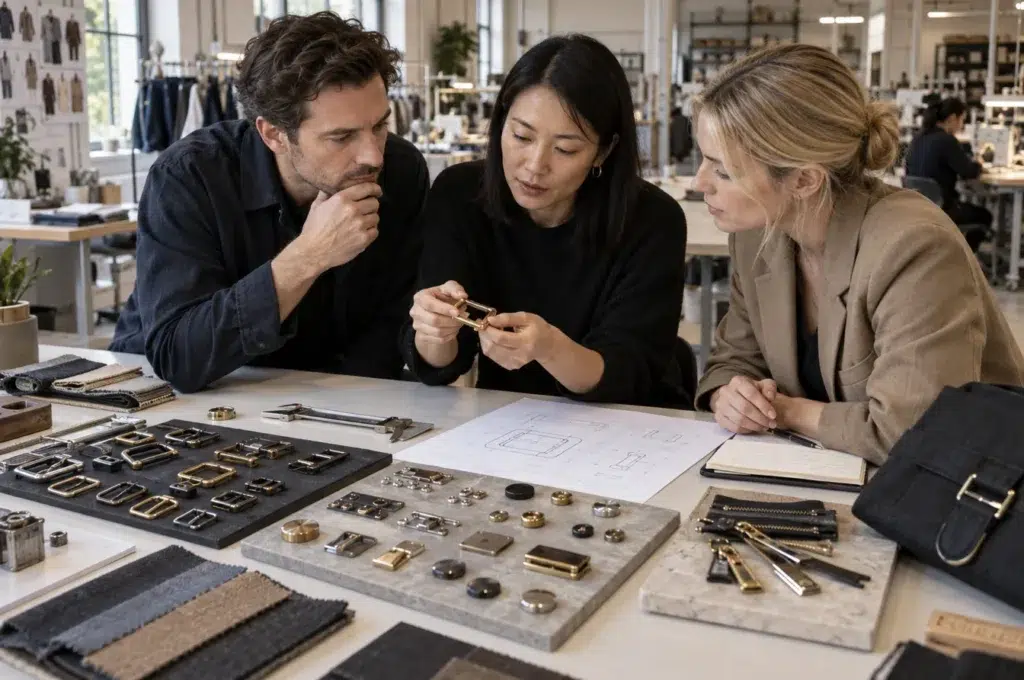
Finish approval should record more than a color name. The master sample should define base metal, surface preparation, polish direction, texture, decorative tone, gloss level, protective top layer where used, and acceptable variation. “Antique brass” on zinc alloy describes a finish appearance, while solid brass describes the underlying material. Keeping those two ideas separate prevents a visually attractive sample from creating the wrong expectation about weight, wear, or aging.
How Do Zinc Alloy and Brass Compare in Finish Durability and Aging?
The first-day appearance can be nearly identical, but the two metals reveal very different visual stories after friction, moisture, handling, and time.
Solid brass can retain material continuity as its surface darkens, scratches, or develops patina. Zinc alloy depends more heavily on the quality and continuity of its applied finish, especially at edges, joints, and repeated contact points.
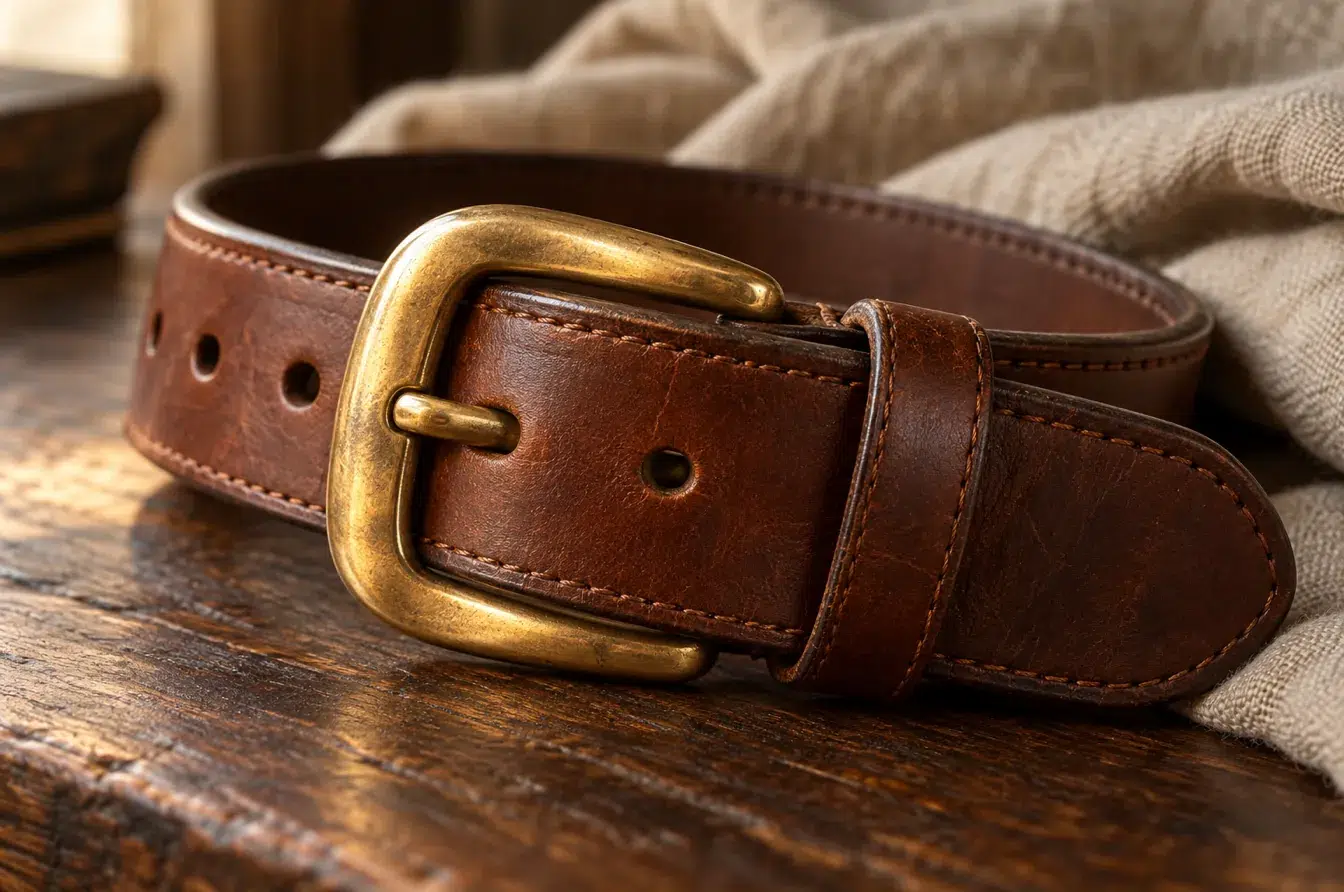
Brass and Zinc Alloy Age Through Different Visual Changes
Uncoated brass gradually changes color as it reacts with the surrounding environment. The surface may become deeper, softer, or less uniform. For a heritage, vintage, artisan, or naturally luxurious collection, this change can add character. For a clean modern collection that promises a stable bright gold surface, the same change can be unacceptable. Protective finishes can slow the change, but they also introduce another layer that can scratch or wear.
Zinc alloy normally reaches its final appearance through plating, paint, electrophoretic coating, or another decorative system. When that system is well prepared and suited to the product, the buckle can retain an even and sophisticated finish. When preparation or coverage is weak, wear may expose a visibly different base color. The contrast makes damage more noticeable, particularly on bright gold, pale silver, or dark finishes.
Neither metal should be described as automatically durable without considering the full part. Brass can bend, scratch, tarnish, or lose a protective coating. Zinc alloy can perform reliably when its geometry, casting quality, preparation, and finish are well controlled. The expected product lifetime and acceptable appearance change should be defined before the material decision is finalized.
| Aging condition | Brass response | Zinc-alloy response | Approval question |
|---|---|---|---|
| Fine surface scratches | Similar metal color may remain visible beneath | A contrasting substrate may appear after coating breakthrough | How visible is damage at normal viewing distance? |
| Repeated edge contact | Metal can polish, mark, or deform locally | Coating can thin first at exposed edges | Are contact zones designed and protected? |
| Moisture and handling | Tarnish or patina may develop | Finish integrity becomes critical | What appearance change is acceptable? |
| Long-term color expectation | Natural change may be part of the story | Applied finish should be selected for stable appearance | Is aging intended, tolerated, or rejected? |
Wear Approval Must Focus on Contact Points
The decorative front face usually receives the most attention during sampling, but it may not be the first area to fail. The pin tip, inner frame, hinge, moving bar, underside, strap contact edge, and attachment points experience more rubbing and pressure. Recessed zones may also be difficult to finish evenly, while raised edges are exposed to impact and abrasion.
Approval should therefore examine the complete assembled buckle after repeated operation. The review can include opening and closing, strap movement, dry rubbing, controlled moisture contact, handling, and inspection under consistent lighting. The garment should also be checked for staining, snagging, surface transfer, pressure marks, and distortion around the attachment. These practical checks reveal risks that a flat color chip or untouched display sample cannot show.
The acceptance record should define the important surfaces and the permitted change. A small hidden mark may have no effect on value, while a bright exposed edge can make a buckle look worn very quickly. Functional condition matters as much as color: the frame should remain aligned, the pin should not loosen, and moving surfaces should not become rough. This approach evaluates durability as a product experience instead of an abstract promise attached to the metal name.
When Should a Brand Choose Zinc Alloy or Brass for a Custom Women’s Fashion Buckle?
Choosing brass as the automatic upgrade can add cost and weight, while dismissing zinc alloy can remove useful design freedom without improving the product.
Brass is the stronger choice when natural warmth, substantial touch, controlled patina, and long-term material character lead the concept. Zinc alloy is stronger when sculptural detail, lower weight, finish variety, and efficient repeatability lead the design.
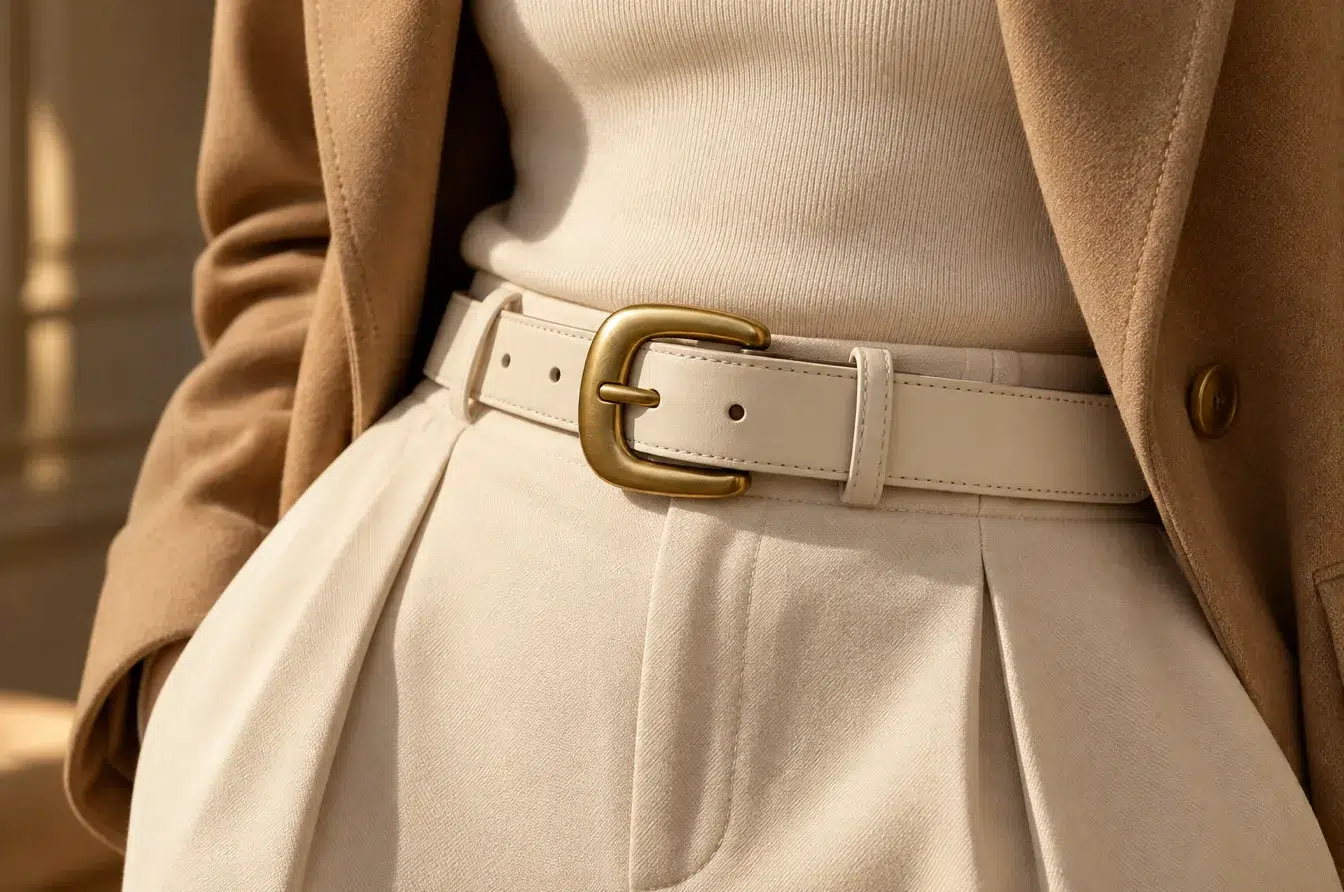
Choose Brass When Material Authenticity Leads the Story
Brass works best when the buckle is intended to feel like a lasting object rather than a temporary decorative accent. Compact signature closures, refined belt buckles, jewelry-like garment fasteners, and heritage-inspired pieces can benefit from its weight and warm natural color. The material is especially persuasive when the visible surface is polished, brushed, softly aged, or otherwise allowed to communicate that it is brass throughout.
The garment still needs to support the choice. The buckle size, strap width, fabric weight, reinforcement, and position should manage the added mass without pulling or twisting. The desired aging behavior must also be clear. If gradual darkening is part of the collection story, the finish can allow it. If a stable bright tone is required, the protective surface and care expectation must be developed accordingly.
Brass is less convincing when it is selected only so the material name can appear on a specification. A heavy buckle on delicate apparel may reduce comfort. A complex sculptural concept may require costly secondary work and still lose the depth intended by the designer. The premium advantage is strongest when the material’s natural properties are visible, tactile, and relevant to the final product.
| Project priority | Brass as the starting point | Zinc alloy as the starting point |
|---|---|---|
| Natural warm metal character | Strong fit | Requires a brass-tone decorative finish |
| Substantial hand feel | Strong fit in compact forms | Can be adjusted through geometry and section |
| Large lightweight statement buckle | Weight needs careful control | Often the more practical fit |
| Deep sculpted logo or relief | Possible, but process may limit efficiency | Strong fit for dedicated die casting |
| Planned patina or heritage aging | Strong fit | Usually less suitable as a natural aging story |
| Stable fashion color across a seasonal range | Requires a controlled finish when natural color is unsuitable | Broad finish flexibility with clear approval standards |
Choose Zinc Alloy When Design Freedom Leads the Value
Zinc alloy is well suited to buckles whose premium impression comes from silhouette, relief, texture, finish color, or integration with a broader trim family. It can support larger decorative forms with less weight than a comparable solid-brass part, which is useful for dresses, coats, soft belts, and fashion-led closures. A dedicated tool can also reproduce branded details and attachment features consistently across production.
The finish specification carries more responsibility in this route. The buckle should be designed around polishing access, coating distribution, edge exposure, and real contact points. The approved sample should record the intended tone, gloss, texture, visible surfaces, and acceptable variation. Repeated-use checks should be completed on the assembled garment rather than on loose hardware alone.
Some collections can use both metals deliberately. Brass can define a long-life signature line, while zinc alloy supports seasonal statement pieces or lighter garments. Another product may use a brass focal buckle with zinc-alloy decorative trims, provided that color and gloss are approved together. Material consistency is less important than experience consistency. The strongest decision is the one that aligns appearance, touch, weight, construction, aging, and repeat production with the role of the buckle.
Conclusion
Brass offers natural substance and character; zinc alloy offers sculptural freedom and finish versatility. The more premium buckle is the one that best completes the garment.