- Loading...
A convincing catalogue can hide a poor project fit. I prefer to start with clear requirements before attractive samples or low prices drive the decision.
Fashion brands can find the right custom metal hardware supplier by defining the application and customization level, shortlisting relevant specialists, comparing quotations against one brief, and approving physical samples. Selection should also establish responsibility for production quality, complete delivery timing, and repeat-order consistency.

The search becomes more useful when it follows the component from design intent to installation and repeat production. A decorative logo plate, an adjustable garment buckle, and a moving bag clasp require different expertise. The right supplier must fit both the hardware and the way the brand develops its collections.
Where Can Fashion Brands Find Custom Metal Hardware Suppliers?
Broad searches produce long supplier lists, but unrelated capabilities make comparison difficult. A more specific search starts with the component and the finished product.
Custom metal hardware suppliers can be found through component-specific searches, industry directories, sourcing platforms, trade events, and referrals from garment or bag manufacturers. Each channel produces candidates; relevant development examples, process evidence, and physical samples are still needed to establish suitability.
Search for the Actual Component and Application
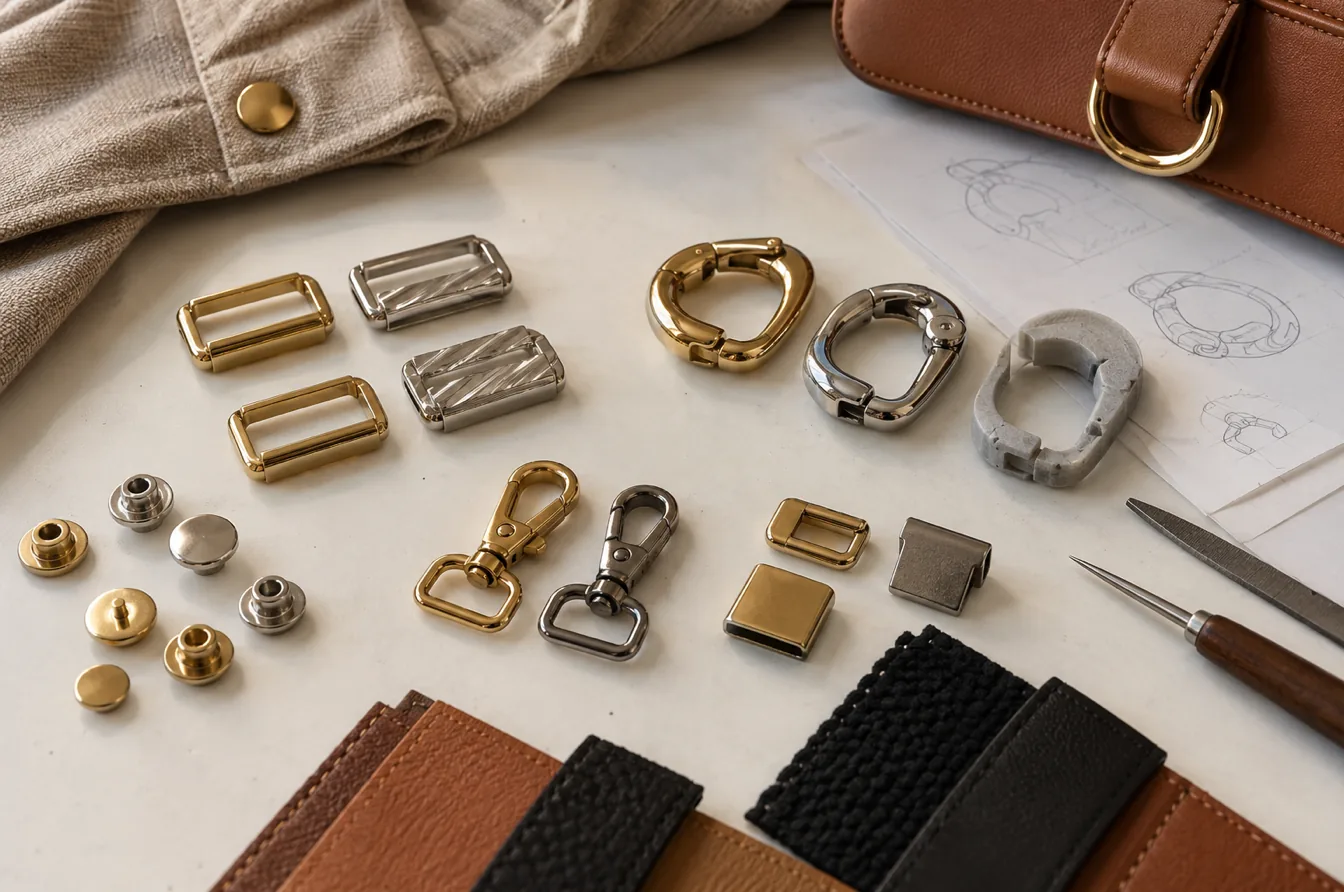
Search terms should describe the intended purchase. Examples include “custom brass logo plate manufacturer,” “zinc alloy bag clasp supplier,” or “custom garment buckle manufacturer.” A known manufacturing process can make the search more specific, but an unresolved material or process choice should remain open for technical review.
Relevant experience matters more than catalogue size. A supplier showing decorative bag fittings may understand visible surface quality but still need to demonstrate expertise in moving mechanisms or attachment to lightweight fabric. Comparable projects should connect the component to its application, material, construction, and production route.
Referrals can help identify suitable candidates, especially when the garment or bag factory already understands the installation requirements. However, an established relationship does not establish suitability for every new design. A different attachment, finish, or mechanism can introduce requirements outside the supplier’s usual work.
Decide How Much Customization Is Necessary
“Custom” should be clarified before quotations begin. Existing components, modified designs, and fully original parts involve different development work.
| Purchasing route | Suitable starting point | Point to confirm |
|---|---|---|
| Existing component | A standard shape already meets the application | Dimensions, available finishes, stock, and replenishment |
| Modified existing design | Branding or selected details need adjustment | Which changes require tooling, separate processing, or new approval |
| Fully custom component | Original geometry or a signature mechanism is essential | Engineering scope, tooling, sample stages, and production feasibility |
Where feasible, quotations for more than one route can reveal the value of full customization. An existing component may satisfy the functional brief, while a proprietary shape may be justified when it carries a recognizable brand detail. The decision should follow the design requirement, expected volume, and available development time.
How Can Brands Verify a Hardware Supplier’s Manufacturing Capabilities?
Finished samples show what a supplier can present. Qualification must also establish how the proposed design will be developed, produced, checked, and repeated.
Brands can verify manufacturing capabilities through a project-specific drawing review, relevant process evidence, clearly assigned production responsibilities, and samples made through the proposed manufacturing route. The strongest evidence connects technical decisions and approval records to actual production work.
Use the Initial Technical Review as Evidence
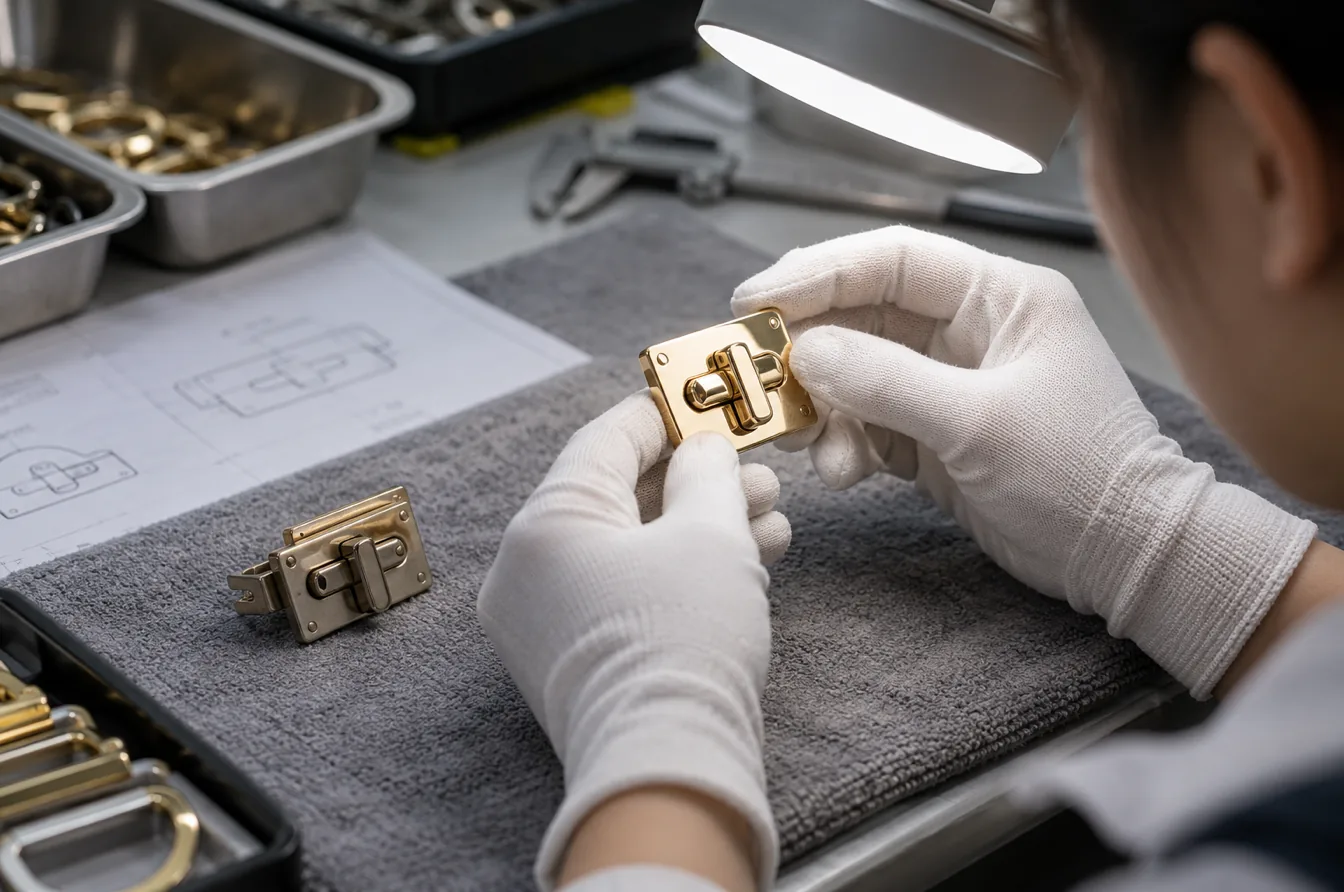
A useful supplier response identifies missing information and explains practical risks. For a custom clasp, the discussion may cover movement clearance, attachment, assembly, and finishing access. For a logo plate, it may concern fine detail, edge treatment, mounting, and the effect of polishing on the design.
A marked-up drawing makes this review easier to assess. Proposed changes should explain which feature is affected, why the change is needed, and what it means for appearance, function, cost, or timing. Immediate agreement with every detail provides little evidence that the design has been evaluated.
Material recommendations also need a reason. “Premium metal” is incomplete as a specification. The proposal should identify the material or grade where applicable, manufacturing method, expected weight, finish compatibility, and any unresolved limitations. Alternatives should preserve the critical design and functional requirements.
| Capability under review | Useful evidence |
|---|---|
| Design interpretation | Drawing comments linked to the intended application |
| Forming and tooling | Relevant part examples and an explained production route |
| Finishing | Physical references and documented appearance controls |
| Production consistency | Inspection records linked to drawings and approved samples |
| Problem resolution | An example showing how a defect was investigated and corrected |
Establish Who Controls Each Operation
Factory ownership is one part of the assessment. A sourcing partner may provide valuable coordination across several specialists, while a manufacturer may use outside support for selected operations.
The project needs clear responsibility for tooling, forming, polishing, plating, assembly, and inspection. The supplier should explain which operations it performs, which it coordinates externally, and how changes or defects are controlled. Access to technical answers is particularly important when several parties influence the finished component.
Private customer work may not be available for display. Redacted drawings, unbranded samples, and process explanations can still demonstrate relevant capability without requiring disclosure of another brand’s designs.
What Should a Custom Hardware Request for Quotation Include?
Quotations become misleading when suppliers fill the same information gaps differently. A shared brief makes technical assumptions and commercial exclusions visible before prices are compared.
A custom hardware request for quotation should define the component’s function, drawings or references, critical dimensions, material, finish, attachment, branding, and quantities by variant. It should also state sample expectations, relevant performance checks, packaging, delivery requirements, and the charges to be quoted separately.

Give Every Candidate the Same Requirements
The RFQ should distinguish confirmed requirements from choices still open for development. A physical sample can communicate shape and feel, but its exact condition and any requested changes need written explanation. A photograph alone rarely resolves dimensions, rear attachment, material, or moving interfaces.
The following information supports a more useful comparison:
| RFQ field | Information to provide |
|---|---|
| Application | Finished product, installed position, function, and use conditions |
| Design | Drawing revision, dimensions, reference sample, and critical features |
| Material | Specified material or a request for justified alternatives |
| Finish | Physical reference, color, gloss, texture, and visible surfaces |
| Installation | Fabric or leather thickness, mating parts, and attachment method |
| Branding | Artwork, size, position, and preferred application method |
| Quantity | Sample quantity and initial order split by design, size, and finish |
| Acceptance | Dimensional, visual, functional, and relevant durability requirements |
| Delivery | Receiving location, required arrival date, packing, and shipment scope |
Forecasts should be identified as estimates. A possible future volume should not be presented as a committed order simply to obtain a lower quotation.
Separate Development Work From Recurring Supply
Tooling, engineering, samples, revisions, unit production, packaging, testing, and transport should be identifiable in the quotation. The currency, pricing unit, quantity basis, and validity also need to be clear. This prevents an apparently lower unit price from concealing excluded work.
Questions raised during quotation can change the specification. When a critical requirement changes, the revised brief should go to every shortlisted supplier. Otherwise, the final comparison may combine prices for different versions of the component.
For proprietary hardware, the development agreement should also address tooling ownership, permitted use, storage, maintenance, and access to approved files. These arrangements need explicit agreement before development begins; a tooling charge alone leaves important questions unresolved.
How Should Brands Evaluate Custom Metal Hardware Samples?
A sample can look correct while leaving installation, durability, or production feasibility unresolved. Each approval stage needs a defined purpose and a clear record.
Custom metal hardware samples should be evaluated for geometry, material, weight, attachment, movement, finish, and suitability for the finished product. Approval should identify the sample’s manufacturing route, document accepted variation, and establish the reference for bulk inspection and repeat orders.

Match the Sample to the Decision
Different samples answer different questions. A model can support a decision about scale and proportion without demonstrating the behavior of the finished metal component.
| Sample stage | Main decision | Remaining point to verify |
|---|---|---|
| Visual or dimensional model | Shape, scale, position, and basic integration | Actual material, finish, and mechanical behavior |
| Metal development sample | Construction, weight, attachment, movement, and finish direction | Differences from the proposed bulk process |
| Pre-production sample | Final agreed specification and inspection reference | Whether the production batch reproduces the approved result |
The sample record should state how the part was made. If bulk production will use different tooling, forming, polishing, or finishing methods, those differences need review. An attractive prototype does not resolve risks introduced by a later process change.
Review the Installed Component and the Complete Set
Hardware should be sampled with the intended surrounding materials wherever possible. A buckle needs the relevant strap or webbing. A rivet needs the correct material stack and setting method. A clasp needs its mating parts and installed position. These checks reveal assembly issues that standalone dimensions may miss.
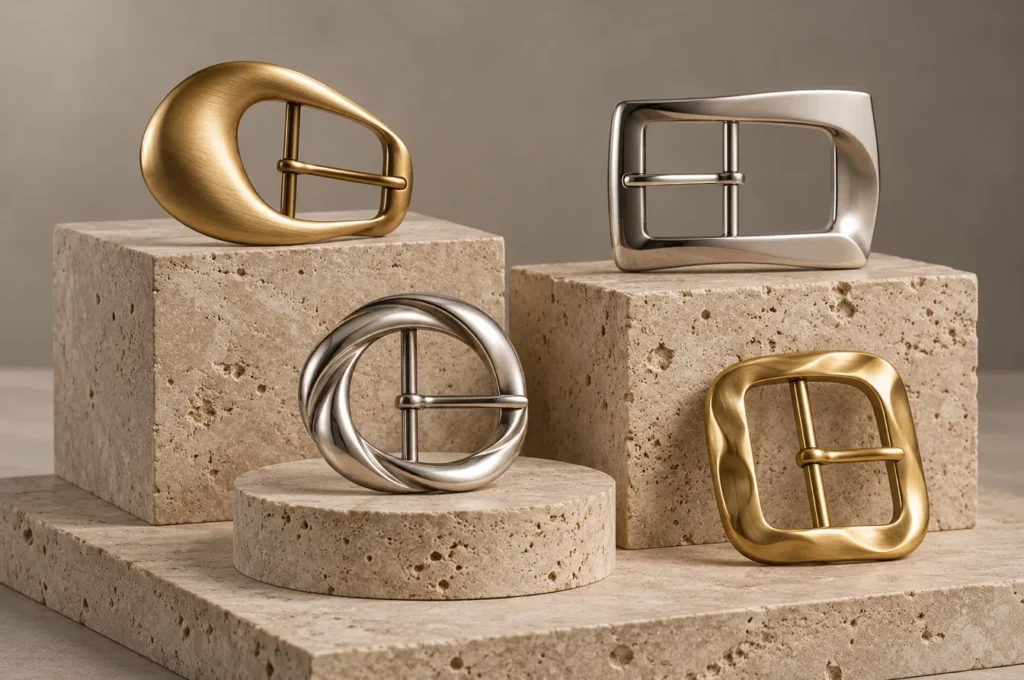
Visual approval should also consider every component used together. The same finish name can produce different appearances across materials and geometries. Buckles, rings, chains, and logo plates should be reviewed as a set against a physical reference under agreed viewing conditions.
Performance checks should follow the application. Garment hardware may require evaluation after the intended care process; moving closures may need repeated operation; exposed decorative surfaces may need wear or corrosion assessment. Methods and acceptance criteria should be agreed for the project rather than copied from an unrelated component.
Approval needs to identify the drawing revision, material, finish reference, installation method, accepted deviations, and unresolved items. A controlled initial order can then provide evidence of production consistency before the program expands. Retained samples and records give later orders a defined reference.
How Can Brands Compare Suppliers’ MOQs, Tooling Costs, and Lead Times?
A low minimum, inexpensive mold, or short production estimate can conceal obligations elsewhere. Commercial comparison needs the complete collection and delivery scope.
Brands should compare MOQs by component and finish, tooling charges by development scope, and lead times by separate project stages. The comparison should use the same quantity split, approved specification, packing requirements, and delivery basis, while recording exclusions and the conditions that start production.
Calculate the Commitment Across the Collection
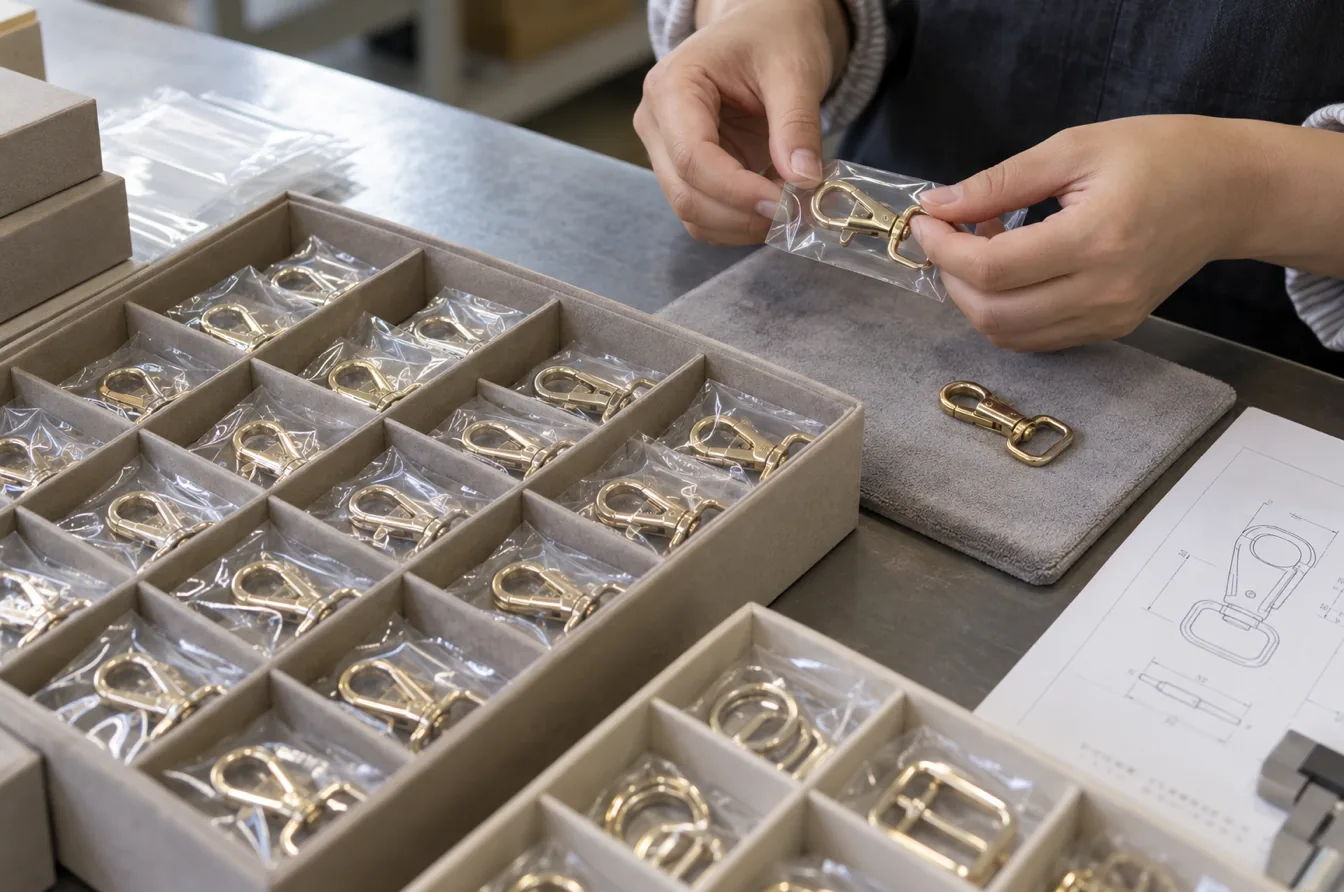
A stated MOQ may apply separately to each design, size, finish, or logo treatment. The collection’s total quantity therefore does not establish that every variant meets the supplier’s minimum. A component and finish matrix makes the actual commitment visible.
Suppliers should confirm which variants can share tooling or processing and which require separate minimums. Existing molds, fewer finish variants, or branding on an existing component may offer practical alternatives, provided they still meet the design brief.
| Commercial item | Basis for comparison |
|---|---|
| MOQ | Minimum by component, size, finish, and logo treatment |
| Tooling | Included parts, development work, revisions, and agreed usage terms |
| Unit price | Same specification, quantity tier, and pricing unit |
| Additional charges | Samples, testing, packaging, inspection, and transport |
| Lead time | Separate development, approval, production, and transit stages |
Tooling charges should be considered against the expected usable volume, not an optimistic forecast alone. Any refund, credit, maintenance, or replacement arrangement belongs in the agreed terms before it enters the cost comparison.
Plan Backward From the Required Arrival Date
Bulk production time is only one part of the schedule. Drawing review, tooling, sample production, revisions, finish approval, inspection, packing, and transport may all sit outside the advertised production estimate.
Each supplier should identify what starts the quoted clock: approved drawings, sample approval, payment, material availability, or a combination of conditions. The schedule should work backward from the date the garment or bag factory needs the components, with provision for unresolved development steps.
Final selection should follow the project’s critical requirements. A supplier with a lower price but unresolved assembly or finish risks is not yet a comparable offer. A supplier with a longer schedule may still fit a replenishment program if specifications and production controls are stable. The decision should reflect the actual development workload, inventory commitment, arrival date, and evidence from the initial order.
Conclusion
The right supplier combines relevant development capability, reproducible quality, transparent costs, and workable delivery. Comparable briefs, installed samples, and controlled initial orders turn a shortlist into an informed decision.