- Loading...
Sparkle sells emotion, but the wrong stone can raise cost, weaken application, or make a product look cheaper than planned.
Diamonds and rhinestones both create brilliance, but they work through different materials, optical structures, costs, and fixing methods. I choose between them by reading the design purpose first, then matching light performance, durability, production method, and quality control.
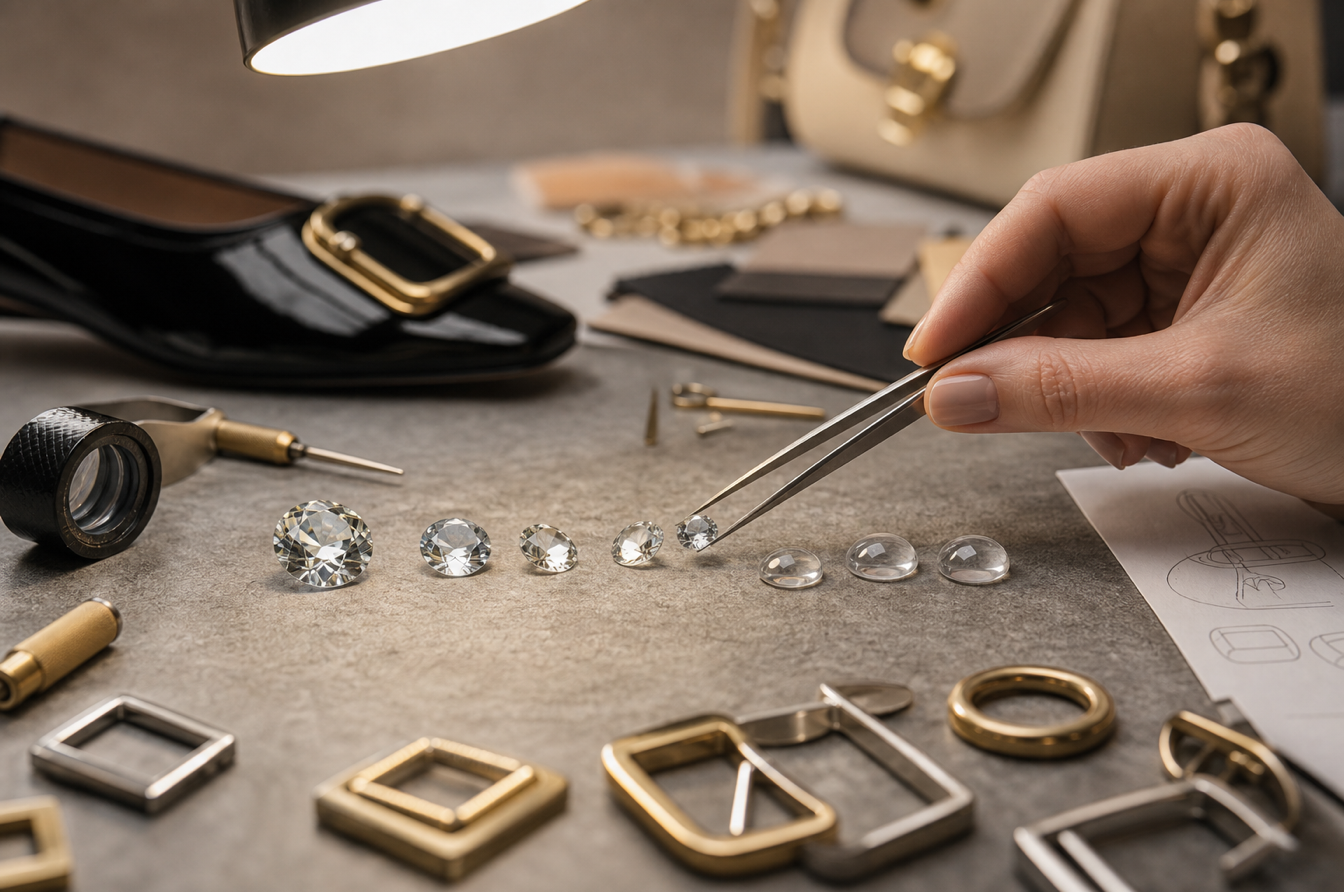
I see sparkle as a design language, not just a surface effect. A diamond carries natural rarity and high optical performance. A rhinestone, also called a strass stone or imitation stone in many markets, carries engineered brightness and flexible application. Both can be valuable when they are used in the right place. The real mistake is treating all clear stones as the same material because they look similar under a showroom light.
What Really Separates a Diamond From a Rhinestone?
A diamond and a rhinestone can both catch the eye, but they do not carry the same origin, structure, or product promise.
Diamond is crystalline carbon with gem value, while rhinestone is an engineered decorative stone made from glass crystal, acrylic, resin, or similar materials.
Natural Gemstone and Engineered Decoration
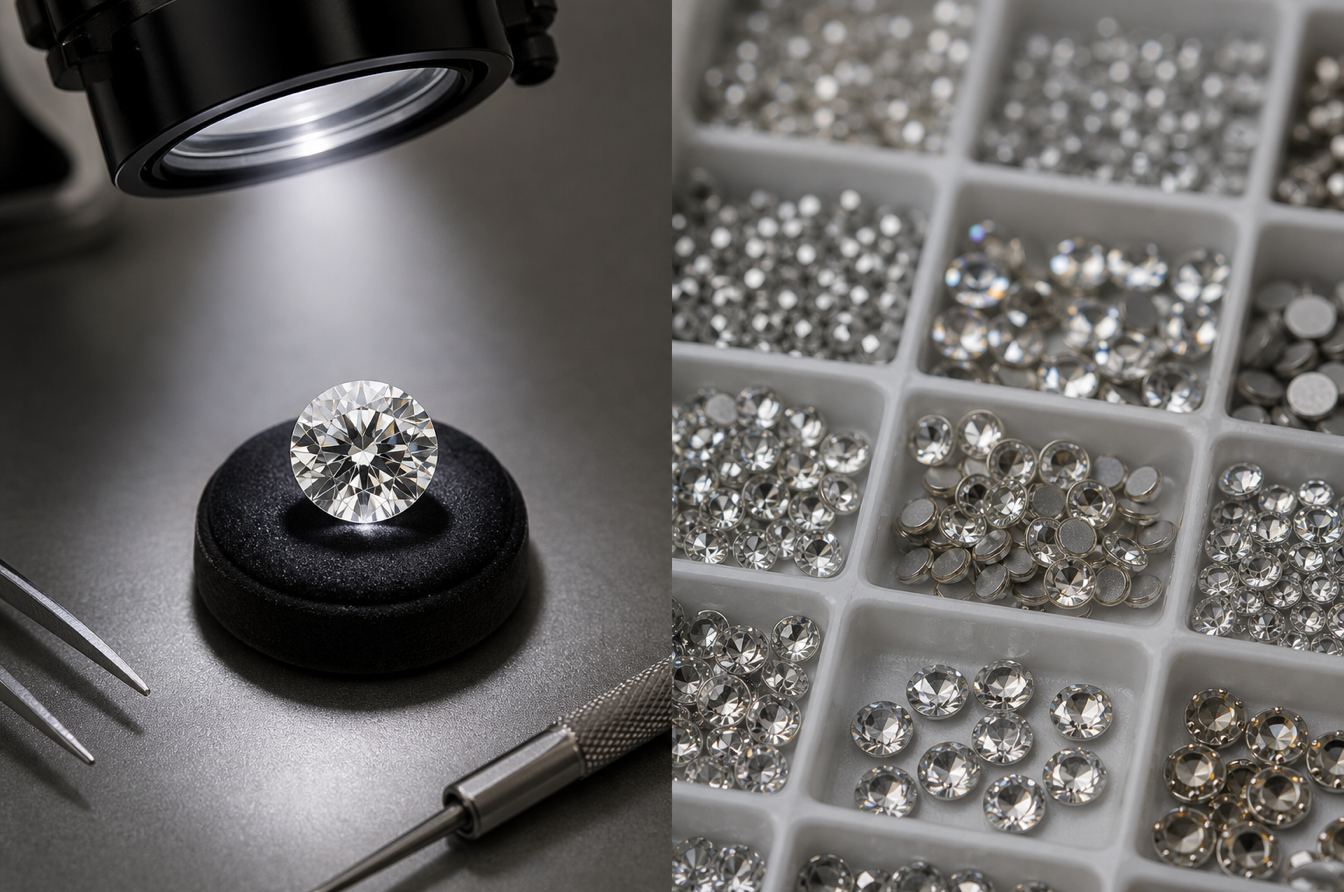
When I explain this topic to designers, I start with the definition because many sourcing problems come from loose language. A natural diamond is formed under extreme pressure and temperature in the earth. Its value comes from rarity, optical performance, hardness, traceable grading, and cultural meaning. A lab-grown diamond is also diamond in material terms, because it has the same carbon crystal structure, but it is produced in a controlled technical process. Both natural and lab-grown diamonds belong to the gemstone world.
A rhinestone belongs to a different world. It is usually a decorative imitation stone made to create sparkle at a practical cost and in large production quantities. Historically, the term was connected with rock crystals from the Rhine region, and later with glass stones used as diamond substitutes. Today, when a factory says rhinestone, it may mean machine-cut crystal glass, molded glass, acrylic stone, resin stone, hot-fix stone, flat back stone, pointed back chaton, or a mounted stone in a metal setting. This is why I always ask the supplier to define the material, not only the stone name.
| Term | Main Material | Main Value |
|---|---|---|
| Natural diamond | Crystalline carbon from nature | Rarity, hardness, gem status |
| Lab-grown diamond | Crystalline carbon grown by technology | Diamond optics with controlled origin |
| Crystal rhinestone | Cut or molded glass crystal | Strong decorative sparkle at scale |
| Acrylic rhinestone | PMMA plastic | Light weight, low cost, good clarity |
| Resin rhinestone | Synthetic resin | Flexible shaping, color, and decorative use |
Why Sparkle Matters in Design
People respond to sparkle because moving light creates attention. In fashion hardware, this matters more than it may seem. A small stone on a buckle, button, shoe ornament, or bag charm can change the perceived price of a whole product. It can make a simple shape feel festive, evening-ready, feminine, theatrical, or luxury-coded. Light also guides the eye, so a designer can use stones to emphasize a neckline, a closure, a strap, a logo plate, or the movement of a garment on stage.
But sparkle is also risky. Too much brightness can make a product look cheap when the base material, plating, and setting are not strong enough. A beautiful stone can fail if the adhesive yellows, if the silver backing peels, or if the edges scratch during packing. I treat rhinestones as functional decoration. They must support the visual economy of the product, but they must also survive handling, sewing, gluing, heat pressing, shipping, and wear.
| Design Goal | Better Direction | Reason |
|---|---|---|
| Fine jewelry value | Diamond or lab-grown diamond | Strongest gem message |
| Couture garment sparkle | Premium crystal rhinestone | High brilliance with workable cost |
| Large stage costume area | Crystal or acrylic rhinestone | Strong effect across distance |
| Fast fashion detail | Acrylic or resin stone | Cost and weight control |
| Shoe or handbag hardware | Pointed back stone in metal setting | Secure mechanical hold |
Why Does Diamond Light Outperform Rhinestone Sparkle?
Brightness is not magic. It comes from refractive index, internal reflection, cutting geometry, surface polish, and the way the back of the stone handles light.
Diamond has a high refractive index and strong internal light return, while many rhinestones rely on facet design and silver backing to imitate brilliance.
Refractive Index and Internal Reflection
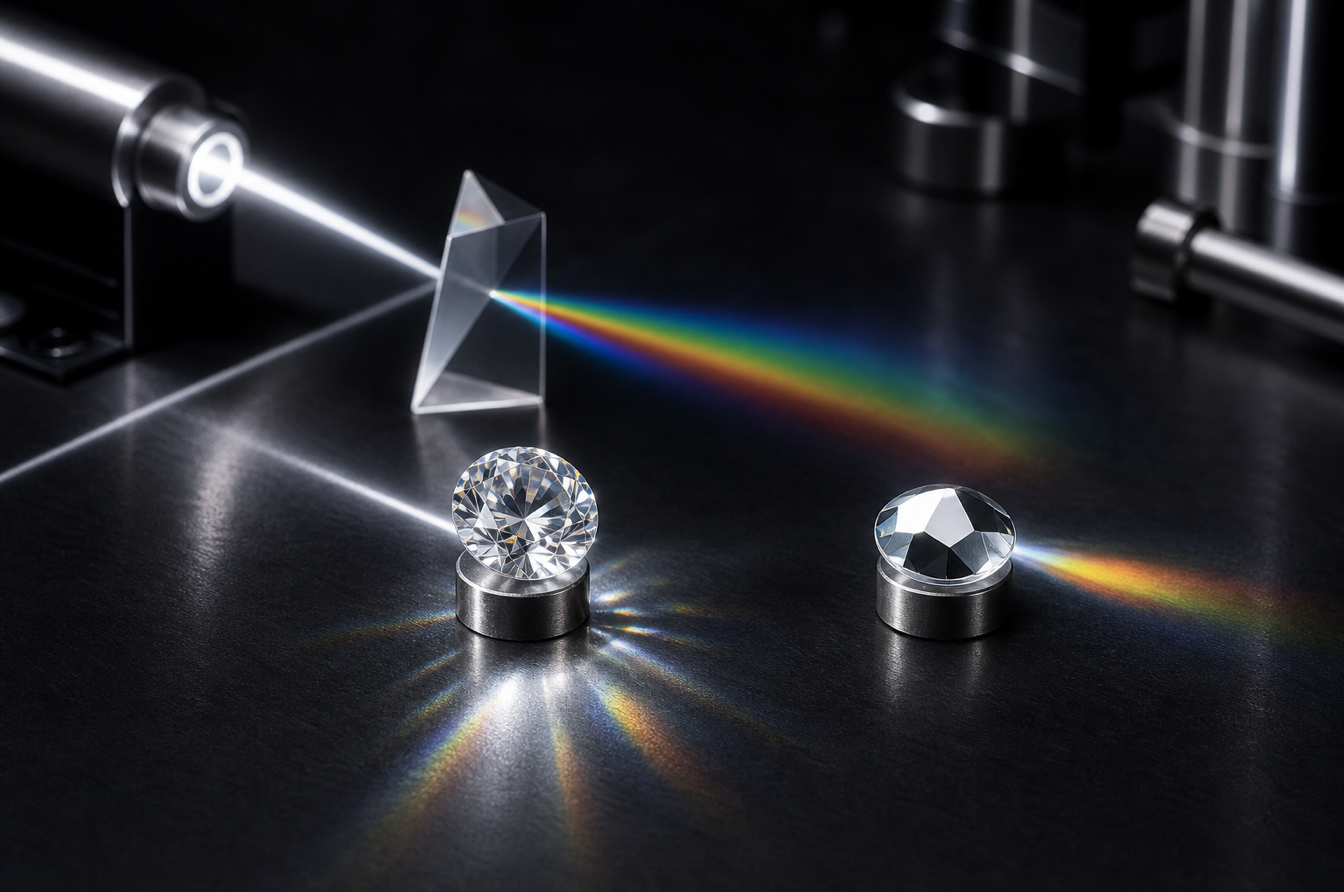
The most important optical difference is how each material bends light. Diamond has a refractive index around 2.42, which means light slows and bends strongly when it enters the stone. With the right cut, much of that light reflects inside the stone before returning to the viewer’s eye. This is why a well-cut diamond can show brightness, fire, and depth even when the stone is small.
Most rhinestone materials do not bend light as strongly. Common glass, acrylic, and many resins sit much lower in refractive index than diamond. They can still sparkle, but the sparkle is usually shallower. The light may pass through, scatter softly, or depend more on surface reflection. A premium crystal rhinestone improves this through higher quality glass composition, careful facet angles, and a polished surface. But it is still an engineered decorative solution, not the same optical system as diamond.
| Material Family | Optical Behavior | Practical Result |
|---|---|---|
| Diamond | Very strong refraction and internal reflection | Deep brilliance and fire |
| Lab-grown diamond | Same diamond material behavior | Similar optical potential |
| Crystal glass rhinestone | Moderate to strong sparkle when well cut | Good fashion brilliance |
| Acrylic rhinestone | Clear but lighter optical depth | Bright enough for broad decoration |
| Resin rhinestone | Variable clarity and shine | Useful for color and shape effects |
The Secret of Silver Backing and Facet Work
The bottom of a rhinestone is often the hidden hero. Many flat back glass rhinestones use a reflective foil or metallic coating on the back. This silver backing returns light toward the viewer and compensates for the lower refractive index of the base material. Without it, many clear rhinestones would look pale on fabric because light would pass through the stone and be absorbed by the garment surface. With a good backing, the stone looks brighter, cleaner, and more consistent across colors and applications.
This is also why backing quality matters so much. If the foil scratches, oxidizes, or peels away, the stone loses part of its sparkle. I check the back coating before I approve bulk production, especially for hot-fix stones, shoe ornaments, and accessories that may face friction. Cutting is another difference. A diamond is cut to manage light return, symmetry, weight retention, and gem value. High-end rhinestones may be machine cut with impressive precision, while lower-cost plastic stones may be molded. Molded facets can look softer at the edges, so the sparkle becomes broader and less crisp.
| Feature | Diamond | Premium Crystal Rhinestone | Acrylic or Resin Rhinestone |
|---|---|---|---|
| Back design | Usually open to light | Often silver foiled | Often silvered, molded, or colored |
| Facet edge | Sharp when well cut | Sharp to very sharp in high grade | Softer in many molded pieces |
| Main challenge | Cut quality and grading | Foil durability and consistency | Scratch resistance and heat behavior |
| Visual depth | High | Medium to high | Low to medium |
How Do Natural, Lab-Grown, Crystal, Acrylic, and Resin Stones Compare?
Material hierarchy is not about pride. It is about matching beauty, budget, production risk, and the customer’s expectation.
I compare stones by origin, hardness, weight, clarity, heat resistance, color control, brand value, and how the part will be fixed.
Natural Diamonds and Lab-Grown Diamonds
Natural diamonds sit at the top of the emotional and commercial hierarchy. They are chosen when the product needs gemstone status, long-term value, ceremonial meaning, or a fine jewelry message. Their hardness is also exceptional, so they resist scratching better than almost any other decorative stone. But this strength comes with cost, grading complexity, ethical sourcing responsibility, and a different production route from normal fashion hardware.
Lab-grown diamonds reduce some sourcing concerns and can make diamond optics more accessible, but I still do not treat them like rhinestones. They need gemstone handling, certificate logic, secure setting, and a price structure that belongs closer to jewelry than garment trim. For most apparel, footwear, and bag hardware, diamonds are usually not the practical choice. They are best used when the object itself is meant to be jewelry, a collectible, or a premium limited piece where the stone identity is part of the story.
| Choice | Best Use | Main Risk |
|---|---|---|
| Natural diamond | Fine jewelry, luxury collectibles, high-value hardware | Cost, sourcing proof, grading |
| Lab-grown diamond | Modern jewelry and controlled-origin luxury pieces | Consumer positioning and certification |
| Diamond-like rhinestone | Fashion sparkle and decorative hardware | Lower gem value and durability |
Crystal, Acrylic, and Resin Rhinestones
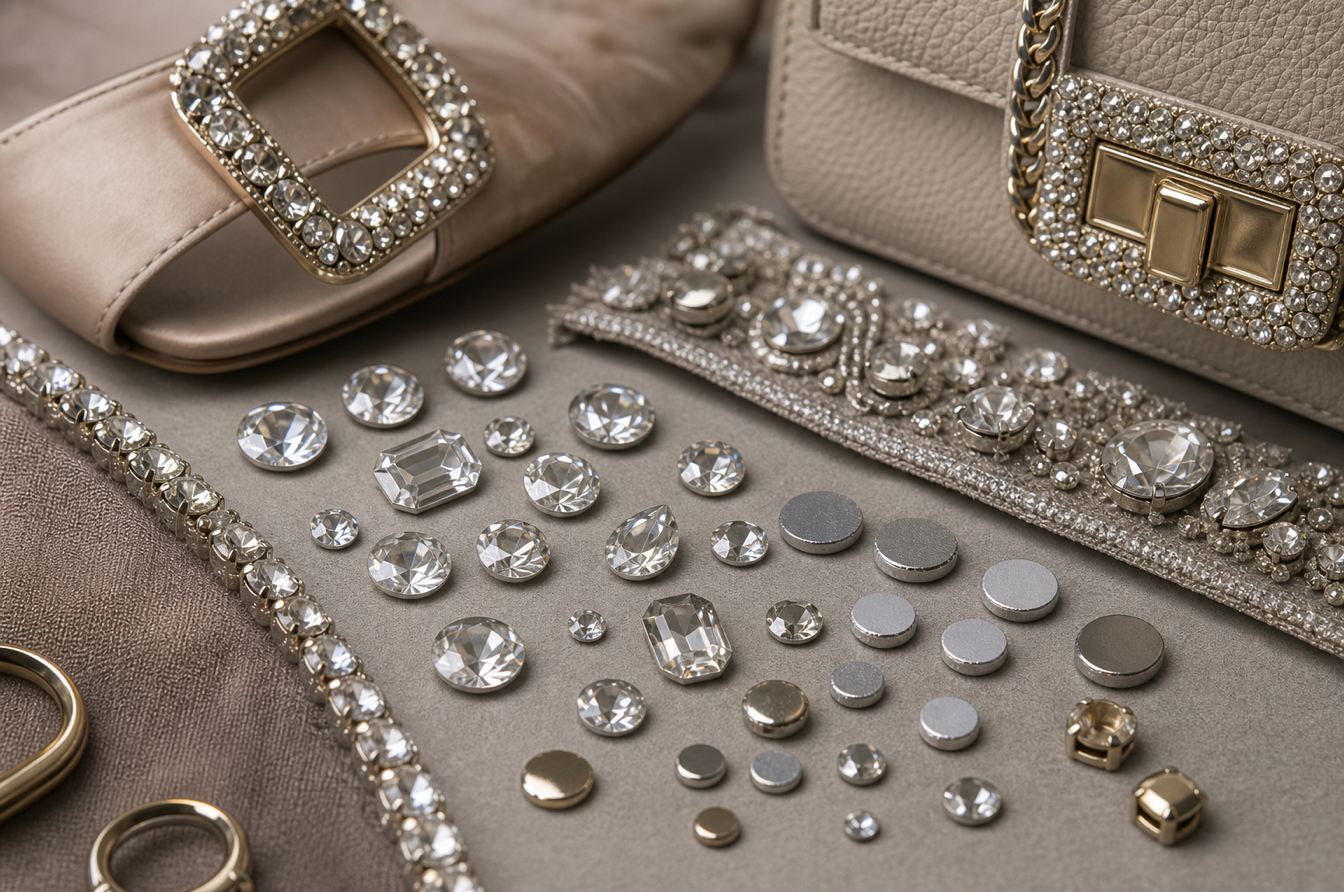
Premium crystal rhinestones occupy the high craft level of decorative stones. Swarovski is known for precision-engineered crystal components and a modern lead-free crystal formula. Preciosa is known for Bohemian glassmaking tradition, machine-cut crystal stones, and lead-free product lines under its Lead-Free Brilliance symbol. In practical sourcing, I use these types of products when a garment, costume, or accessory needs strong sparkle, consistent color, sharp facets, and a more refined hand feel than ordinary plastic stones can give.
Acrylic rhinestones are usually made from PMMA. They are clear, light, shatter-resistant, and cost-efficient. I like acrylic for large areas, DIY craft, display, promotional products, and commercial fashion where weight matters. Resin rhinestones are often used when the design needs special color, domed shapes, softer effects, or flexible decorative production. Compared with acrylic, resin can feel slightly heavier or warmer depending on formulation, and its heat resistance and surface hardness can vary widely. I ask for exact material data because the words acrylic and resin are sometimes used loosely in factories.
| Material | Strength | Limitation | Typical Use |
|---|---|---|---|
| Premium crystal glass | Strong brilliance and crisp facets | Higher cost and breakage risk | Couture, bridal, dancewear, premium accessories |
| Standard glass rhinestone | Good decorative shine | Quality varies by cutting and backing | Fashion trims and ornaments |
| Acrylic | Light, clear, economical, hard to shatter | Easier to scratch and less optical depth | Fast fashion, craft, large-area decoration |
| Resin | Flexible color and shape options | Variable heat and abrasion resistance | Novelty trims, domes, soft decorative looks |
| Metal-set rhinestone | Better mechanical security | More weight and assembly cost | Shoe clips, bag charms, buttons, buckles |
When Should Designers Choose Flat Back or Pointed Back Stones?
The back shape decides the fixing method, and the fixing method decides whether sparkle survives real use.
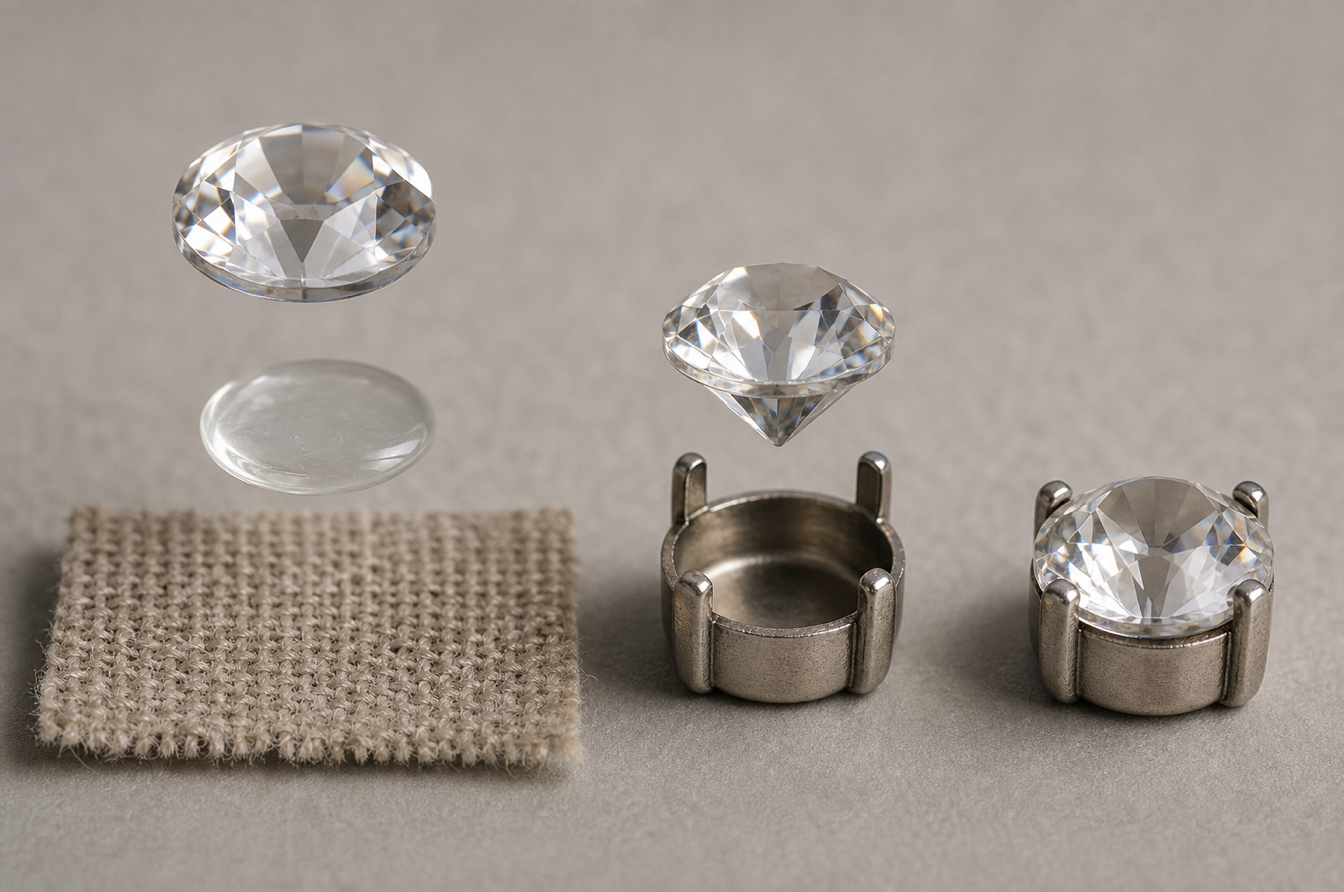
Pointed back stones need a setting, while flat back stones are designed for adhesive, hot-fix, or direct surface application.
Structure Decides Application
A pointed back stone, often called a chaton in crystal product language, is designed to sit in a cavity, cup, bezel, prong, claw, or metal setting. Its pavilion shape helps the stone look deeper and more jewel-like, but it cannot sit flat on fabric by itself. I use pointed back stones when the design includes a metal component: shoe ornaments, handbag charms, buckles, buttons, brooch-like trims, belt hardware, and decorative settings. The metal holds the stone mechanically, so the result is usually more durable than glue alone when the product faces friction.
A flat back rhinestone is made for direct application to a surface. It can be glued to fabric, leather, plastic, metal, paper, or packaging, depending on the adhesive system. It is the practical choice for garments, dancewear, caps, T-shirts, bridal veils, costumes, nail decoration, and craft products. The flat base gives contact area. The question is not only which stone looks better. The question is which surface can hold it, how the user will wear it, and what process the factory can control repeatedly.
| Back Type | Fixing Method | Best Application |
|---|---|---|
| Pointed back | Claw, prong, cup, bezel, sew-on setting | Shoes, bags, buttons, buckles, jewelry-like trims |
| Flat back no hotfix | Cold adhesive or industrial glue | Garments, leather goods, accessories, crafts |
| Flat back hot-fix | Heat-activated glue layer | Apparel panels, costumes, dancewear |
| Sew-on stone | Holes or mounted cup for stitching | Delicate fabrics and removable trims |
Hand Sewing, Cold Gluing, and Hot-Fix
Hand sewing is slow, but it gives excellent control. I use it for expensive garments, delicate surfaces, and places where glue would bleed, stiffen the fabric, or age badly. Sew-on stones or metal cups are especially useful when the item needs dry cleaning, movement, or repairability. The weak point is labor cost and stitch consistency. If the thread tension is poor, the stone can tilt or snag.
Cold gluing is flexible and common. The adhesive can be chosen for fabric, leather, metal, or plastic, and it works well for small batches or complex placement. The risk is chemical compatibility. Some glues yellow, crack, soften coatings, stain fabric, or fail after washing. I always run peel tests, wash tests, and aging checks before approving bulk.
Hot-fix is efficient for apparel because the glue layer is already on the back of the stone. It supports repeatable placement and faster production, especially with transfer sheets. But heat, pressure, and time must match the fabric. Too much heat can damage synthetics, flatten pile, or weaken coatings. Too little heat gives weak bonding. I treat hot-fix as a controlled production process, not a quick shortcut.
| Method | Advantage | Risk | My Approval Check |
|---|---|---|---|
| Hand sewing | Strong control and repairability | High labor cost | Stitch tension and snagging |
| Cold glue | Works on many materials | Yellowing, staining, weak peel strength | Adhesion and aging test |
| Hot-fix | Fast and consistent for panels | Heat damage or weak bonding | Heat, time, pressure, wash test |
| Metal setting | Strong mechanical security | Higher cost and weight | Prong smoothness and pull strength |
How Can Teams Control Quality, Sustainability, and Future Material Risks?
A rhinestone can look perfect in a sample photo and still fail in bulk because clarity, backing, color, or attachment changed.
I control rhinestone quality through five checks: clarity, facet sharpness, backing durability, hardness, and color consistency.
Five Quality Checks Before Bulk Approval
First, I check clarity. Glass and plastic stones should not show obvious bubbles, black dots, haze, or flow marks unless the effect is intentional. A few hidden defects may be acceptable for low-cost craft use, but they are not acceptable for premium accessories.
Second, I check facet sharpness. Crisp facet lines create clean flashes. Rounded or uneven facets create a duller glow and make the product look less precise.
Third, I inspect the bottom coating. The silver layer should look even, bonded, and protected from easy peeling. This is critical because the backing affects long-term sparkle.
Fourth, I check hardness and abrasion behavior. Glass resists scratching better than acrylic, while acrylic resists breakage better than glass. Resin behavior depends on formulation. I do not use one rule for all plastic stones.
Fifth, I check color consistency. In bulk production, clear, AB, colored, and coated stones can shift between lots. A small color change may become obvious when thousands of stones sit together on one garment panel.
| Check | What I Look For | Why It Matters |
|---|---|---|
| Clarity | No haze, bubbles, dark spots, or cloudy areas | Protects perceived quality |
| Facet sharpness | Clean edges and balanced symmetry | Improves light return |
| Bottom coating | Even silver backing, no peeling | Keeps sparkle stable |
| Hardness and abrasion | Scratch and wear resistance | Prevents dullness in use |
| Color consistency | Stable tone across batch | Protects bulk appearance |
Sustainability, Lead-Free Crystal, and Future Customization
Sustainability is becoming part of stone selection. For crystal rhinestones, lead content control is already a key topic. Modern premium crystal suppliers promote lead-free or very low lead formulas to help brands meet chemical restrictions. I do not rely on marketing language alone. I ask for compliance documents, restricted substance declarations, and product-specific confirmation, especially for children’s products, jewelry-like accessories, and markets with strict import rules.
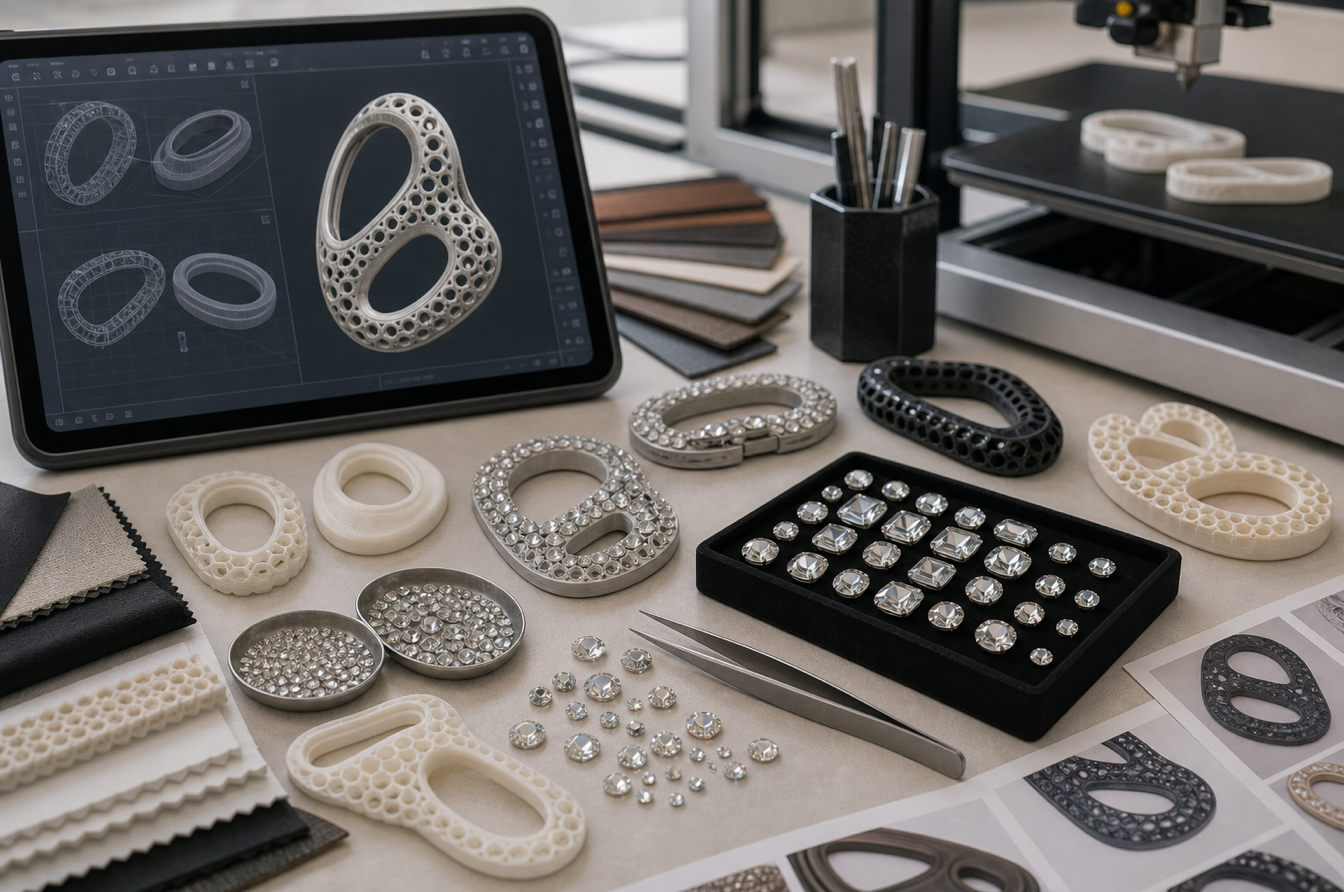
Bio-based resin may become more relevant in decorative stone production because it can reduce dependence on fossil-based inputs. The challenge is performance. A bio-based resin rhinestone still needs clarity, color stability, heat resistance, bonding compatibility, and abrasion resistance. A material is not useful to a designer if it is greener on paper but fails after one season of wear. I also watch 3D printing because it can support custom cavities, stone grids, and integrated settings. Instead of placing stones on a finished part, future teams may print the base structure around exact stone geometry, then combine metal plating, resin parts, and rhinestone setting in one controlled development plan.
| Scenario | Recommended Stone | Reason |
|---|---|---|
| High-end jewelry or collectible object | Natural diamond | Strongest rarity and long-term value |
| Modern luxury with controlled origin | Lab-grown diamond | Diamond material with traceable production |
| Haute couture and stage costume | Swarovski or Preciosa crystal rhinestone | High brilliance and color consistency |
| Premium shoe or handbag ornament | Pointed back crystal in metal setting | Mechanical security and jewelry-like depth |
| Fast fashion and broad DIY craft | Acrylic or resin rhinestone | Lower cost, light weight, flexible design |
| Future lower-impact development | Lead-free crystal or tested bio-based resin | Better compliance and sustainability direction |
Conclusion
The right stone is not the brightest one. It is the one that makes the design shine, function, and survive production.