- Loading...
Resin buttons look simple, but poor material choices can create color drift, weak shanks, failed care tests, and late delivery pressure.
Resin button manufacturing combines material science, mold precision, curing control, finishing, testing, and supply chain discipline to turn a small garment part into a reliable brand asset.
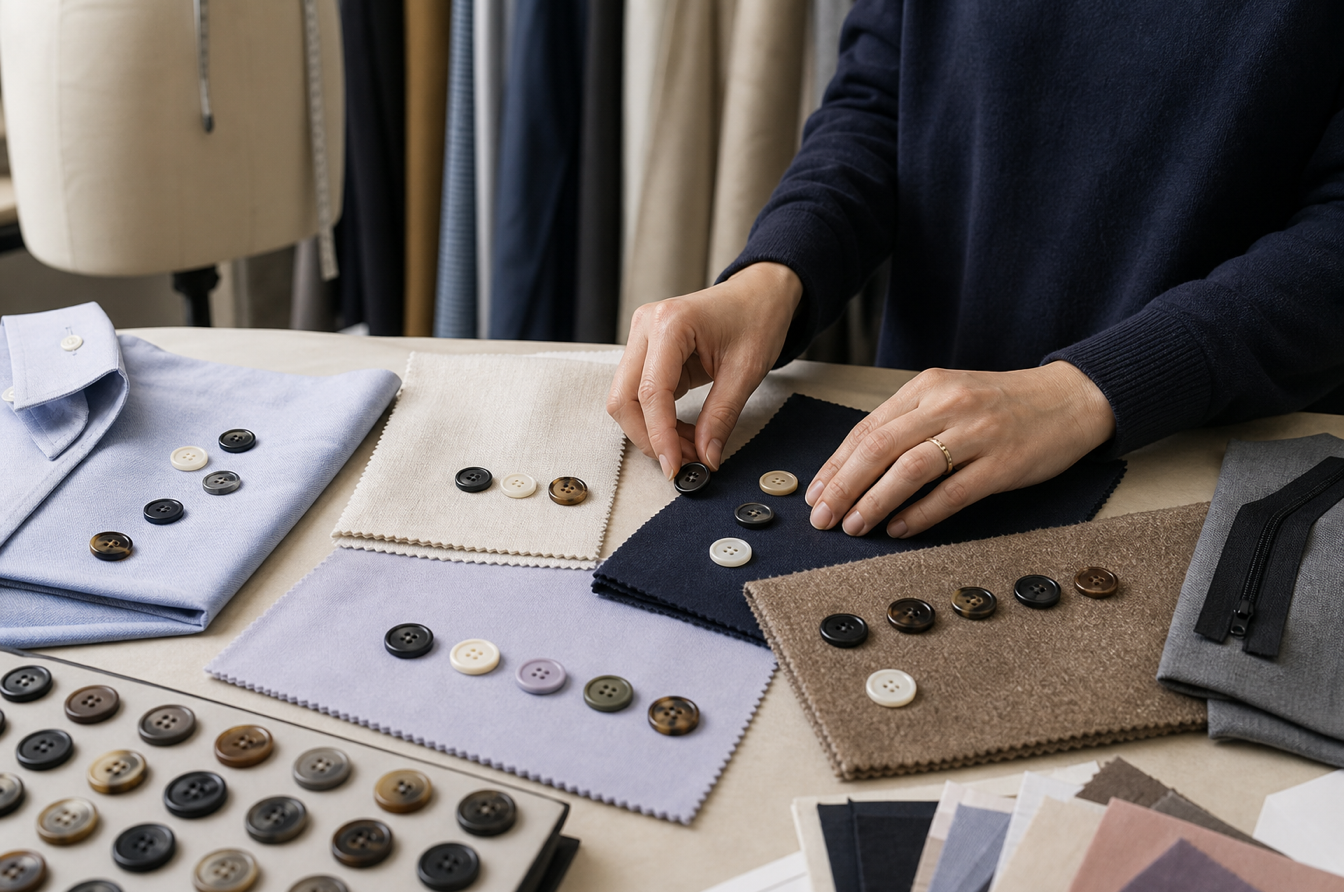
I no longer treat resin buttons as a last-minute fastening choice. In modern apparel development, the button carries proportion, color, surface language, hand feel, and production risk. A shirt button, a pearl-look blouse button, a sportwear button, and a high-strength coat button all ask different questions. This guide explains how I evaluate resin buttons from material selection to factory control, and how an integrated trim supplier can make the whole garment supply chain more stable.
Why Have Resin Buttons Become a Brand and Engineering Decision?
A resin button can close a garment, but it can also signal price, category, durability, and brand discipline.
I use resin buttons when I need controlled color, repeatable surface effects, stable performance, and a design language that can scale across many garment programs.
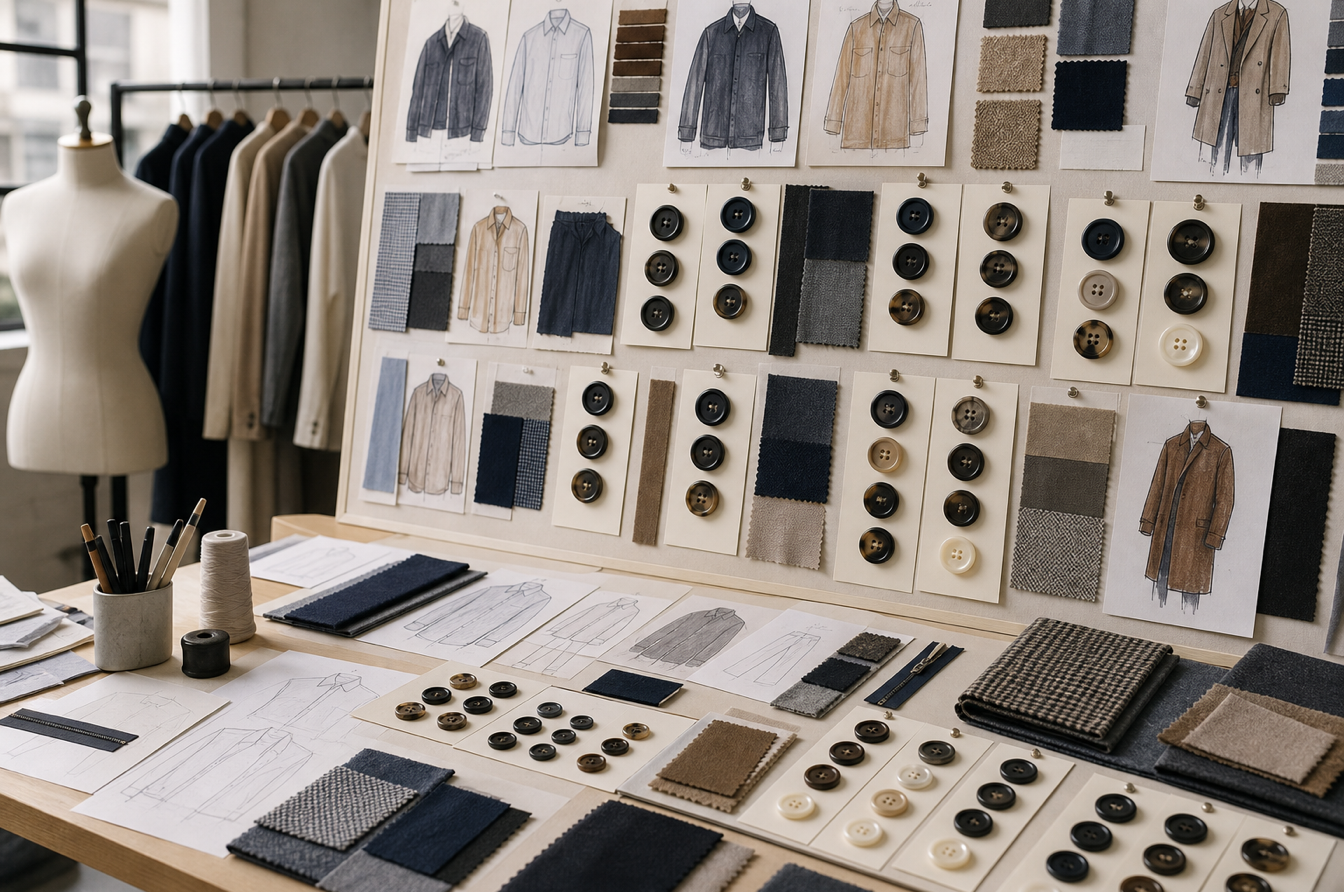
From Fastener to Visual Signature
In the past, many teams selected buttons after the main fabric, fit, and sample construction were almost finished. That habit still happens, but it creates risk. The button may be too glossy for the fabric, too weak for the buttonhole, too thick for the placket, or too late for bulk production. I prefer to move buttons into the early development stage because they influence both the garment face and the manufacturing plan.
Resin buttons are especially useful because they can imitate pearl, horn, corozo, marble, smoke, tortoise, transparent candy color, matte technical surfaces, and many custom effects. That design range gives brand teams a strong visual tool. A controlled pearl resin button can make a blouse feel refined. A deep horn-look resin button can support tailoring without the cost and variation of natural horn. A matte black resin button can help a sports jacket feel clean and technical.
The important point is consistency. A button is small, so inconsistency becomes visible very quickly. If one batch is warmer, more translucent, or more domed than the approved sample, the garment line feels less controlled. That is why I connect resin button selection with batch records, color standards, and approval samples from the beginning.
| Resin Button Role | What I Check | Why It Matters |
|---|---|---|
| Closure component | Hole strength, shank strength, buttonhole fit | Protects garment function |
| Surface detail | Gloss, depth, rim, edge finish | Builds perceived value |
| Color carrier | Batch color, translucency, dye match | Keeps garment line consistent |
| Brand marker | Logo, shape, signature finish | Creates recognition |
| Supply chain item | MOQ, lead time, inspection rule | Reduces delivery pressure |
Why Resin Often Wins in Commercial Garments
I compare resin with standard plastic, natural shell, horn, wood, metal, and other decorative materials by looking at the whole production picture. Resin is not always the most premium material, but it often gives the best balance between cost, design freedom, and repeatability.
Compared with many commodity plastics, polyester resin can look deeper and more natural because pigments and effects can be built through the body, not only placed on the surface. Compared with shell or horn, resin has stronger supply consistency and fewer natural defects. Natural materials can be beautiful, but they bring variation in color, thickness, breakage, and availability. When a brand needs millions of buttons across several countries, that variation can become a serious risk.
Resin also supports customization. A factory can build a button with a specific color swirl, pearl layer, embedded visual depth, laser logo, or special rim. For high-volume apparel, that flexibility matters. It lets the brand create a controlled material story without making production fragile.
| Material | Strength | Common Risk | Best Use |
|---|---|---|---|
| Polyester resin | Strong design range and scalable cost | Color drift if batching is weak | Shirts, blouses, coats, fashion trims |
| Epoxy resin | Clear depth and decorative effects | Heat and curing control need attention | Special decorative buttons |
| Commodity plastic | Low cost and fast output | Flat visual value | Basic mass garments |
| Shell | Natural pearl beauty | Breakage and natural variation | Premium shirts and blouse details |
| Horn or corozo | Natural depth and tradition | Supply and defect variation | Heritage and luxury accents |
How Do Polyester, Epoxy, Bio-Based, and Natural Materials Compare?
Material choice decides curing behavior, heat resistance, color expression, surface finish, and how the button behaves during garment care.
I choose the resin family by matching garment process conditions, customer allergy concerns, sustainability goals, and the level of visual depth the design needs.
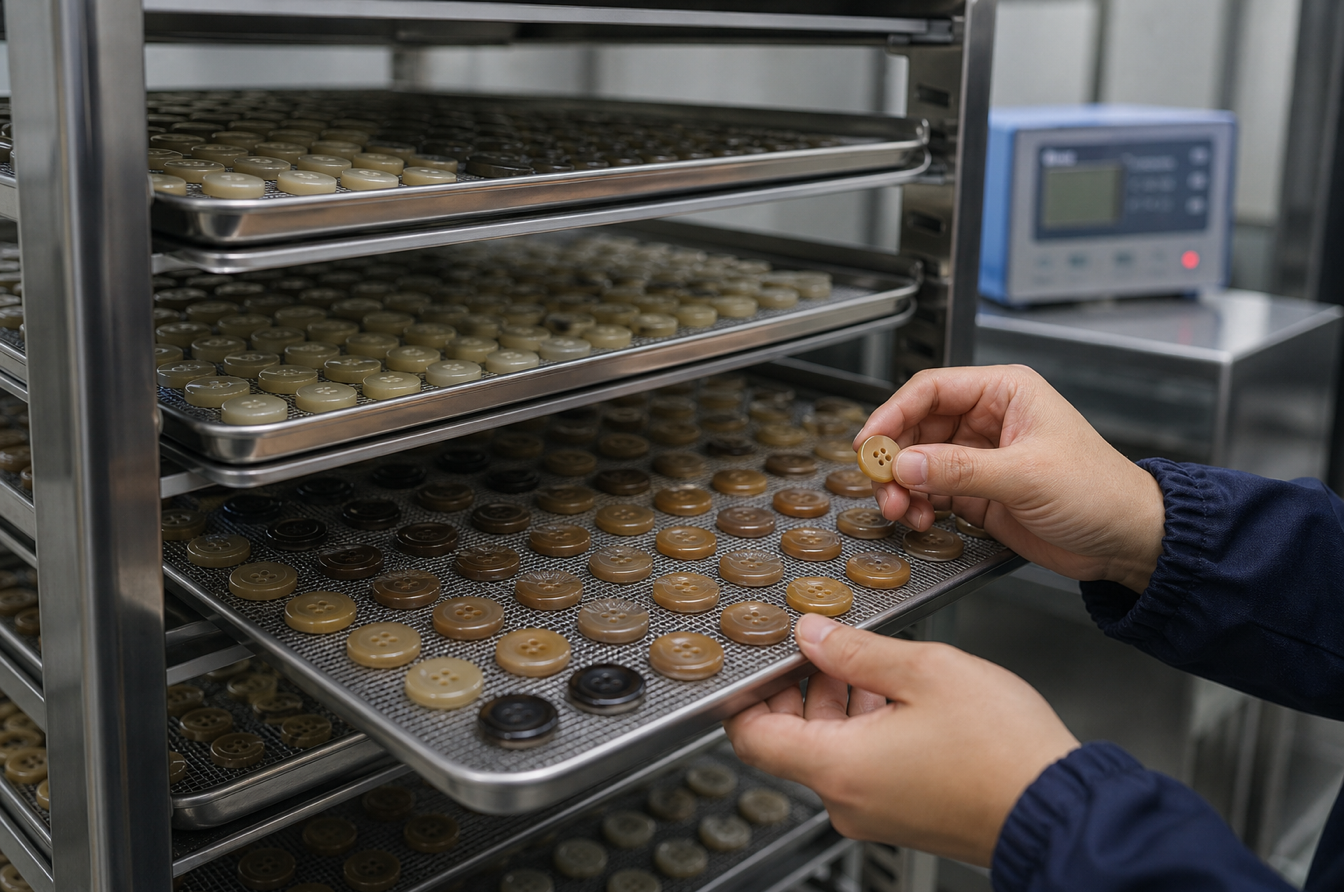
Polyester and Epoxy Resin Behavior
Most commercial resin buttons are based on polyester resin because it can be colored, cast, cured, cut, polished, and scaled with good efficiency. Its value comes from balance. It can create pearl effects, horn effects, transparent layers, and solid colors while keeping production cost under control. For apparel teams, polyester resin is useful because it can survive common garment handling when the formula, curing, and finishing are controlled correctly.
Epoxy resin can create high clarity and decorative depth, and it is useful for some special button effects. But I treat epoxy with more caution for garment programs that face heat, ironing, washing, and high-volume cost pressure. The exact result depends on formulation, curing system, button geometry, and finishing. I do not approve epoxy buttons from appearance alone. I ask how the button performs under the same care conditions that the finished garment will face.
Curing is the quiet center of resin performance. If a button cures too fast, internal stress, bubbles, and uneven hardness can appear. If it cures too slowly or incompletely, the button may feel unstable, polish poorly, or fail later under heat and chemicals. Heat deflection, hardness, impact behavior, and surface scratch resistance all connect back to formula and cure discipline.
| Technical Point | Polyester Resin | Epoxy Resin | Apparel Meaning |
|---|---|---|---|
| Visual effect | Strong pearl, horn, marble, solid color range | Excellent clarity and decorative depth | Supports different brand languages |
| Curing control | Mature for mass production | Sensitive to formula and process | Affects strength and defect rate |
| Heat behavior | Good when properly formulated and cured | Must be tested by application | Important for ironing and pressing |
| Cost position | Usually efficient at scale | Often higher for specialty effects | Impacts trim budget |
| Production fit | Strong for broad apparel categories | Better for selected decorative cases | Guides sourcing strategy |
Bio-Based and Low-Impact Material Directions
I see sustainability changing resin button development in two ways. First, teams are asking for lower-impact inputs, including plant-based resin systems, recycled content options, and formulas designed for better chemical management. Second, brands are asking suppliers to document materials, waste streams, restricted substances, and disposal methods more clearly.
Plant-based resin can reduce dependence on fossil-based inputs when the formula, performance, and supply chain are ready. Low-allergy material choices also matter for garments worn close to skin, especially shirts, childrenwear, uniforms, and performance apparel. In these cases, I want suppliers to provide chemical test support rather than only marketing language.
Biodegradable and bio-derived materials are also developing. Casein-based material, often associated with milk protein buttons, has a long historical connection with button manufacturing and still interests designers who want a natural story. But I separate story from industrial reality. A new material must pass strength, washing, colorfastness, and supply consistency tests before I use it in a bulk order. Sustainability is valuable only when the garment can still perform.
| Material Direction | Opportunity | Practical Check |
|---|---|---|
| Plant-based resin | Lower fossil input story | Strength, color, cost, volume availability |
| Low-allergy formulas | Better skin-contact confidence | Chemical testing and supplier documents |
| Recycled or reduced-impact inputs | Better environmental positioning | Traceability and performance consistency |
| Casein or protein-based material | Natural heritage and biodegradable interest | Moisture behavior, strength, supply stability |
| Cleaner process design | Lower factory waste burden | Waste sorting and cured resin handling |
What Happens Inside a Modern Resin Button Factory?
The button factory turns liquid material into a controlled component through mold accuracy, formula discipline, curing, machining, polishing, and marking.
I audit resin button production as one connected chain because one weak step can create bubbles, color mismatch, weak shanks, or unstable finishing.
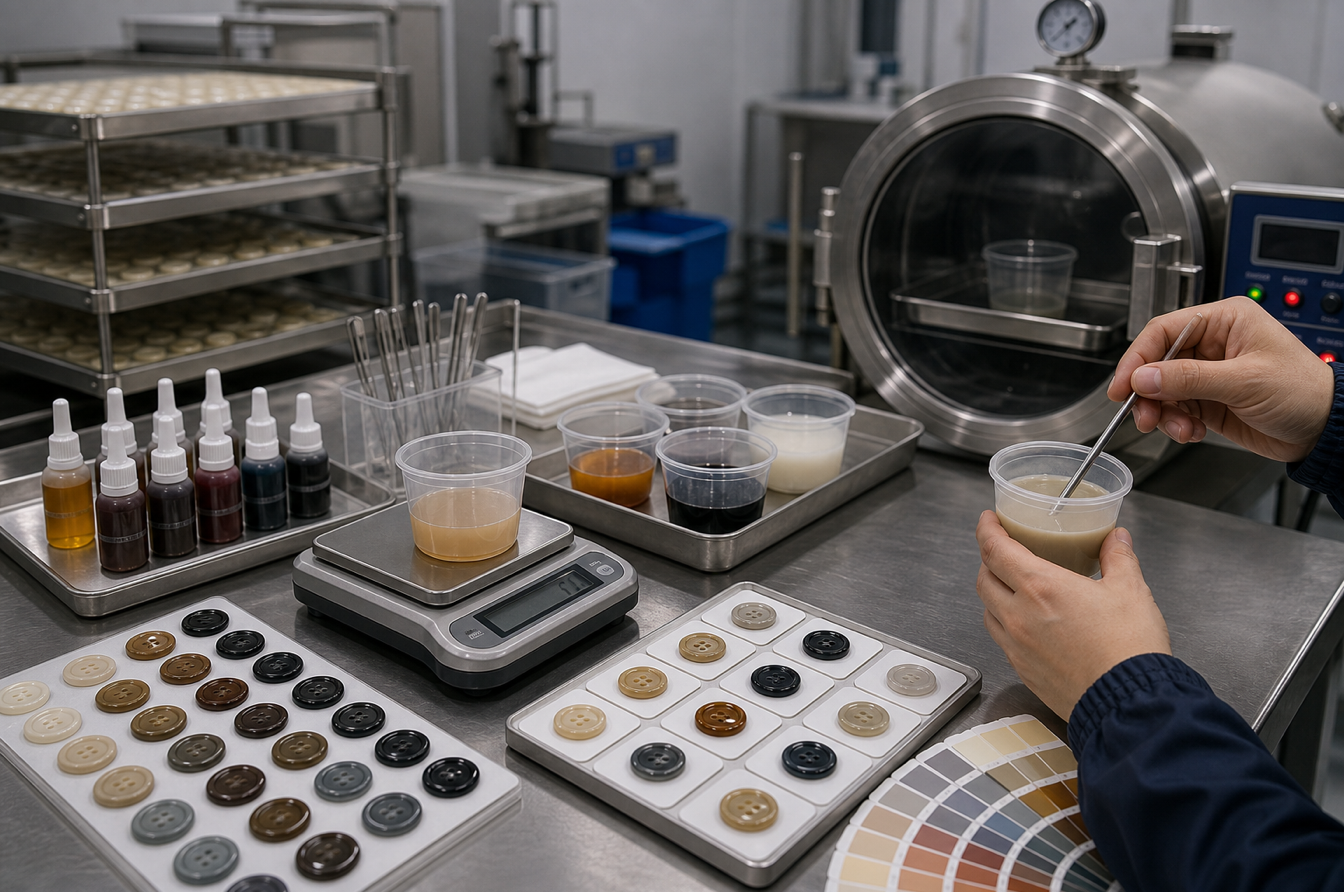
Mold Precision, Shank Design, and Casting Control
The mold defines the button before the resin has a chance to become beautiful. For commercial silicone molds, I check durability, dimensional stability, tear resistance, surface reproduction, and how many cycles the mold can support before it starts to lose precision. A tired mold may create soft edges, uneven shanks, poor logo detail, or inconsistent button thickness.
Shank buttons need special attention. A shank is not only a loop on the back. It controls fabric clearance, sewing strength, button angle, and user comfort. For coats and thick jackets, a precise shank can prevent fabric compression. For light garments, a poorly sized shank can make the button wobble or hang away from the fabric. I ask for shank drawings or physical cut samples when the button is critical.
Mixing and coloring also decide final quality. Pigments must be weighed accurately, and the formula must match the approved standard. Vacuum degassing is important because trapped air can become bubbles, weak points, or visible defects. In pearl and horn effects, mixing must be controlled without over-blending the pattern. Too little mixing creates harsh streaks. Too much mixing kills the natural-looking depth.
| Process Step | Control Point | Defect If Ignored |
|---|---|---|
| Mold preparation | Surface cleanliness and mold life | Soft edges, poor detail, distortion |
| Resin weighing | Ratio and pigment accuracy | Cure failure or color mismatch |
| Vacuum degassing | Air removal before casting | Bubbles and weak internal spots |
| Shank design | Height, wall thickness, hole clearance | Sewing failure or unstable fit |
| Pattern mixing | Pearl or horn effect control | Flat look or uncontrolled streaks |
Curing, Finishing, Logo Work, and Surface Protection
Curing is not just waiting. Temperature, humidity, resin mass, catalyst system, and button thickness all influence the curve. A common 24-hour curing window can be useful, but I do not treat the number as magic. I want the factory to understand the actual formula and the local environment. A humid or cold workshop can slow cure. Too much heat can create stress or warping. Correct curing contributes to hardness, polish quality, impact resistance, and dimensional stability.
After curing, the button enters finishing. Cutting, drilling, tumbling, sanding, and industrial polishing must create a smooth edge without removing important shape details. The button should not cut thread, scratch skin, or look cloudy. For premium buttons, polishing is often what turns a good material into a high-value surface.
Laser marking and logo customization add another layer. I use laser marking when the brand needs durable, precise, and clean logo detail. The supplier must test laser power, mark depth, contrast, and placement. A logo should not weaken a thin area or create burnt edges. For some buttons, a protective coating can improve scratch resistance or change the hand feel, but it must be tested for washing, dry cleaning, rubbing, and long-term color stability.
| Finishing Method | Purpose | Approval Question |
|---|---|---|
| Drilling | Creates sew-through holes | Are hole edges clean and aligned? |
| Tumbling and polishing | Smooths and shines the surface | Does the button keep its shape? |
| Laser marking | Adds logo or identification | Is the mark clean and durable? |
| Anti-scratch coating | Improves surface resistance | Does it survive care testing? |
| Final sorting | Removes visible defects | Are rejection rules consistent? |
How Should Quality, Compliance, and Cost Be Controlled?
A resin button is approved only when the sample, test results, production cost, and defect rules all support the same business decision.
I connect quality management with cost modeling because rejected units, mold loss, and late failures can erase a good unit price.
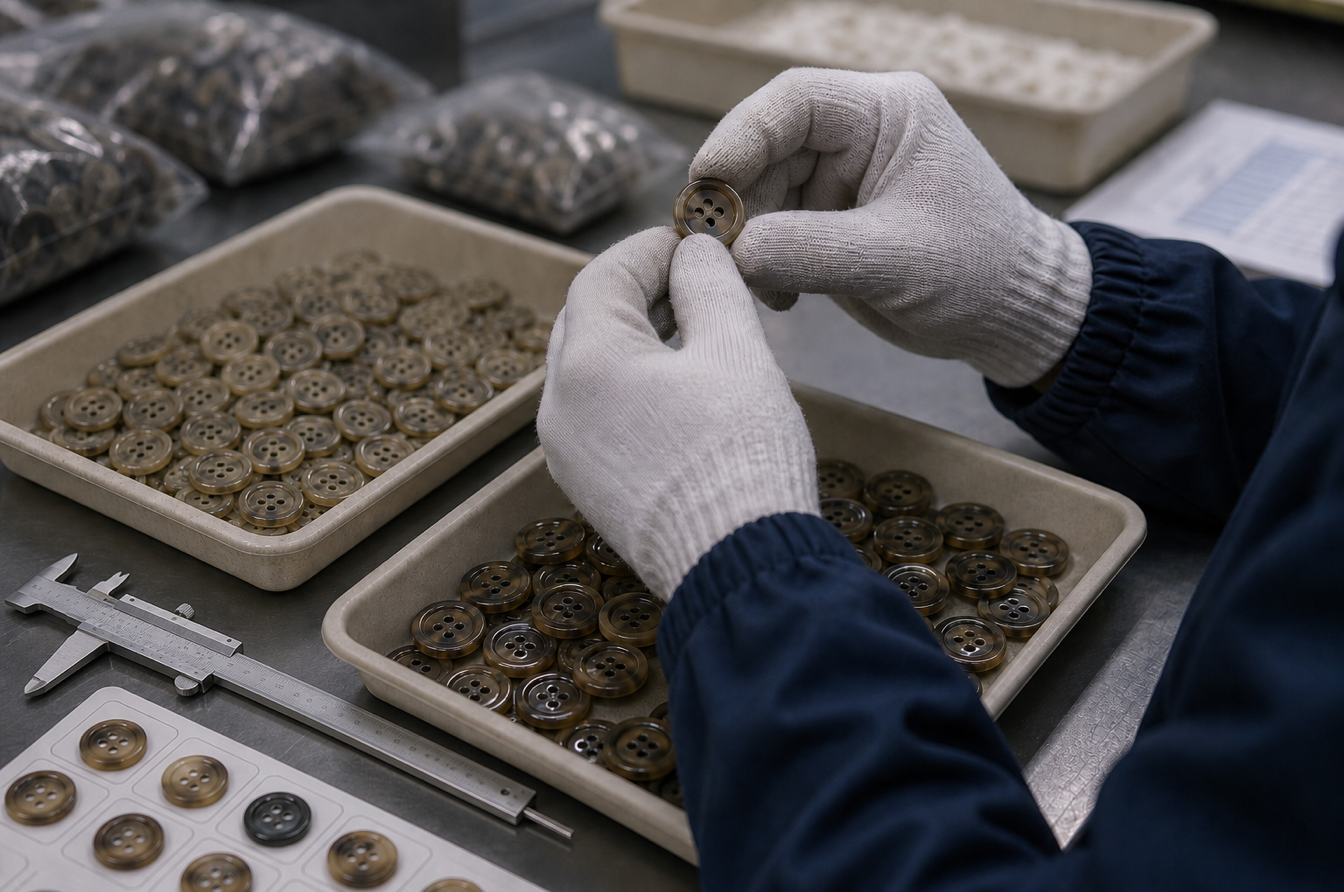
Physical, Chemical, and Care Performance Tests
I begin with physical performance. Tension testing checks whether the button, hole wall, or shank can survive the pulling force expected during sewing and garment use. Impact testing is important for coat buttons, sportwear buttons, workwear, childrenswear, and shipping conditions. A button that looks strong may crack when it hits a hard surface or when the garment is pressed in a packed carton.
Then I move to care conditions. Resin buttons should be tested against washing, detergents, rubbing, ironing temperature, garment pressing, and colorfastness needs. Heat resistance is especially important because a button may pass normal handling and then fail during garment finishing. Some garments meet high-temperature pressing before packing. If the button softens, warps, loses gloss, or transfers color, the issue becomes visible at the worst possible time.
Chemical stability also matters. I ask how the button behaves with detergents, softeners, finishing agents, and dry-cleaning conditions when relevant. For export garments, the team should also review restricted substance requirements and buyer-specific standards. I do not make legal assumptions across markets. I ask suppliers and brands to verify local environmental and industrial waste rules before shipment.
| Test Area | What It Reveals | Garment Risk |
|---|---|---|
| Tension test | Shank or hole strength | Button detachment |
| Impact test | Crack and chip resistance | Breakage in use or transport |
| Heat resistance | Ironing and pressing stability | Warping, gloss loss, deformation |
| Washing and detergent test | Care durability | Color change or surface damage |
| Colorfastness | Rubbing and transfer behavior | Staining fabric or lining |
Cost Model, Rejection Rate, and Waste Discipline
The cheapest button is not always the lowest-cost button. I build a cost model around resin unit price, pigment cost, mold cost, cycle yield, finishing labor, testing cost, rejected units, packing, logistics, and the risk of remake. Rejected units are often underestimated. If a pearl-effect button has a high rejection rate because the pattern is hard to control, the real cost may be much higher than the quotation suggests.
Mold loss also matters. A mold that fails early increases cost and may create production gaps. For custom shank buttons, logo buttons, and complex shapes, I ask how many molds the factory will prepare for bulk production and how they will identify mold-related defects. If production is split across several molds, I want to compare output from each mold before shipment.
Waste management must be practical. Fully cured resin is usually handled differently from uncured resin, pigments, solvents, and contaminated tools, but the correct method depends on local regulations and the factory’s waste system. I expect factories to separate waste streams, cure or contain materials correctly where required, and keep records. Environmental responsibility is not a slogan; it is a process discipline.
| Cost Factor | Why It Moves Margin | Control Method |
|---|---|---|
| Resin and pigment price | Sets base material cost | Confirm formula and color standard |
| Mold depreciation | Adds hidden development cost | Track mold cycles and defects |
| Rejected units | Raises true unit cost | Define sorting rules early |
| Testing cost | Protects bulk order value | Match tests to garment risk |
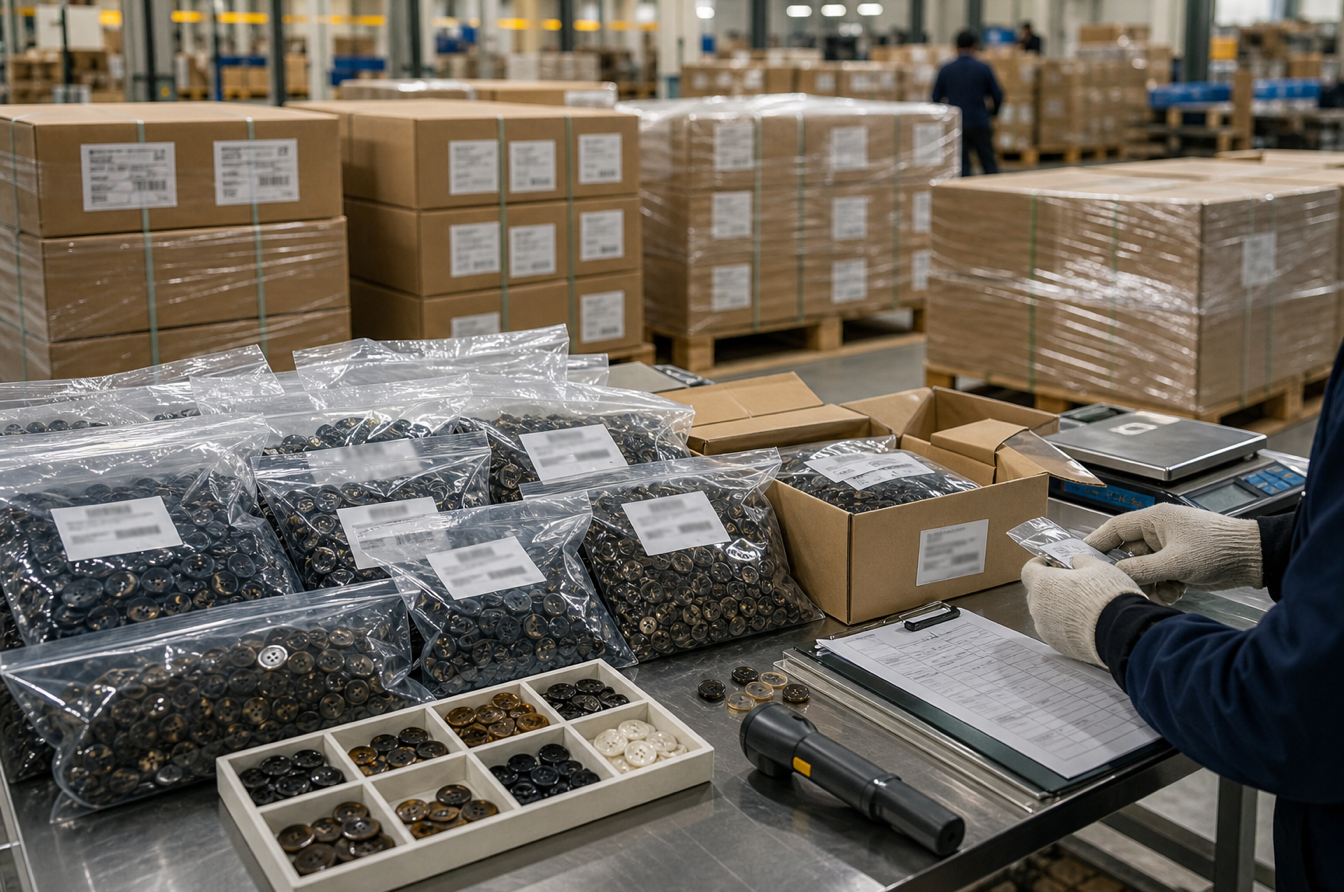
| Logistics and packing | Impacts delivery and damage | Use batch labels and secure cartons |
How Can Integrated Trim Supply Chains Build Better Garments?
Buttons perform better when they are developed with sewing thread, zippers, lace, webbing, fabric color, and export timing.
I use integrated trim supply thinking to reduce color disputes, speed sampling, and make bulk production easier to control across markets.
Coordinated Trim Design and Category-Specific Buttons
A resin button rarely lives alone. It sits next to sewing thread, zipper tape, lace, webbing, lining, elastic, label color, and fabric finishing. If each trim is sourced separately without a shared color standard, the final garment can look uneven even when every supplier did its own job correctly. I prefer an integrated dipping solution, where button color, thread color, zipper tape, lace, and webbing are reviewed together under the same lighting and fabric context.
This is where a broad trim supplier, such as MH, can be useful as a reference model. When one supply partner understands buttons, sewing thread, zippers, lace, and webbing, the design team can align color, surface, and delivery earlier. It does not remove the need for inspection, but it makes coordination easier. A sportswear program may need a matte, abrasion-resistant button that works with technical thread and webbing. A shirt program may need a refined pearl-look button, stable placket thread, and exact white matching. A coat program may need a high-strength shank button, heavy thread, lining support, and strong replacement planning.
| Garment Market | Button Direction | Linked Trim Decision |
|---|---|---|
| Sportswear | Wear-resistant matte resin button | Technical thread and webbing color |
| Shirts | Fine pearl-look resin button | Placket thread and label harmony |
| Blouses | Delicate glossy or translucent button | Lace and light fabric matching |
| Coats | High-strength shank resin button | Heavy thread, lining, and spare buttons |
| Uniforms | Stable color and durable surface | Repeatable zipper and thread standards |
Batch Identification, Global Logistics, and Green Factory Direction
Mass production requires batch identification. When a factory produces millions of resin buttons, I want every carton tied to a batch, formula, mold group, inspection record, and shipment plan. If a problem appears in garment sewing, batch records make the response faster. The team can isolate a production window instead of questioning the entire order.
This discipline matters in global trade. Export markets such as Latin America, Europe, North America, and Asia can have different lead times, documentation habits, customs requirements, and buyer expectations. A supplier with export experience can help plan production waves, packing methods, spare ratios, and shipment timing. For apparel teams, this reduces the gap between trim approval and garment delivery.
The future direction is digital and green. I expect more resin button factories to use digital color records, formula management, mold tracking, barcode batch labels, automated inspection support, and clearer waste reporting. I also expect brands to ask for more sustainable material options, better chemical documentation, and lower-waste production routes. The best factories will not only make buttons. They will build a reliable trim ecosystem where design, material science, quality, compliance, cost, and logistics work together.
| Future Capability | What It Improves | Practical Benefit |
|---|---|---|
| Digital formula records | Color repeatability | Fewer remake disputes |
| Mold and batch tracking | Defect isolation | Faster quality response |
| Automated visual inspection | Sorting consistency | Lower missed defects |
| Green material development | Sustainability story | Better buyer alignment |
| Integrated trim planning | Full garment coordination | Shorter development cycle |
Conclusion
When I manage resin buttons as engineered trim, I protect garment beauty, factory stability, cost control, and global delivery confidence.