- Loading...
A beautiful coat can lose authority when its button sits flat, pulls fabric, or fails under everyday tension.
Shank buttons create a functional gap between button and fabric, so heavy garments close smoothly, premium surfaces stay clean, and sourcing teams can control strength, finish, compliance, and brand detail.
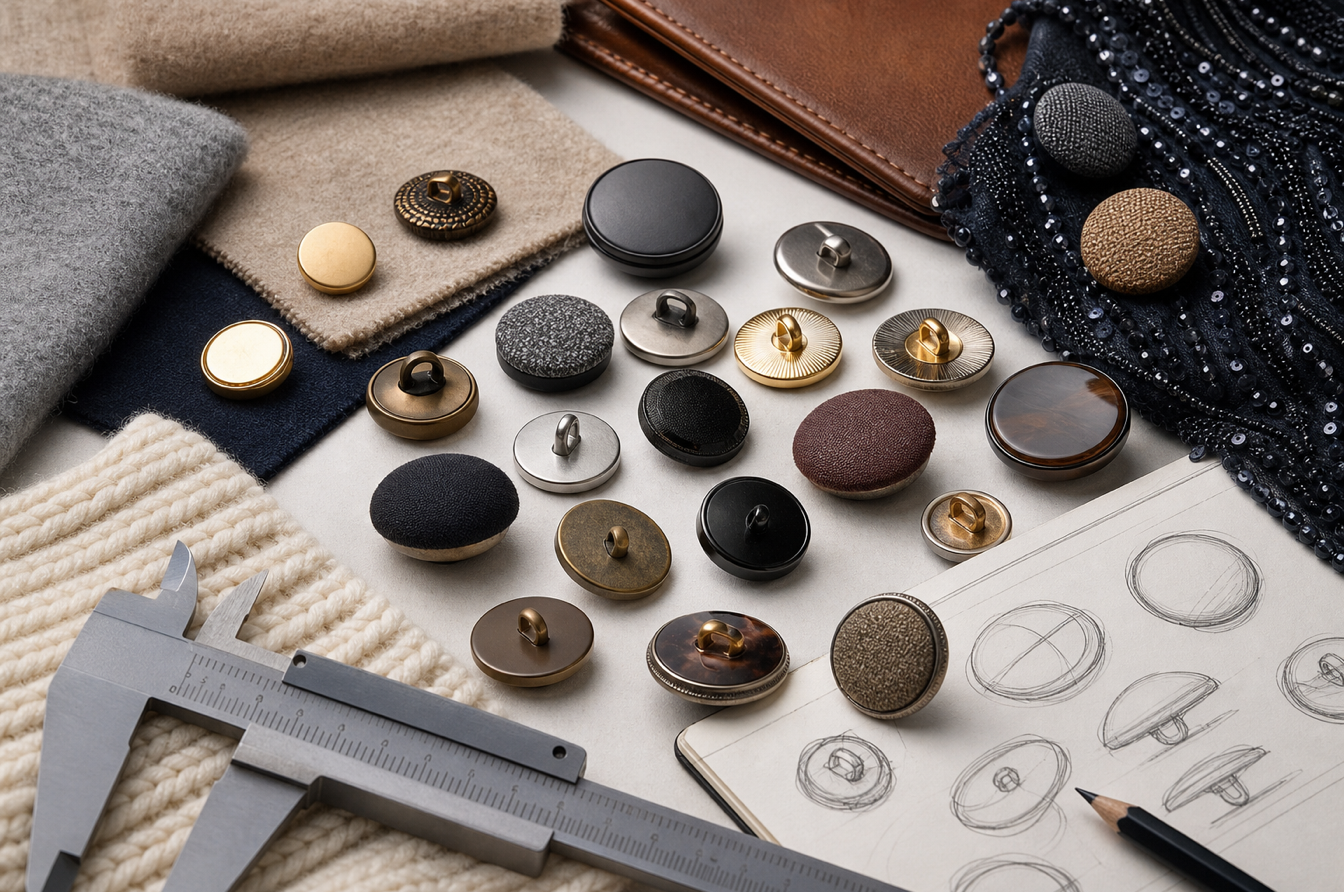
I see shank buttons as small engineered structures, not simple decorative closures. Their value comes from the space behind the button. That space protects fabric, gives room for the buttonhole layer, improves the garment hand feel, and also opens a smooth front surface for branding. For Lustrim, a good shank button is where design, mechanics, material science, and bulk production discipline meet.
Why Does The Shank Gap Define Both Function And Beauty?
A flat button can fight against thick fabric, and that pressure often shows as wrinkles, distortion, or early wear.
The shank gap gives the buttonhole layer room to sit naturally, reducing fabric stress while keeping the front surface clean for luxury finishes, logos, carving, and inlay work.
The Gap Works Like A Small Buffer Zone
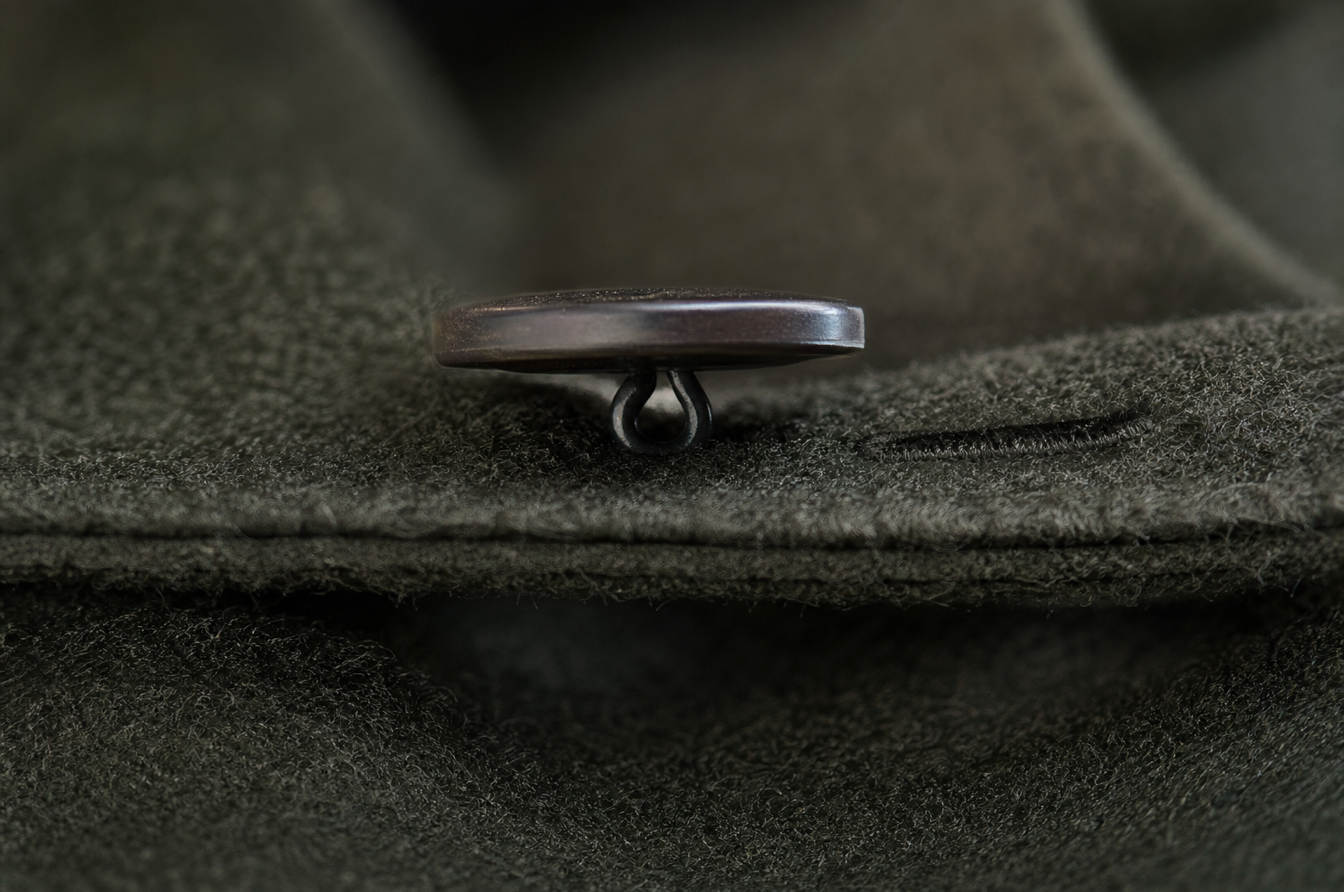
When I develop buttons for coats, blazers, cashmere outerwear, leather jackets, or heavy wool garments, I first look at the thickness of the closed layers. A flat sew-through button holds the thread close to the fabric surface. That can work well for shirts, but it can compress thicker materials. The buttonhole layer needs space. If it has no space, the fabric may pull upward around the button, the buttonhole may stretch, and the front panel may show stress marks after repeated wear.
A shank button solves this by lifting the button body away from the garment. The shank creates a buffer between button and fabric. This buffer lets the buttonhole layer slide into position without crushing the face fabric. On soft cashmere, it helps reduce localized pressure. On leather, it reduces creasing around the button point. On heavy wool, it helps the garment close with a cleaner line. This is why I often treat shank height as a design specification, not a small detail left to the supplier.
| Fabric Type | Common Risk With Flat Buttons | Shank Button Advantage |
|---|---|---|
| Cashmere coating | Surface dents and fiber stress | Softer closure and less compression |
| Heavy wool | Pulling around the buttonhole | Cleaner front panel tension |
| Leather | Creasing and pressure marks | More space for rigid layers |
| Structured tailoring | Button tilt and front distortion | Better alignment through thickness |
A Smooth Front Surface Carries More Design Value
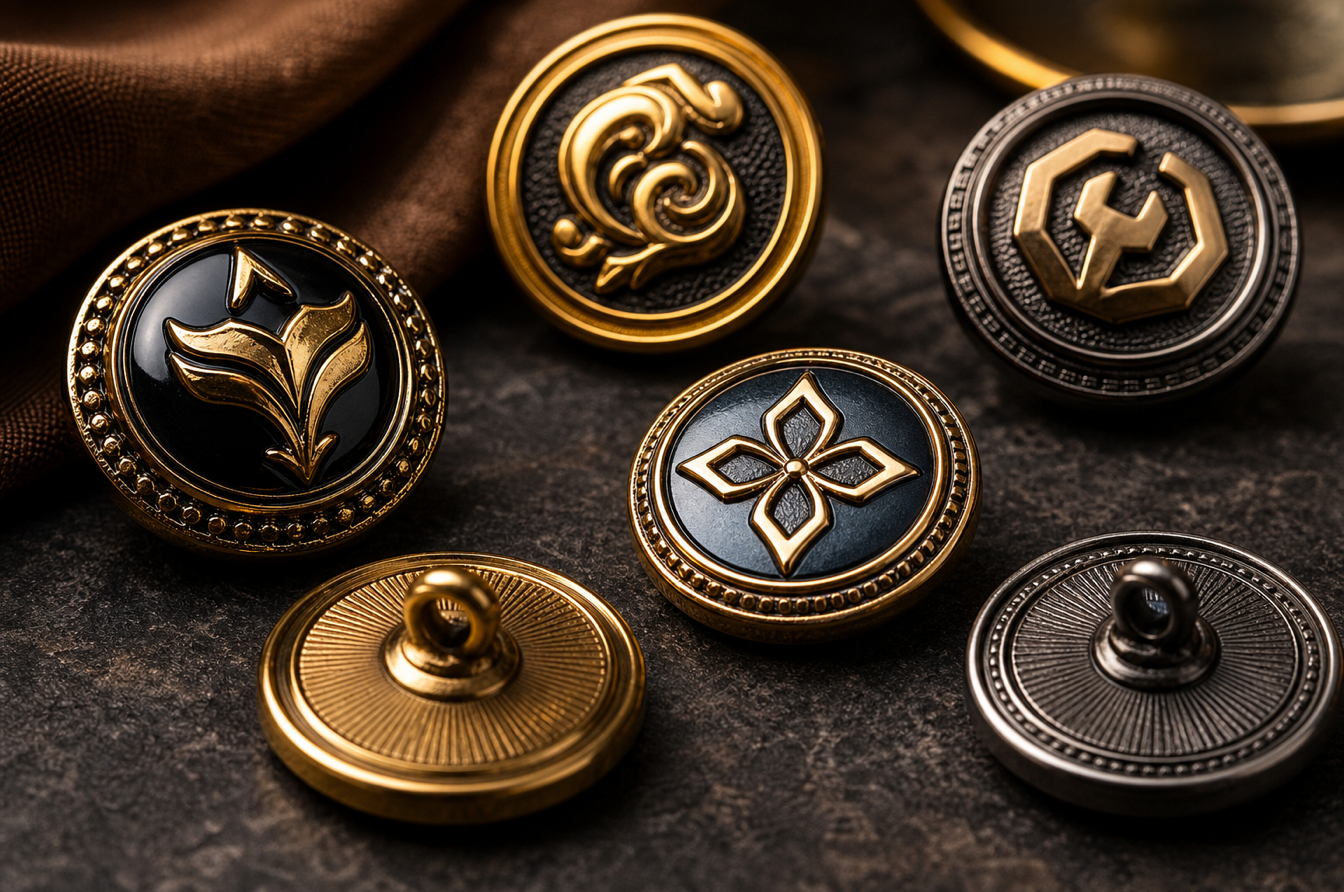
The other beauty of a shank button is what the front does not show. Because the sewing path sits behind the button, the visible face can remain uninterrupted. This gives designers a full surface for logo embossing, debossing, 3D carving, enamel color, stone-like inlay, brushed metal texture, or sculptural relief. On a premium coat button, that surface can become a small brand stage.
I prefer to discuss the front surface and the back structure together. A deep relief logo may need thicker material. A polished metal dome may need a stable casting route. A resin button with an inlaid shell effect needs enough face thickness to avoid weak edges. A logo that looks elegant in CAD can become too shallow after polishing or too heavy after plating. The shank keeps the sewing function hidden, but it does not remove engineering responsibility. The best result is quiet: the customer sees a refined surface, while the garment maker sees a stable closure.
Which Shank Structures Work Best For Different Garments?
Two buttons may look similar from the front, but the shank can completely change strength, touch, and application risk.
Cast shanks give high structural strength, tunnel shanks hide function inside plastic or resin bodies, and flexible shanks improve softness for bridal and couture garments.
Cast Shanks Support Strength And Premium Weight
Cast shank buttons are common in metal buttons because the shank and the button body can be formed as one integrated structure. In zinc alloy or brass, this gives a strong connection between the loop and the button face. For outerwear, uniforms, military inspired garments, luxury blazers, and leather pieces, that integrated structure matters. The button may be large, heavy, and exposed to strong pulling forces, so the shank cannot be a weak afterthought.
When I review a cast shank sample, I check more than the front design. I look at the shank thickness, the loop opening, the casting line, the polishing quality inside the loop, and the transition point where the shank meets the button body. Sharp internal corners can concentrate stress. Poor polishing can cut thread. A shank opening that is too narrow can force the sewing factory to use thinner thread than the garment needs. The best cast shank feels solid, but it also gives the sewing team enough room to attach it cleanly.
| Shank Type | Main Strength | Key Watchpoint |
|---|---|---|
| Cast shank | Integrated strength and premium metal feel | Avoid brittle corners and rough loop edges |
| Tunnel shank | Hidden sewing path and low profile | Keep wall thickness stable |
| Flexible shank | Soft touch and fabric harmony | Control sewing security and aging |
| Wire shank | Light structure for some decorative uses | Check deformation under pull |
Tunnel And Flexible Shanks Solve Softer Design Problems
Tunnel shanks are often used in plastic, resin, or some molded button structures. The sewing channel runs through the back of the button, while the front surface remains clean. This can be useful when the designer wants the benefit of a shank but does not want a visible loop or a heavy metal feeling. On thinner garments, a tunnel shank can sit closer to the fabric and feel less bulky. It can also help when the button face needs a clean logo or a soft rounded form.
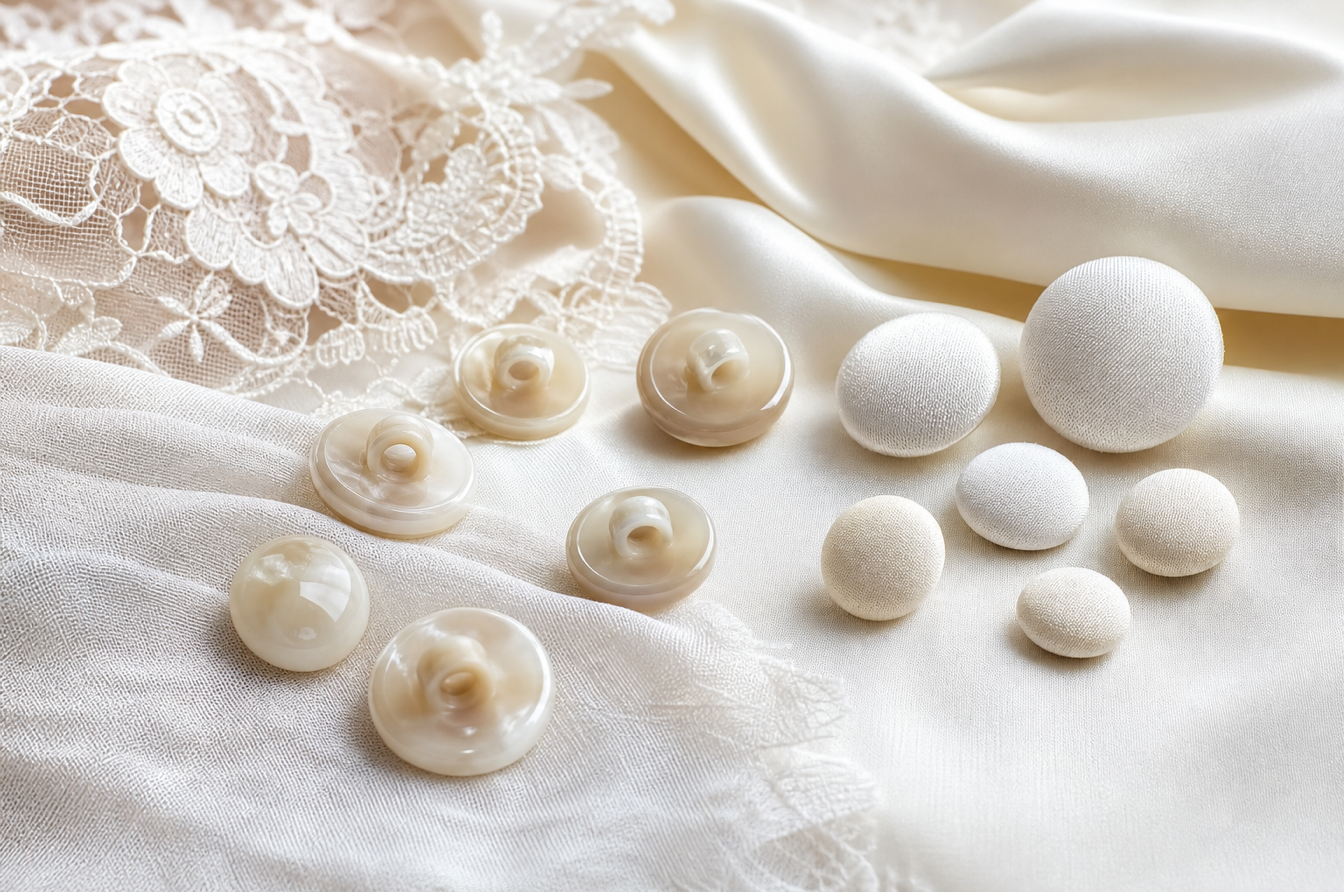
Flexible shanks are different. They are often made with fabric, thread, cord, or a soft loop construction. I see them in bridalwear, eveningwear, couture details, and delicate garments where touch matters as much as strength. A fabric-covered button with a flexible shank can blend into the garment visually and physically. It does not feel cold or hard, and it can move with the fabric. But flexibility should not mean casual control. The loop material, stitch density, knot security, and dry-cleaning behavior still need testing. A soft shank that loosens after cleaning can damage the whole premium impression.
How Do Materials And Surface Finishes Shape Performance?
The front face may sell the design, but base material and finishing decide whether the button survives bulk use.
Zinc alloy, brass, ABS, bio-based plastics, recycled metals, enamel, plating, antique finishes, and PVD each create different weight, precision, durability, and compliance profiles.
Zinc Alloy And Brass Need Different Sourcing Logic
Zinc alloy is often attractive for custom shank buttons because it supports complex shapes, detailed molds, and efficient production. It can capture raised logos, sculptural relief, and decorative contours well. It also gives a satisfying weight at a practical cost. For many fashion brands, zinc alloy is a strong choice when the design needs detail and the order needs commercial balance.
Brass has a different character. It usually feels warmer, denser, and more traditional in premium hardware. It can be excellent for luxury tailoring, heritage outerwear, naval inspired buttons, and long-life garments. But brass is not only a mood. It also requires careful control of material cost, machining or stamping route, and finishing compatibility. If the button will face dry cleaning, humidity, sweat, or garment washing, the protective finish must be specified clearly.
I do not choose between zinc alloy and brass by saying one is simply better. I ask what the garment needs. Does the brand want high mold detail? Does it need a heavy hand feel? Will the button pass through industrial washing? Is the price point luxury, contemporary, or volume fashion? These questions make the material decision practical.
| Material | Best Use | Sourcing Concern |
|---|---|---|
| Zinc alloy | Detailed custom shapes and decorative relief | Plating quality and casting consistency |
| Brass | Premium heritage feel and durable metal identity | Cost, finish protection, and oxidation control |
| ABS | Lightweight buttons for knitwear and softer garments | Heat and chemical resistance |
| Bio-composite | Sustainability story and new texture | Strength, aging, and claim documentation |
Finishing Is The Alchemy Of The Button
Surface finishing can make the same button feel cheap, technical, vintage, ceremonial, or luxurious. Electroplating is still one of the most common routes for metal shank buttons, but the specification should go deeper than color. I like to discuss nickel-free plating when skin contact or buyer policy requires it, anti-oxidation treatment for long shelf life, and corrosion checks such as salt spray testing when the garment may face moisture, coastal markets, or high humidity.
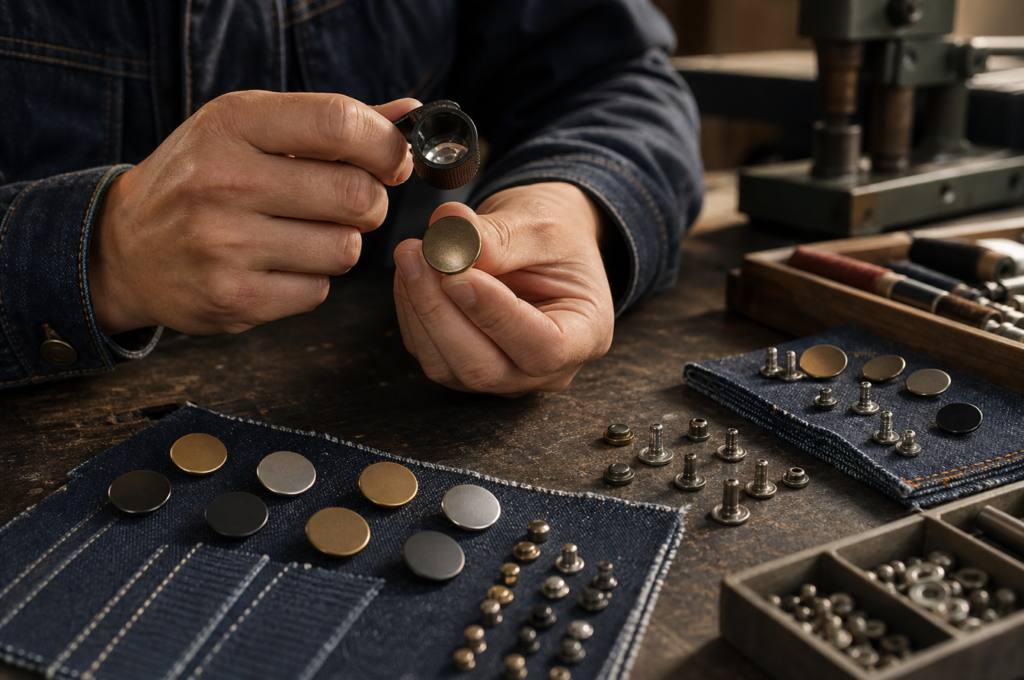
Antique finishes can give a vintage look, but they must be controlled. Too much darkening can hide the logo. Too little can look unfinished. Enamel can bring color and brand identity, but the filled area must resist chipping and cleaning chemicals. PVD can create hard, refined metallic tones with better wear resistance in some applications, but it needs the right base surface and process control. For sustainable development, I also see more interest in recycled metal, bio-based plastics, coffee-ground composites, shell powder composites, and other bio-filled materials. I welcome these options, but I test them with the same seriousness as conventional materials. A sustainable button still has to hold, wash, age, and ship well.
How Should Shank Buttons Be Engineered For Each Application?
Many button failures happen because the button is beautiful alone but poorly matched to the garment structure.
Large coat buttons need reinforced sewing, knitwear needs light weight and controlled shank height, and formalwear often needs fabric-covered harmony rather than visual contrast.
Outerwear Buttons Need Load Planning
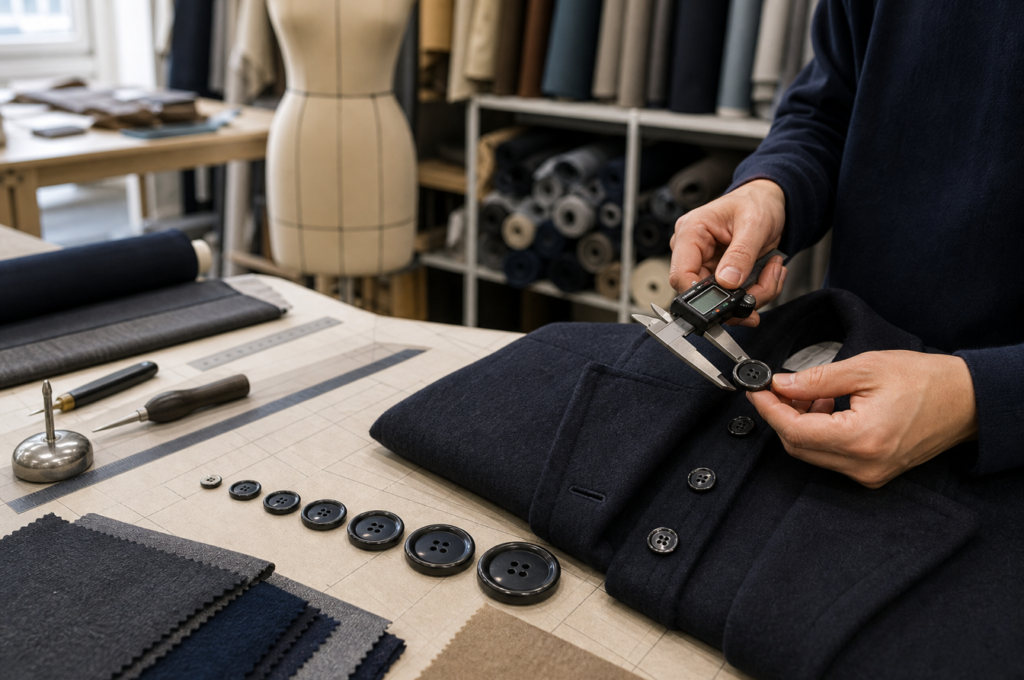
Large shank buttons from 25 mm to 30 mm are common on coats, capes, leather jackets, and heavy cardigans. These buttons can look powerful, but their size increases leverage. When the wearer pulls the front open, the force does not only act on the button face. It travels through the shank, thread, fabric, and inner structure. If the garment factory attaches a large shank button without reinforcement, the fabric can tear, stretch, or form a visible pucker.
For heavy outerwear, I often recommend a backing button or stay button on the inside. This spreads the force across a larger area and protects the outer fabric. The sewing thread should match the load, not only the color. Stitch count, thread type, button position, and inner fusing all matter. On leather, pre-punching or controlled needle selection may be needed to avoid unnecessary damage. On thick wool, the sewing tension should be firm but not so tight that it crushes the fabric pile. A good button application is a small load-bearing system.
| Application | Recommended Button Logic | Production Check |
|---|---|---|
| Wool coat | 25-30 mm metal or resin shank with backing button | Pull test after sewing |
| Leather jacket | Strong shank with reinforced attachment point | Check creasing and needle damage |
| Structured blazer | Medium height shank with clean alignment | Check front panel balance |
| Uniform outerwear | Corrosion-resistant finish and strong sewing | Wash and wear simulation |
Knitwear And Formalwear Need Gentler Decisions
Knitwear creates a different challenge. The fabric is elastic, so a heavy button can pull the garment downward or distort the placket. In this case, I often consider lightweight ABS, resin with reduced thickness, or a smaller metal button with careful backing. Shank height should not be too high if it makes the button swing or catch. The goal is to give enough space for closure without adding unnecessary weight.
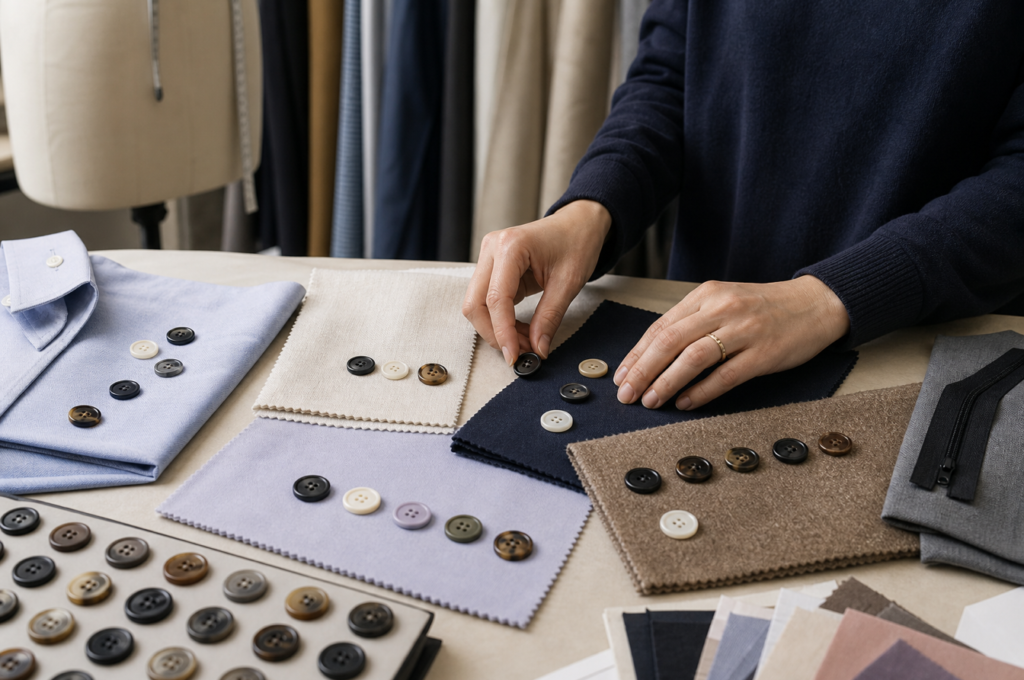
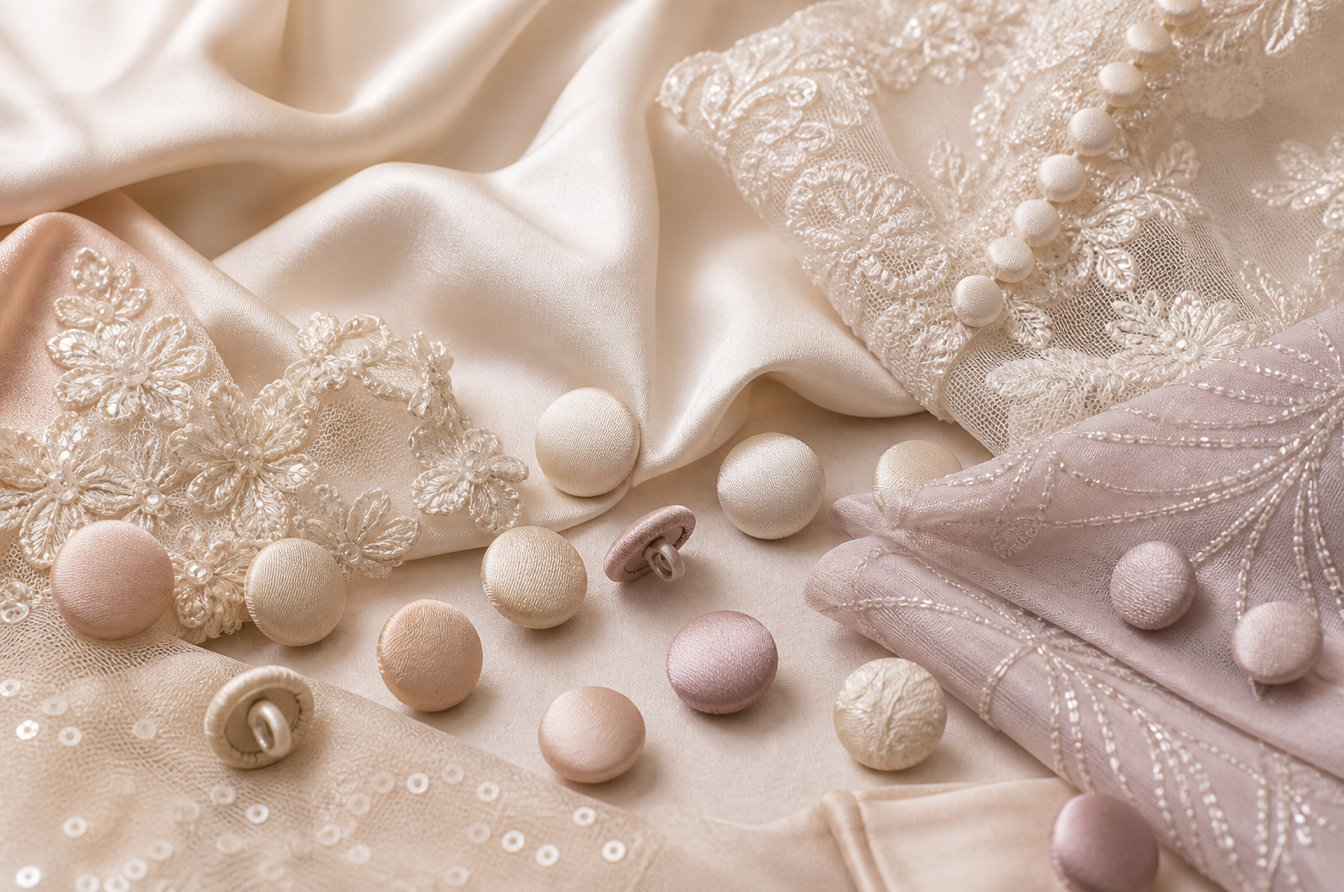
For lightweight woven fabrics, silk blends, bridalwear, and eveningwear, the question becomes touch and visual integration. Fabric-covered shank buttons are useful because they let the closure blend into the garment surface. The fabric cover can match the dress, the satin, the lace, or the suiting cloth. But the construction must be clean. The cover should not wrinkle, the edges should not fray, and the shank should not twist after cleaning. When the garment is expensive, a small uneven button becomes very visible. I prefer to test fabric-covered buttons on the actual garment material before approving bulk, because thickness, stretch, and sheen can change the result.
What Sourcing Controls And Future Trends Should Buyers Watch?
Premium buttons need more than a good sample, because bulk production can fail through strength, color, chemistry, or unclear claims.
Pull testing, wash and dry-cleaning checks, batch matching, restricted substance control, 3D prototyping, and brand storytelling protect both product quality and market trust.
Testing And Compliance Should Start Before Bulk
For shank buttons, pull testing is essential because the shank is the structural bridge between the button and the garment. I want to know whether the shank will separate from the body, whether the sewing loop will deform, and whether the garment attachment can hold under real use. The test should reflect the actual garment. A button tested loose on a lab fixture is useful, but a button tested after sewing on the target fabric tells a more complete story.
Wash and dry-cleaning resistance should also be planned early. A metal finish may look excellent before cleaning and dull afterward. A resin tunnel shank may hold shape in normal laundry but react differently in industrial garment washing. Enamel may chip if the surface preparation is poor. Fabric-covered buttons may shrink or wrinkle after cleaning. I prefer to test the button, the sewing method, and the garment care route together.
Compliance is part of the same conversation. Buyers selling across global markets often ask for OEKO-TEX related documentation, REACH awareness, nickel release control, lead and cadmium restrictions, and internal restricted substance lists. The exact requirement depends on product type, market, buyer policy, and skin contact level. I do not treat this as paperwork after production. It should influence plating, paint, alloy, dye, coating, adhesive, and recycled material selection from the start.
| Control Point | Why It Matters | Practical Action |
|---|---|---|
| Pull test | Confirms shank and attachment strength | Test on actual fabric construction |
| Wash and dry-cleaning test | Checks finish and material stability | Match the real care label |
| Batch matching | Reduces color and plating variation | Review shade under controlled light |
| Restricted substance control | Supports export readiness | Confirm buyer RSL and test reports |
| Claim documentation | Protects sustainable material credibility | Keep recycled or bio-based records |
Digital Sampling Turns A Button Into Brand Storytelling
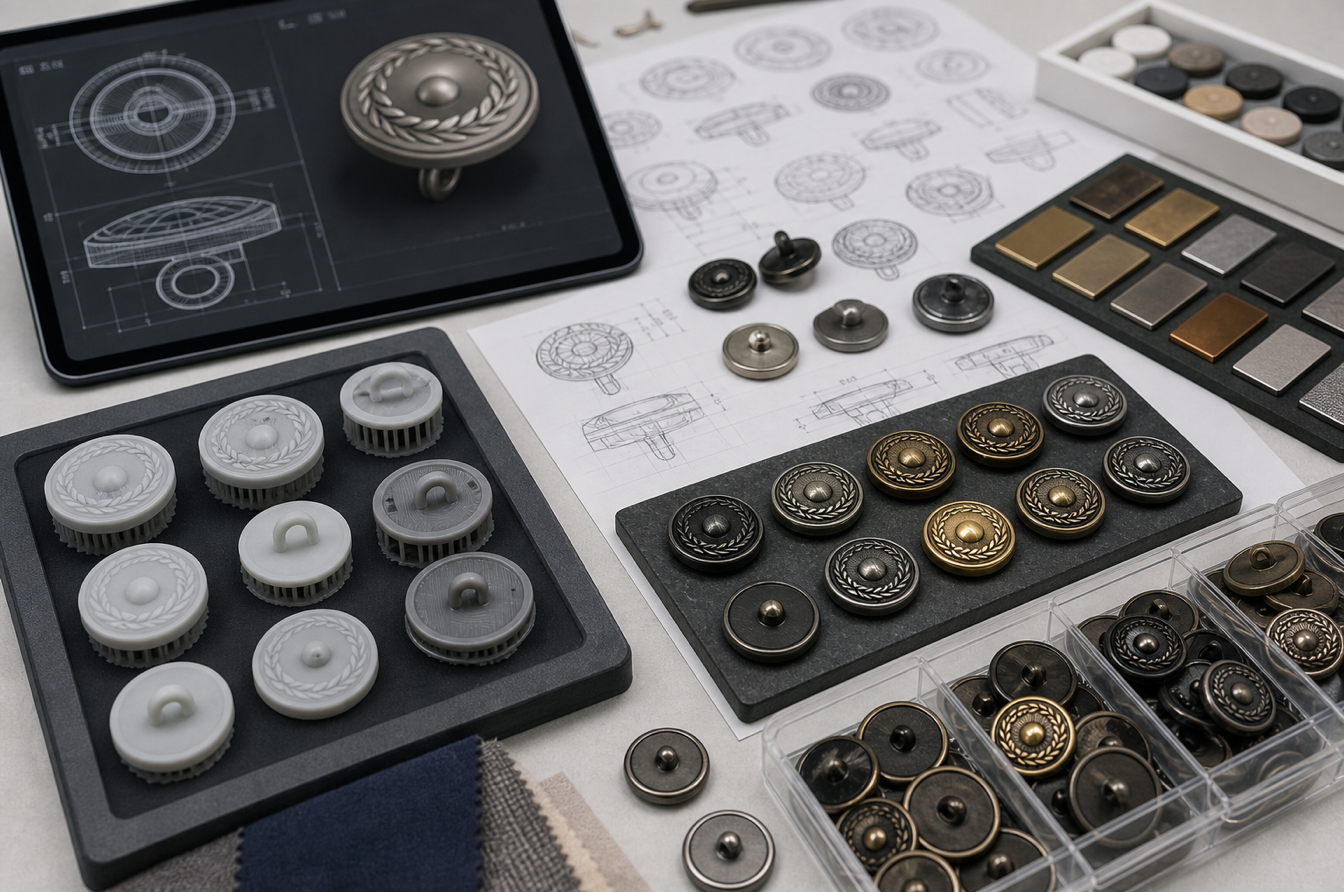
3D printing is changing the early stage of shank button development. It allows a design team to review shape, scale, logo position, and shank clearance before committing to a mold. A printed prototype will not always match final metal or resin performance, but it can prevent expensive mistakes. I like using it for large coat buttons, sculpted logos, curved surfaces, and unusual shank geometry. It shortens the conversation between design, supplier, and factory.
Digital design also supports brand storytelling. A shank button can carry a micro version of the brand language: a raised crest, a debossed monogram, a brushed surface, a colored enamel ring, or a material story based on recycled metal or bio-composite content. This is not decoration for its own sake. The button is touched every time the wearer closes the garment. That repeated contact gives the brand a quiet, physical memory.
The future of shank buttons will not be only about new materials or new machines. It will be about better connection between design intent, engineering structure, responsible sourcing, and bulk reliability. When these parts work together, the button is no longer a small accessory. It becomes a precise design decision that protects the garment and strengthens the brand.
Conclusion
A strong shank button gives premium garments space, structure, beauty, and sourcing confidence through better design, testing, material control, and brand detail.