- Loading...
A gold sample can look perfect and still become the wrong production choice when its finish name replaces a complete technical specification.
I do not treat 18K and 24K as color names alone. They may describe gold purity or a target tone, while performance depends on the substrate, preparation, coating method, layer structure, thickness, topcoat, and intended application.
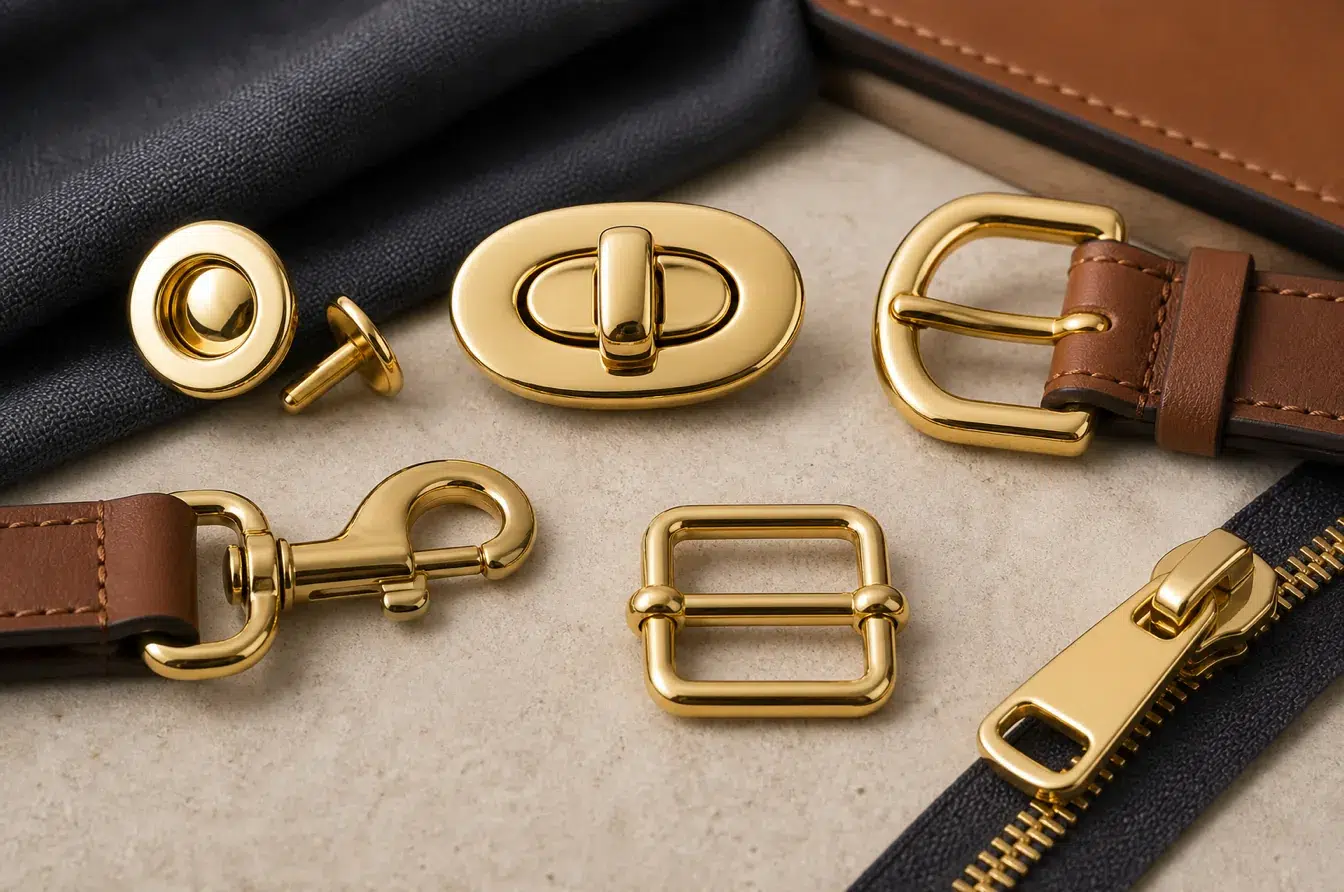
The short answer is no. Color is the most obvious difference, but it is only one part of the decision. For custom hardware used on clothing, bags, shoes, pet products, and swimwear, the same “18K gold” or “24K gold” description can hide very different materials and production routes. A useful specification must separate appearance, precious-metal content, base material, coating process, protective structure, and performance requirements.
What Do “18K Gold” and “24K Gold” Mean in Fashion Hardware Finishing?
The first risk appears before production starts: the same karat term can describe different technical and commercial meanings across suppliers.
When real gold is involved, 18K contains 75% gold and 24K is essentially pure gold. On fashion hardware, however, these labels may identify a deposited gold alloy, a PVD color, or a visual reference rather than the composition of the complete part.
Separate Gold Purity From the Hardware Material
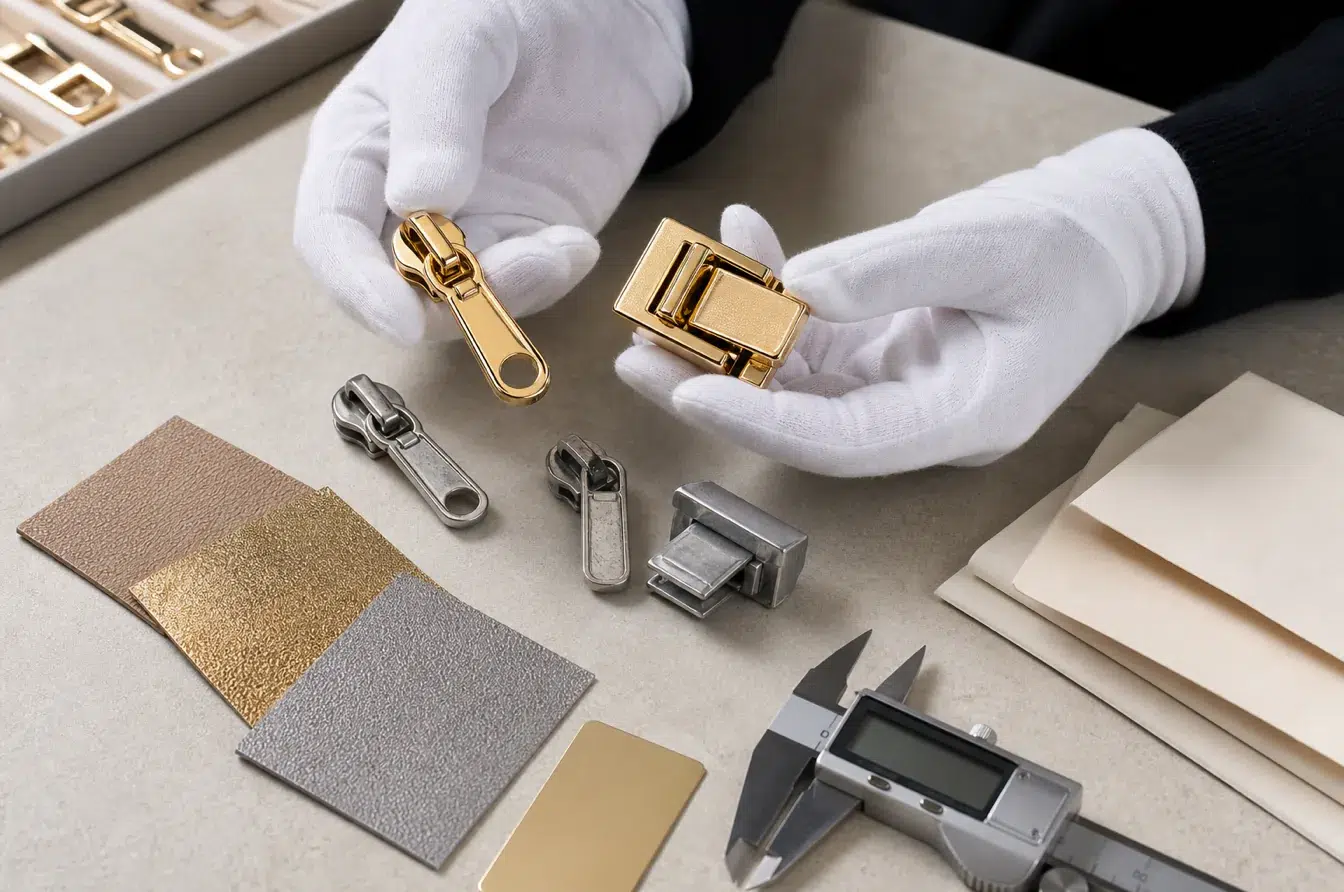
Karat describes the proportion of gold in a gold alloy. An 18K alloy contains 75% gold and 25% other metals, while 24K represents nearly pure gold. These figures apply to the gold alloy itself. They do not mean that a buckle, logo plate, zipper pull, clasp, or D-ring is made from solid 18K or 24K gold.
Most custom fashion hardware begins with a structural base such as zinc alloy, brass, or stainless steel. A decorative surface is then created through electroplating, PVD, another vacuum process, lacquer, e-coating, or a combined layer system. If genuine gold alloy is deposited over the base, the karat value can describe that deposited material. If a supplier uses “18K gold color” or “24K gold color,” the term may instead identify the target shade. Some gold-colored PVD systems use hard compounds that resemble gold but contain little or no precious gold. The process declaration must therefore state what is actually deposited.
This distinction also affects product wording. When genuine gold is present, production records should support the stated purity, deposited layer, and coating structure. “18K gold plated,” “18K gold color,” and “18K PVD” should not be treated as interchangeable descriptions because each phrase can indicate a different material, process, cost, and expected surface behavior.
Convert the Finish Name Into a Complete Declaration
A finish code should answer several questions before it enters a drawing, RFQ, purchase order, or approval sheet. The base metal needs an exact material description. The surface process needs to identify electroplating, PVD, ion plating, or another route. The layer structure should include pretreatment, barrier layers, decorative layers, and any clear protective treatment. When genuine gold is specified, the gold-alloy purity and minimum thickness require documentation. When color only is required, the approved master sample and finish code become the controlling references.
This approach prevents a common quotation problem. Two factories may both quote “18K gold,” but one may provide a thin decorative electroplate over zinc alloy while another provides a hard gold-colored PVD coating over stainless steel. The loose parts can look similar under showroom lighting, yet their cost, wear behavior, corrosion response, touch, weight, and labeling position are different. A comparable quotation needs the same substrate, same surface texture, same coating definition, and same test plan.
| Term in a quotation | Possible meaning | Required clarification |
|---|---|---|
| 18K gold plated | Genuine 18K gold alloy deposited over a base metal | Base metal, process, gold purity, thickness, underlayers, and topcoat |
| 24K gold plated | High-purity gold deposited over a base metal | Base metal, process, thickness, porosity control, wear requirement, and protection |
| 18K or 24K gold color | Visual shade associated with a karat-gold appearance | Physical master, color tolerance, gloss, texture, substrate, and coating chemistry |
| Gold PVD | Vacuum-deposited gold or a gold-colored hard coating | Target composition, layer stack, substrate preparation, thickness, and test method |
How Do 18K and 24K Gold Finishes Differ in Color, Brightness, and Tone?
Color differences are real, but a karat number cannot predict the final appearance without the alloy recipe and the complete surface construction.
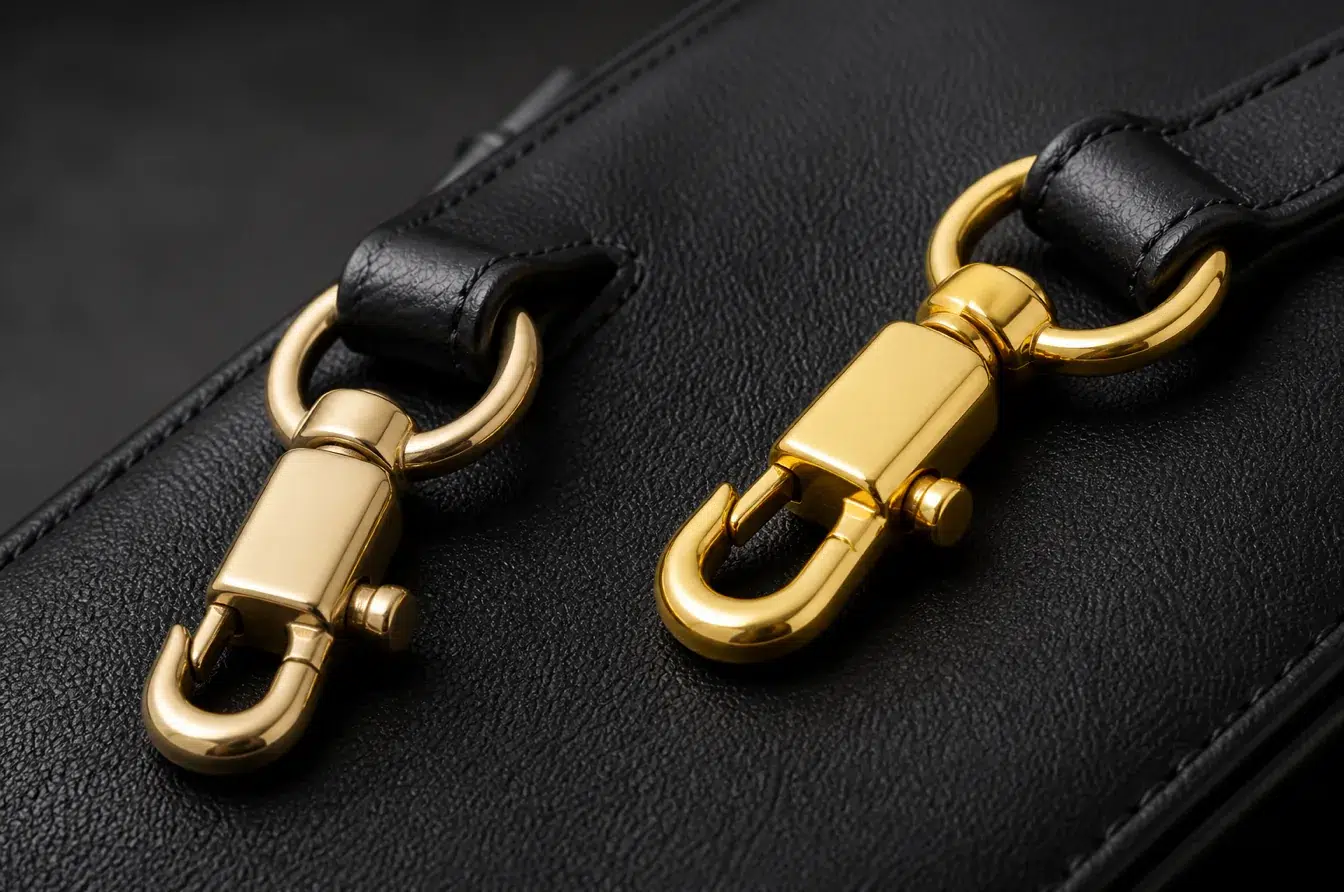
Comparable real-gold deposits often make 24K appear richer and more saturated yellow, while 18K can look warmer, paler, rosier, or more neutral. Alloy chemistry, polish, texture, underlayers, coating thickness, topcoat, and lighting can change that result.
Understand Why One Karat Can Produce Several Shades
Pure gold has a strong yellow appearance. An 18K alloy contains other metals, and those additions can change both hardness and color. Silver-rich formulations may appear lighter or greener, while copper-rich formulations can move toward a warmer or redder direction. The label “18K” therefore defines a gold proportion when real gold is present, but it does not define one universal yellow. Two 18K deposits from different chemistry systems can have different hue, brightness, and saturation.
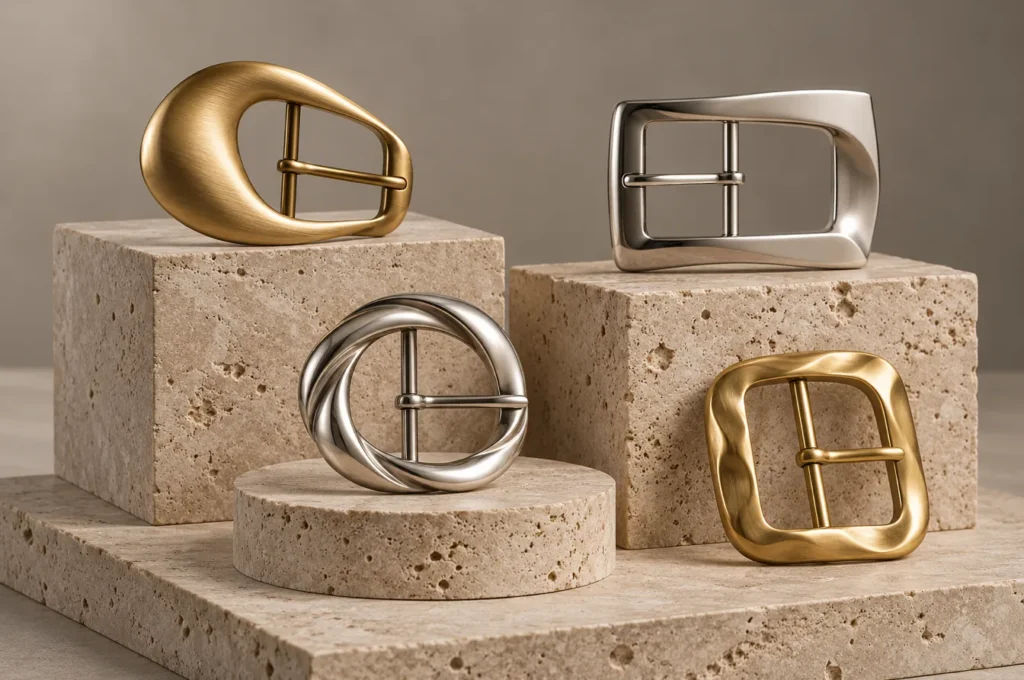
The same issue appears with 24K finishes. A real high-purity gold deposit has a recognizable rich yellow, but the perceived result still depends on the surface beneath it. A mirror-polished part reflects strong highlights and surrounding colors. A satin or brushed part scatters light and appears softer. A bead-blasted texture can reduce brightness even when the deposited material is unchanged. Thin decorative layers may also allow the optical character of the underlayer and the quality of polishing to influence the final result.
Some PVD constructions combine a hard gold-colored underlayer with a thin genuine-gold flash. This structure demonstrates why the visible surface cannot be reduced to karat alone. The hard layer contributes color support and wear performance, while the gold flash adjusts the precious-metal surface and visual effect. Different layer recipes can therefore target a similar shade while producing different cost and durability profiles.
Match the Color on the Intended Substrate and Texture
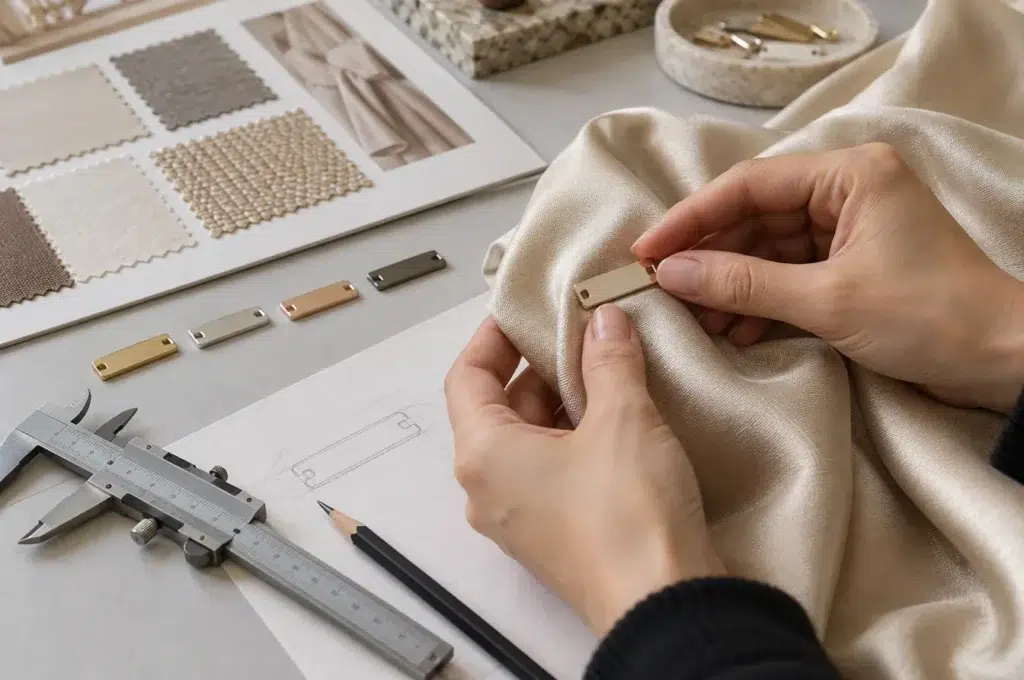
Color approval should use production-intent samples rather than photographs, digital renderings, supplier names, or isolated color chips. A physical master needs the correct substrate, geometry, polishing direction, gloss, and coating system. A flat brass chip with a bright polish is not a reliable approval reference for a curved zinc-alloy buckle with satin texture or a brushed stainless-steel clasp with PVD.
Lighting also changes the judgment. Warm retail lighting can make a pale gold appear richer, while cool daylight can reveal green or gray undertones. Highly reflective parts pick up nearby leather, fabric, skin, and packaging colors. A coordinated hardware set should therefore be reviewed under agreed lighting and beside the actual product materials. The evaluation should cover both face-on appearance and oblique angles because curved and brushed surfaces can shift visually as the observation angle changes.
For collections that mix zinc alloy, brass, and stainless steel, an exact optical match may require different coating recipes on each substrate. The approved target should focus on the assembled product rather than forcing identical process settings. The specification can record a master sample, instrumentally measured color values when available, gloss range, brushing direction, acceptable edge variation, and defined visual-critical areas. This creates a repeatable target without pretending that “18K gold” already contains all of that information.
| Appearance variable | Possible effect | Approval control |
|---|---|---|
| Gold-alloy composition | Changes yellow, pale, warm, green, or red undertones | Supplier composition declaration and approved sample |
| Surface texture | Changes reflection, brightness, and apparent saturation | Defined polish, brushing, blasting, or satin finish |
| Underlayer and coating stack | Influences leveling, reflectivity, color support, and aging | Complete layer record on the intended substrate |
| Lighting and viewing angle | Changes perceived warmth and contrast | Agreed light source, viewing method, and assembled-product review |
How Do Zinc Alloy, Brass, and Stainless Steel Affect Gold-Finish Appearance and Durability?
The gold tone controls first-day appearance, but the substrate strongly influences manufacturing, coating preparation, failure mode, and long-term product behavior.
Zinc alloy supports complex cast forms, brass offers premium weight and broad decorative finishing, and stainless steel provides a corrosion-resistant foundation. None is universally best; each needs a finish system matched to geometry, wear, moisture, contact, and expected aging.

Compare the Substrate Before Comparing the Gold Tone
Zinc alloy is valuable for detailed pressure die casting. Logos, recessed textures, attachment posts, sculpted profiles, and multiple functions can be integrated into one part. The surface still requires careful casting control, deburring, polishing, cleaning, and undercoating before a bright decorative finish is applied. Porosity, weak leveling, sharp edges, poor rack placement, or insufficient barrier protection can lead to blistering, pitting, dull areas, peeling, or early corrosion. Calling the top layer 24K does not correct a weak casting or pretreatment system.
Brass is a copper-zinc alloy with useful weight, machining and forming options, and a familiar premium feel. It can support electroplated gold, lacquered natural brass, antique treatments, and other decorative systems. A suitable barrier layer is important when a thin gold deposit must remain stable because copper from the substrate can influence discoloration and corrosion behavior after the surface becomes porous or worn. The finish specification should also state whether natural patina is acceptable or whether the part must retain a controlled bright-gold appearance.
Stainless steel provides a stronger corrosion-resistant base for demanding applications, but coating adhesion is not automatic. Electroplating requires appropriate cleaning and activation of the passive surface. PVD also depends on controlled polishing, cleanliness, fixture design, and deposition conditions. A thin PVD film preserves the texture beneath it, so scratches, weld discoloration, tool marks, or uneven brushing remain visible. These effects show why substrate condition and finish construction must be evaluated together, while decorative appearance and protective performance remain separate approval points.
Select the Material at Component Level
One gold-finish system rarely suits every component across clothing, bags, shoes, pet accessories, and swimwear. A garment logo plate may need detailed casting, low weight, smooth edges, and color stability but carry little structural load. Zinc alloy can be efficient for that role when the coating system matches washing, perspiration, and fabric-contact requirements. A premium bag clasp may favor brass for tactile weight and sculpted detail, while a frequently handled ring or hook may justify stainless steel when corrosion and repeated movement create higher risk.
Footwear trims can face flex, impact, dirt, sweat, rubbing, and pressure against other materials. Pet-product hardware may add repeated opening cycles, pull loads, outdoor moisture, and contact with cleaning products. Swimwear components can meet skin contact, wet-dry cycling, perspiration, salt, and pool-related exposure. These conditions do not automatically dictate one substrate, but they change the test plan and the value of inherent corrosion resistance.
A component-level strategy can mix materials inside one collection. Zinc alloy may deliver decorative volume, brass may define a signature touchpoint, and stainless steel may protect a high-wear or high-consequence function. The main challenge becomes visual coordination. Different materials may need different pretreatments and coating recipes to reach the same approved gold appearance. The complete hardware family should be reviewed together before release, then conditioned and rechecked when aging harmony matters.
| Base metal | Main design advantage | Main finish risk | Typical decision priority |
|---|---|---|---|
| Zinc alloy | Efficient complex die-cast shapes and integrated detail | Porosity, edge coverage, preparation, and dependence on protective layers | Decorative geometry, weight, cost, and controlled exposure |
| Brass | Premium feel, machining and forming flexibility, warm character | Tarnish, copper migration, barrier quality, and coating wear | Signature parts, rich detail, and acceptable aging behavior |
| Stainless steel | Strong corrosion-resistant foundation and clean functional forms | Surface activation, visible substrate defects, and coating shadowing | High handling, moisture, structural function, and long-term stability |
How Do Electroplating and PVD Change the Performance of 18K and 24K Gold Finishes?
Two samples can share a color target while their deposition processes create different layer structures, thickness options, coverage risks, and failure modes.
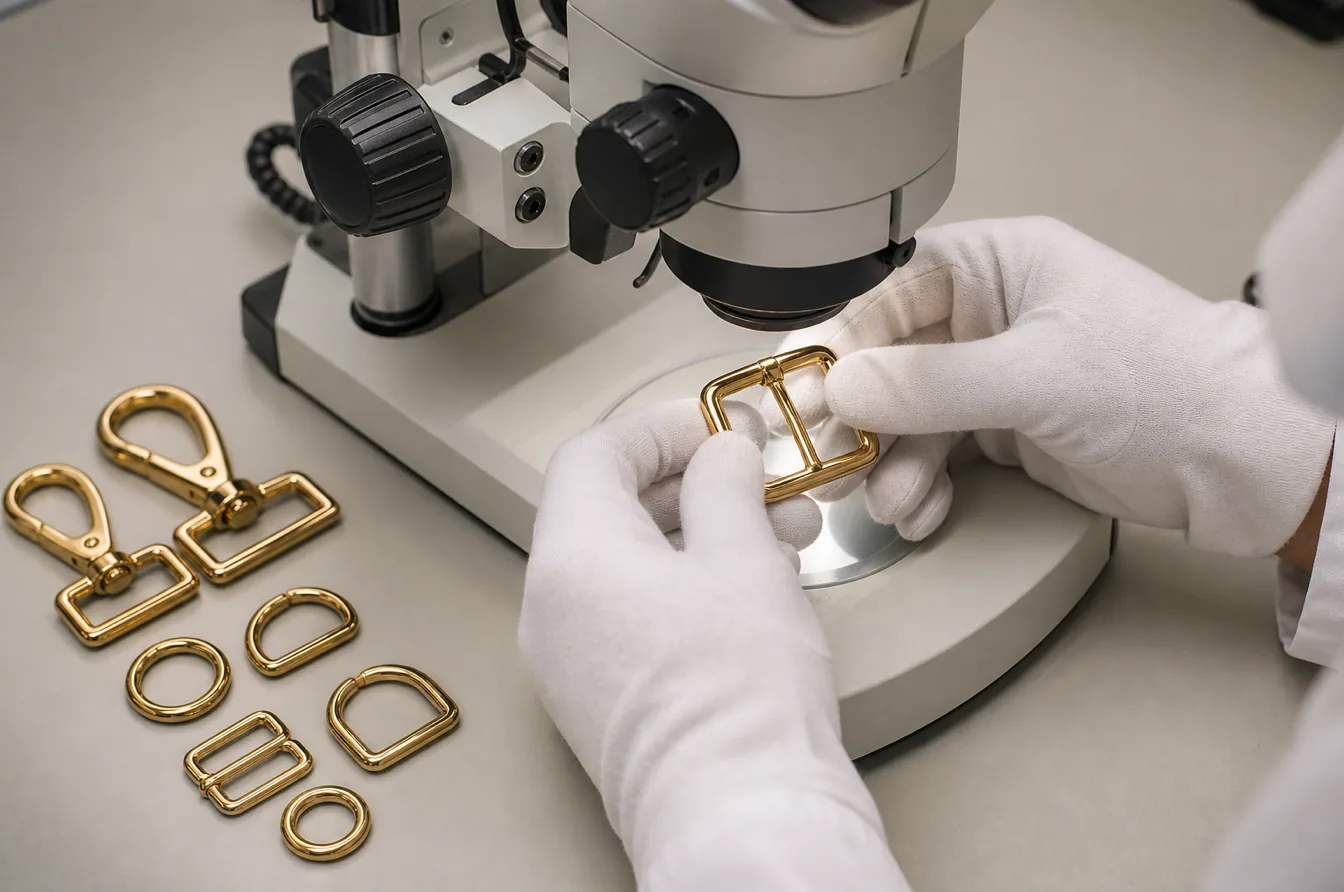
Electroplating can deposit genuine gold or gold alloy through a liquid electrochemical process. PVD deposits a thin film in a vacuum and may use real gold or a gold-colored hard compound. Process selection must follow the substrate, geometry, appearance, wear, and claim.
Compare Complete Coating Systems Rather Than Process Names
Electroplating builds metallic layers through controlled electrical deposition in liquid baths. A decorative gold-plated part can include cleaning and activation, a leveling or strike layer, a barrier layer, the final gold or gold-alloy deposit, and a protective topcoat. Layer choice depends on the substrate and the required color, brightness, corrosion behavior, precious-metal content, and skin-contact position. Electroplating can provide flexible precious-metal thickness, but current distribution can create variation at edges, recesses, holes, rack points, and complex contact areas.
PVD transfers coating material in a vacuum. Decorative systems may use titanium nitride, zirconium-based compounds, carbon-containing films, genuine gold flash, or multilayer combinations. Many of these films can offer high surface hardness and good wear behavior, especially on a stable stainless-steel base. The process remains sensitive to surface preparation and geometry. Deposition is directional, so deep recesses, undercuts, internal faces, and overlapping features can receive different coverage unless fixture rotation, chamber loading, and part orientation are engineered correctly.
Neither route should receive an automatic quality ranking. A well-controlled electroplated brass component can outperform a poorly prepared PVD-coated part. A properly engineered PVD system on stainless steel can provide a stronger starting point than a thin decorative electroplate on a porous zinc casting. The process name indicates how the coating is formed, but the substrate, layer structure, thickness, adhesion, defect control, and production discipline determine the usable result.
Define Durability Through Measurements and Relevant Tests
The statement “24K is better” confuses purity with performance. High-purity gold is soft, while an 18K gold alloy can be harder because other metals are present. A high-purity gold flash may need a harder supporting layer beneath it when scratch and wear resistance matter. A thin 24K deposit can therefore wear faster than a thicker or harder 18K system, while a poorly controlled 18K layer can still fail early. Karat cannot replace wear data.
Coating thickness must also be measured with a technique suitable for the layer and substrate. Depending on the construction, production teams may use non-destructive instrumental readings, calibrated comparison samples, or cross-sectional microscopy. Thickness numbers from different processes should not be compared without context because a thin hard PVD layer and a soft electroplated gold layer do not behave as equivalent materials.
The test plan should separate adhesion, abrasion, repeated operation, color change, corrosion, chemical exposure, and skin-contact surface behavior. Salt-spray testing can reveal pores and production discontinuities, but the result should be treated as a controlled comparison rather than a direct prediction of service life. For hardware with prolonged skin contact, the finished contact surface can also be evaluated for material release when relevant. A finish name alone cannot establish suitability.
| Performance question | Electroplating focus | PVD focus | Approval evidence |
|---|---|---|---|
| What creates the color? | Deposited gold, gold alloy, or another decorative metal | Gold, gold flash, or gold-colored hard compound | Composition and process declaration |
| What controls adhesion? | Cleaning, activation, strike, barrier layers, and current control | Cleaning, activation, surface condition, fixture design, and deposition recipe | Finished-part adhesion test |
| What controls wear? | Gold hardness, thickness, topcoat, contact pressure, and porosity | Film composition, hardness, adhesion, thickness, and edge geometry | Application-specific abrasion and operating cycles |
| What controls corrosion? | Substrate, underlayers, pores, thickness, and sealing | Substrate resistance, film defects, coverage, and exposed edges | Defined corrosion method with acceptance criteria |
How Should Gold-Finish Samples and Batch Color Consistency Be Approved Before Production?
A beautiful development sample has limited value unless its material, process, appearance, and acceptance limits can be repeated during bulk production.
Approval should combine a sealed physical master, complete finish specification, production-intent samples, controlled color evaluation, measurable coating records, and application-specific tests. Bulk inspection must compare the same substrate, texture, geometry, and process rather than relying on an “18K” or “24K” label.
Build a Traceable Sample-to-Bulk Approval Record
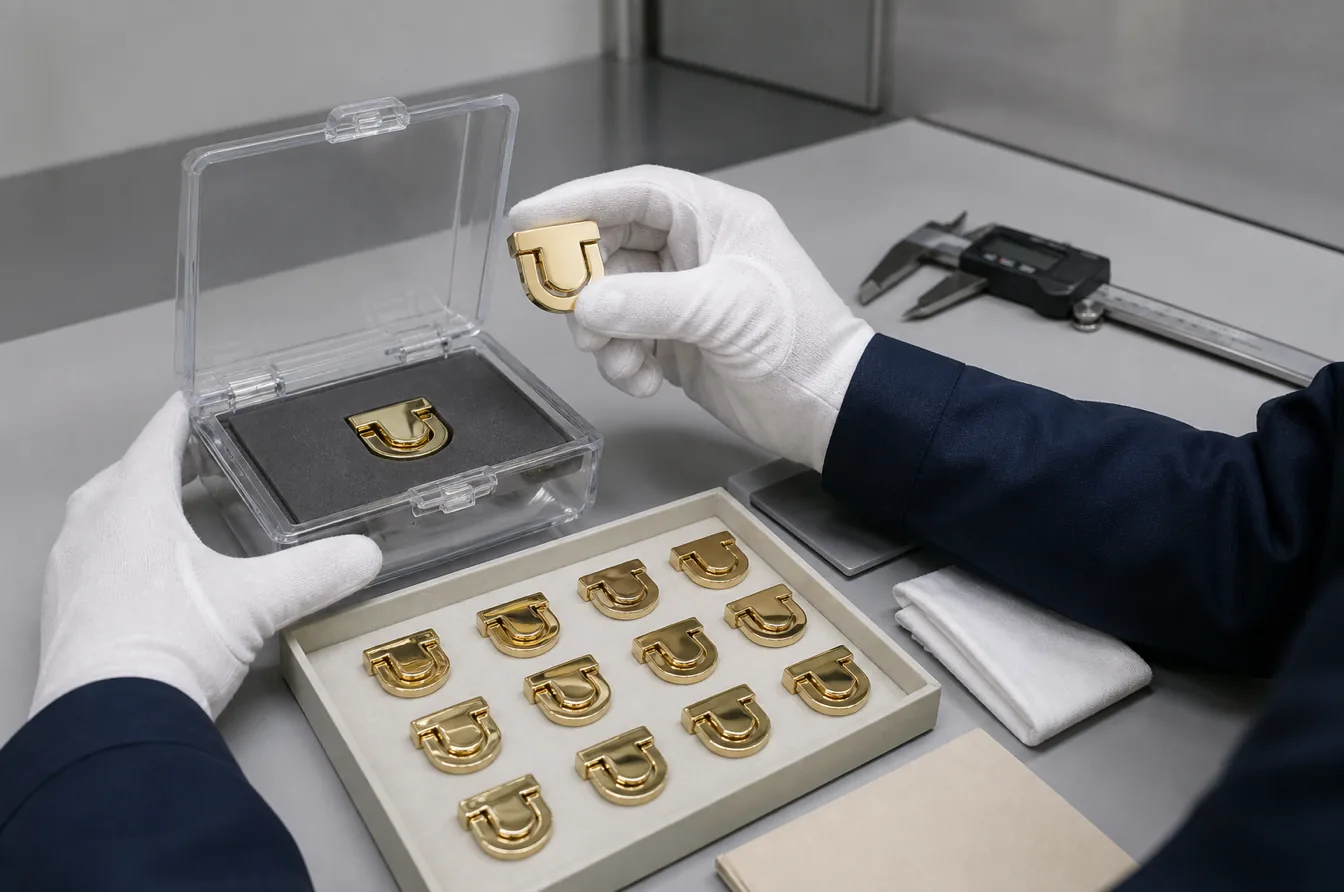
The approval chain should begin with a finish definition, not with a loose sample. The record needs the part number, drawing revision, exact substrate, manufacturing route, polishing or texture code, complete coating process, target color, critical visible faces, permitted rack points, and required protection. When genuine gold is claimed, the record should include gold purity and minimum deposited thickness. When the requirement is a gold tone, the process composition and approved visual reference still need clear identification.
A signed master sample should be made on the intended substrate and production geometry. Flat color chips are useful for early direction, but they cannot reveal edge brightness, cavity coverage, polishing waves, rack marks, welding effects, or movement between assembled parts. Pilot samples should use production tooling, fixtures, coating racks, chamber loading, and cleaning conditions as closely as practical. This connects approval to the process that will create the bulk order.
The master should remain protected from handling, cosmetics, humidity, and uncontrolled light exposure. A working comparison sample can be used on the inspection table while the sealed master remains the final reference. The approval record can include measured color values, gloss, brushing direction, surface roughness where relevant, and photographs taken under controlled conditions. Photographs support traceability, but they should not replace the physical sample because cameras, displays, and lighting alter metallic color.
Control Production Through Defined Tests and Inspection Limits
Bulk color consistency depends on more than the final bath or PVD recipe. Casting quality, substrate composition, polishing, cleaning, underlayers, rack density, electrical current distribution, target condition, chamber loading, temperature, deposition time, topcoat curing, and post-finish handling can all create variation. Inspection should therefore record the variables most likely to change the approved appearance and performance.
The sampling plan should define when incoming substrate checks, first-piece approval, in-process inspection, and final lot inspection occur. Visual assessment should cover the main face, edges, holes, recesses, contact points, and assembled appearance. Instrumental color measurement can support decisions on flat or repeatable surfaces, but small curved hardware may still require a carefully defined visual method. Acceptance limits should distinguish normal minor variation from defects such as patchiness, cloudiness, burning, pitting, exposed base metal, peeling, color mismatch, or inconsistent brushing.
Performance evidence should match the component. A garment trim may require perspiration, cleaning, fabric-staining, and attachment checks. Bag and pet hardware may need repeated operation, abrasion, joint, and load evaluation. Footwear and swimwear components may require wet exposure, salt-related conditioning, flex, impact, and skin-contact review. Salt-spray results should remain one controlled QC tool rather than a lifetime claim. The approved master, technical specification, test report, and retained bulk sample together form the production record.
| Approval stage | Required evidence | Main risk controlled |
|---|---|---|
| Finish definition | Substrate, process, layer stack, color target, texture, critical faces, and claim language | Ambiguous 18K or 24K terminology |
| Development sample | Correct material and representative geometry | Attractive but technically irrelevant color chip |
| Production-intent pilot | Real tooling, fixtures, racks, chamber conditions, and assembly | Sample-to-bulk process change |
| Bulk inspection | Controlled visual comparison, measurements, defect limits, and test records | Batch color drift, weak coverage, and inconsistent performance |
| Retained reference | Sealed master plus signed bulk sample and approval documents | Disputes, repeat-order drift, and unsupported quality decisions |
Conclusion
18K and 24K finishes differ beyond color, so reliable hardware depends on a complete specification covering material, process, layers, appearance, testing, and production control.