- Loading...
A beautiful sample can still become the wrong hardware choice when its base metal, finish system, geometry, and real use are evaluated separately.
I choose electroplated brass for decorative freedom and complex forms, while PVD-coated stainless steel is better for demanding wear and corrosion resistance. The better option depends on the complete component, not the finish name alone.
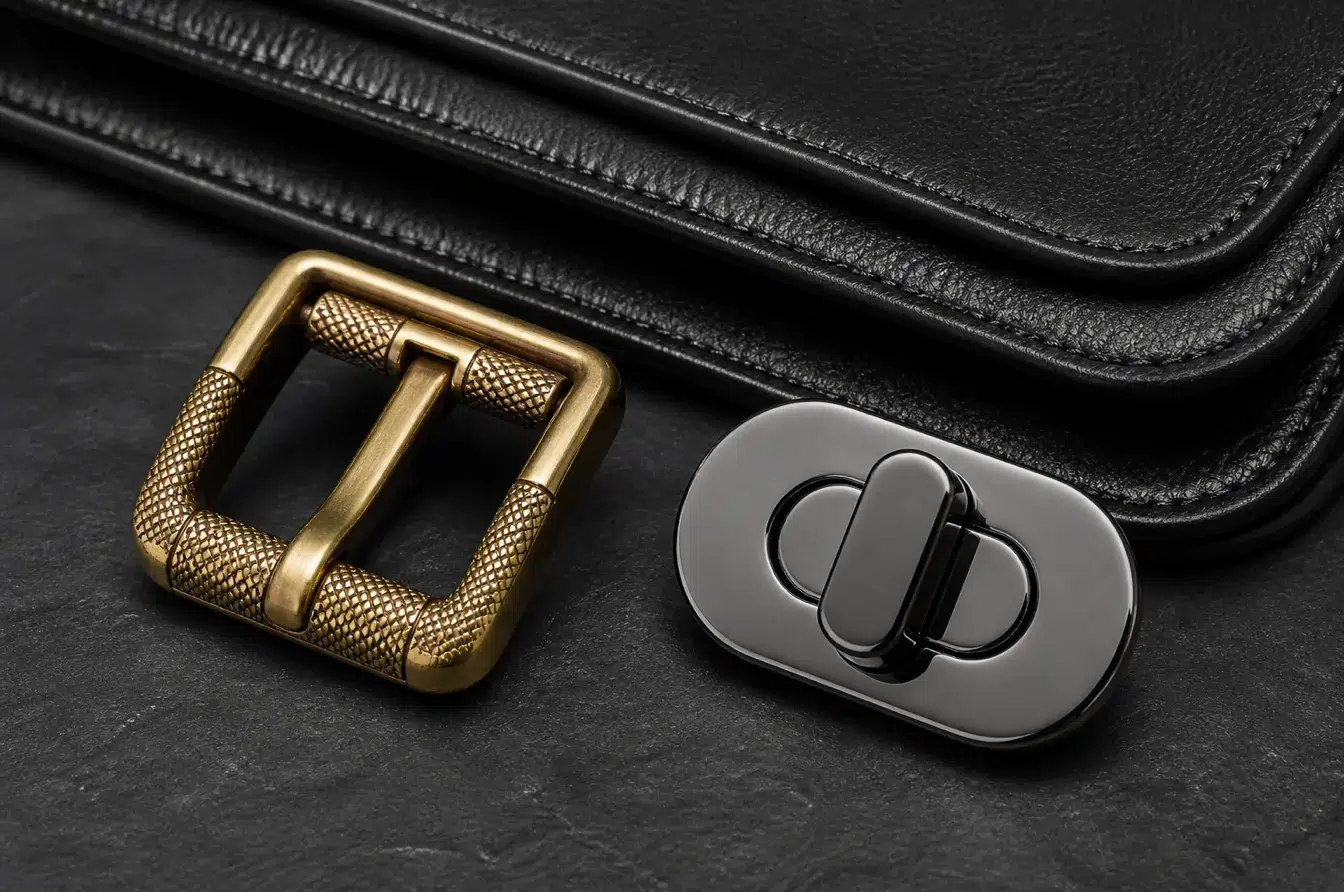
Developing custom hardware for apparel, bags, footwear, jewelry, or related fashion products requires comparing two complete engineered systems. One combines brass with electroplated layers. The other combines a selected stainless-steel grade, prepared surface, adhesion system, and PVD topcoat. That distinction keeps the decision practical and prevents attractive marketing terms from replacing a real specification.
What Are the Key Differences Between Electroplated Brass and PVD-Coated Stainless Steel?
The visible color may look similar, but the materials, deposition processes, manufacturing routes, and typical failure modes are fundamentally different.
Electroplated brass offers a workable decorative substrate with flexible metallic finishes. PVD-coated stainless steel combines a corrosion-resistant base with a thin vacuum-deposited film. The full construction matters because the substrate and coating work together.
Compare the Complete Material and Finish Systems
The base metal comes first because it remains responsible for the component’s structure after the visible finish is applied. Brass is a family of copper-zinc alloys, and the selected grade affects machining, forming, casting, polishing, electrical preparation, and corrosion behavior. It is widely used for decorative hardware because it can support detailed shapes, warm visual character, and many established electroplated colors. The electroplated result may include several functional layers rather than one simple color deposit. Cleaning, activation, leveling layers, barrier layers, decorative metal, and a final protective treatment can all affect the outcome.
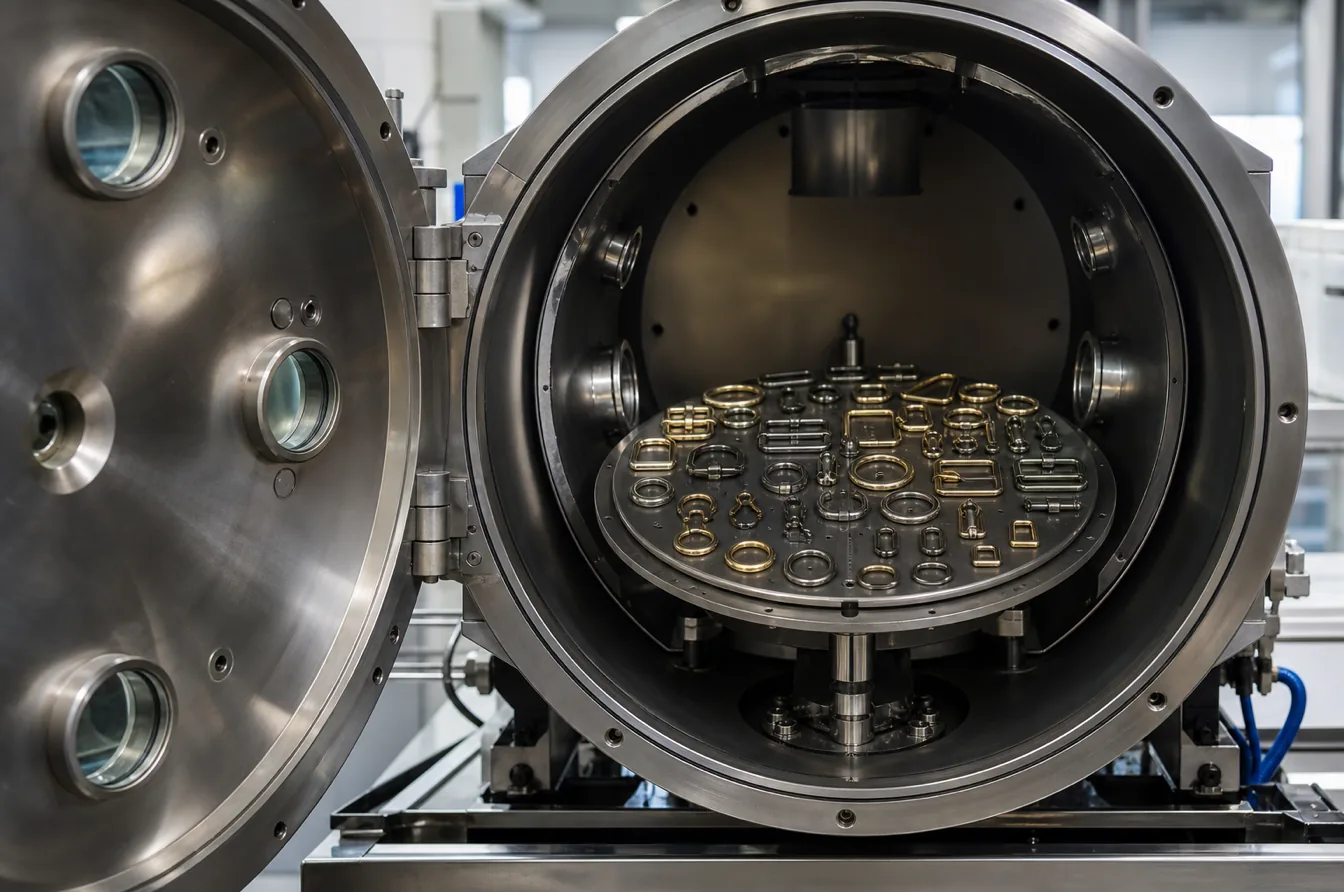
For the PVD option, the specification must also cover more than the top color. Stainless steel provides the structural substrate, but its grade, manufacturing condition, polishing, roughness, and cleanliness influence the final performance. The PVD film is deposited in a vacuum and may include an adhesion layer followed by one or more decorative or protective layers. Because the film is thin, it normally preserves the texture beneath it. A polished surface remains reflective, a brushed surface keeps its grain, and an uncontrolled scratch remains visible after coating.
This is why vague descriptions such as “gold-plated brass” or “gold PVD stainless steel” are not enough. In supplier reviews, I ask for the brass or steel grade, manufacturing route, pretreatment, complete coating stack, surface texture, target color, critical faces, and expected exposure. Only then can two quotations be compared and the likely behavior of each system predicted.
Understand How Each Deposition Route Can Fail
Electroplating deposits metal through an electrochemical process in liquid baths. It can provide good adhesion, controlled layer construction, familiar decorative colors, and strong coverage on many conductive parts. However, current distribution is not identical across every surface. Edges, recesses, holes, rack points, and contact areas can receive different effective coverage. The outcome also depends on bath control, cleaning, polishing, underlayers, sealing, and handling after finishing. A sample can look excellent on its presentation face while still hiding a weak edge or poorly protected recess.
PVD transfers coating material through a vacuum deposition process. Selected PVD films can be hard, wear resistant, and visually precise, but the process is largely directional. Deep recesses, undercuts, overlapping parts, and complicated three-dimensional surfaces may create shadowed areas unless the supplier controls fixture design, component rotation, target arrangement, and chamber loading. The coating can also contain microscopic defects or porosity, so the corrosion resistance of the underlying material still matters.
I therefore avoid describing electroplating as automatically weak or PVD as automatically failure-proof. Electroplated brass can perform very well when the layer system is engineered for the application. PVD-coated stainless steel can fail when the surface is poorly prepared, the geometry cannot be coated evenly, or a hard thin film is unsupported at a sharp impact point. The process name gives direction, but process discipline determines the result.
| Decision area | Electroplated brass | PVD-coated stainless steel | Specification priority |
|---|---|---|---|
| Structural base | Brass alloy selected for forming, machining, casting, or stamping | Stainless grade selected for strength and corrosion resistance | Exact grade and production route |
| Finish formation | Electrochemical metallic layer stack | Vacuum-deposited thin-film system | Pretreatment, underlayers, topcoat, and sealing |
| Geometry concern | Current distribution, edge build, recess coverage, and rack points | Line-of-sight coverage, shadowing, rotation, and chamber loading | Critical faces and sectioned sample review |
| Common hidden risk | Weak preparation or an underspecified plating stack | Poor surface preparation, film defects, or unsuitable geometry | Process record and production-intent sample |
Which Option Offers Greater Design and Finish Flexibility for Custom Fashion Hardware?
Design freedom is not only a color question; it begins with how efficiently the base material can become the intended three-dimensional component.
I normally choose electroplated brass for intricate forms, warm decorative character, and broad traditional finish options, while PVD-coated stainless steel suits designs that need precise fabrication and a durable metallic surface.
Let Geometry Choose the Manufacturing Route
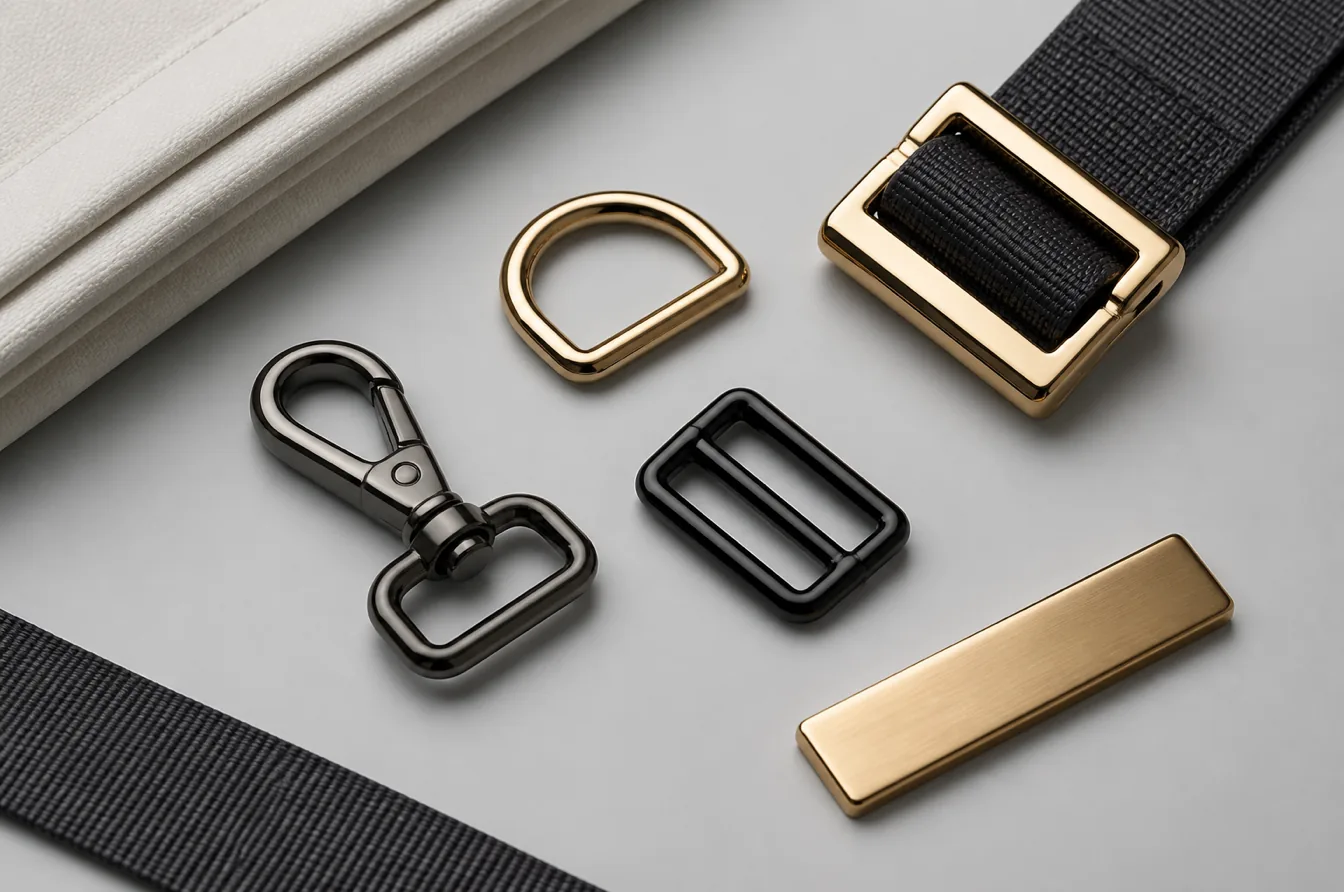
Brass supports several practical manufacturing routes for custom fashion hardware. Depending on the alloy and component, it can be stamped, coined, drawn, forged, machined, pierced, bent, or cast. That flexibility is valuable for sculpted logo plates, engraved trims, decorative buckles, heritage-inspired clasps, and signature components with fine relief. A machinable brass grade can support crisp detail and controlled dimensions, while sheet or forged brass can produce clean edges and a substantial premium feel. The grade still needs to match the process because brass optimized for machining may not be ideal for deep forming.
Stainless steel can also be stamped, formed, machined, welded, cut, or made into wire components. It is an excellent material for rings, hooks, sliders, plates, clasps, and clean geometric parts, especially when strength and corrosion resistance justify the processing effort. However, stainless steel can require greater forming force, more attention to springback, more tool maintenance, and longer polishing or machining time. Forcing an organic, deeply sculpted design into stainless steel only because the final surface will use PVD often creates unnecessary cost and risk.
The finish process adds another geometry constraint. Electroplating surrounds the part in liquid, but electrical current still influences local build. PVD can protect exposed surfaces efficiently, but deep cavities and hidden faces require careful fixture engineering. When a design has pronounced undercuts, nested features, or surfaces that cannot face the deposition source, I ask the supplier to coat a true production-intent prototype. A flat color chip cannot reveal these risks.
Build Color, Texture, and Brand Details Into the Specification
Electroplated brass supports many familiar fashion effects, including bright, satin, antique, warm, pale, dark, and multi-step decorative finishes. It can work particularly well when the goal is classic metallic depth, an intentionally aged appearance, or a contrast between polished high points and darker recessed details. Brass also allows a brand to use natural warmth or controlled patina as part of the product story. A protective layer can slow visual change when the design requires a cleaner, more stable appearance.
PVD-coated stainless steel can deliver gold, rose-gold, bronze, gunmetal, black, and other controlled metallic effects while preserving a polished, brushed, blasted, or satin substrate texture. It is especially effective for clean contemporary designs where the metal surface remains visually exposed. Still, I never approve a color through a name alone. “Champagne gold” can shift with the substrate polish, coating recipe, layer structure, light source, observation angle, and nearby materials.
Approval should use a physical master sample made on the intended substrate and surface texture, supported by measurable color values, tolerance, gloss, brushing direction, acceptable rack marks, and visually critical faces. When one collection mixes electroplated brass and PVD stainless steel, the parts should be reviewed together. Two components may match on day one but age differently after rubbing, perspiration, humidity, or cleaning, so coordinated appearance requires both initial matching and exposure testing.
| Design objective | Strong starting choice | Why it fits | Main validation point |
|---|---|---|---|
| Intricate relief or sculpted branding | Electroplated brass | Multiple forming and machining routes support fine decorative detail | Polish quality and finish coverage in recesses |
| Clean geometric premium component | PVD-coated stainless steel | Strong substrate with a thin finish that preserves precise texture | Edge condition, visible scratches, and chamber coverage |
| Heritage or intentionally aged appearance | Electroplated or protected brass | Warm base character and broad antique effects | Approved aging range and topcoat behavior |
| Coordinated modern metallic palette | PVD-coated stainless steel | Controlled metallic colors on polished, brushed, or matte surfaces | Measured color, gloss, texture, and batch consistency |
| Complex shape with premium wear target | Prototype a hybrid or both routes | Geometry and surface requirements may pull in different directions | Full-stack sample, cost, and production repeatability |
Which Material and Coating Perform Better Against Scratching, Tarnishing, and Corrosion?
The word “durable” is too broad because scratching, coating loss, tarnishing, corrosion, impact, and color shift are different failure modes.
PVD-coated stainless steel usually provides the stronger starting point for repeated handling, moisture, and abrasion. Electroplated brass can still perform well when its alloy, layer stack, protection, geometry, and test plan match the intended use.
Separate Surface Wear From Base-Metal Performance
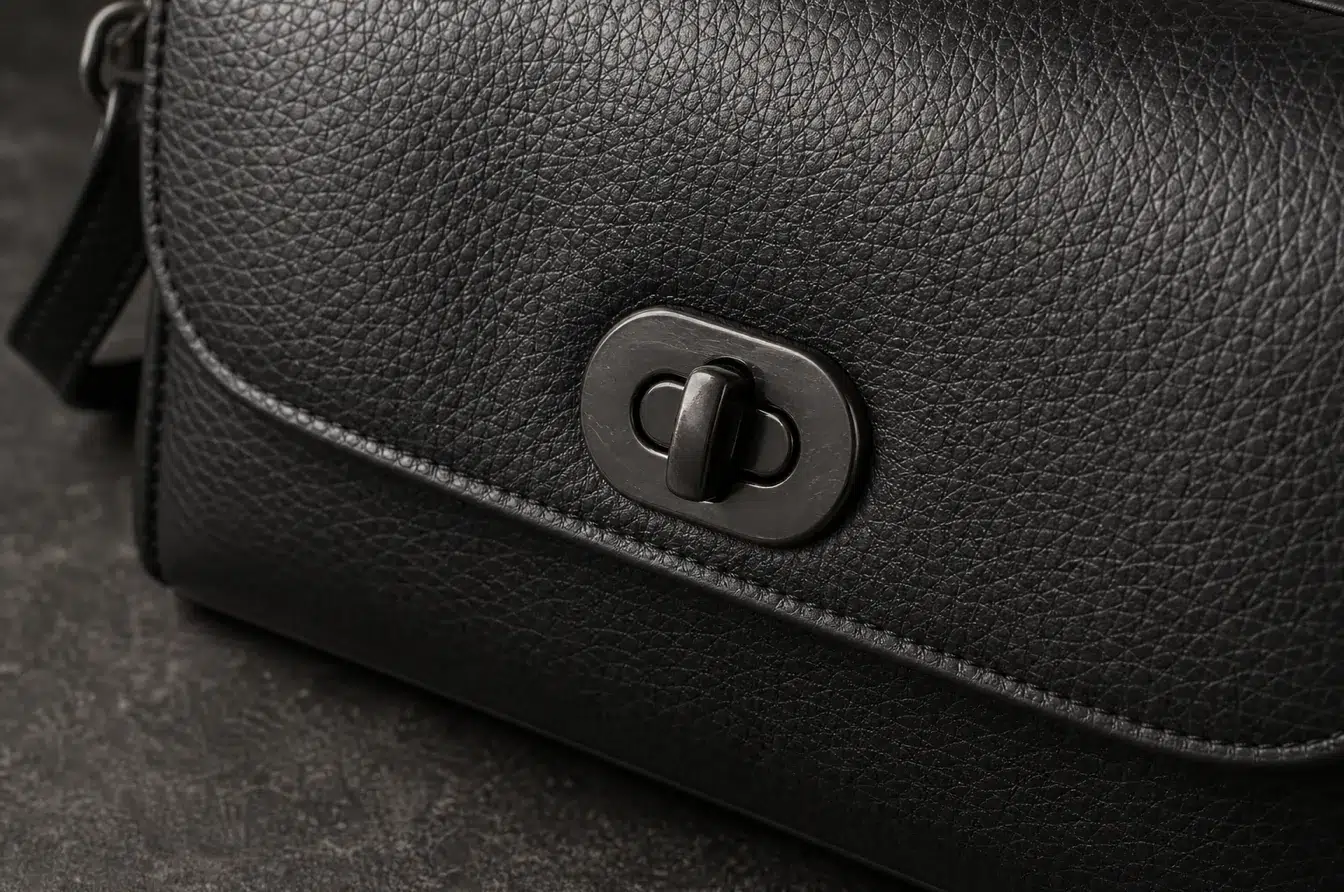
The first step is to identify how the hardware is likely to fail. A bag turn lock may receive repeated finger contact, sliding friction, and impact at the locking face. A zipper pull rubs against fabric and neighboring components. A footwear buckle meets flex, dirt, sweat, and occasional impact. A garment logo plate may carry almost no load but still fail commercially if its color changes or its edges stain the fabric. These components do not need the same durability strategy.
PVD-coated stainless steel often performs strongly because the stainless substrate provides a corrosion-resistant foundation and the selected PVD film can increase surface hardness and wear resistance. This combination is valuable when the component is frequently touched or exposed to humidity. However, the coating is thin, so it cannot hide weak polishing, sharp burrs, pores, or unstable joints. At a hard contact edge, a local scratch or impact can still damage the film. Crevices, contamination, unsuitable steel grades, and rough surfaces can also reduce the expected corrosion performance.
Electroplated brass depends more visibly on its complete finish system. Brass can tarnish, and a decorative layer can wear through at high-friction points. But those facts do not make every electroplated component short-lived. Correct surface preparation, suitable underlayers, controlled thickness, low porosity, protective sealing, and appropriate packaging can create a reliable result. I judge whether expected wear is an acceptable patina, a repairable surface change, or a clear product failure before the finish is selected.
Test the Finished Component for Its Real Environment
I use accelerated corrosion testing as one part of the evidence, not as a universal lifetime prediction. ISO 9227 salt-spray methods can help reveal pores, discontinuities, and changes in maintained production quality, but they are not designed to rank unrelated materials as a permanent league table. A higher reported hour count does not automatically prove that one component will look better after years of fashion use.
The test plan should follow the real product. It may combine corrosion exposure with synthetic perspiration, abrasion, adhesion, repeated operation, detergent or cleaning contact, humidity, leather contact, cosmetic exposure, and color measurement. For swimwear, footwear, or coastal accessories, relevant salt and wet-use conditions are added. Moving hardware is tested after cycling because rubbing can expose a different surface than the untouched sample. Inspection then covers the visible face, edges, holes, joints, recesses, rack areas, and contact zones rather than recording only whether the part has red rust.
Chemical compliance must also be treated separately from visual durability. Stainless steel may contain nickel, electroplated systems may use nickel-bearing intermediate layers, and some machinable brasses may contain lead. A decorative topcoat does not remove the need to assess release or restricted substances from the finished article. When hardware has direct and prolonged skin contact, the relevant market requirements should be defined and the completed component tested after finishing. This prevents a surface label such as “PVD” or “nickel-free color” from becoming an unsupported compliance claim.
| Performance question | Inspection focus | Why one test is insufficient | Practical approval evidence |
|---|---|---|---|
| Scratch and abrasion resistance | Contact zones, edges, moving surfaces, and neighboring materials | A static corrosion test does not reproduce rubbing | Abrasion plus visual and color assessment |
| Tarnish and color retention | Sweat, humidity, chemicals, light, and protective layers | Color can change without coating detachment | Conditioned sample compared with the signed master |
| Corrosion resistance | Substrate, pores, crevices, underlayers, and exposed cuts | Flat panels do not reproduce real geometry | Finished-part corrosion test and section review |
| Adhesion | Pretreatment, surface roughness, impact, and deformation | A hard coating can still detach from a weak interface | Adhesion test before and after relevant conditioning |
| Skin-contact compliance | Complete alloy and coating stack at wear-prone areas | A finish name does not prove metal-release performance | Finished-article testing for the target market |
Which Fashion Hardware Applications Are Best Suited to Each Option?
The best choice changes by component because decorative value, structural load, body contact, moisture, movement, and acceptable aging are never identical.
I use electroplated brass where detail, tactile warmth, or decorative variety leads the brief, and PVD-coated stainless steel where repeated handling, corrosion resistance, clean geometry, and long-term appearance matter more.
Map Function, Exposure, and Customer Contact
For apparel, electroplated brass often suits premium buttons, logo plates, decorative buckles, chain details, and heritage-inspired trims when the design requires crisp relief or a warm metal character. PVD-coated stainless steel becomes attractive for exposed zipper components, rings, hooks, adjusters, and clean modern details that may receive regular handling or perspiration. Weight and edge comfort still need control because a highly durable part can remain unsuitable if it pulls on light fabric or feels cold and heavy against the body.
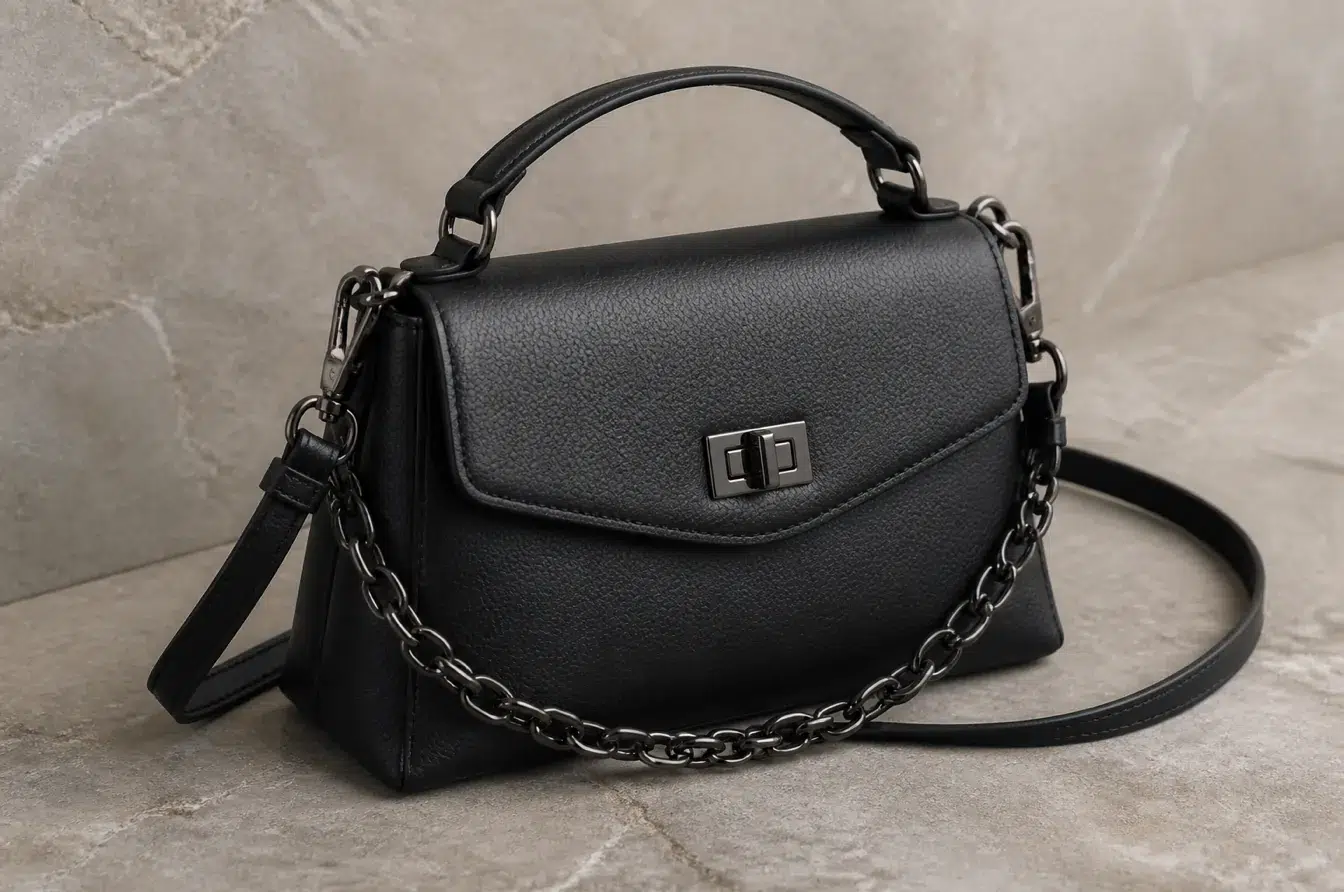
For bags and leather goods, I separate signature touchpoints from load-bearing or moving components. A sculpted clasp cover or ornamental plate may benefit from the design freedom of brass. A ring, snap hook, turn-lock mechanism, chain element, or frequently handled closure may justify stainless steel and PVD when friction, moisture, and returns are important risks. Leather contact also needs attention because trapped moisture, tanning residues, and surface friction can change the behavior of metal finishes.
Footwear hardware faces a demanding combination of flex, impact, perspiration, dirt, abrasion, and pressure against the wearer. PVD-coated stainless steel is often the stronger starting point for functional hooks, rings, sliders, and exposed closures. Electroplated brass can still suit decorative badges, premium buckles, and heritage details when the geometry and weight support it. For jewelry-like fashion accessories, the decision depends on skin contact, desired detail, maintenance expectations, and whether the brand values a stable contemporary surface or a richer traditional plated look.
Use a Component-Level Strategy Instead of One Global Rule
One material-and-finish system rarely needs to cover an entire collection. A product can use electroplated brass for its signature decorative element and PVD-coated stainless steel for a high-wear functional component. This protects value where the customer touches and sees it while also placing structural and corrosion performance where failure would be costly. It can also reduce over-engineering on low-risk decorative parts.
The challenge is coordination. Mixed materials may require different tooling, polishing, pretreatment, finishing lines, suppliers, and production schedules. Even when the target color name is identical, the parts can differ in hue, reflection, gloss, brushing direction, and aging behavior. I approve the complete hardware family together and condition the set before release when long-term color harmony matters. Direct metal-to-metal contact also requires examination because two hard components can scratch one another regardless of their individual test results.
For a premium line, a hybrid finish may also be evaluated: brass provides the complex form, an electroplated underlayer levels and protects it, and a PVD topcoat adds color and wear performance. This route is not automatically necessary because it adds production steps, interfaces, cost, and quality-control points. It is reserved for components whose design and durability requirements justify the complexity, then compared with simpler production-intent alternatives.
| Fashion application | Preferred starting option | Main reason | Verification point |
|---|---|---|---|
| Sculpted logo plate or signature trim | Electroplated brass | Fine detail, warm character, and decorative finish range | Weight, edge safety, recess coverage, and color aging |
| High-touch clasp, hook, or chain component | PVD-coated stainless steel | Strong base with better wear and moisture potential | Contact wear, geometry, operation, and coating adhesion |
| Vintage belt or heritage leather detail | Electroplated or protected brass | Material warmth and controlled patina support the design | Acceptable aging, leather contact, and protective layer |
| Footwear ring, hook, or functional closure | PVD-coated stainless steel | Strength and corrosion resistance suit demanding exposure | Flex, impact, perspiration, abrasion, and wearer comfort |
| Mixed premium hardware family | Component-level combination | Each part receives the material that matches its role | Color coordination, supplier control, and assembled testing |
How Do Cost, MOQ, Lead Time, and Quality Testing Requirements Compare?
The lowest unit price can become the most expensive choice after tooling, finishing minimums, rejections, delays, returns, and inconsistent repeat orders are included.
Electroplated brass often provides flexible decorative development and established finishing routes. PVD-coated stainless steel can justify higher processing demands through durability. I compare total program cost, production capacity, and verification—not loose-part price alone.
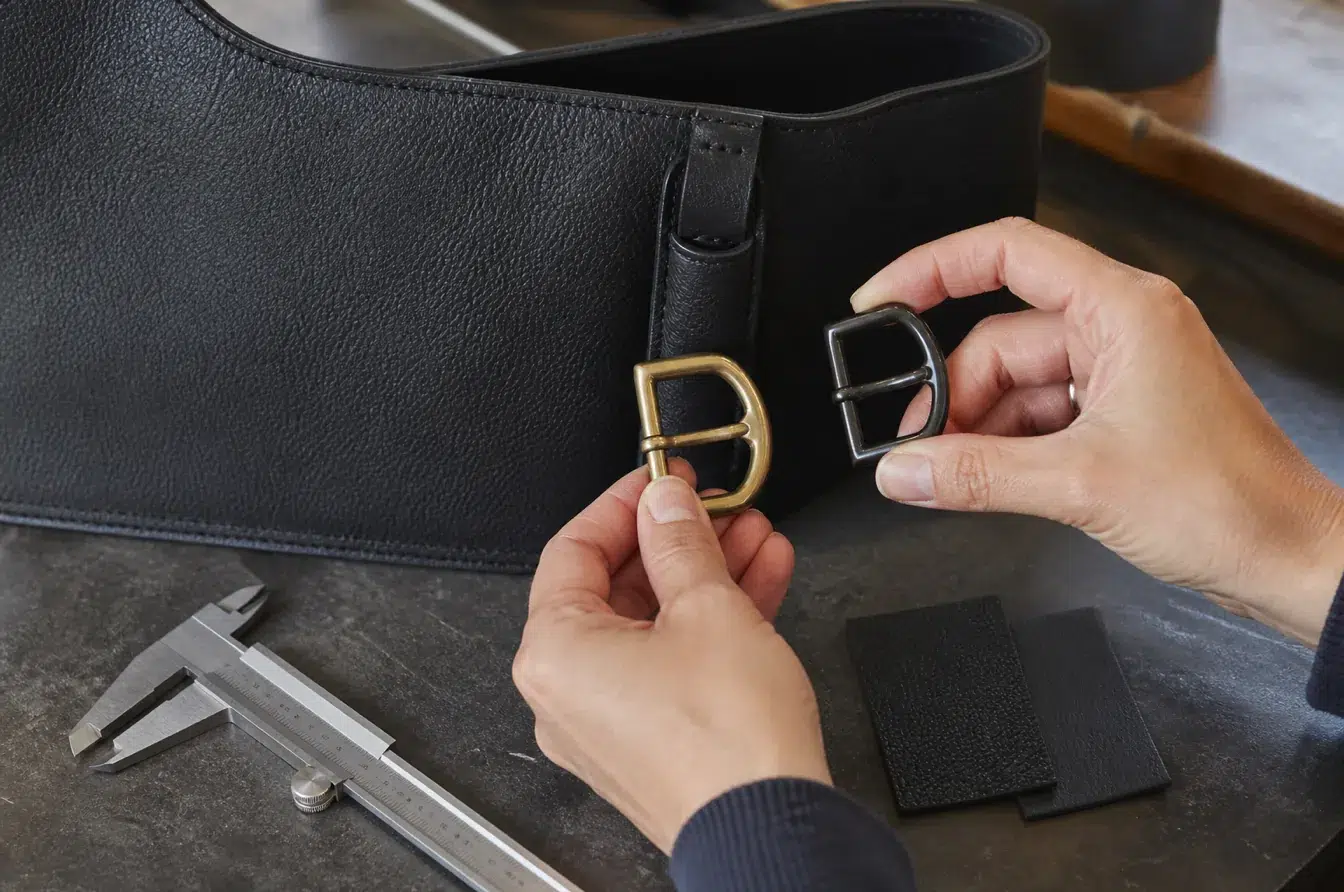
Compare the Total Program, Not a Generic Price Ranking
Electroplated brass is not always cheaper, and PVD-coated stainless steel is not always more expensive. Brass cost changes with alloy, stock form, part mass, machining time, forming route, polishing, plating stack, protective treatment, and rejection rate. A simple stamped brass plate may be efficient, while a deeply machined clasp with extensive hand polishing may be costly. Electroplating may support a broad range of colors, but a special finish can still have bath minimums, setup costs, or long approval cycles.
Stainless-steel cost changes with grade, sheet or bar form, tooling, machining difficulty, forming force, welding, surface preparation, polishing, and PVD chamber utilization. PVD suppliers normally plan production around compatible colors, recipes, fixture capacity, and chamber loads. A small order may carry a high setup burden if it cannot share a batch. A larger stable program may use that capacity more efficiently. Geometry also affects how many components fit on a fixture and how reliably they receive the target coating.
Lead time is therefore a process-chain question. The process map should cover raw-material availability, toolmaking, forming or machining, polishing, pretreatment, finishing, assembly, testing, color approval, packaging, and shipping. When several specialist suppliers handle these stages, transport and queue time can exceed the actual processing time. I ask who owns the complete schedule and who is responsible when a failed finish must return to an earlier stage. That answer is often more valuable than a promised standard lead time.
Make the RFQ and Quality Plan Comparable
Each supplier should receive the same decision-ready RFQ, stating the exact application, component dimensions, expected load, movement, attachment method, body-contact condition, environmental exposure, target substrate, manufacturing route, visible faces, texture, color reference, gloss, annual forecast, order tiers, sample quantity, packaging, and compliance market. It should also identify the surfaces where rack marks are allowed and the edges or interfaces where coating wear would create a failure.
For electroplated brass, the RFQ should request the alloy, complete layer stack, individual control points, surface preparation, protective treatment, finish-batch minimum, and expected variation across the part. For PVD-coated stainless steel, it should request the grade, pre-finish, adhesion system, PVD recipe or coating family, fixture plan, chamber-loading controls, masking, and batch traceability. Every proprietary process secret is not required, but enough information is necessary to confirm that repeat orders will follow the approved construction.
The approval plan includes a production-intent master sample, measurable color and gloss limits, functional tests, adhesion and abrasion checks, application-specific corrosion or chemical exposure, restricted-substance requirements, and inspection after assembly. Packaging is also defined because metal parts can scratch one another before they reach the factory line. The final decision is based on the quote, the verified sample, the supplier’s repeatability, and the financial consequence of failure. This makes MOQ and unit price part of the decision without allowing them to hide an incomplete specification.
| Commercial factor | Electroplated brass questions | PVD stainless-steel questions | Comparison basis |
|---|---|---|---|
| Tooling and forming | Is the part stamped, forged, cast, coined, or machined? | Is the part stamped, formed, machined, welded, or assembled? | Tool cost, part complexity, yield, and revision flexibility |
| Finish MOQ | What bath, color, or rack minimum applies? | What chamber load, recipe, or color minimum applies? | Minimum billable batch and sample-to-bulk route |
| Lead time | How many pretreatment, plating, sealing, and inspection stages are involved? | How are polishing, cleaning, fixture preparation, and chamber scheduling controlled? | Full process-chain schedule and rework ownership |
| Quality evidence | What layer, adhesion, corrosion, color, and compliance controls are recorded? | What surface, coating, adhesion, wear, color, and compliance controls are recorded? | Test methods, limits, reports, and batch traceability |
| Total program cost | Material, forming, polishing, plating, rejects, and maintenance | Material, fabrication, polishing, PVD setup, rejects, and lifecycle performance | Cost at realistic volumes plus failure and return risk |
Conclusion
I choose electroplated brass for decorative complexity and PVD-coated stainless steel for demanding durability, then confirm the decision through complete specifications, production samples, and application-specific testing.