- Loading...
I have seen a finish look perfect on a sample and still fail when the process, substrate, geometry, and approval standard do not work together.
The right finishing system matches the base material, part geometry, appearance, exposure, compliance needs, and production scale. Electroplating and PVD create metallic layers, spray and e-coating apply paint, and baked paint describes how a compatible coating is cured.
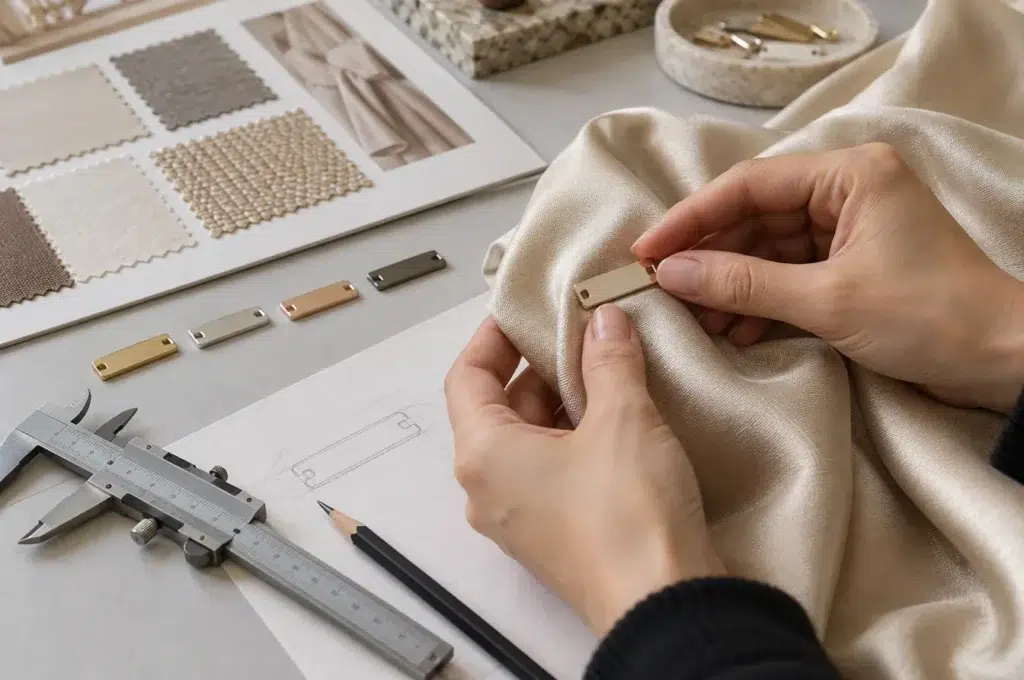
Finish evaluation for custom fashion hardware should not begin by asking which process is best in isolation. Product requirements determine what the component must look like, how it will be used, what can fail, and whether the production process can repeat the approved result in bulk.
What Are the Key Differences Between Electroplating, PVD, Spray Coating, E-Coating, and Baked Paint?
A familiar finish name can still hide different materials, layer structures, application methods, and curing routes.
These processes differ in what is deposited, how it reaches the hardware, and how it becomes stable. Electroplating deposits metal from a bath, PVD deposits a vacuum film, spray and e-coating apply paint, and baking cures a coating with heat.
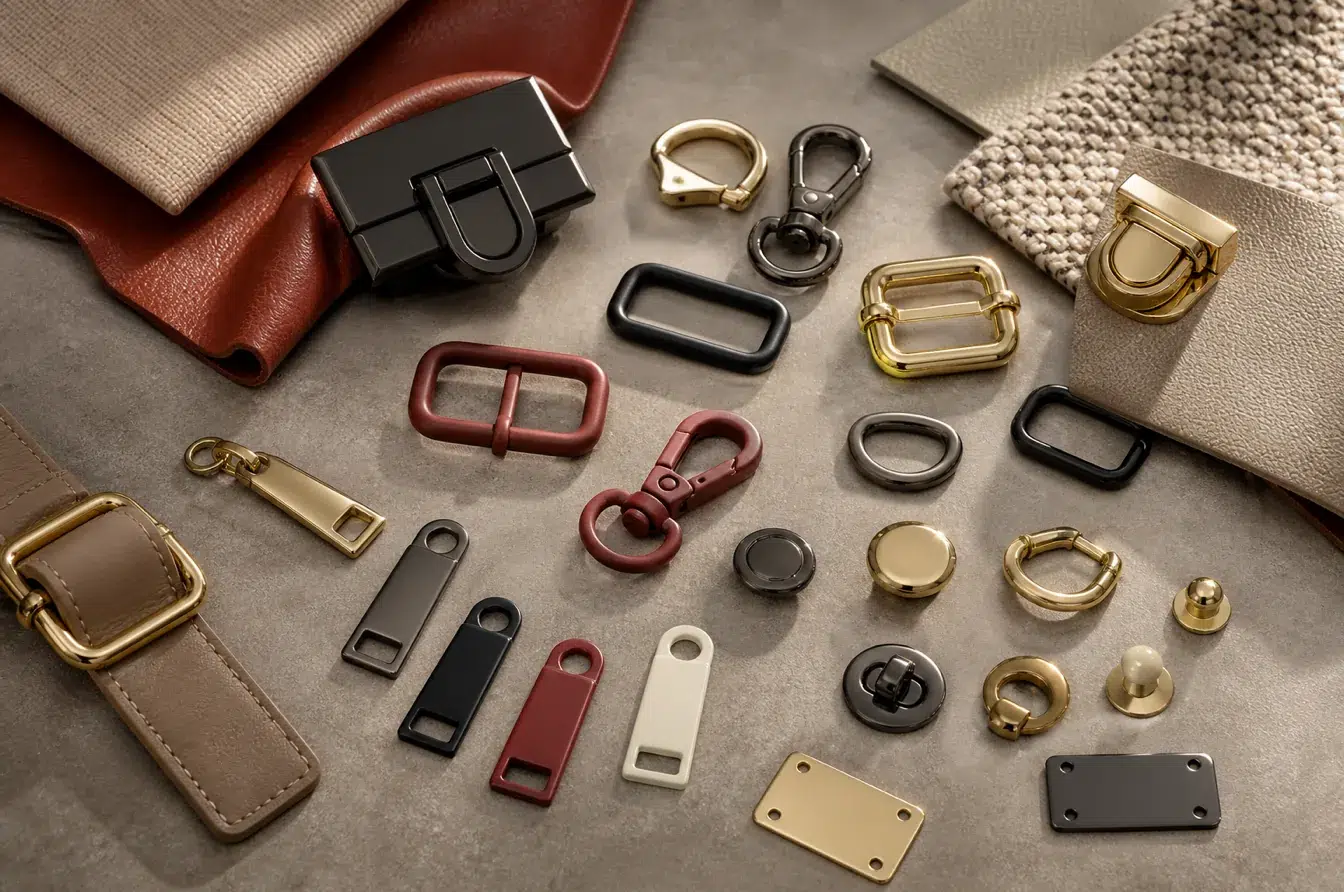
Separate Deposition, Application, and Curing
Electroplating is the established route for many bright, decorative fashion finishes. A conductive component is cleaned, activated, connected to electrical current, and immersed in an electrolyte. Metal ions are reduced onto its surface. The visible result may be gold, silver, nickel, gunmetal, antique brass, or another effect, but the final appearance rarely comes from one isolated layer. Copper, nickel, color deposits, flash layers, seals, and clear protective coatings may each have a separate role.
PVD uses a different physical route. A target material is vaporized or sputtered inside a vacuum chamber and deposited as a very thin film. Reactive gases can form compounds that create specific colors, hardness, or chemical behavior. PVD is attractive for premium, frequently handled components because its films can be hard and wear resistant. But the result still depends on substrate quality, pretreatment, chamber loading, coating recipe, and the layers beneath the PVD film.
Spray coating is an application method. A gun atomizes liquid coating and directs it toward the component. The system may use a primer, one or more color coats, and a clear protective coat. It can dry at ambient temperature, react as a two-component chemistry, or cure with controlled heat. Spray coating gives designers broad freedom with opaque colors, gloss levels, soft visual effects, and selected textures, but transfer efficiency and film consistency depend on equipment, geometry, racking, and operator control.
E-coating, also called electrocoating or electrophoretic coating, is electrically assisted painting. A conductive part is immersed in a waterborne paint bath, and an electrical field attracts charged coating particles to the surface. Because the liquid surrounds the component, the process can reach recesses and hidden areas that are difficult to cover consistently with a spray gun. The deposited film is then rinsed and cured.
“Baked paint” is different from the other labels because it describes curing rather than one unique deposition method. The EPA organic-finishing guide separates coating material, surface preparation, application, and curing as distinct choices. A coating can therefore be spray-applied and baked, or deposited by e-coating and then baked. I do not treat “baked paint” as a complete production specification unless the coating chemistry and application route are defined.
Compare Complete Systems Instead of Finish Names
In practice, I treat the complete production route from raw component to packed part as part of the finishing specification. Every finishing proposal should identify each surface-preparation step, such as polishing, blasting, degreasing, ultrasonic cleaning, activation, conversion treatment, or primer application. Electroplating may add several metal layers and a sealer. PVD may use an electroplated leveling or anticorrosion layer before the vacuum film. Paint systems may require flash-off time, multiple coats, and a defined oven cycle.
This full-stack view prevents a false comparison. “PVD versus electroplating” is not always a choice between two mutually exclusive systems. A decorative PVD finish on brass may depend on electroplated underlayers to improve leveling, brilliance, adhesion, or corrosion performance. The review of decorative PVD applications explains why PVD often complements electroplating instead of replacing it completely.
Masking requirements also need confirmation. Threads, pivots, springs, electrical contacts, snap fits, glue areas, and bearing surfaces may need protection. The thermal budget must be checked before assembled hardware is finished because paint baking and some PVD cycles can damage plastics, adhesives, magnets, seals, solder, elastic inserts, or earlier coatings.
| Finish term | What is deposited | How it reaches the part | Approval points to clarify |
|---|---|---|---|
| Electroplating | One or more metallic layers | Electrodeposition in liquid baths | Complete layer stack, thickness, sealing, and rack points |
| PVD | A thin metal or compound film | Vacuum deposition | Substrate, underlayers, recipe, temperature, and chamber loading |
| Spray coating | Liquid organic coating | Manual or automatic atomized spray | Resin, primer, number of coats, film build, and curing route |
| E-coating | Electrically charged paint particles | Immersion with electrical current | Conductive substrate, pretreatment, bath color, thickness, and bake |
| Baked paint | A heat-cured coating film | Application method must be stated separately | Coating chemistry, application, part temperature, and cure schedule |
Which Base Materials and Hardware Designs Work Best With Each Finishing Process?
The same finish can perform differently on a die-cast buckle, stamped ring, machined clasp, or mixed-material assembly.
The base material and manufacturing route should be selected before the finish is finalized. Conductivity, oxide behavior, casting porosity, heat tolerance, surface texture, recess depth, sharp edges, movement, and assembly sequence determine whether a coating can adhere, cover, cure, and function correctly.
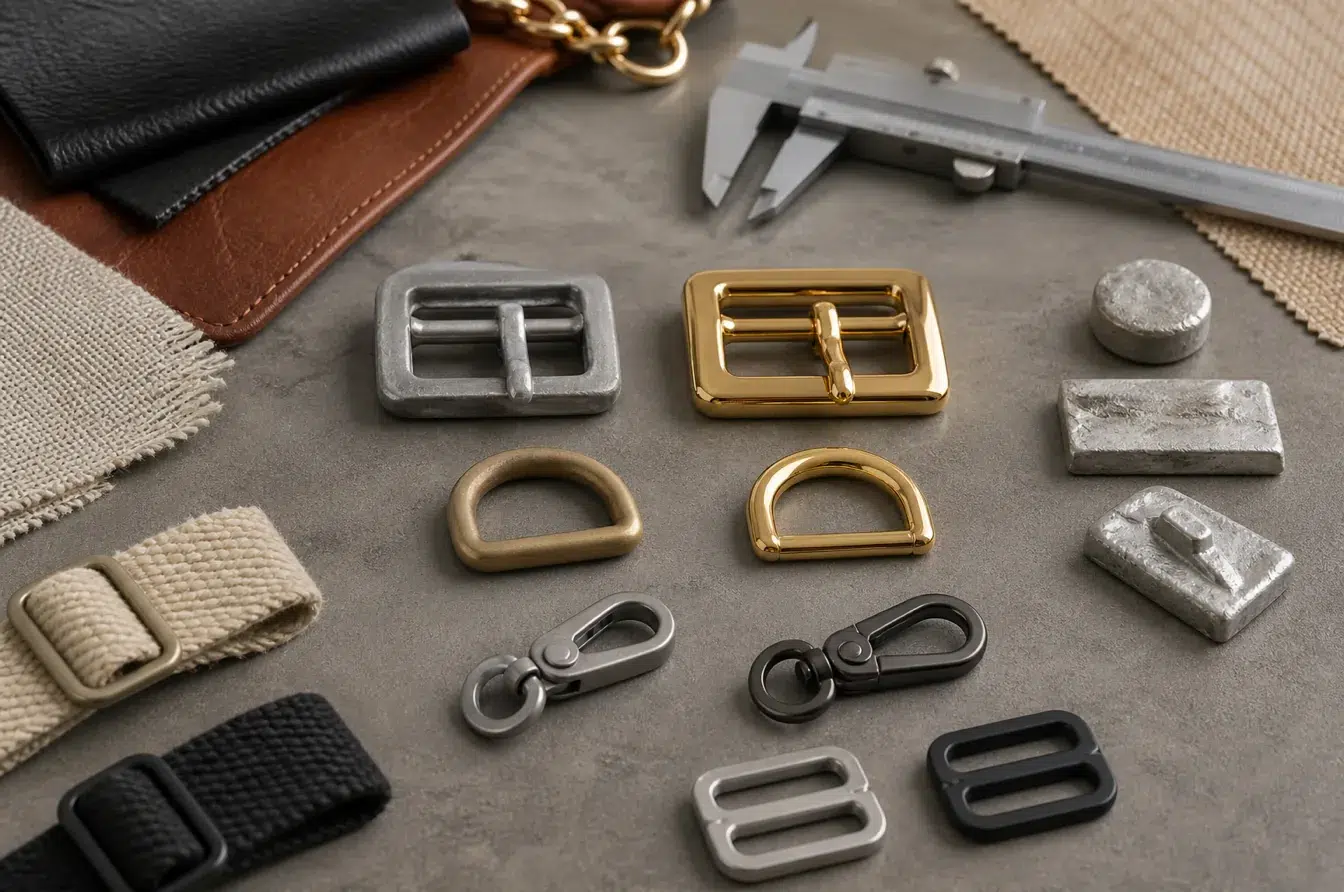
Match the Finish to the Actual Substrate
“Metal hardware” is an incomplete material description. Zinc alloy, brass, stainless steel, carbon steel, aluminum, and metallized plastic do not enter a finishing line with the same surface chemistry or thermal behavior.
Zinc alloy supports complex die-cast shapes, integrated logos, recessed textures, and efficient high-volume production. Electroplating can give it a bright jewelry-like appearance, while spray-applied and baked paint can create opaque fashion colors. The main risk is often upstream: casting pores, cold shuts, parting lines, gate removal, and uneven polishing can remain visible or weaken the finish. PVD may be possible through an approved multilayer route, but compatibility must be validated for the specific alloy and casting quality.
Brass is a strong starting point for warm premium details, stamped or formed parts, machined pieces, and polished decorative hardware. It works well with electroplating, and it can also support PVD when the complete pretreatment and underlayer system is qualified. Brass is conductive, but alloy composition still matters. Some lead-free or silicon-containing brasses behave differently during electrochemical preparation, so the exact alloy should be specified rather than writing only “brass.”
For premium buckles, clasps, rings, zipper parts, and jewelry-like trims, I often recommend stainless steel as the PVD substrate. It provides a stable base, and a thin PVD film can add gold, bronze, gunmetal, or black while preserving a polished, brushed, or blasted texture. The stainless grade still matters because a colored surface layer cannot turn an unsuitable base metal into a corrosion-resistant product.
Aluminum is lightweight and useful for larger components, but its natural oxide layer changes how coatings bond. The complete cleaning, activation or conversion treatment, primer, and curing route must therefore be confirmed. Painted finishes can provide broad color freedom, while other processes need specialized pretreatment. Plastics create another decision path because conductivity and heat tolerance may require metallization, low-temperature deposition, or a paint system designed for the polymer.
Let Geometry, Tolerance, and Assembly Decide the Route
Geometry can overrule a material-based preference. PVD is directional, so shadowed surfaces and deep recesses may receive a different film than exposed faces unless part rotation, fixture design, and chamber loading solve the problem. Electroplating takes place in liquid, but electrical current distribution can still produce thicker deposits on high-current edges and weaker coverage in difficult recesses. Process qualification should identify these variations on actual components rather than on flat test panels.
E-coating becomes useful when a conductive component has curves, holes, seams, or internal surfaces that must receive a continuous protective film. PPG’s e-coat process description shows how immersion and electrical attraction support uniform coverage on complex configurations. This can suit chain links, hooks, frames, internal structures, and protective primer applications.
Spray coating works well when the brief needs custom solid colors, fast visual experimentation, controlled texture, or selective coverage. However, narrow gaps and recessed areas require correct gun access and racking. Manual spraying also makes operator technique important. Distance, angle, stroke speed, overlap, and atomization can change the film thickness, so inspection should cover sidewalls, edges, backs, holes, and masked areas rather than only the main presentation face.
During development, I check coating build against the tolerance drawing. Paint and e-coat can narrow slots, close threads, increase friction, stiffen springs, or change snap engagement. PVD is much thinner, but it preserves substrate defects and cannot compensate for poor fit. Electroplated multilayers can also change dimensions. The finishing sequence—before or after assembly—should be decided before tooling and critical clearances are frozen.
| Base material or design condition | Strong starting options | Main reason | Development risk to check |
|---|---|---|---|
| Die-cast zinc alloy with detailed relief | Electroplating or baked spray finish | Bright metallic or opaque color flexibility | Porosity, polishing, edge coverage, and heat limits |
| Polished or formed brass | Electroplating or qualified PVD stack | Warm premium base and strong decorative potential | Alloy-specific pretreatment and tarnish control |
| Stainless steel premium hardware | Natural finish or PVD | Stable substrate and precise thin-film appearance | Grade, pre-finish quality, shadowing, and wear zones |
| Aluminum component | Qualified paint or specialized compatible process | Low weight and broad color potential | Oxide removal, conversion treatment, primer, and cure |
| Deep recesses or hidden conductive surfaces | E-coating | Immersion supports more uniform internal coverage | Drainage, bath access, color limitation, and film build |
| Tight moving joint or engraved detail | Thin PVD or controlled plating | Lower film build preserves geometry | Contact wear, exposed edges, masking, and local thickness |
How Do These Finishes Compare in Color, Texture, and Visual Consistency?
Two parts can share one color name and still look different once gloss, texture, geometry, and lighting begin to interact.
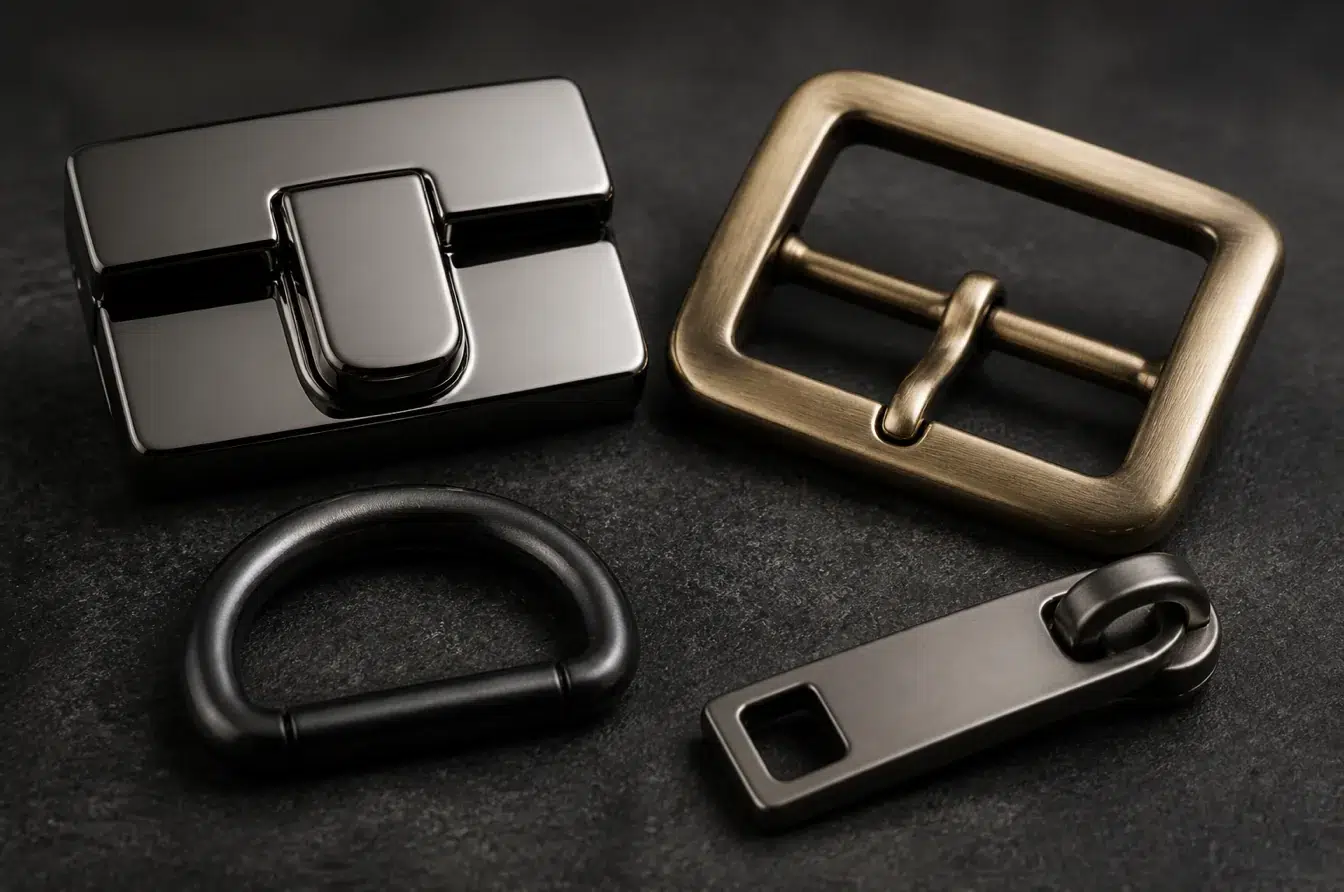
Electroplating and PVD suit authentic metallic effects, spray or baked paint provides broad opaque color and texture freedom, and e-coating supports briefs led by uniform protection. Consistent appearance still depends on surface preparation, measurable tolerances, and production-intent master samples.
Build the Appearance Before Applying the Final Layer
Polishing, brushing, blasting, and casting quality are part of the finish specification. Decorative PVD films are very thin, so they retain the texture beneath them. That is useful when the target is a crisp mirror, satin brush, or fine matte effect, but it also means that scratches, pores, parting lines, uneven grain, and local waviness remain visible. A premium vacuum chamber cannot repair an inconsistent raw surface.
Electroplating can create bright, deep, jewelry-like metallic colors and may use underlayers that improve leveling and brilliance. It can support familiar fashion tones such as gold, pale gold, silver, gunmetal, rose gold, black nickel, and antique effects. But it cannot reliably hide deep pits, poor gate removal, or inconsistent polishing. Electrical current density can also change deposit build around edges, holes, and recesses, so local appearance still needs control.
Spray-applied and baked paints provide more body and opacity. They work well when the collection needs seasonal solid colors, matte or gloss surfaces, selected tactile effects, or a color that does not need to look like bare metal. The thicker film can soften small surface variation, but it may also round sharp engraving, bridge narrow gaps, fill fine texture, or make a precision part feel less crisp.
E-coating normally produces an even paint-like film, but not every e-coat bath can deliver the decorative color range expected by a fashion brand. Dedicated baths and slow color changes often favor a limited, stable palette. E-coat can serve as a protective layer beneath another decorative finish when the visible surface needs a richer metallic effect, special texture, or collection-specific color.
Replace Color Names With a Production Standard
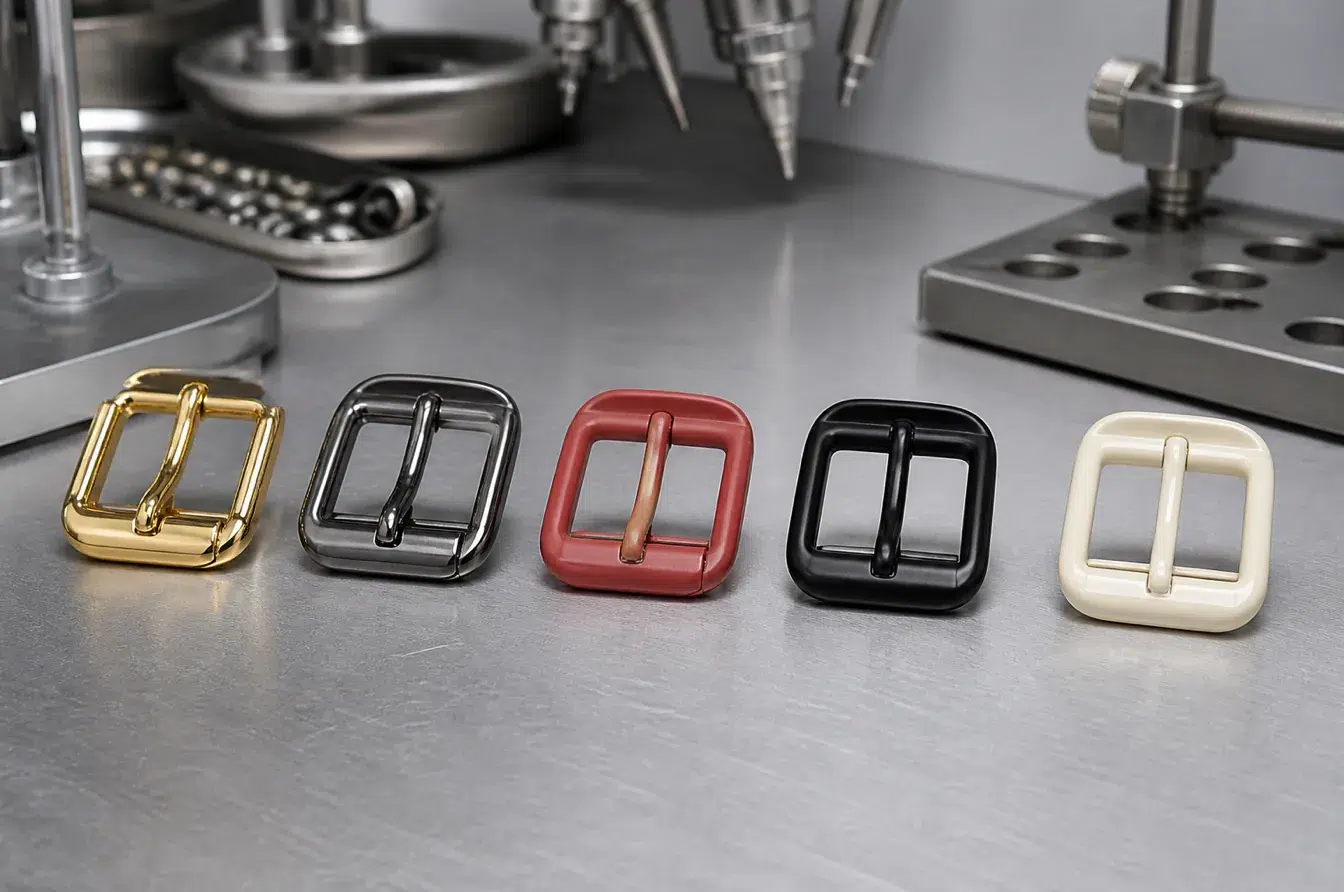
I do not treat color names such as “champagne gold,” “gunmetal,” “antique brass,” and “matte black” as complete production instructions. Pantone can help communication, but a paper or plastic reference does not reproduce metallic reflection, texture, or gloss on a three-dimensional component. A curved buckle reflects light differently from a flat logo plate, and a brushed face can appear lighter or darker when its grain direction changes.
A signed physical master should be approved on the intended substrate, geometry, and finishing route. The approval record should identify critical faces, permitted rack-mark locations, brushing direction, and the acceptable gloss range. The lighting and viewing method also need definition. ASTM D2244-25 makes an important point for production: the purchaser and supplier should agree on the color-difference method and permissible tolerance, and visual acceptability can also be influenced by gloss and texture.
For a coordinated hardware family, every visible component should be compared as a group. Gold PVD on stainless steel, gold electroplating on brass, and gold paint on zinc alloy may match when new but age differently under friction, sweat, humidity, cleaners, and sunlight. The complete set should be conditioned before approval when consistent aging matters. An approved master should also be retained, and a renewed comparison should be required after any change to the plating bath, PVD target, paint lot, chamber recipe, production line, or specialist finishing partner.
| Appearance objective | Strong starting process | Variables to lock | Common mismatch risk |
|---|---|---|---|
| Bright jewelry-like metal | Electroplating | Polish, underlayers, color deposit, seal, and gloss | Recesses and edges differ from the main face |
| Thin premium metallic color | PVD | Substrate texture, underlayers, recipe, and loading | Scratches and roughness remain visible |
| Opaque seasonal color | Spray-applied baked paint | Resin, pigment, primer, thickness, gloss, and cure | Film build softens details or varies across geometry |
| Uniform protective paint film | E-coating | Pretreatment, bath control, voltage, thickness, and bake | Functional appearance may not meet luxury expectations |
| One color across mixed materials | Process-specific color matching | Physical masters, measurement method, and aging test | New parts match while used parts diverge |
Which Finish Offers the Best Resistance to Wear, Sweat, Corrosion, and Color Fading?
“Durable” is too vague when a finish can survive corrosion yet fail through rubbing, impact, perspiration, chemicals, or color change.
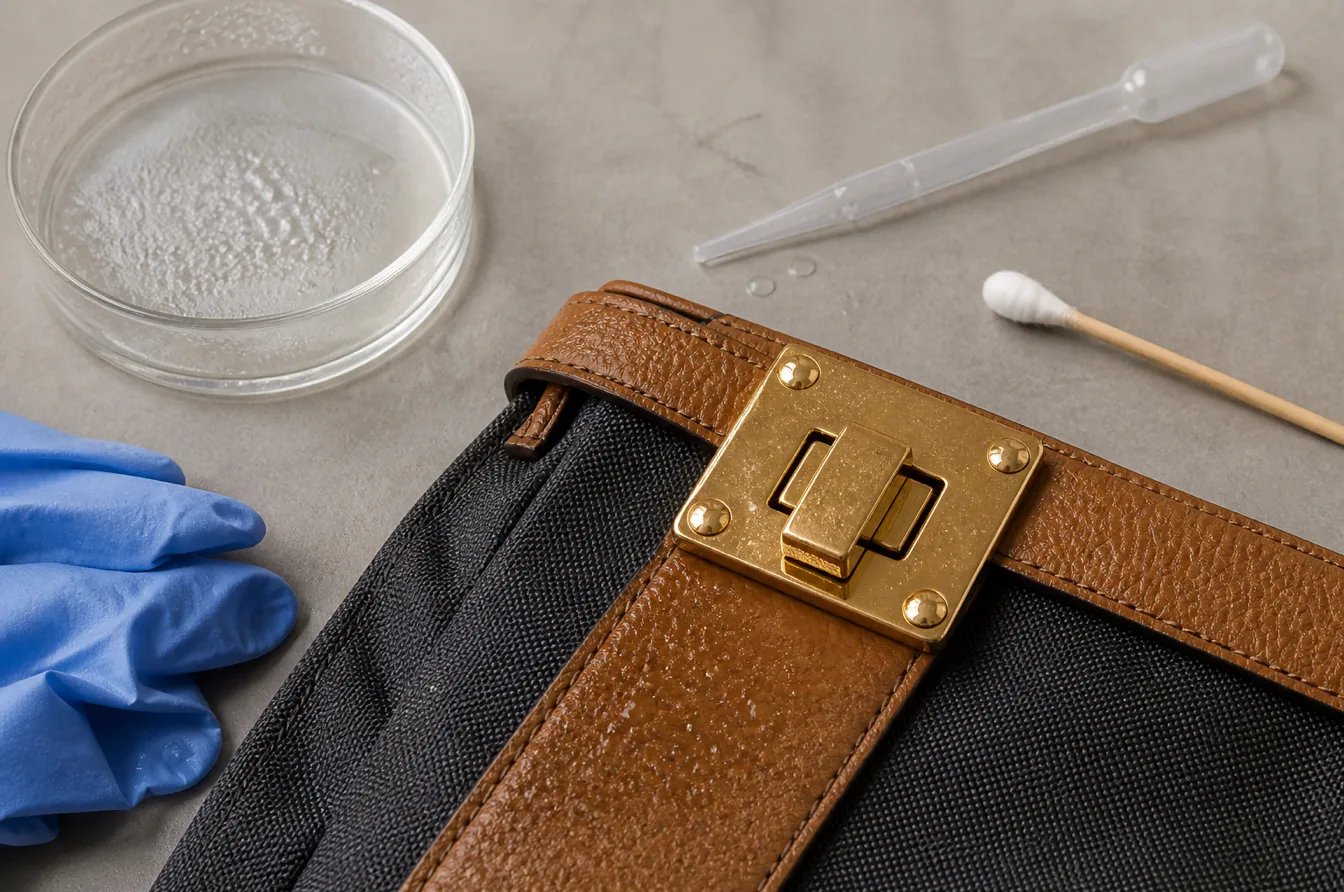
Finish performance should not be ranked until the failure mode is defined. PVD often helps against wear, e-coating supports uniform corrosion protection, electroplating depends on its complete metal stack, and painted systems depend on pretreatment, resin, film build, and curing. Testing must reproduce actual use.
Define the Product’s Real Failure Mode
I begin durability assessment by examining where the hardware sits and how it moves. A zipper pull rubs against fingers and fabric. A handbag clasp receives repeated impact and contact at its locking surfaces. A shoe buckle meets bending, dirt, and abrasion. A swimwear trim faces chloride, perspiration, cosmetics, and long wet periods. A decorative logo plate may have little mechanical load but very high appearance expectations.
PVD is a strong starting point for premium, high-touch components because selected films can provide high hardness, wear resistance, and stable metallic color. But a hard thin film is not automatically impact-proof or corrosion-proof. PVD performance depends on the substrate, underlayers, film structure, porosity, surface condition, and contact system. If a sharp edge strikes another hard part, a brittle or poorly supported coating can still crack or reveal the base.
Electroplating can also provide excellent decorative and protective performance when the layer system is engineered correctly. The hidden variables include preparation, copper or nickel underlayers, individual deposit thicknesses, porosity, color layer, and sealing or clear protection. Two parts described as “gold plated” may look similar on day one while having very different wear and corrosion behavior.
E-coating is particularly useful where corrosion can begin in holes, seams, corners, or internal surfaces. Its coverage advantage can protect areas a spray gun may miss. Spray-applied and baked paints can also perform well, but “paint” covers many chemistries. Acrylic, epoxy, polyurethane, and other systems do not share one durability level, and the same formula can perform differently when cleaning, priming, thickness, flash time, or curing changes.
Color fading must also be separated from coating loss. A finish can stay attached but shift in tone after ultraviolet exposure, heat, sweat, or chemicals. Another can retain its color but polish smooth at contact points. The acceptance criteria must state which change is allowed and which is a failure.
Test the Finished Component, Not the Marketing Label
Corrosion tests should be used as comparison tools, not as stand-alone lifetime predictions. ASTM B117 explains that salt-spray results do not reliably predict natural-service performance when used alone. ISO 22775 is more directly relevant to metallic footwear accessories because it addresses both salt-water corrosion and sulfide tarnishing. The useful method depends on the product and target market.
For fashion hardware, a practical matrix can include corrosion, tarnish, artificial perspiration, abrasion, adhesion, repeated operation, humidity, ultraviolet exposure, detergent, cosmetics, cleaners, and color measurement. Testing should use production-intent parts with their real edges, recesses, rack points, and contact zones. A flat coated panel cannot reveal whether a buckle tongue scrapes its frame or whether a chain link exposes the finish at a moving interface.
Function needs the same inspection as appearance after conditioning. A buckle may keep its color but become rough at the pivot. A painted part may pass corrosion exposure but chip during impact. A plated part may remain bright while transferring discoloration onto pale leather. A zipper pull may pass a visual review but wear through where fingers repeatedly contact the same edge.
Compliance also belongs to the finished article. REACH nickel restrictions apply to release from relevant articles in direct and prolonged skin contact, not simply to the marketing name of the top layer. A PVD label, a “nickel-free color,” or an “eco-friendly finish” does not by itself prove the finished component complies. Underlayers, pores, exposed rack points, and wear-through can matter, so applicable evidence should cover the production-intent component and any change to the substrate or coating stack.
| Product risk | Evaluation focus | Why one test is insufficient | Useful acceptance focus |
|---|---|---|---|
| Repeated hand or fabric rubbing | Abrasion plus color comparison | Corrosion resistance does not prove wear resistance | No unacceptable color breakthrough or roughness |
| Perspiration and cosmetics | Artificial sweat and representative chemical exposure | Salt spray does not reproduce skin-contact chemistry | Color, adhesion, corrosion, staining, and function |
| Hidden moisture | Corrosion exposure with recess inspection | A front-face review can miss internal attack | No unacceptable corrosion in seams, holes, or joints |
| Moving contact | Repeated operation before and after conditioning | Static coupons do not reproduce local friction | Stable operation, surface condition, and fit |
| Skin-contact compliance | Applicable finished-article chemical testing | Process names do not control actual release | Valid report for the final substrate and finish stack |
| Long-term visual consistency | UV, humidity, heat, and instrumental color checks | Adhesion alone does not measure color shift | Agreed color and gloss change after exposure |
How Do Cost, MOQ, Lead Time, and Quality Control Affect Your Final Choice?
I have seen the cheapest coating quotation become the most expensive option once sampling, rejects, rework, delays, and complaints are included.
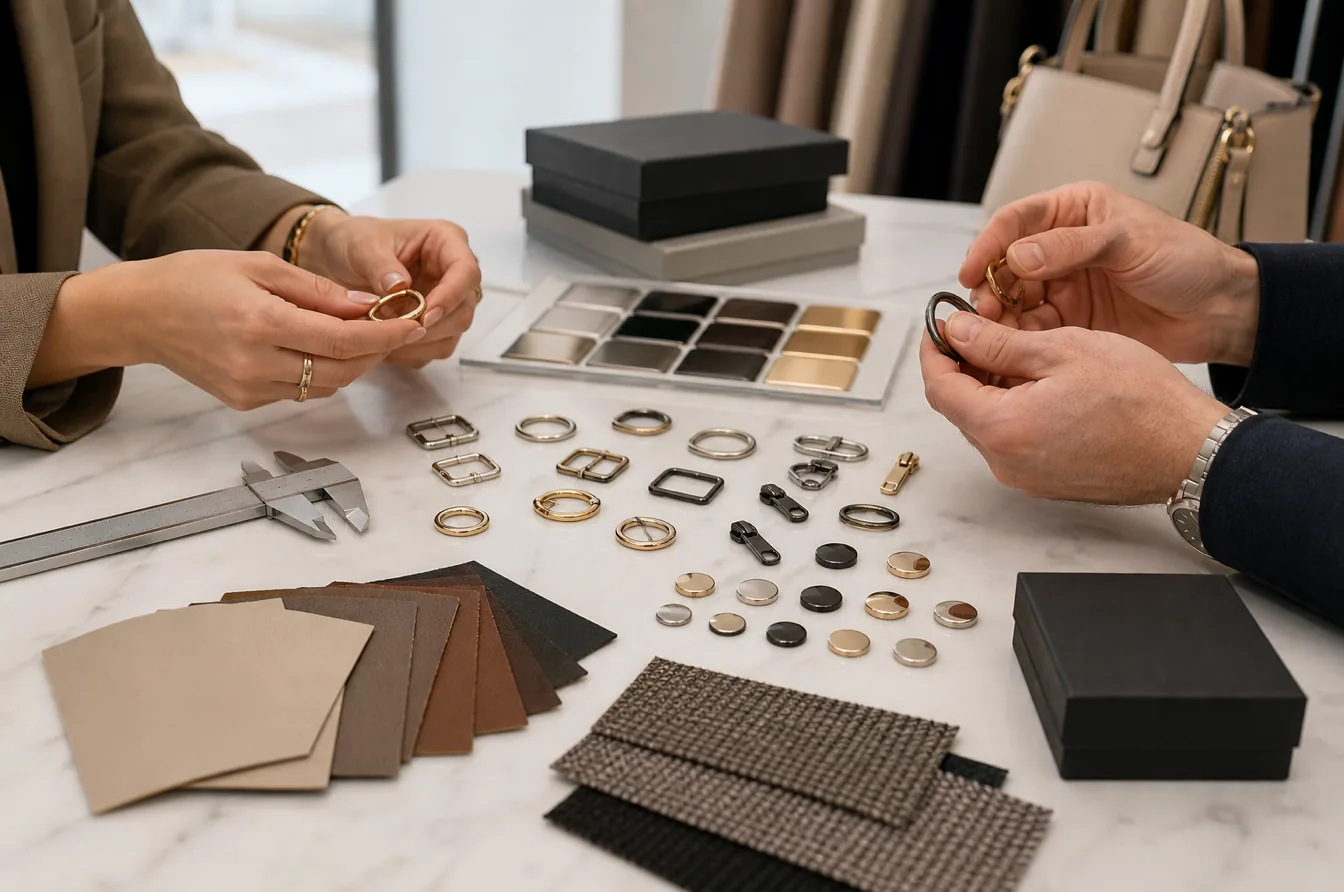
The decision should compare total finished-hardware cost rather than coating price alone. Chamber or bath setup, racking, color changes, batch loading, pretreatment, testing, outsourced processing, reject risk, MOQ, and lead time determine whether a finish is commercially suitable and repeatable for the collection.
Connect Commercial Terms to Process Reality
PVD requires vacuum equipment, controlled recipes, fixtures, targets, loading, and qualified pretreatment. The unit price may be higher than standard decorative electroplating, especially when the batch is small or the chamber cannot be loaded efficiently. However, PVD can still be the lower-risk commercial choice for premium, high-touch hardware when better wear performance supports the product positioning and reduces complaints or refinishing.
Electroplating has mature production capacity and can be cost-effective for many decorative metallic colors. Its MOQ and price are influenced by bath availability, rack design, layer construction, metal price, thickness, color control, and wastewater management. Quotation comparisons should confirm that every offer refers to the same layer specification and test requirements because a very low price may reflect a thinner or simpler hidden stack.
Spray coating can be attractive for samples, special colors, and smaller fashion runs because paint color changes may be easier than changing an e-coat bath or PVD target system. Yet small parts can require significant manual handling, masking, racking, and inspection. Overspray, rework, uneven film, and oven loading can offset the apparent process flexibility.
E-coating has strong transfer efficiency and repeatability, but dedicated tanks, bath management, pretreatment, rinsing, and ovens favor suitable throughput. Frequent color changes are slow and expensive on many lines. It is most suitable when the program has stable colors, repeat volume, complex conductive geometry, and a clear protective purpose.
Baked paint introduces its own scheduling constraints because the coating, flash-off, oven profile, and cooling time must be controlled. The production line needs enough compatible parts to operate efficiently, but overloading racks can create shadowing, contact marks, poor airflow, or inconsistent cure. MOQ is therefore not only a sales rule; it often reflects how the process achieves a stable batch.
Lead time also depends on where the process sits in the supply chain. If raw parts, polishing, electroplating, PVD, painting, and final assembly occur at different facilities, transport and queue time can exceed the actual coating cycle. The fashion-industry electroplating and PVD study shows why production location, lot size, logistics, and finishing capability belong in the decision.
Build an RFQ and Control Plan That Produce Comparable Answers
A structured RFQ makes quotations technically comparable. It should include the exact substrate and manufacturing route, annual and order quantity, part dimensions and surface area, finish type, color master, gloss, texture, critical faces, permitted rack points, masking zones, assembled materials, use environment, compliance market, required tests, proposed coating stack, and production route.
Sample approval should progress from appearance to production capability. An early hand-finished sample can confirm design direction, but it may not represent bulk polishing, rack density, bath loading, chamber position, paint application, or oven cure. Final approval samples should come from production-intent tooling, substrate, pretreatment, finishing line, and assembly conditions whenever practical.
In production, I use the control plan to define what is measured and where. It can include material verification, coating or layer records, critical dimensions after finishing, color and gloss, adhesion, corrosion, abrasion, operation, rack-mark position, cosmetic defect limits, and relevant chemical compliance. Signed masters and approved process records should be retained so future orders can be compared with the same standard.
Change control is essential because an apparently minor production change can alter performance. A new alloy source, polishing compound, plating line, paint batch, PVD chamber, underlayer, rack design, cure schedule, or specialist production partner should trigger review. Change-control requirements should define which changes require disclosure, new samples, or repeated testing before bulk shipment.
The final decision is therefore not “premium process versus cheap process.” The preferred system is the lowest-risk option that can deliver the required appearance and service performance at the planned volume. Sometimes that is electroplating for a broad metallic collection, PVD for premium wear zones, baked spray paint for trend colors, or e-coating for complex protective coverage. The commercial answer follows the product requirement.
| RFQ or approval item | Required specification | Commercial risk it controls |
|---|---|---|
| Base component | Exact alloy, manufacturing route, geometry, and surface condition | Unquoted pretreatment, adhesion failure, and finish variation |
| Finish system | Full layer or coating stack, color, gloss, texture, and cure | False price comparisons and hidden quality reductions |
| Quantity profile | Sample, first order, repeat order, annual forecast, and color split | Unrealistic MOQ, inefficient loading, and color-change cost |
| Critical surfaces | Presentation faces, hidden areas, rack points, masks, and wear zones | Sample-to-bulk surprises and cosmetic disputes |
| Performance plan | Test method, conditioning, acceptance criteria, and laboratory responsibility | Marketing claims without comparable evidence |
| Timing | Tooling, raw part, pretreatment, coating, testing, rework, and logistics | Lead-time promises that omit outsourced steps |
| Bulk control | Sampling, color range, defects, dimensions, function, and records | Inconsistent production despite an approved sample |
| Change control | Material source, production partner, line, recipe, rack, and layer changes | Silent substitutions and invalidated approvals |
Conclusion
I recommend choosing the finish only after locking substrate, geometry, appearance, exposure, tests, and production reality, because the best custom hardware finish is always a complete system.