- Loading...
I have seen nearly identical silver-tone finishes lead to very different results once they enter daily use, repeated production, and full-product assembly.
Silver, chrome, nickel, palladium, and rhodium are not interchangeable finish names. The practical difference involves color temperature, reflectivity, tarnish behavior, wear resistance, layer structure, skin contact, cost, and the factory’s ability to reproduce the approved appearance.
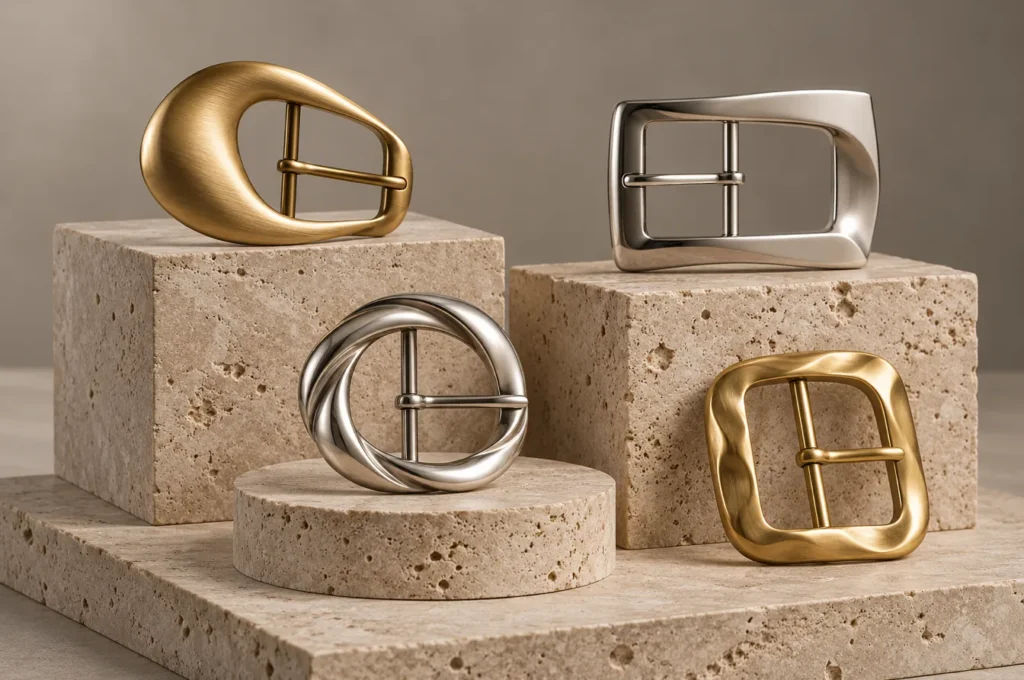
The word “silver” often describes a broad visual family rather than one deposited metal. A cool mirror-white buckle may use decorative chrome over nickel, while a softer white logo plate may use nickel, palladium, real silver, white bronze, or another alloy system. Rhodium may create an even brighter premium surface. These parts can look close in a presentation tray, but they can age, wear, tarnish, and react to their environments differently.
A reliable decision therefore begins with the intended product and the complete finish construction. Color remains important, but it cannot replace the base metal, preparation, underlayers, final deposit, thickness, topcoat, texture, and performance requirements. Each item in a coordinated hardware family also needs review because a zipper pull, buckle, chain, rivet, clasp, and logo plate may face different wear conditions.
What Visual Differences Separate Silver, Chrome, Nickel, Palladium, and Rhodium Finishes?
Five finishes may all look “silver,” but small differences in whiteness, warmth, brightness, and reflection can change the character of an entire product.
Silver is usually softer and warmer; chrome is cool and mirror-like; nickel is neutral to slightly warm; palladium is a refined neutral white; and rhodium is crisp, bright, and often blue-white. Texture and polishing can shift every one of these effects.
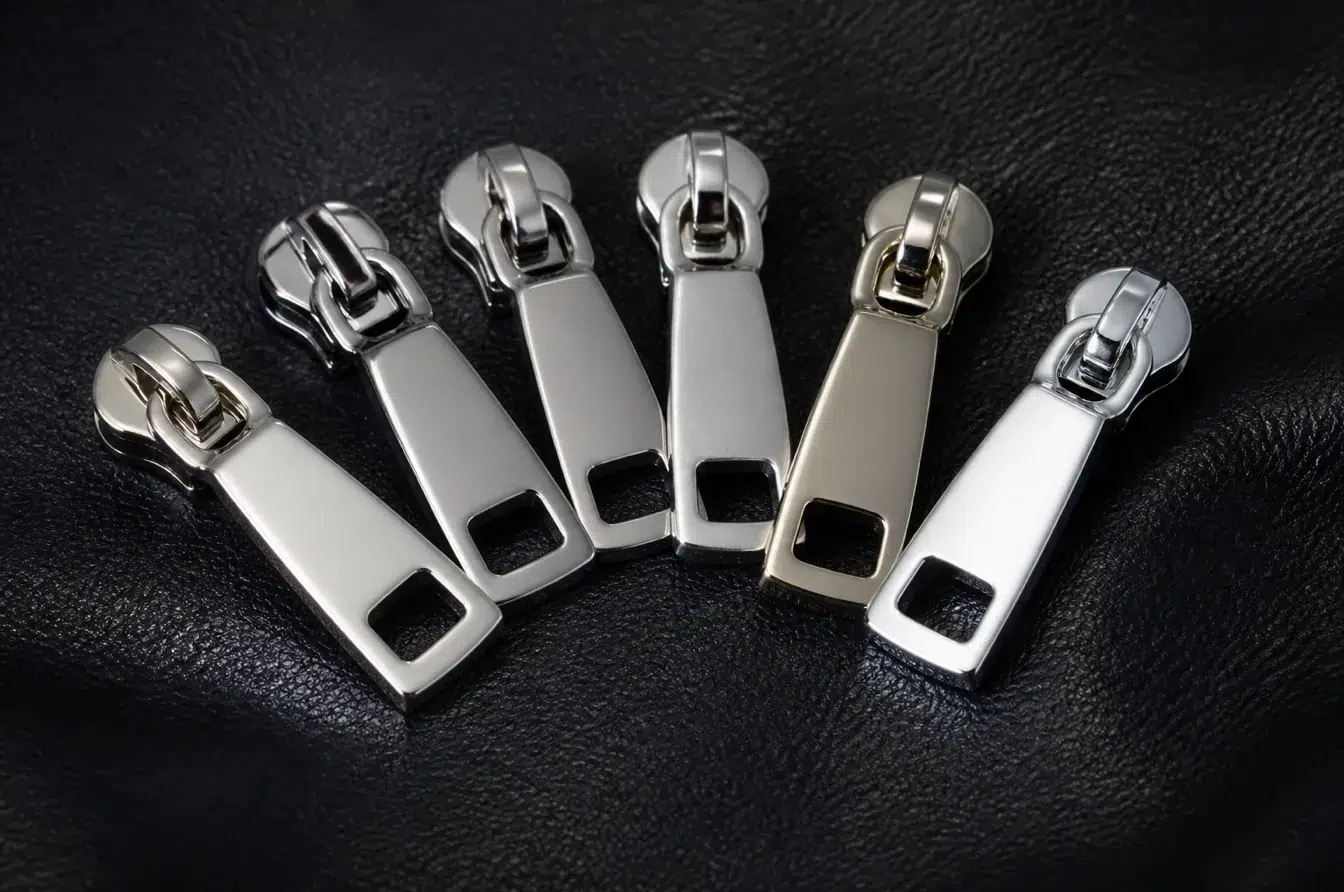
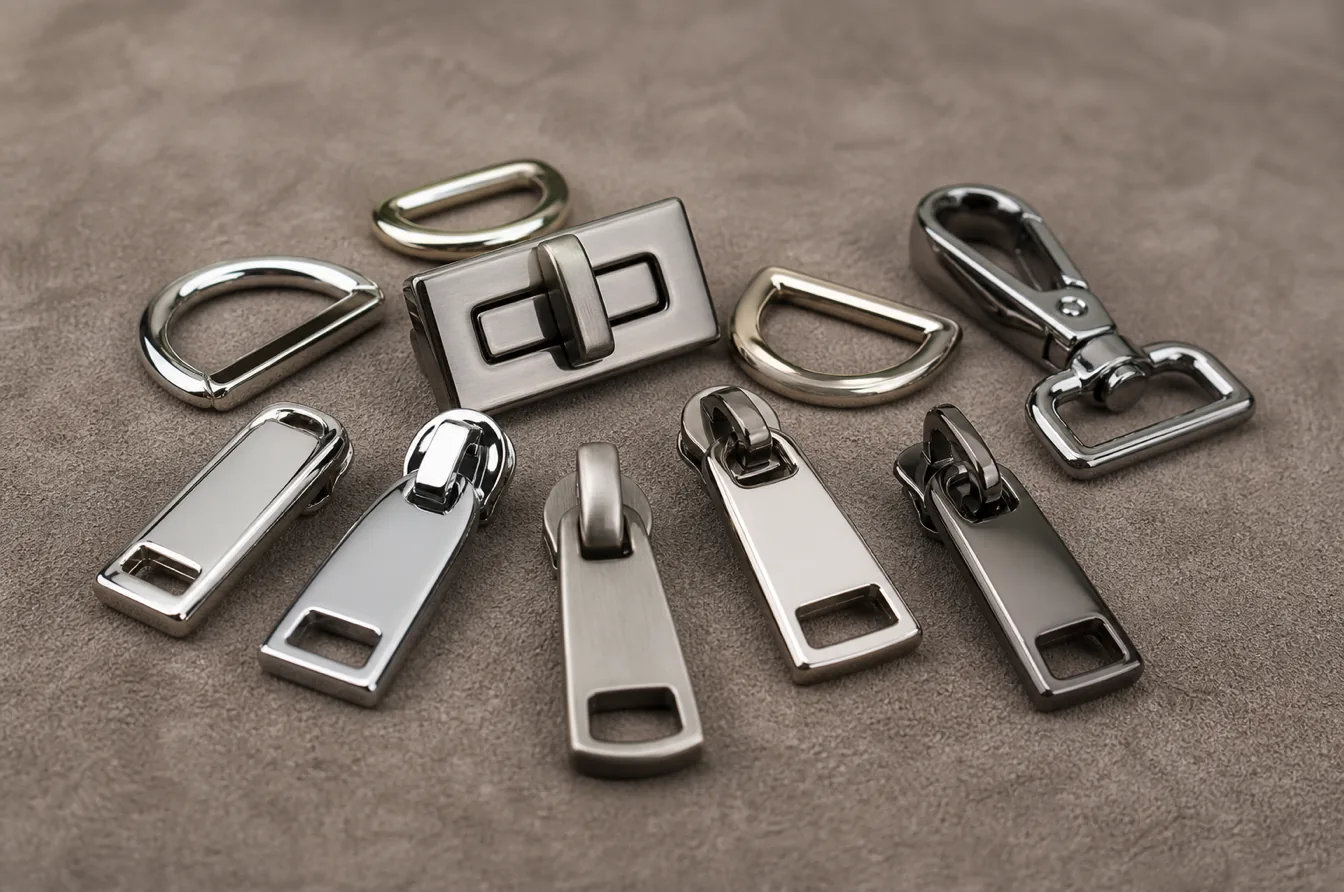
Read Color Temperature Together With Surface Texture
Real silver plating often has a softer white appearance than chrome or rhodium. Depending on polish, thickness, lighting, and protection, it may appear slightly warm, grey, or creamy. That character can work well with vintage leather, soft textiles, jewelry-inspired trims, and products that should not look overly technical. A mirror polish increases brilliance, while a satin treatment reduces sharp reflections and makes the finish feel quieter.
Chrome normally creates a cooler, cleaner, more mirror-like impression. The visual effect often comes from a highly polished nickel layer beneath a thin chrome top layer. Because the chrome layer is thin and partly follows the optical quality of the layers below, weak polishing, casting pores, waviness, or scratches can remain visible. Bright chrome can suit modern buckles, logo plates, clasps, and sharply defined bag hardware, but the same reflectivity can make fingerprints and surface distortion easier to notice.
Nickel generally sits between warm silver and cool chrome. Bright nickel can be reflective, while satin nickel creates a softer, more muted surface. A slight yellow or grey cast may become clearer when nickel is placed beside rhodium or chrome. This difference matters when several suppliers produce components for the same product because “bright nickel” from separate plating systems may not create an exact visual match.
Palladium often appears neutral, refined, and slightly softer than a crisp rhodium white. It can support a premium appearance without the icy character of bright chrome. Rhodium usually produces the brightest and coolest premium white within this group, although rhodium alloys and alternative white finishes can create several tones. The metal name alone therefore cannot guarantee one universal shade.
Approve the Finish on the Actual Component
Metallic color changes with geometry. A flat plate reflects light differently from a rounded buckle frame, a faceted zipper pull, or a recessed logo. Polished edges can look brighter than broad faces, while brushed areas can appear darker because they scatter light. Deep cavities may also receive a different deposit distribution from exposed edges, changing both brightness and long-term wear.
The approval sample should use the intended base material, production geometry, polish, brushing direction, and coating system. A supplier color card is useful for narrowing the direction, but it cannot reveal how the finish will look on a zinc-alloy casting, machined brass part, stamped steel component, or stainless-steel ring. The full hardware set should also be viewed beside the final leather, fabric, webbing, print, or molded material because surrounding colors affect the apparent warmth and brightness of silver-tone metal.
| Finish | Typical visual direction | Surface character to define | Main matching risk |
|---|---|---|---|
| Silver | Soft white, often slightly warm or grey | Mirror, bright, satin, brushed, or antique | Tarnish protection and batch-to-batch warmth |
| Chrome | Cool, blue-white, highly reflective | Bright mirror or satin chrome | Substrate polish, underlayer quality, and fingerprints |
| Nickel | Neutral to slightly warm white | Bright, semi-bright, satin, or brushed | Yellow-grey shift beside cooler components |
| Palladium | Neutral, clean, refined platinum-like white | Bright or soft polished finish | Different pure-metal and alloy recipes |
| Rhodium | Crisp, brilliant, cool white | High polish, bright white, or controlled alloy tone | Thin coverage, underlayer influence, and supplier shade variation |
Does a Silver-Tone Finish Name Describe Its Color, Plating Metal, or Surface Effect?
Ambiguous finish language creates quotations that look comparable on paper but describe different materials, processes, costs, and expected service behavior.
A silver-tone name may identify a visual target, a real deposited metal, a plating alloy, or a protected surface effect. A usable specification must separate the approved appearance from the base metal, layer sequence, final deposit, texture, and protective treatment.
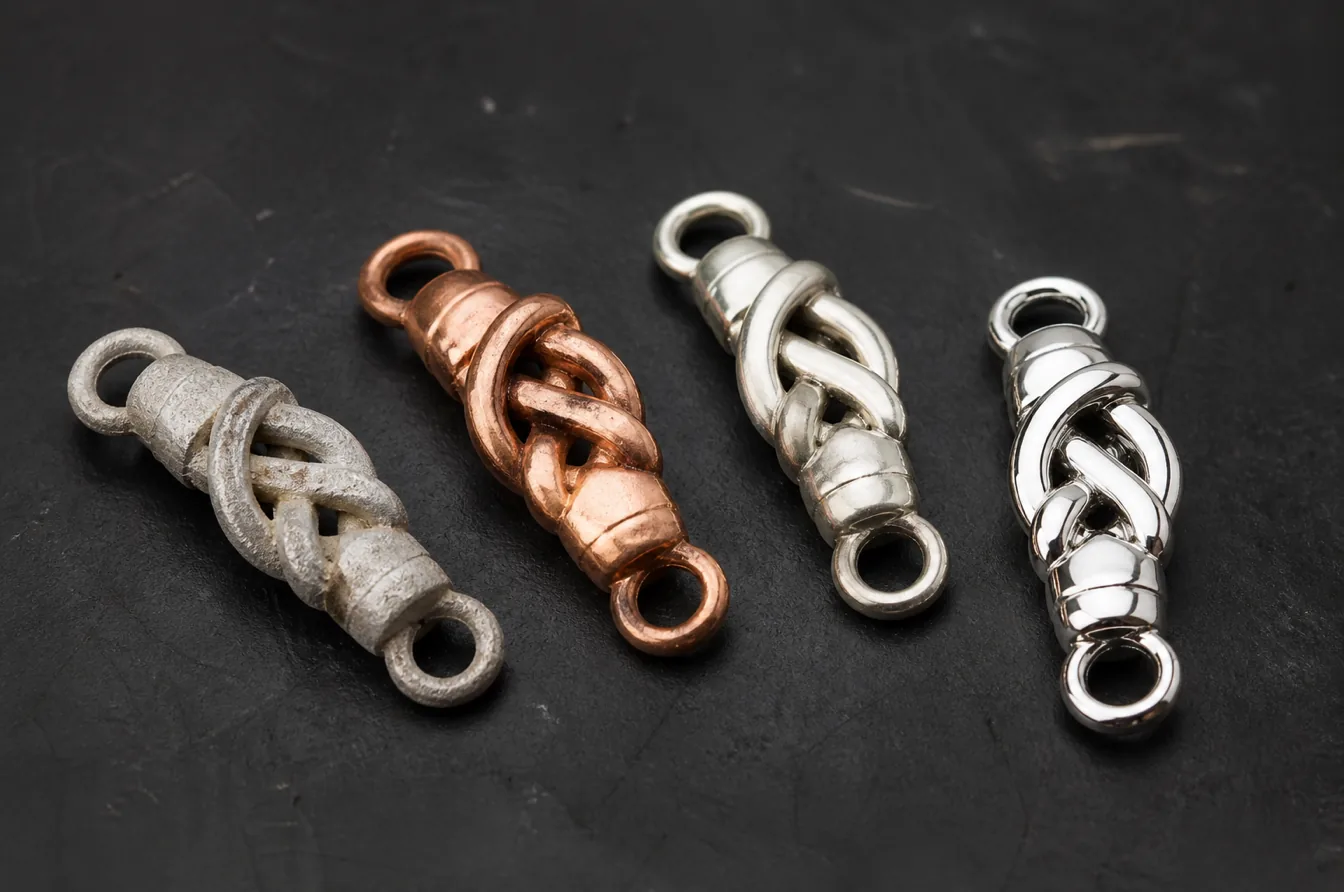
Separate the Visible Color From the Material Structure
“Silver finish” is the most ambiguous term in this group. It can mean genuine silver plating, a generic silver color, bright nickel, nickel-chrome, white bronze, palladium, rhodium, or even a nonmetallic coating that copies a silver appearance. Each route can produce an attractive first sample, but the cost, thickness, wear pattern, tarnish behavior, and repair options may be completely different.
Chrome and nickel are also commonly confused. Decorative chrome is often built as a layered system rather than a single deposit directly on the base part. Copper may help level a cast surface, several nickel layers may support brightness and corrosion resistance, and a thin chrome layer may provide the final cool tone and surface hardness. A part described only as “chrome” can therefore still contain a substantial nickel structure below the visible layer.
Nickel itself may be the final appearance or an engineering underlayer. It can smooth small surface irregularities, support a bright finish, reduce the visual effect of porosity, and create a base for chrome or a precious-metal top layer. Palladium can also serve two roles. It may be visible as a premium white surface, or it may act as a barrier below rhodium or another final deposit. Rhodium is most often used as the exterior bright-white layer, but rhodium-alloy systems may be selected when color, deposit distribution, wear, or cost needs adjustment.
These distinctions change product descriptions and approval records. “Rhodium color,” “rhodium plated,” and “rhodium-look alloy” are not equivalent. The same principle applies to silver and palladium. Clear wording prevents a visual reference from being mistaken for a material declaration.
Record the Whole Plating Stack
A complete finish record begins with the base metal and its manufacturing route. Zinc alloy, brass, stainless steel, steel, aluminum, and plastic require different preparation and layer strategies. The record then identifies polishing or blasting, cleaning and activation, leveling layers, barrier layers, the decorative top layer, and any transparent seal, lacquer, or e-coating.
Layer order matters because a thin final deposit cannot hide a weak foundation. Porosity in a zinc-alloy casting can create pits or blisters. Copper migration can influence the color of a thin precious-metal finish. A passive stainless-steel surface needs suitable activation for strong adhesion. Sharp edges may receive high current and build a different thickness, while deep recesses may receive less coverage. The visible metal name explains only the final part of this construction.
A consistent quotation should use the same substrate, preparation, layer sequence, minimum thickness points, topcoat, texture, and test conditions across suppliers. Otherwise, one quote may describe a thin decorative flash over a basic underlayer while another includes a more complete protective system. The cost difference may come from the hidden structure rather than the visible color.
| Finish wording | What it may mean | Clarification needed before approval |
|---|---|---|
| Silver finish | A generic silver color or real silver plating | Deposit chemistry, thickness, anti-tarnish treatment, and color master |
| Chrome finish | Chrome over nickel, another chrome-look system, or a color target | Full underlayers, chrome process, texture, and critical coverage areas |
| Nickel finish | Visible nickel or nickel used below another finish | Final or intermediate role, surface texture, and skin-contact position |
| Palladium finish | Pure palladium, palladium alloy, barrier layer, or palladium-tone effect | Chemistry, layer position, final shade, and topcoat |
| Rhodium finish | Pure rhodium, rhodium alloy, or rhodium-look alternative | Actual final deposit, underplate, thickness, color, and wear requirement |
How Do These Finishes Compare in Wear, Corrosion, and Tarnish Resistance?
A premium metal name does not guarantee reliable service when the coating is too thin, poorly supported, or tested against the wrong exposure.
Chrome and rhodium usually provide hard, tarnish-resistant surfaces; silver needs tarnish management; nickel offers useful hardness and leveling; and palladium provides stable premium-white options. Actual durability still depends on thickness, underlayers, adhesion, geometry, topcoat, and use conditions.
Distinguish Tarnish, Corrosion, Wear, and Coating Failure
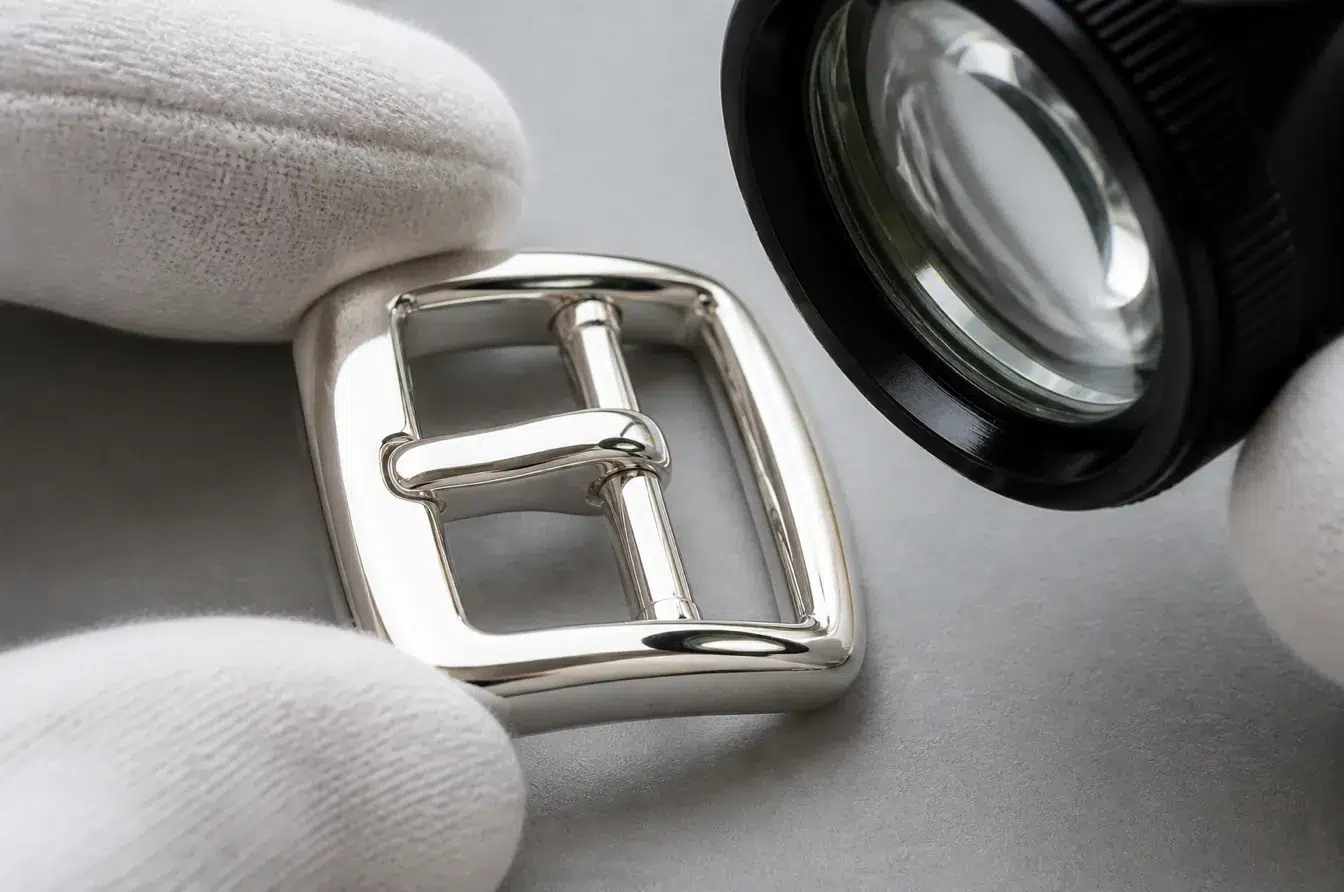
Tarnish is a surface color change caused by a reaction between the finish and its environment. Silver is especially associated with this risk, so a bright silver-plated part often needs an anti-tarnish treatment or clear protective layer. That protection should be considered part of the finish system. Two silver-plated parts with different seals can age differently even when the initial color is almost identical.
Corrosion begins when moisture, salts, chemicals, or defects allow the metal system to deteriorate. The visible top layer may remain intact in one area while pores, cut edges, rack points, or worn contact surfaces expose the underlayer elsewhere. A nickel-chrome system can offer useful protection, but its performance depends on the nickel structure and continuity of the coating. Palladium and rhodium are chemically stable choices for premium surfaces, yet thin areas or poor adhesion can still expose the layers beneath them.
Wear is different again. Moving hooks, chain links, buckle tongues, swivel joints, zipper pullers, and clasp contact points rub repeatedly. A hard top layer can resist fine scratching, but no thin decorative coating should be treated as permanent under unlimited friction. Rhodium is valued for surface hardness and brightness, while chrome also performs well against abrasion. Palladium can be stable but may not provide the same exterior hardness as a well-designed rhodium system. Silver is comparatively soft, so high-friction applications need careful thickness and protection decisions.
Peeling, blistering, cracking, cloudiness, and pitting are often process or layer-compatibility failures rather than simple material weaknesses. Preparation, cleaning, activation, polishing, casting quality, deposit stress, topcoat curing, and handling can determine whether the finished part survives use.
Match the Test Plan to the Product Environment
No single laboratory result can rank every silver-tone finish for every product. Apparel hardware may face perspiration, washing, detergent, fabric rubbing, and skin contact. Bag hardware may meet leather chemistry, hand oils, cosmetics, repeated opening, and hard contact between components. Footwear adds flexing, impact, dirt, moisture, and abrasion. Swimwear brings wet-dry cycling, salt, chlorinated water, sunscreen, and prolonged skin contact. Pet hardware may experience outdoor exposure, pulling, repeated operation, mud, cleaning agents, and contact between moving metal parts.
The test plan should separate appearance retention from protection of the base metal. A part can remain structurally sound but become commercially unacceptable because of visible stains, color drift, or patchy wear. Another part can look acceptable on the main face while corrosion begins at a hidden joint or exposed edge. Inspection criteria should therefore cover both visible finish quality and protective defects.
Production-intent samples are more useful than isolated flat panels when geometry creates thin areas, friction points, or trapped moisture. The evaluation can combine adhesion, abrasion, repeated operation, corrosion conditioning, artificial perspiration, wash or chemical exposure, and assembled-product review. Acceptance limits should define the permitted color change, wear location, exposed underlayer, staining, blistering, peeling, or corrosion rather than relying on a vague requirement such as “high durability.”
| Performance concern | Most relevant variables | Typical vulnerable areas | Practical approval focus |
|---|---|---|---|
| Tarnish or discoloration | Final metal, seal, lacquer, chemicals, and storage | Broad visible faces and recessed details | Color change and uniformity after conditioning |
| Abrasion and friction | Surface hardness, thickness, topcoat, load, and motion | Buckle tongues, hooks, chains, pivots, and edges | Wear-through, scratch pattern, and exposed underlayer |
| Corrosion | Base metal, porosity, underlayers, coating continuity, and moisture | Pits, cut edges, holes, rack points, joints, and recesses | Red or white corrosion, blistering, staining, and substrate attack |
| Adhesion failure | Cleaning, activation, layer compatibility, stress, and curing | Sharp bends, corners, holes, and formed areas | Peeling, cracking, lifting, and flaking |
| Skin-contact suitability | Contact duration, nickel-containing layers, wear, and material release | Backs of trims, zipper areas, clasps, and body-facing surfaces | Finished-part assessment after representative wear |
Which Silver-Tone Finish Best Suits Apparel, Footwear, Bags, Swimwear, and Pet Accessories?
The right finish follows the component’s contact, movement, environment, appearance, and price position—not a universal ranking of five metal names.
Nickel or chrome can suit controlled commercial applications, silver supports a softer jewelry-like look, palladium enables premium white and barrier systems, and rhodium creates a bright luxury surface. High-contact and wet applications require stronger attention to the complete coating construction.
Choose by Contact, Movement, and Exposure
Apparel buttons, rivets, zipper pullers, hooks, and logo plates can use several silver-tone systems. Bright nickel offers a familiar neutral appearance and efficient decorative performance when the contact position and material requirements allow it. Chrome can create a cooler, sharper look for visible trims. Silver can support a softer premium or vintage direction, but washing, perspiration, and fabric rubbing make tarnish protection and color retention important. Body-facing components need particular attention to the complete layer structure and material-release behavior.
Footwear hardware meets a different mix of conditions. Eyelets, hooks, lace clips, buckles, and logo parts can face repeated flexing, impact, dirt, moisture, and friction from laces or straps. Bright chrome can suit a technical mirror-white direction, while rhodium may be reserved for highly visible premium components where the cost is justified. A thin precious-metal flash is less suitable when hard rubbing repeatedly reaches the same edge or contact point unless the supporting layers and protection have been designed for that movement.
Bag hardware often has the highest visual demand because buckles, turn locks, chain links, clasps, and logo plates become part of the product identity. Palladium can create a refined neutral white, while rhodium can provide a brighter jewelry-like finish. Chrome can support a modern technical effect, and silver can suit a softer luxury aesthetic. Leather contact, hand oils, cosmetics, moving joints, and metal-to-metal rubbing should guide the final construction rather than appearance alone.
Swimwear hardware requires caution because wet-dry cycling, salt, pool chemicals, sunscreen, and skin contact occur together. A stable substrate and a nickel-controlled or nickel-free finish system may be more important than the name of the top color. Palladium-based barriers and rhodium top layers can be considered for premium bright-white programs, but every selected construction still needs validation on the actual component.
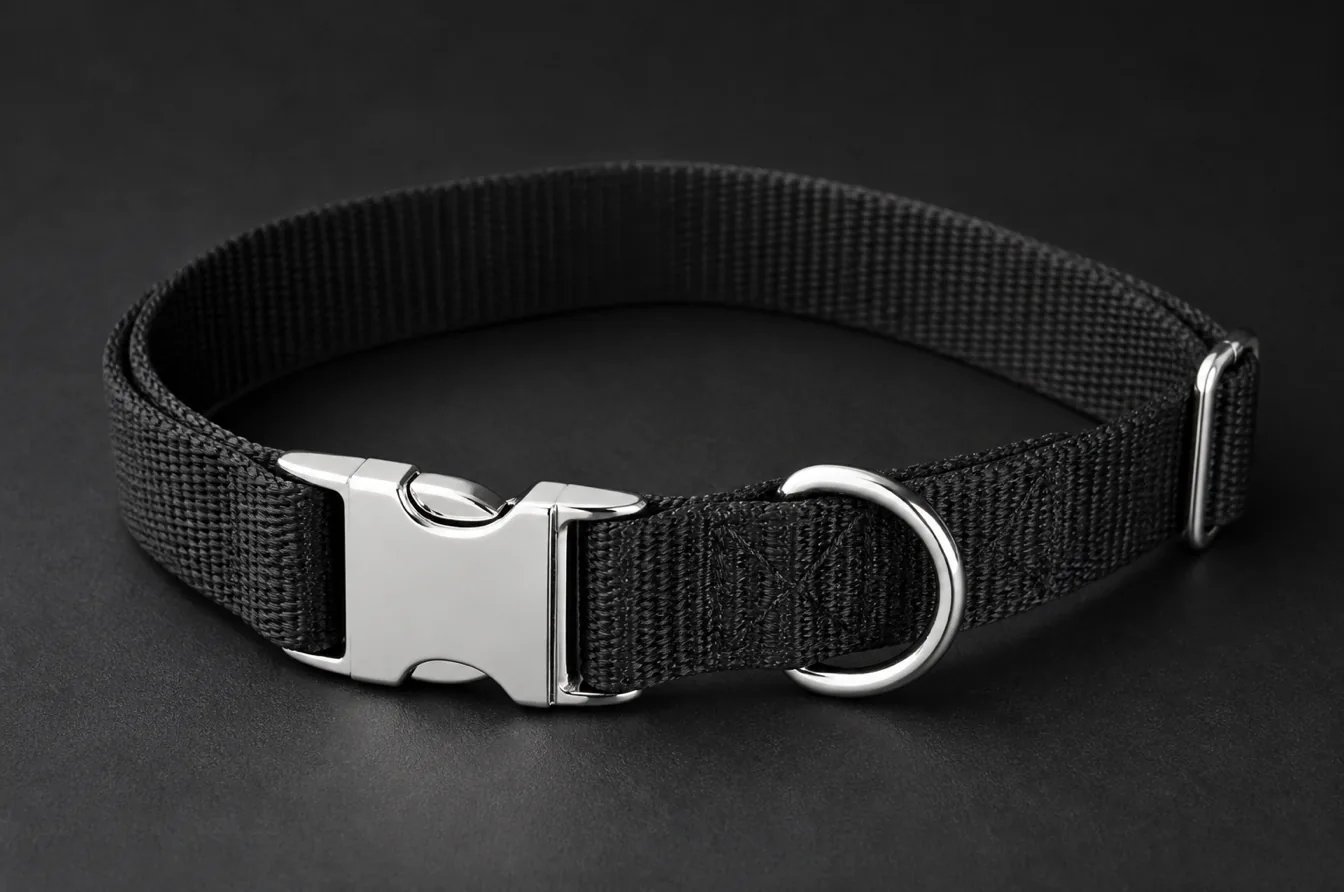
Pet-product hardware often combines outdoor moisture, repeated release cycles, pulling, dirt, cleaning, and impact. Decorative finish choice should not reduce the structural safety margin of a buckle, ring, snap hook, or adjuster. Stainless steel or another corrosion-resistant base may be more valuable for demanding functional parts, while plated zinc alloy or brass can serve decorative components when exposure and loading remain controlled.
Coordinate the Finish Across a Complete Collection
One product line may use several base metals and production processes. A cast zinc-alloy logo plate, brass clasp, stainless-steel ring, steel chain, and plastic-plated decoration will not necessarily achieve the same silver tone through one identical recipe. Each substrate may need a different preparation and layer structure to match the same approved visual target.
The approval should therefore cover the assembled hardware family rather than separate loose components. A cool chrome buckle may look inconsistent beside a warmer nickel zipper pull. A bright rhodium logo can make a nearby palladium clasp appear grey even when both parts look premium on their own. Matching involves color temperature, brightness, gloss, texture, edge tone, and aging behavior.
Component-level finish selection can also improve value. Rhodium may be reserved for the signature logo, palladium for a body-contact trim, chrome for a highly polished decorative buckle, and a controlled nickel or white-bronze alternative for lower-wear components. This strategy works only when the resulting shades remain intentional and the specification records which parts use each system.
| Product situation | Useful finish direction | Main design reason | Critical validation point |
|---|---|---|---|
| Cost-controlled apparel trims | Bright nickel, nickel-chrome, or suitable silver-tone alternative | Familiar appearance and scalable decorative finishing | Washing, perspiration, rubbing, skin contact, and color matching |
| Modern mirror-white bag or footwear hardware | Bright chrome over a suitable underlayer system | Cool, clean, highly reflective visual | Polishing quality, fingerprints, recess coverage, and moving contact points |
| Premium neutral-white bag hardware | Palladium or a controlled palladium-alloy finish | Refined white tone and premium positioning | Exact chemistry, layer role, thickness, and wear pattern |
| Jewelry-inspired logo or signature component | Rhodium or a suitable rhodium-alloy top layer | Crisp white brightness and strong tarnish resistance | Underplate quality, coverage, abrasion, and cost control |
| Soft or vintage premium-white trim | Silver with an appropriate protective treatment | Warmer, less technical visual character | Tarnish, topcoat appearance, moderate wear, and storage behavior |
| Wet or body-contact component | Nickel-controlled or nickel-free system matched to the application | Reduces material-release and corrosion concerns | Finished-part testing after wear and environmental conditioning |
What Finish Details Should Be Specified When Ordering Custom Fashion Hardware?
A finish code becomes reliable only when it connects the approved appearance to a repeatable material, process, measurement, test plan, and inspection method.
A complete specification should define the base metal, preparation, plating sequence, final deposit, thickness, topcoat, color master, gloss, texture, critical surfaces, permitted contact points, application tests, defect limits, and sample-to-bulk approval record.
Build a Finish Code That a Factory Can Reproduce
The drawing or RFQ should begin with the exact base material and manufacturing method. “Metal buckle” is not enough because die-cast zinc alloy, machined brass, stamped steel, and stainless steel respond differently to polishing, activation, plating, and corrosion exposure. The specification should then define the surface preparation, including polish level, brushing direction, blasting texture, and any areas that must remain uncoated.
The plating sequence should identify each functional layer in order. This includes strikes, leveling layers, barrier layers, the final decorative metal, and any seal, lacquer, or e-coating. A minimum thickness can be assigned to the relevant layers and measured at agreed locations. Measurement points matter because edges, broad faces, recesses, holes, and rack-contact areas may not receive identical deposits.
Appearance controls need more than a metal name. The record should include a sealed physical master made on the intended substrate and geometry. Color values can support the master where the surface permits reliable measurement. Gloss, texture, brushing direction, critical viewing faces, acceptable edge variation, and standard lighting conditions should also be defined. Photographs help with traceability but should not replace the physical master.
Performance requirements should describe the exposure and acceptance limit. Instead of “good corrosion resistance,” the document can state the conditioning method, duration, inspected zones, and permitted defects. The same principle applies to abrasion, repeated operation, artificial perspiration, washing, chemical contact, color transfer, and adhesion. This creates evidence that can be compared across development, pilot, bulk production, and repeat orders.
Control the Change From Sample to Bulk
An attractive development sample does not guarantee a consistent production lot. Bulk results can shift when the casting supplier, base alloy, polishing media, cleaning cycle, plating bath, rack loading, electrical current distribution, production line, topcoat cure, or subcontractor changes. The approval record should connect the signed sample to the process that will be used for production.
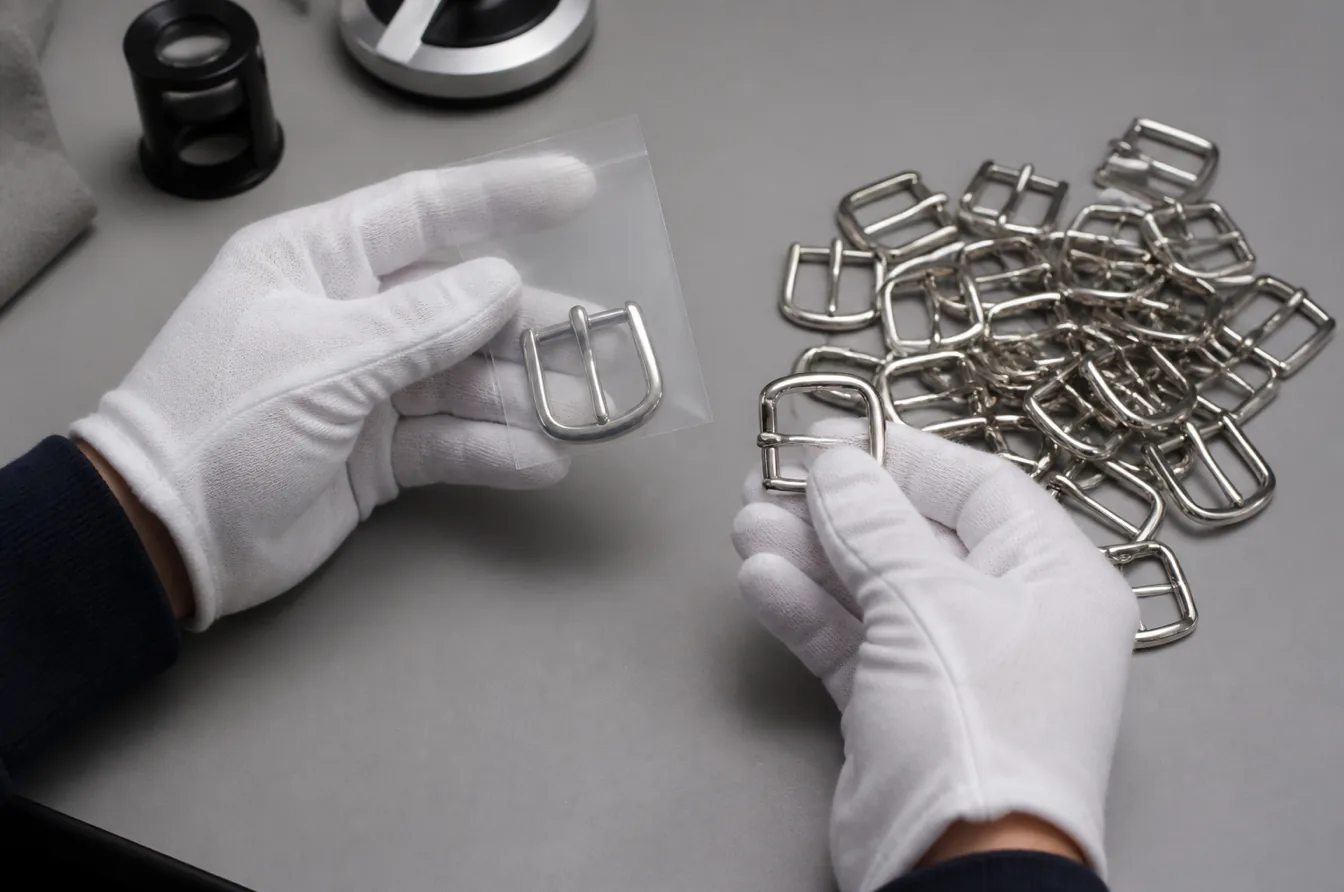
Pilot parts should use production tooling, intended fixtures, planned rack or barrel processing, and the real coating line where possible. Inspection should cover the main face, edges, recesses, holes, contact points, backs, and assembled appearance. Critical areas need separate limits because a small mark on a hidden rack point may be acceptable while the same mark on a logo face is not.
Bulk inspection should distinguish color drift from structural coating defects. Patchiness, cloudiness, burning, pitting, exposed base metal, roughness, peeling, blistering, inconsistent brushing, and visible rack marks require clear definitions. Retained samples from the approved pilot and first bulk lot can support repeat-order control. When any material, process, chemistry, factory, or protective layer changes, the affected appearance and performance checks should be repeated before release.
The strongest purchasing language is therefore not “premium silver finish.” It is a controlled system that links a finish code to a base metal, layer construction, master sample, measurement plan, test method, and defect limits. That record allows cost discussions without losing the approved visual or functional target.
| Specification field | Information to record | Risk reduced |
|---|---|---|
| Base part | Material grade, manufacturing method, geometry, and drawing revision | Hidden substrate changes and incompatible preparation |
| Surface preparation | Polish, brushing, blasting, cleaning, activation, and critical faces | Poor leveling, visible defects, and weak adhesion |
| Layer structure | Underlayers, barrier layers, final deposit, minimum thickness, and topcoat | Ambiguous quotations and premature wear or corrosion |
| Appearance control | Sealed master, color target, gloss, texture, lighting, and viewing method | Supplier-to-supplier and batch-to-batch mismatch |
| Process control | Rack or barrel method, permitted contact points, and measurement locations | Thin recesses, edge variation, rack marks, and uneven color |
| Performance plan | Relevant exposure, test conditions, inspected areas, and acceptance limits | Generic durability claims that do not match actual use |
| Approval record | Pilot sample, signed bulk sample, retained reference, and change history | Sample-to-bulk drift and repeat-order inconsistency |
Conclusion
Silver-tone hardware becomes predictable only when color, metal, layer structure, application, testing, and production control are specified as one complete finish system.