- Loading...
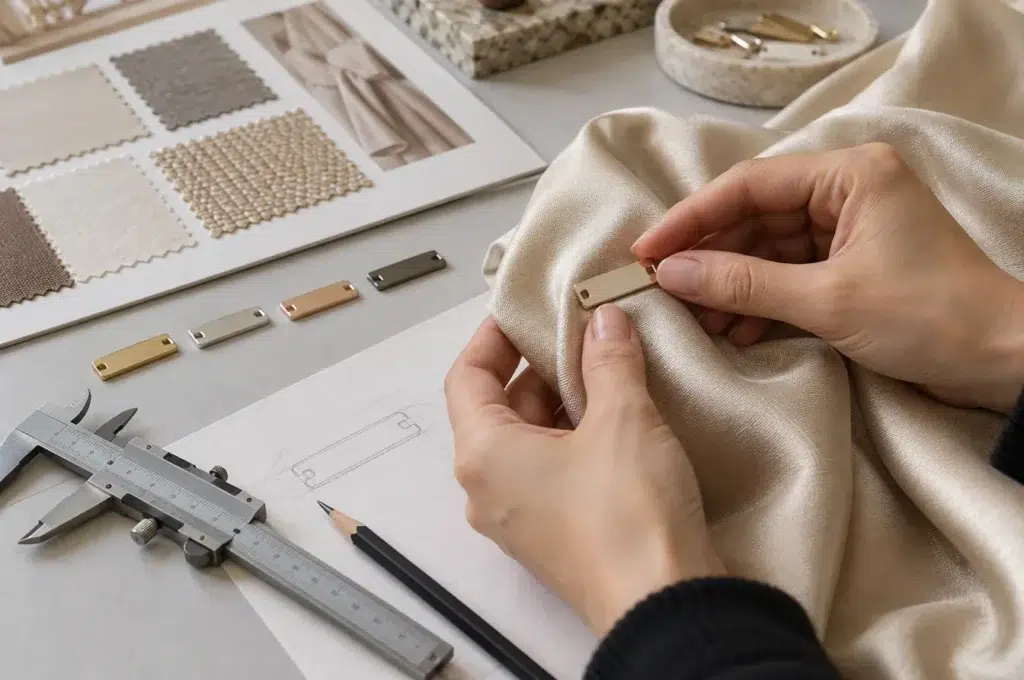
I have seen a finish approved from a screen and rejected as soon as the plated sample reached the design table.
Yes, Pantone color codes can communicate the intended color of custom fashion hardware. However, the code should remain a color reference rather than the complete production standard, especially for electroplated, PVD, brushed, polished, antique, or other reflective metal finishes.
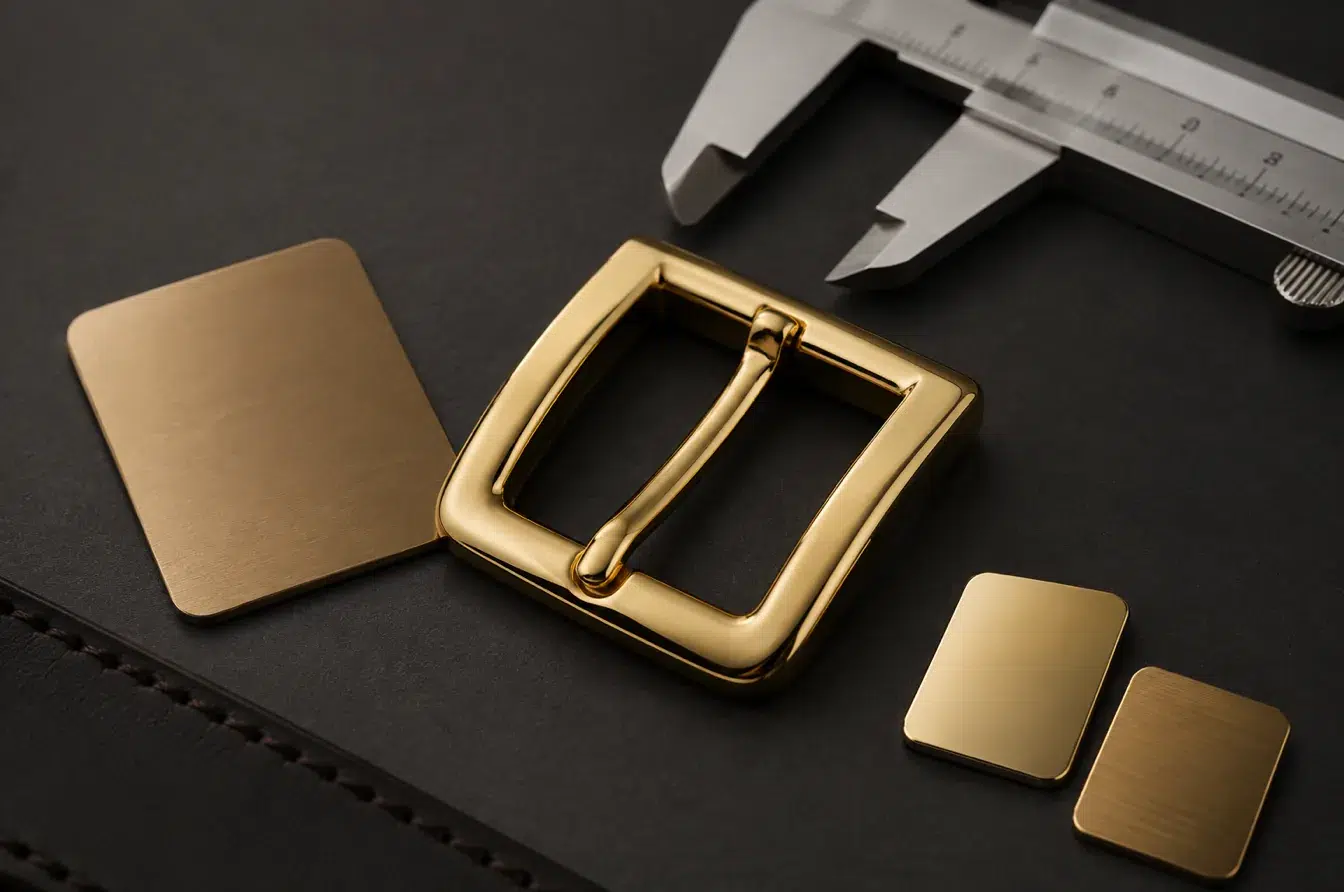
A reliable metal finish specification connects color intent with the material, finishing process, surface texture, gloss, geometry, and an approved physical sample. This distinction matters across apparel, footwear, bags, swimwear, and pet products because the same color reference can produce very different results on a painted eyelet, a polished buckle, a PVD logo plate, or an antique-finished clasp.
Which Pantone Color System Should Be Used for Custom Metal Fashion Hardware?
A Pantone number without its system or suffix can send a development team toward the wrong physical reference.
TPG references are generally more relevant to coated hard surfaces, while TCX references are intended for textiles. Metallic product effects need a suitable product-focused metallic reference, and graphics metallic colors should not automatically become the approval standard for plated hardware.
Use the Full Color Designation
The number alone does not identify how a color was presented or what material application it was designed to support. A complete callout should include the color number, suffix or library, intended substrate, and whether the reference controls a pigmented coating, color fill, printed detail, or general metallic direction. This removes a common gap between design files and factory interpretation.
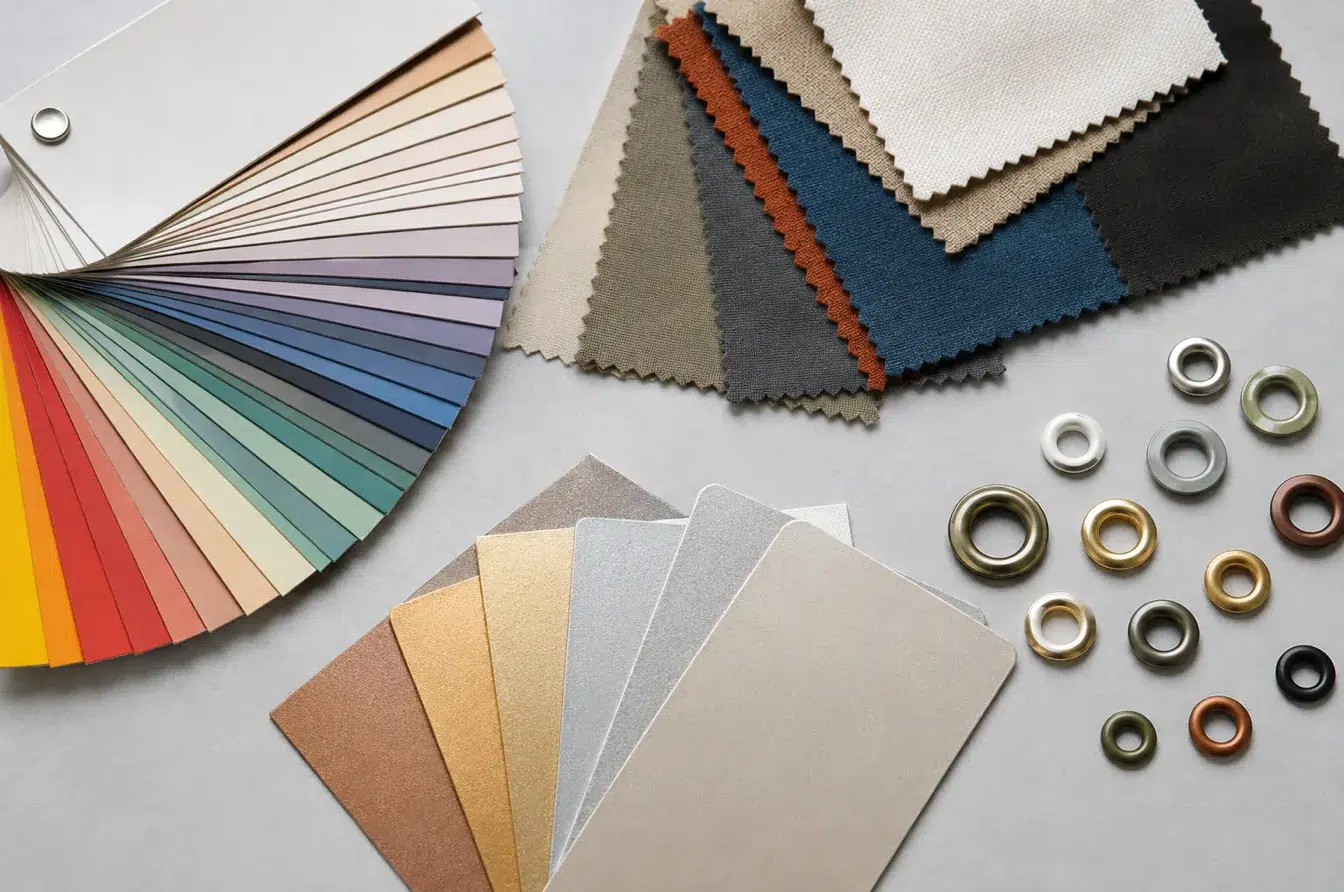
For example, a fabric color may be developed from a textile reference, while a coated eyelet beside it may use a hard-surface reference. The two references can support visual coordination, but they should not be treated as physically identical standards. Textile fibers scatter light, a painted surface reflects from a continuous film, and plated metal adds directional reflection from both the deposited layer and the polished substrate beneath it.
The tech pack should therefore record the full Pantone designation rather than a bare number copied from a digital palette. A physical chip or swatch should also be identified when color accuracy is important. Digital values remain helpful for drawings and communication, but they cannot reproduce the gloss, depth, texture, or movement of a finished metal part.
Match the Reference to the Surface Treatment
The intended process should guide the reference choice. TPG can be practical for opaque coatings on hard surfaces, including painted metal components. A product-focused metallic reference can help establish the visual direction for shimmer or metallic-effect coatings. TCX is useful when the surrounding fabric color must be coordinated with the hardware, but it does not define how a metal surface should be plated or polished.
Graphics metallic colors serve a different purpose. They describe metallic ink effects for printed materials such as packaging, labels, and artwork. A graphics metallic code may still communicate a broad gold or bronze direction, but it should not be presented as a plating formula. If it is the only available brand reference, the finishing supplier should develop physical metal samples around that direction and the selected sample should become the working production master.
| Pantone reference route | Best use in a fashion product | Main limitation for hardware |
|---|---|---|
| TPG hard-surface reference | Painted or coated metal, plastic, leather, and other hard surfaces | Does not define metallic reflection or a plating stack |
| TCX textile reference | Fabric, thread, webbing, and soft-material coordination | Cannot reproduce the appearance of reflective metal |
| Product metallic reference | Metallic-effect direction for fashion accessories and hard goods | Still requires validation on the actual metal part |
| Graphics metallic reference | Printed packaging, labels, artwork, and general color direction | Represents metallic ink rather than electroplated or PVD metal |
| Digital color value | CAD files, presentations, and early communication | Screen appearance is not suitable for final physical approval |
Can Pantone Codes Accurately Represent Gold, Silver, Gunmetal, or Antique Brass Plating?
Plating names appear simple, but their visual result comes from much more than hue.
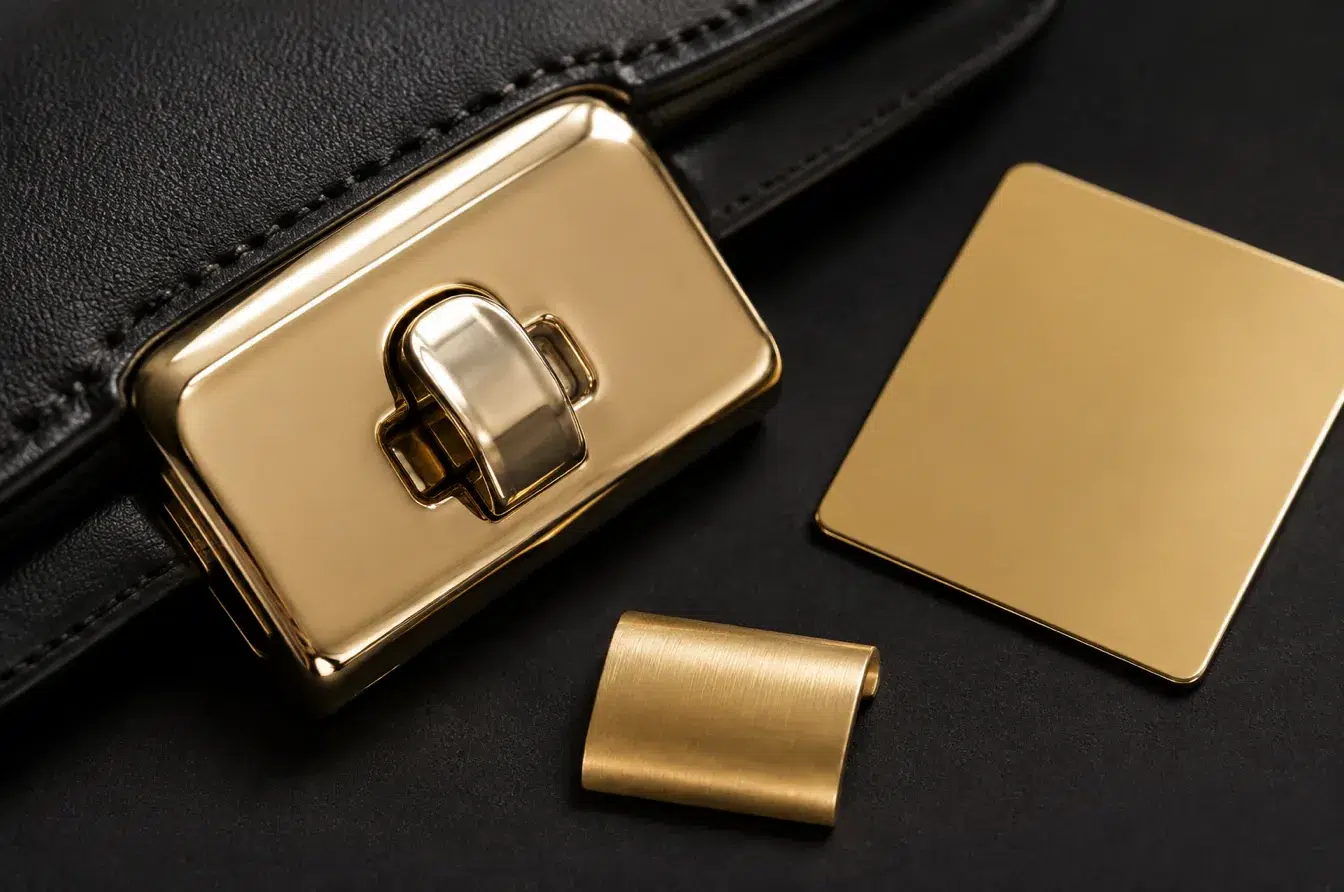
Pantone codes can indicate the desired warmth, darkness, or color family of a plated finish, but they cannot fully reproduce metallic depth, reflection, polish, or antique contrast. Gold, silver, gunmetal, and antique brass should be approved as physical metal finishes.
Separate Pigmented Color From Metallic Reflection
Paint, enamel, and color fill use pigments to create an opaque or partly translucent color layer. These processes can often move toward a Pantone target in a direct way because the visible surface is controlled largely by the formulated coating. Gloss and texture still matter, but the relationship between reference and finished color is easier to describe.
Electroplating and PVD work differently. They create thin metallic layers over a prepared surface. The final appearance comes from the base material, polishing quality, underlayers, deposited color layer, surface roughness, and any seal or clear protection. A pale gold over a bright polished base may look clean and luminous, while a similar color layer over a satin or rough base can look darker and less saturated.
Silver also illustrates the problem. Bright silver, satin silver, brushed silver, white nickel, and darker nickel-like finishes can occupy a similar general color family while producing very different product impressions. Gunmetal can lean blue, gray, brown, or black. Antique brass adds deliberate darkening in recesses and selective removal on raised areas, so contrast and application method are as important as the base tone.
Write Plating as a Developed Finish
A request such as “Pantone-matched champagne gold” should be treated as a development direction, not a complete factory instruction. The specification should identify the base metal, pre-finish, finishing route, brightness, texture, and approved sample. If the design depends on a particular red or green undertone, that preference should be stated in plain language and confirmed on the real part.
The approval hierarchy should also be clear. The Pantone reference establishes the initial color direction. The first metal trials show what the selected process can achieve. The chosen trial then becomes the physical master for later samples and bulk production. When a difference appears between the paper reference and the approved metal sample, the approval record should state which one controls production. For reflective plating, the signed metal sample normally provides the more useful visual standard.
| Finish family | Pantone contribution | Additional approval information |
|---|---|---|
| Opaque paint or enamel | Strong hue target | Coating type, gloss, texture, film appearance, and sample |
| Bright gold or silver plating | General tone and warmth direction | Base metal, polish, layer route, brightness, protection, and metal master |
| PVD gold, rose gold, or gunmetal | Color-family and mood reference | Substrate texture, pre-finish, recipe direction, loading, and sample |
| Antique brass or antique silver | Base-color direction | Recess darkness, relief contrast, wiping pattern, protection, and sample |
| Brushed or satin metal | Limited color direction | Grain size, direction, reflectivity, uniformity, and physical master |
What Metal Finish Details Should Be Specified Beyond the Pantone Code?
A correct color code can still produce the wrong result when the surrounding finish variables remain open.
A complete metal finish specification should define the base material, finishing process, pre-finish, gloss, texture, brushing direction, protective layer, critical surfaces, acceptable variation, and approved physical master. Performance expectations should be recorded separately from visual color approval.
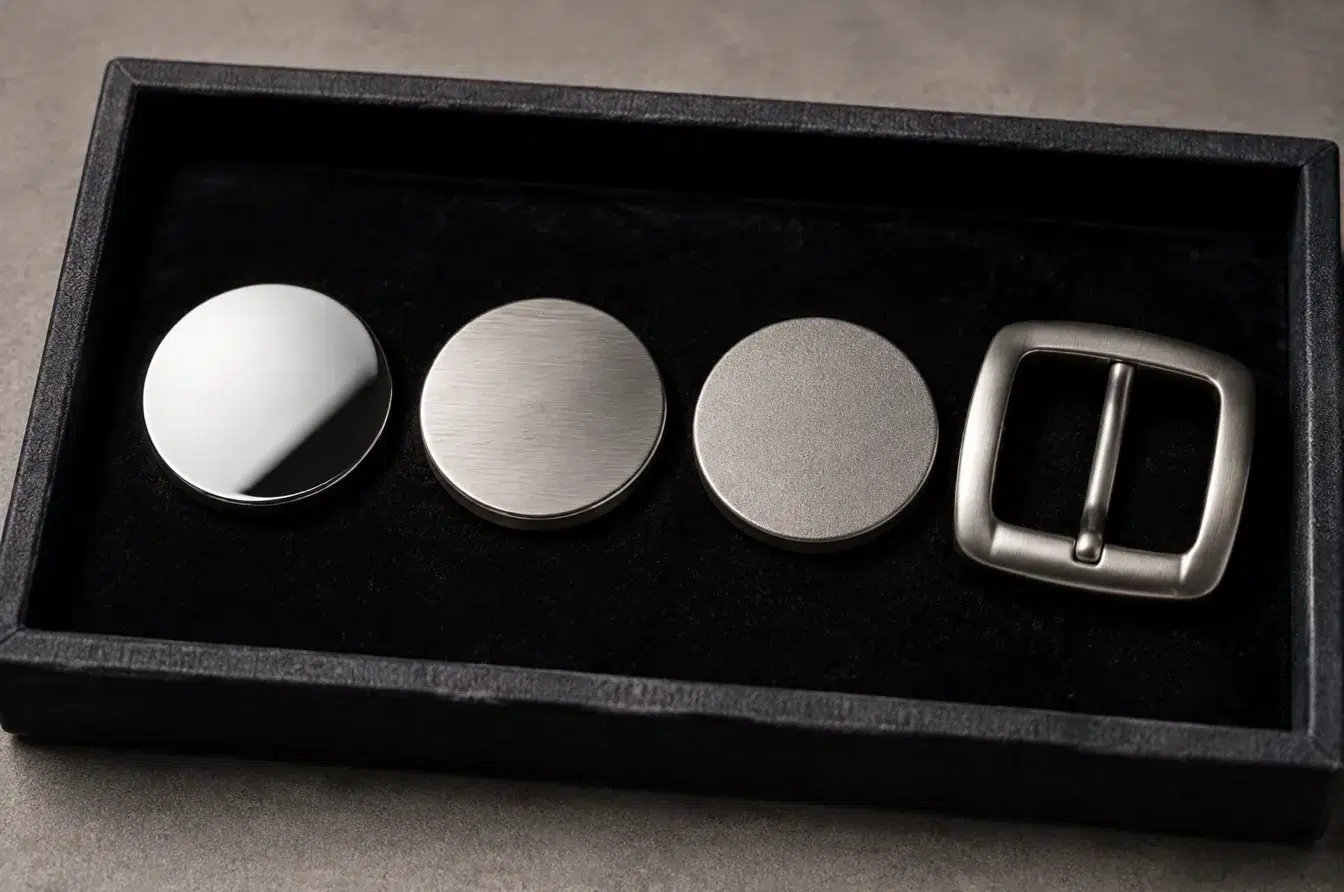
Define the Complete Surface Build
The substrate is the first control point. Zinc alloy, brass, stainless steel, aluminum, and steel do not present the same natural color, surface chemistry, or polishing response. A thin decorative layer may reveal the tone and texture beneath it, while an opaque coating may hide more of the substrate but soften engraving or fill narrow details.
The pre-finish should be recorded with equal care. Mirror polishing, satin brushing, fine blasting, tumbling, and as-cast texture create different reflection patterns before the color layer is applied. For brushed parts, the grain direction should follow the product drawing because a vertical grain and a circular grain can appear like different colors under the same light.
The visible finishing route should then identify whether the part is electroplated, PVD-coated, spray-coated, e-coated, enamel-filled, or treated with an antique effect. Terms such as “gold,” “black,” or “matte” are too broad by themselves. The presence of a clear protective coat, the desired gloss, the degree of transparency, and the expected tactile feel all change the final appearance.
Turn Appearance Into Inspectable Requirements
The approval record should identify which surfaces carry the strictest cosmetic requirement. A buckle front may be critical while a hidden back allows controlled contact marks. A logo plate may require consistent brushing across the presentation face, while a chain needs acceptable color continuity across moving links. Edges, holes, recesses, and attachment areas should be included rather than leaving inspection focused only on the largest flat face.
Acceptable variation should be discussed before bulk production. Metallic parts rarely look identical at every angle, so approval should distinguish normal directional change from an actual mismatch. The viewing light, comparison distance, orientation, and relationship to adjacent materials can be recorded in simple production language. Instrument readings may support the decision when the surface is suitable, but the physical appearance standard remains essential for complex reflective effects.
Visual approval and performance approval should remain separate. A finish may match the color master but still wear, tarnish, chip, fade, or transfer color during use. The product application should define relevant exposure to friction, perspiration, moisture, pool chemicals, cosmetics, detergent, outdoor light, or repeated movement. These requirements belong in the project specification without being confused with the Pantone color callout.
| Specification item | Why it changes the result | Practical record |
|---|---|---|
| Base material | Alters natural tone, preparation, and layer behavior | Exact alloy or approved material grade |
| Pre-finish | Controls reflection, smoothness, and visible texture | Mirror, satin, brushed, blasted, tumbled, or approved sample |
| Finishing process | Determines whether the color is pigmented or metallic | Electroplating, PVD, paint, e-coat, enamel, or antique treatment |
| Gloss and texture | Changes perceived lightness and depth | Visual level, direction, and physical comparison sample |
| Protective layer | Can shift warmth, gloss, and long-term appearance | Clear coat or seal requirement and approved result |
| Critical surfaces | Directs inspection toward visible and functional areas | Marked drawing or annotated sample |
| Allowed variation | Prevents subjective pass-or-fail decisions | Agreed visual range and comparison conditions |
| Application exposure | Separates color approval from use performance | Product-specific evaluation plan |
How Should Physical Metal Samples Be Approved Before Bulk Production?
A sample becomes useful only when its material, geometry, process, and approval conditions represent the intended order.
Bulk approval should rely on a signed physical master made on the intended substrate and representative part geometry. The review should cover color, gloss, texture, critical faces, adjacent materials, and defined lighting, while photographs serve only as supporting records.
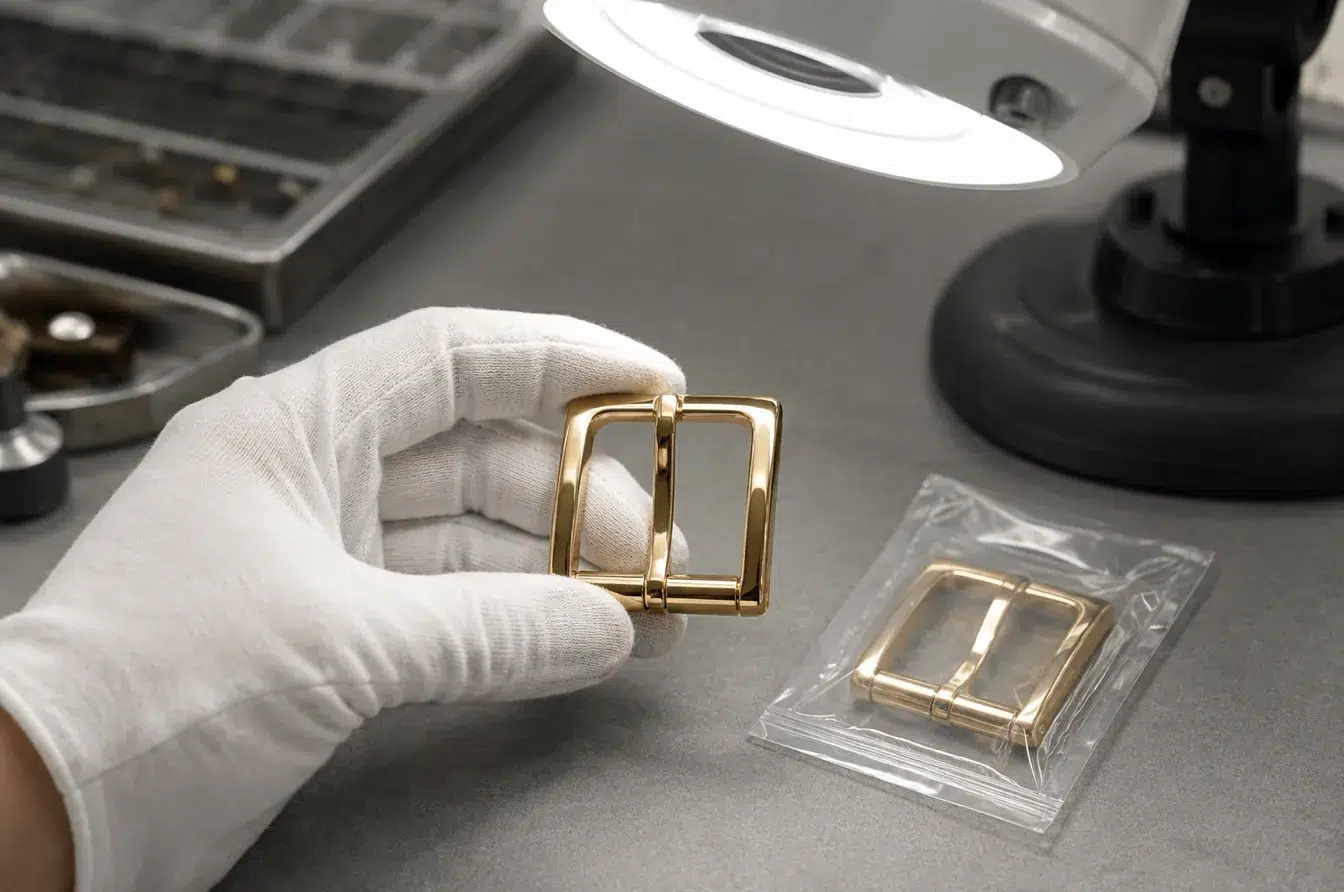
Approve the Actual Part, Not Only a Flat Panel
A flat panel is useful during early color development because it is easy to prepare and compare. It does not show how the finish behaves on a curved buckle frame, a recessed logo, a narrow zipper pull, a chain link, or a part with holes and sharp edges. Final approval should therefore move from the color panel to a production-intent component as early as practical.
The sample should use the intended base material and surface preparation. A polished brass sample cannot fully approve the appearance of the same color on blasted stainless steel or die-cast zinc alloy. The finishing route should also match the proposed bulk process. A hand-painted prototype may confirm the color direction, but it cannot validate the uniformity of a production coating line.
Review should include more than one part when variation is likely. Several pieces can reveal differences caused by position, racking, polishing, or local geometry. For a coordinated family of buckles, rings, logo plates, zipper pulls, and cord ends, the complete group should be viewed together. This allows small individual differences to be judged in the context of the finished product rather than in isolation.
Create a Clear Master-Sample Record
The selected sample should be signed, dated, coded, and protected from handling damage. Matching masters at the buyer and factory reduce disputes because both teams compare production against the same physical result. The record should connect the sample to the part drawing, base material, color reference, pre-finish, process route, gloss, texture, and revision status.
Lighting and orientation should remain consistent during review. A metallic surface can look warmer, darker, or more reflective when the viewing angle changes. The sample should be rotated during assessment so the full appearance is understood, but the final comparison position should be repeatable. Adjacent fabric, leather, plastic, paint, or webbing should be present when the hardware must coordinate with them.
Photographs are valuable for communication and traceability, but they should not replace the physical master. Camera exposure, white balance, screen settings, and surrounding light can shift the apparent color. A photograph can document which sample was selected, while the sealed part controls the actual visual decision.
| Approval stage | Main purpose | Required evidence |
|---|---|---|
| Color-direction review | Narrow the intended hue and finish family | Full Pantone designation, reference chip, and visual notes |
| Process trial | Compare achievable coating or plating routes | Labeled samples with substrate and process information |
| Production-intent sample | Confirm appearance on the real component | Intended material, geometry, pre-finish, and finishing line |
| Assembly review | Check harmony with the finished product | Hardware set beside fabric, leather, plastic, or webbing |
| Master-sample sealing | Establish the bulk visual standard | Signed and dated parts retained by both parties |
| Bulk comparison | Control shipment consistency | Master sample, agreed viewing method, and inspection record |
Why Can Metal Finish Colors Vary Between Samples and Bulk Orders?
The color callout may remain unchanged while the material, preparation, loading, or finishing conditions shift behind it.
Sample-to-bulk color variation can come from base-material lots, polishing, underlayers, bath or coating condition, PVD loading, film build, curing, clear protection, racking, geometry, and inspection light. Repeatability depends on locking these variables around the approved master.
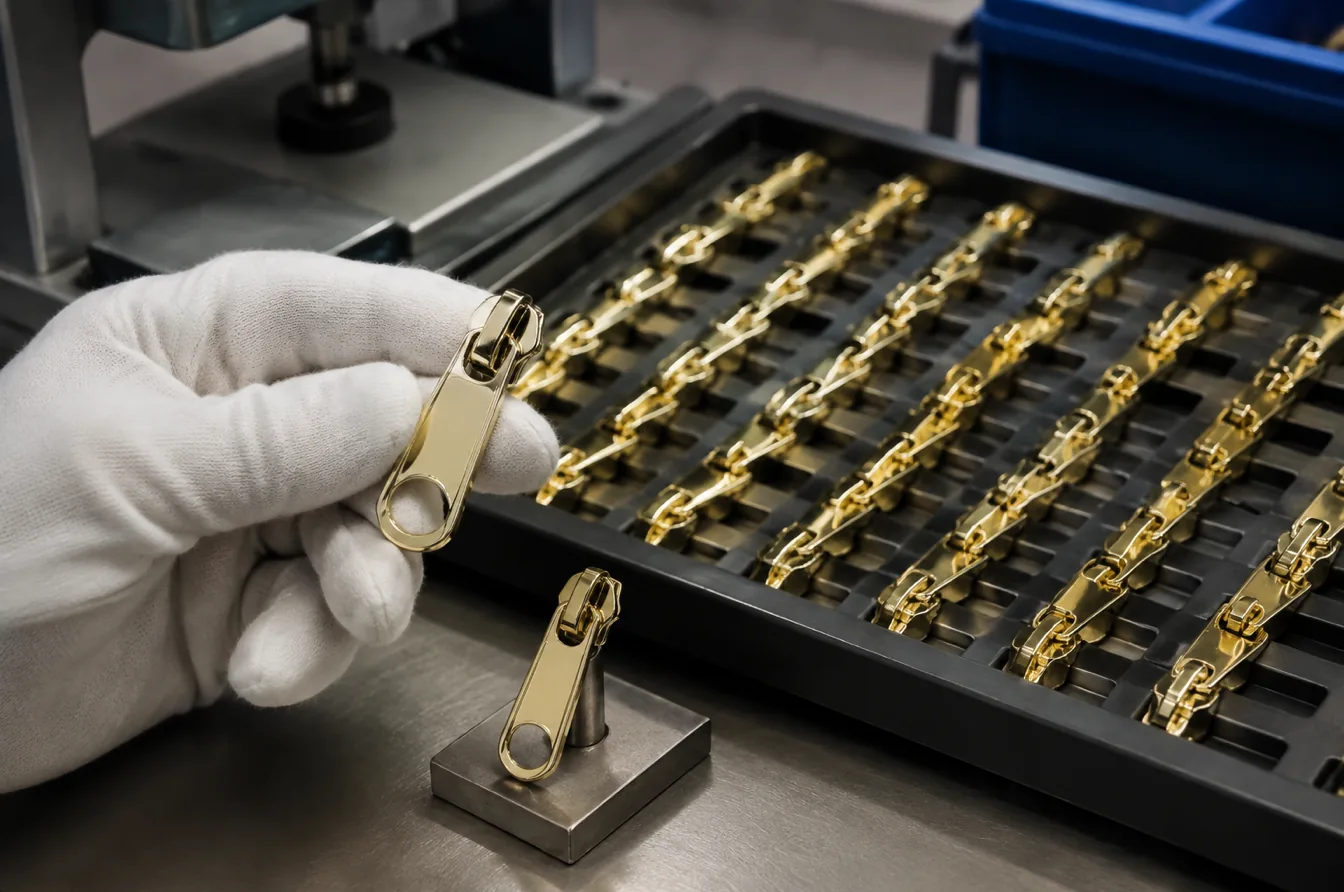
Identify Where Variation Enters the Process
Raw components create the first source of variation. Different alloy lots, casting surfaces, stamping marks, welding areas, or polishing levels can change how the finish reflects light. Small components with sharp edges and deep recesses are especially sensitive because the visible layer may not develop uniformly across every surface.
The finishing process adds further variables. Electroplating depends on preparation, bath condition, underlayers, current distribution, racking, and time. PVD depends on the substrate surface, chamber recipe, fixture position, target condition, and loading pattern. Paint and e-coat depend on pigment dispersion, film thickness, application, flash-off, curing, and clear protection. Antique treatments add manual or semi-controlled removal that can change the contrast between raised and recessed areas.
Sample scale can also mislead. A few carefully handled development pieces may receive more polishing attention and wider spacing than a full production load. Bulk racks or barrels introduce contact, shadowing, density, and handling conditions that the first sample did not experience. Production-intent sampling should reproduce the planned loading and finishing route closely enough to expose these risks before the order is released.
Control Reorders as Well as the First Bulk Run
The approved master should anchor incoming, in-process, and final inspection. Raw surfaces can be checked before finishing, critical appearance can be monitored during production, and finished parts can be compared under the agreed viewing conditions. Multiple pieces from different production positions provide a more reliable picture than one selected sample.
Process records should connect each batch to its material lot, preparation route, finishing line, loading method, color or coating lot, and final protection. The goal is not paperwork for its own sake. It is to make a visible change traceable to a production variable and to prevent an accepted result from depending on one operator’s memory.
Repeat orders require the same discipline. A new raw-material source, polishing compound, plating line, coating batch, PVD fixture, clear coat, or finishing partner can alter the result even when the Pantone code remains identical. Defined change triggers should require comparison with the retained master and, when the difference is meaningful, a renewed approval before bulk completion.
| Variation source | Typical visual effect | Control point |
|---|---|---|
| Base-material or casting lot | Warmth, darkness, pits, or uneven reflection | Confirm material and raw-surface quality before finishing |
| Polishing or brushing | Changed brightness, grain, and apparent color | Lock method, direction, and surface master |
| Underlayer or plating condition | Shifted tone, depth, edge coverage, or recess color | Maintain the approved layer route and bath controls |
| PVD loading or fixture position | Lightness and color differences across parts | Use repeatable fixtures, orientation, and loading pattern |
| Paint film or curing | Hue, gloss, texture, or adhesion variation | Control coating lot, film build, and cure conditions |
| Clear protection | Warmer, cooler, glossier, or duller appearance | Approve the complete finish including the final protective layer |
| Bulk handling | Contact marks, scratches, or mixed appearance | Define racking, separation, packing, and sampling points |
| Inspection conditions | False pass or rejection caused by light and angle | Use consistent viewing light, orientation, and physical master |
Conclusion
Pantone is valuable for communicating color intent, but repeatable fashion hardware requires a complete finish specification, an approved physical metal master, and controlled production conditions.