- Loading...
Choosing the more expensive stainless grade without studying exposure can raise cost, while choosing by appearance alone can create avoidable corrosion failures.
304 suits many dry, decorative fashion-hardware applications. 316L adds molybdenum for better resistance to chloride-related pitting and crevice corrosion, so it is more defensible for repeated sweat, saltwater, humidity, and wet-dry cycles. The right grade depends on exposure, geometry, fabrication, and testing—not prestige alone.
The practical question is not which alloy sounds more premium. It is whether the finished component has enough corrosion margin for its real use conditions at a commercially sensible cost.
What Is the Main Material Difference Between 304 and 316L Stainless Steel?
Both grades look like stainless steel, but treating them as interchangeable can hide the alloying difference that matters most in sweat and salt exposure.
304 and 316L are austenitic chromium-nickel stainless steels. The main functional difference is the molybdenum in 316L, which improves resistance to localized chloride attack; the “L” identifies low carbon.
Molybdenum Creates the Main Corrosion Advantage
Both grades form a chromium-rich passive film that gives stainless steel its corrosion resistance. The film is thin and self-repairing when the surface has access to oxygen, but chlorides can damage it at vulnerable points. Once that happens, localized attack may begin as pitting on an exposed surface or crevice corrosion inside a joint, overlap, hinge, recessed logo, or other narrow gap.
The composition explains why 316L usually offers a larger safety margin. Outokumpu lists its typical Core 304/4301 as approximately 18.1% chromium and 8.1% nickel, with no intentional molybdenum. Its Supra 316L/4404 data lists approximately 17.2% chromium, 10.1% nickel, and 2.1% molybdenum. Exact limits depend on the governing standard and product form, so a supplier specification should identify the recognized grade and standard rather than repeat a marketing description.
I focus on the molybdenum difference because it directly supports better resistance to chloride-related pitting and crevice corrosion. That is the reason 316L is usually more suitable for hardware exposed repeatedly to sweat, seawater spray, coastal air, or salt-containing contamination. It does not automatically produce a brighter polish, a richer color, or a visibly more luxurious surface.
The “L” Matters Most After Significant Heat Input
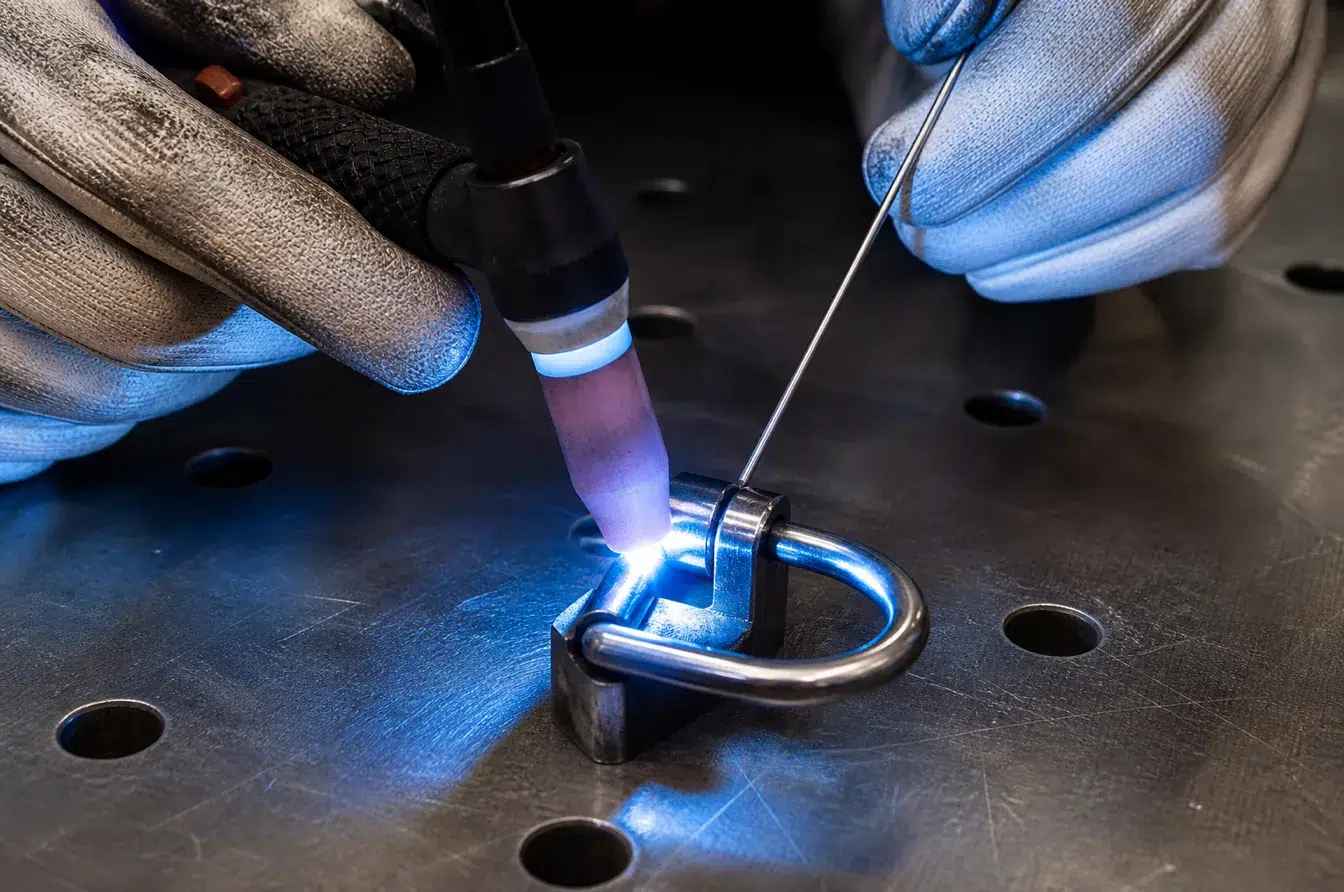
The letter “L” means low carbon. Lower carbon reduces the risk of chromium carbide precipitation in heat-affected areas, which helps preserve resistance to intergranular corrosion after welding or other substantial heat exposure. This benefit can matter in welded D-rings, multi-part buckles, frames, and assemblies where joining creates heat-affected zones. It may matter much less in a simple cold-stamped plate or formed component with no welding.
The suffix should not be confused with the main reason 316L performs better than 304 against perspiration and salt. Molybdenum provides that chloride-related advantage; low carbon primarily protects corrosion performance around significant heat input. If welding is central to the construction, both the grade and the welding procedure need control. A low-carbon alloy cannot correct an unsuitable filler, heavy heat tint, incomplete cleaning, or a crevice-producing joint.
| Material point | 304 stainless steel | 316L stainless steel | Design meaning |
|---|---|---|---|
| Alloy family | Austenitic chromium-nickel stainless | Austenitic chromium-nickel-molybdenum stainless | Similar general forming behavior and appearance are possible |
| Molybdenum | Normally absent | Commonly around 2% | 316L has better resistance to localized chloride attack |
| Carbon designation | Standard-carbon 304 | Low-carbon 316L | The “L” is valuable after welding or major heat input |
| Visual identity | Silver-gray; many finishes available | Silver-gray; many finishes available | Grade cannot be confirmed by appearance |
How Do 304 and 316L Compare in Corrosion Resistance, Strength, Appearance, and Finishing?
A supplier may call 316L stronger or more beautiful, but those claims ignore the supplied condition, component geometry, manufacturing route, and surface system.
316L normally wins in chloride corrosion resistance. Strength is broadly comparable and condition-dependent, while appearance and finishing potential can be almost indistinguishable when both grades receive equivalent processing.
Separate Alloy Performance from Component Performance
316L should not be selected simply because someone assumes the higher grade number means higher load capacity. Published values for annealed 304 and 316L products are broadly comparable, and the ranking can change with the product standard, thickness, cold work, and supplied condition. A finished buckle or ring also depends on section thickness, bend radius, temper, work hardening, weld quality, attachment design, and the direction and repetition of the load.
I therefore approve structural performance on the completed component, not on the alloy name. A thin 316L ring with a weak weld may fail earlier than a well-designed 304 ring. A cold-worked 304 part may also show higher strength than an annealed 316L comparison sample. Tensile data from a mill certificate is useful for incoming-material control, but it cannot replace deformation, pull, torque, fatigue, or operating-cycle tests on production-intent hardware assembled into the real product.
Corrosion resistance is where the grade difference is more consistent. Molybdenum gives 316L more resistance to pitting and crevice corrosion in many chloride-bearing conditions. Even so, “more resistant” does not mean corrosion-proof. Temperature, chloride concentration, acidity, oxygen, contamination, surface deposits, and time all affect performance. The gap between the grades becomes commercially important only when the exposure is demanding enough to use that extra margin.
Surface Design Can Narrow or Widen the Gap
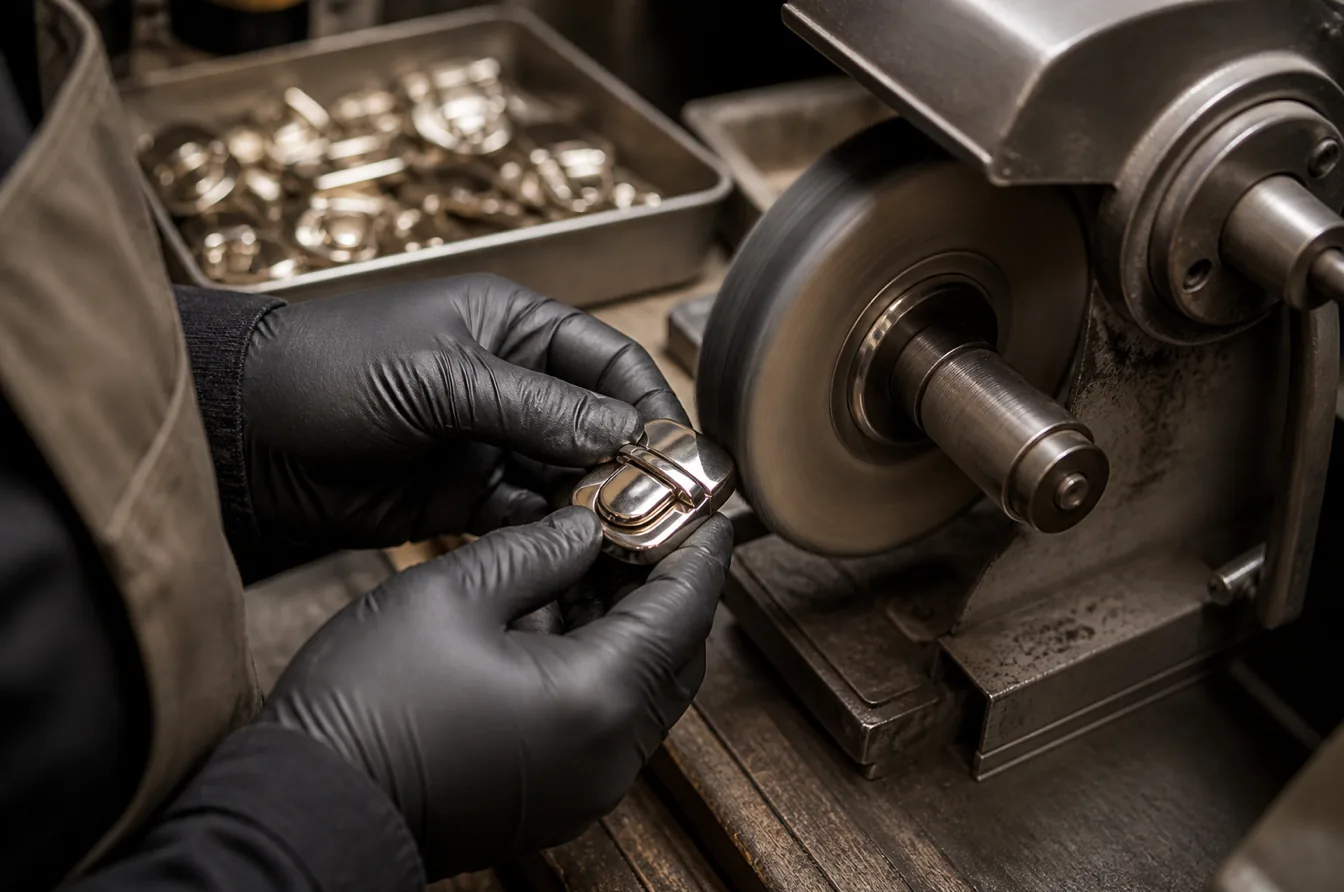
304 and 316L can both be polished, brushed, blasted, tumbled, passivated, electropolished, plated, or prepared for PVD, depending on the product form and supplier capability. If two components use the same geometry and receive equivalent polishing, they may be difficult to distinguish visually. A 316L specification does not create a superior finish by itself, and an uneven 316L polish can look worse than a carefully prepared 304 surface.
Surface condition also changes corrosion behavior. Smooth, clean surfaces shed contamination and are easier to maintain. Rough textures, deep engraving, recessed logos, sharp internal corners, unsealed overlaps, hinge barrels, and tight mechanical joints can retain moisture and allow salts to concentrate during drying. These areas can create crevice conditions that make localized corrosion more likely. Good drainage, accessible cleaning, controlled polishing direction, clean tooling, and removal of fabrication contamination all support the alloy’s passive surface.
| Decision factor | 304 | 316L | What still requires control |
|---|---|---|---|
| General corrosion resistance | Good for many normal environments | Good, with a larger margin in many aggressive environments | Chemical exposure, time, temperature, and maintenance |
| Chloride pitting and crevice resistance | Lower | Higher because of molybdenum | Crevices, salt concentration, finish roughness, and drainage |
| Mechanical capability | Strong and ductile; condition-dependent | Strong and ductile; condition-dependent | Temper, cold work, section, welds, attachment, and finished-part tests |
| Visible appearance | Wide range of metallic finishes | Wide range of metallic finishes | Surface preparation and finishing process |
| Fabrication | Good formability and weldability | Good formability and weldability; low carbon supports welded areas | Tooling, heat input, heat-tint removal, and cleaning |
Which Grade Is Better for Garment Trims, Bag Hardware, and Footwear Components?
Selecting one stainless grade by product category is convenient, but it can over-specify hidden decorative parts and under-protect small components with severe exposure.
304 is a strong starting point for dry, low-exposure decorative hardware. 316L becomes more defensible for repeated skin contact, perspiration, coastal use, trapped moisture, or critical welded assemblies.
Classify the Exposure, Not Only the Product Name
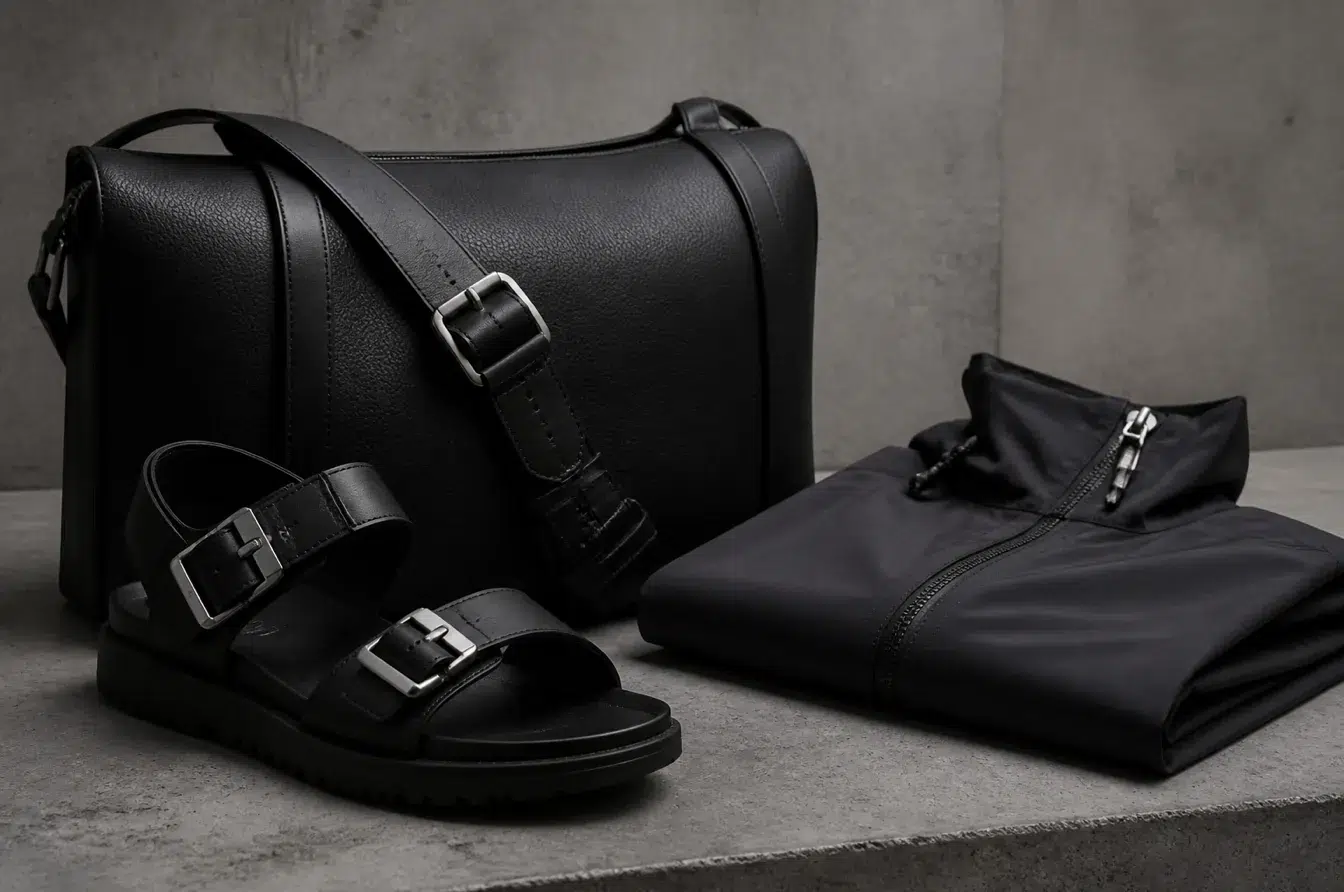
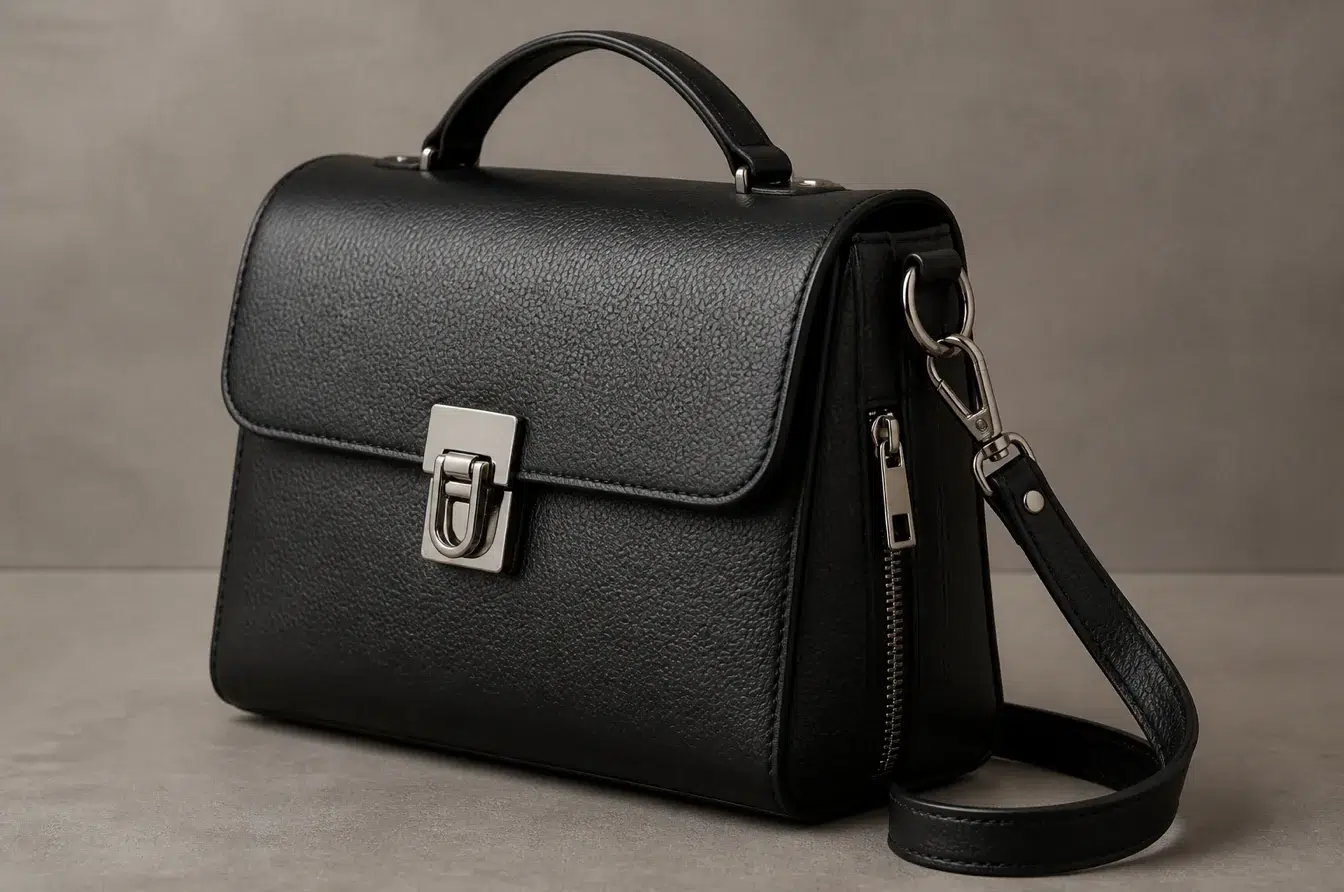
The word “buckle” reveals very little about the environment. A decorative buckle on a structured handbag may remain dry for most of its life, while a small buckle on a sandal can receive perspiration, rain, road salt, sunscreen, and wet-dry cycles. A garment snap may contact skin more often than a large bag ring. Product category is helpful, but exposure frequency is the better decision variable.
For garments, 304 can be suitable for logo plates, decorative buttons, zipper pulls, rivets, and buckles used mainly in normal urban or indoor conditions. The choice still needs to consider laundering, dry cleaning, direct skin contact, and whether a recessed attachment traps detergent or sweat. For bags, 304 often makes sense for decorative fittings, feet, frames, and pulls that see occasional moisture. 316L deserves consideration for coastal collections, frequently handled closures, wet-use bags, and components located where moisture remains trapped between leather, webbing, and metal.
Footwear usually creates a more variable exposure. A dress-shoe ornament may remain dry, while a sandal buckle or athletic-shoe ring may face repeated perspiration and outdoor contamination. I use 316L more selectively for those high-contact, sweat-prone parts, especially when corrosion would stain light-colored leather or fabric. The grade decision should be recorded component by component instead of applied to an entire collection by slogan.
Use a Mixed-Grade Strategy When It Protects Value
304 is sufficient for many ordinary fashion-hardware applications because it combines good corrosion resistance, ductility, weldability, availability, and finishing potential. Using it for low-exposure components avoids paying for corrosion performance the product is unlikely to need. This is especially relevant in large collections where many small trims multiply even a modest material premium.
316L can then be reserved for components where failure or visible corrosion would be expensive: repeated skin-contact pieces, wet-use closures, salt-exposed parts, hard-to-clean crevices, and welded assemblies operating in a demanding environment. A mixed-grade hardware family can therefore protect margins without weakening the product. The challenge is control. 304 and 316L parts must be clearly separated in drawings, bills of materials, incoming inspection, storage, and production records so that visually identical grades are not mixed.
| Hardware application | Practical starting grade | Reason | Questions before approval |
|---|---|---|---|
| Decorative garment logo plate | 304 | Usually low load and limited wet exposure | Does it touch skin, enter washing, or trap detergent? |
| Everyday bag zipper pull | 304 | Good balance of appearance, durability, and cost | Is use coastal, outdoor, or frequently wet? |
| Sandal or sportswear buckle | 316L | Repeated sweat and wet-dry cycles are more likely | Can salt collect in the hinge or under the strap? |
| Swimwear or resort trim | 316L as a starting point | Better chloride resistance provides more margin | Has the finished part passed salt, chlorine, finish, and wear testing? |
| Welded load-bearing ring | Exposure-dependent; consider 316L | Low carbon supports corrosion resistance near welded areas | Are alloy, weld procedure, heat tint, section, and load test controlled? |
Is 316L Worth the Extra Cost for Sweat, Saltwater, Chlorine, or Humid Conditions?
Buying 316L for every component wastes budget, but using 304 in persistent chloride exposure can turn a small saving into stains, returns, and lost trust.
316L is worth the premium when repeated chloride or moisture exposure makes corrosion a credible product risk. Occasional moisture alone does not automatically justify the upgrade.
Judge Frequency, Retention, and Consequence Together
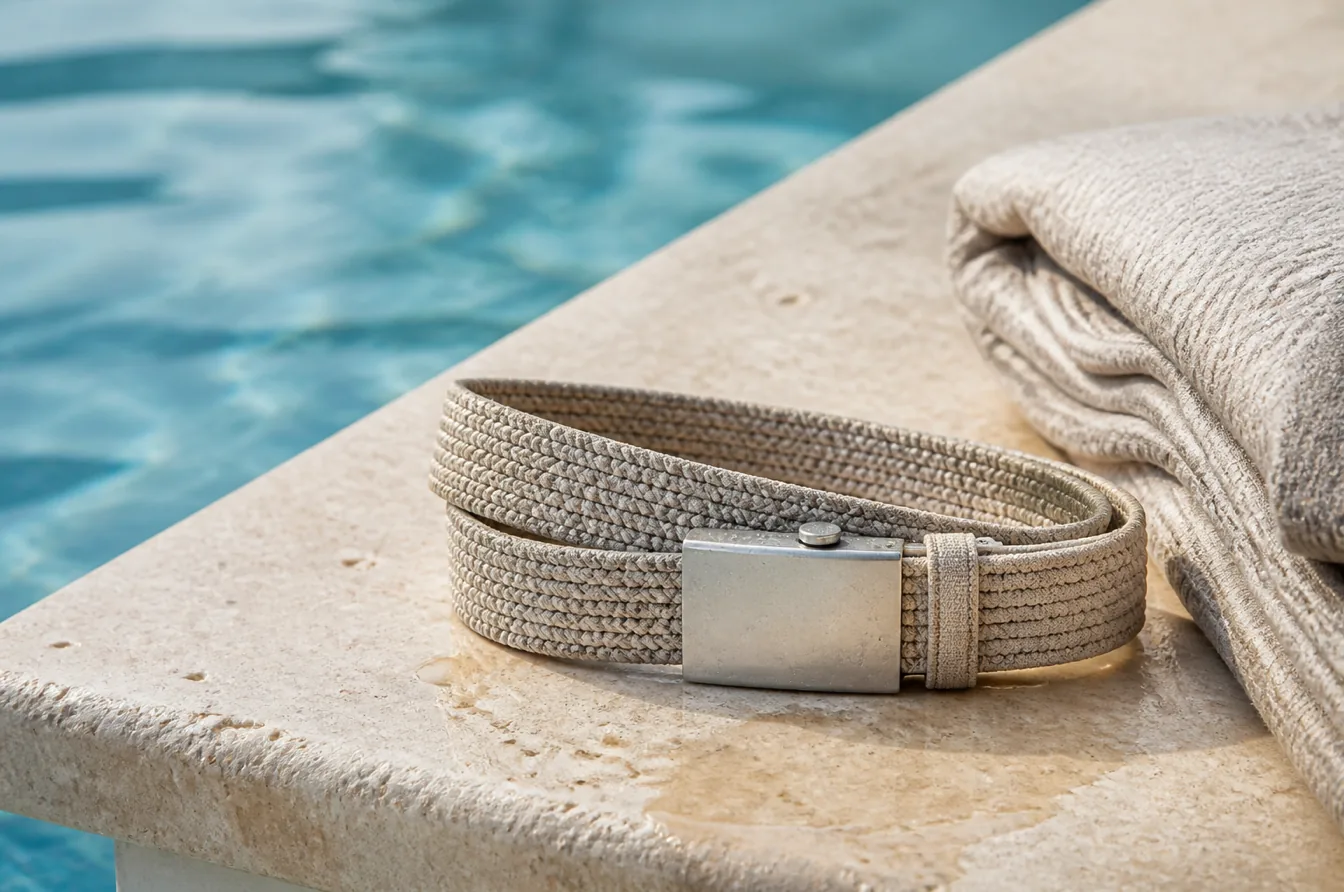
Exposure frequency matters more than a single contact event. Hardware that receives light rain and dries quickly may perform very differently from a hinged component that receives sweat every day and retains a concentrated salt solution in a narrow gap. Humidity alone may be moderate, but humidity combined with coastal salt deposits, skin oils, rough surfaces, and poor airflow creates a more serious condition.
I assess three factors together: how often the part is exposed, whether contamination can remain or concentrate, and what happens if corrosion appears. A concealed internal plate may tolerate slight staining without affecting the customer. A polished front clasp on a white luxury bag has almost no cosmetic tolerance. A small material premium is easier to justify when corrosion could stain adjacent materials, weaken a critical joint, cause a return, or damage the brand’s durability claim.
316L is not a substitute for good geometry or maintenance. Persistent deposits and tight crevices can challenge both grades, and severe pool environments have caused failures in 304- and 316-family stainless steels. That is why “chlorine-proof,” “saltwater-proof,” and “rust-proof” are risky claims without defined test conditions. Swimwear, poolside, marine, and resort hardware should still be validated as finished components in a test plan that reflects actual contact, drying, cleaning, and wear.
Keep Premium and Skin-Safety Claims Technically Accurate
316L can support a premium product story when the material choice solves a real exposure problem. It offers meaningful value in a summer sandal, swimwear closure, coastal bag, or frequently handled accessory when better chloride resistance reduces visible deterioration. It adds far less value to a hidden plate or dry decorative trim whose service conditions are already well within 304’s capability.
The grade should not be presented as automatically nickel-free or universally hypoallergenic. Both 304 and 316L contain nickel. For products sold in the EU, direct and prolonged skin-contact articles are controlled by nickel release from the finished item. REACH Annex XVII Entry 27 specifically includes rivet buttons, fasteners, rivets, zippers, and metal marks used in garments, with a nickel-release limit of 0.5 μg/cm²/week for the relevant contact parts. The referenced test method is EN 1811:2011+A1:2015.
| Exposure pattern | 304 decision | 316L decision | Required follow-up |
|---|---|---|---|
| Dry indoor or normal urban use | Usually reasonable | Often unnecessary | Confirm finish, assembly, and normal-use testing |
| Occasional rain with rapid drying | Often reasonable | Adds margin if appearance risk is high | Check water traps and surface contamination |
| Frequent sweat or skin contact | Higher corrosion risk | Often the safer starting point | Test perspiration, wear, cleanability, and nickel release where required |
| Coastal air or repeated saltwater splash | May be under-specified | More defensible | Test finished geometry through repeated exposure and drying |
| Pool or chlorine-heavy use | Requires caution | Better margin, but not chlorine-proof | Use application-specific corrosion and finish testing |
How Can You Verify the Stainless Steel Grade and Corrosion Performance Before Bulk Production?
304 and 316L can look identical, so approving a polished sample by color or supplier statement leaves the most important material claim unverified.
Use traceable material records and incoming alloy verification, then test production-intent components. XRF can separate 304 from the 316 family, but it cannot confirm the low carbon required for 316L.
Build Traceability Beyond a Material Name on the Quotation
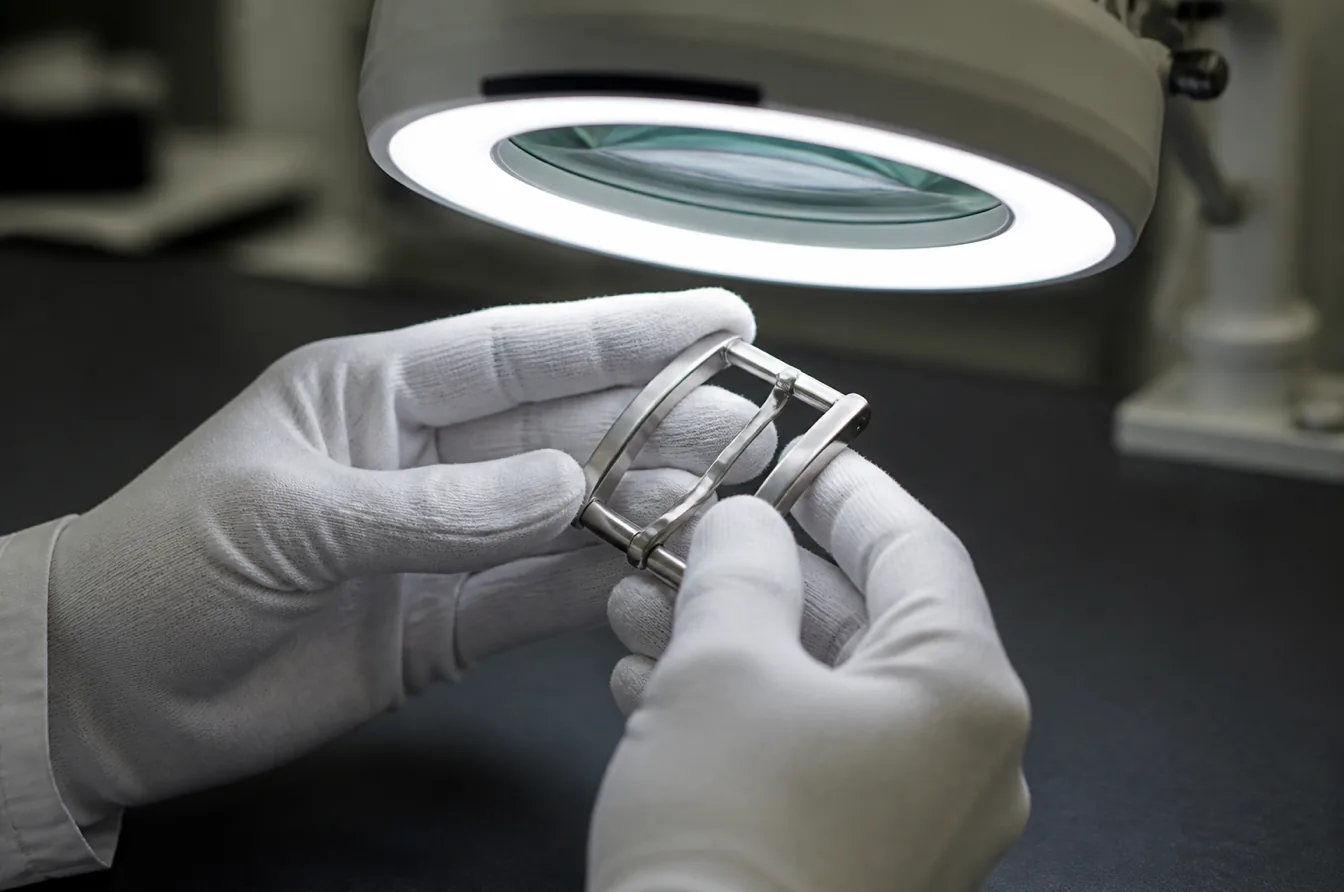
The purchase specification should identify the required grade, recognized standard, product form, surface condition, and any low-carbon requirement. Request a material test certificate linked to a heat or lot number, and keep that identity through cutting, forming, machining, welding, finishing, assembly, and packaging. A certificate without traceability to the delivered parts provides weak protection against substitution or material mix-up.
Handheld XRF is useful because it can detect molybdenum and usually distinguish the 316 family from 304 quickly. However, XRF cannot measure carbon, so it cannot prove the difference between 316 and 316L. Thermo Fisher’s comparison of PMI technologies makes this limitation explicit. When the “L” requirement matters, I combine traceable certificates with a carbon-capable method such as calibrated spark optical emission spectroscopy or qualified laboratory analysis on representative incoming or production samples. A handheld LIBS method should only be accepted when its carbon performance, calibration, sample preparation, and measurement uncertainty are suitable for the specified limit.
Testing should follow risk. Verify more lots when the supply chain changes, when mixed grades are processed in the same factory, when a welded design depends on low carbon, or when failure would be costly. Keep the test location, sample identity, instrument, calibration status, results, and disposition in the inspection record.
Validate the Finished Part, Not Only the Raw Alloy
Correct alloy chemistry is the beginning of quality control, not the end. Corrosion behavior can change after stamping, welding, grinding, polishing, passivation, plating, PVD, assembly, and packaging. Iron contamination from shared tools, unremoved heat tint, aggressive polishing residue, a porous decorative coating, or a new crevice can undermine a correct 316L base material.
The validation plan should reproduce the product’s main risks. Sweat-contact hardware needs a defined artificial-perspiration test, followed by inspection for staining, pitting, color change, coating damage, and transfer to adjacent materials. Coastal or wet-use components need appropriate salt or chloride exposure with realistic wet-dry cycling. Moving parts also need operating cycles and abrasion because wear can expose different surfaces or drive contamination into a joint. Welded or load-bearing parts need mechanical testing after environmental conditioning, not only before it.
I set acceptance criteria before testing and inspect both visible and concealed areas. The record should cover appearance, corrosion, sharp edges, joint function, deformation, attachment security, and any stain on leather, fabric, or webbing. Pre-production approval should use the intended alloy, process, geometry, finish, and assembly. Bulk inspection should then confirm that production matches the approved system instead of relying on one perfect showroom sample.
| Control stage | What to verify | Suitable evidence | Main limitation to avoid |
|---|---|---|---|
| RFQ and drawing | Grade, standard, form, finish, welding, and exposure | Controlled specification and approved drawing | Writing only “stainless steel” |
| Raw material receipt | Supplier lot and alloy family | Traceable certificate plus XRF where appropriate | Assuming XRF proves 316L carbon content |
| Low-carbon verification | Carbon level when the “L” is critical | Calibrated spark OES or qualified carbon-capable laboratory method | Relying on appearance or an unlinked certificate |
| Pre-production sample | Real material, geometry, finish, and assembly | Approved production-intent sample and process record | Testing a specially prepared sample unlike bulk production |
| Bulk validation | Corrosion, wear, operation, load, and material transfer | Risk-based finished-component test reports | Treating raw-alloy chemistry as proof of product life |
Conclusion
I choose 304 for controlled, low-exposure value and 316L for justified chloride risk—then verify the alloy, geometry, finish, and finished component before bulk production.