- Loading...
Choosing a metal by reputation alone can create hardware that looks right but becomes too heavy, too fragile, too costly, or difficult to reproduce.
There is no universally best metal for custom fashion hardware. I choose zinc alloy for design freedom and production economy, brass for warm luxury and character, and stainless steel for demanding strength, wear, and corrosion performance. The application must decide the material.
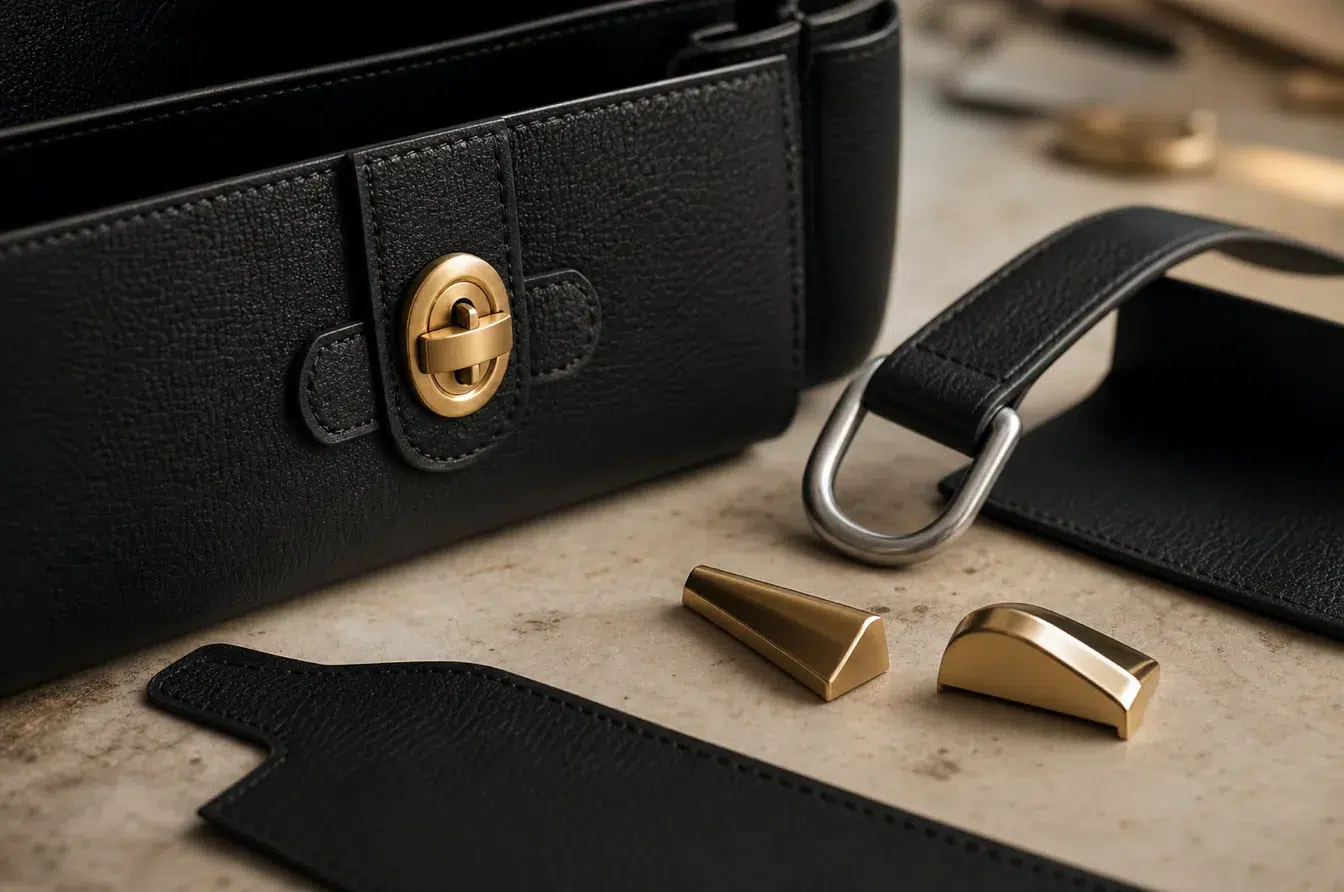
Material selection starts with the component’s job, contact conditions, target feel, production route, finish, volume, and expected life. Only then do material names become useful.
How Do Zinc Alloy, Brass, and Stainless Steel Differ in Weight, Strength, and Appearance?
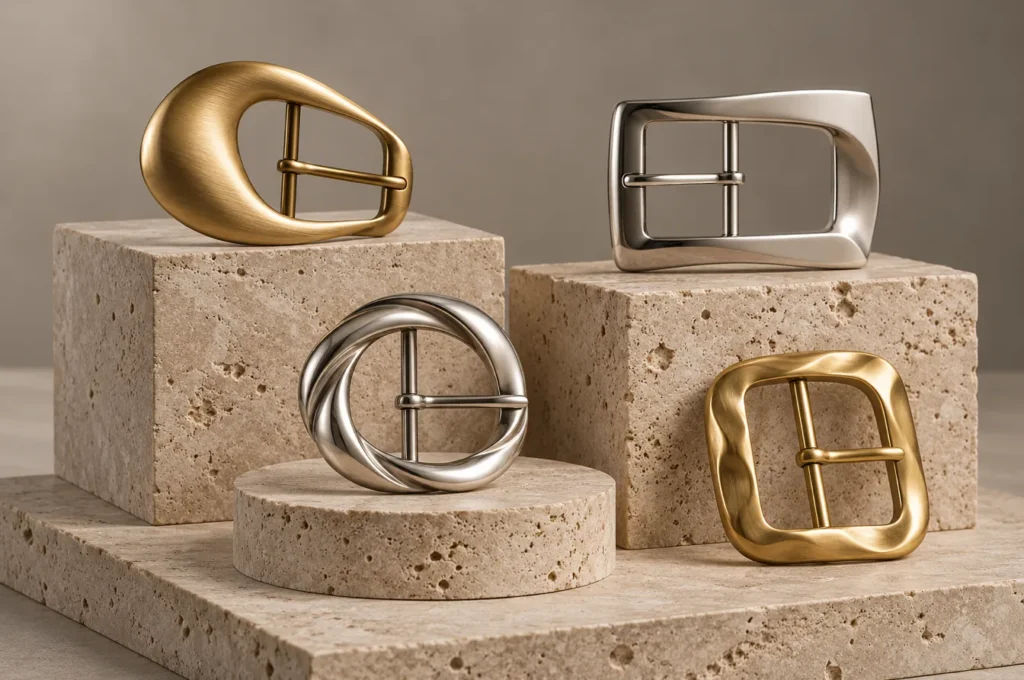
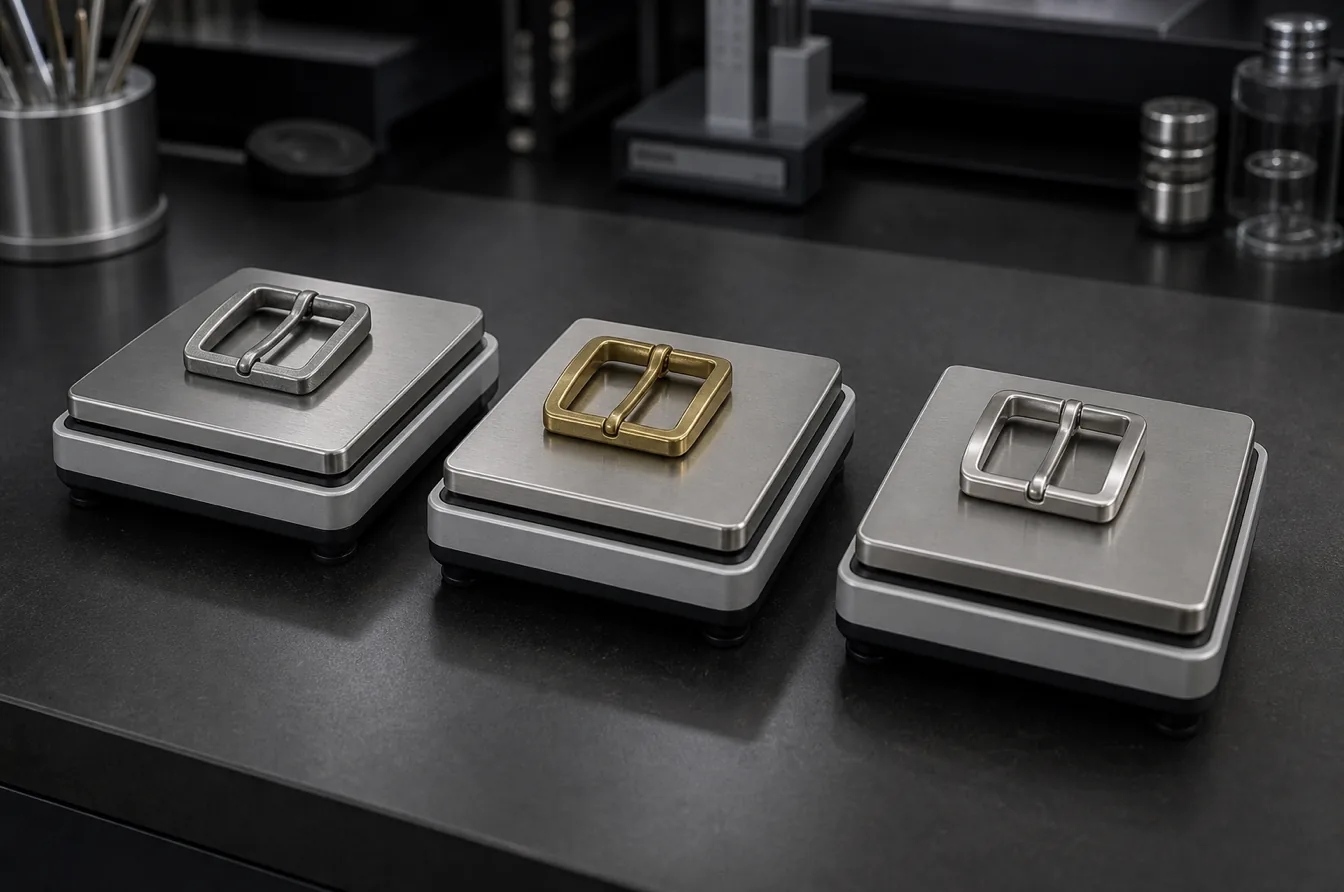
Three parts can share the same finish color but create very different weight, strength, edge definition, tactile feel, and aging behavior in the final product.
Common zinc casting alloys, brass grades, and stainless grades should be compared as complete material systems. In general, zinc favors detailed casting, brass provides the greatest heft and warmth, and stainless provides a strong, clean, durable structure.
Compare the Material Systems, Not Just Their Names
I never treat zinc alloy, brass, or stainless steel as one fixed specification. Each name covers a family of grades, and the final performance also depends on geometry, process, temper, surface preparation, and finish. Still, the common fashion-hardware choices have useful tendencies. Zinc die-casting alloys flow well into detailed tools, so suppliers can reproduce recessed logos, fine textures, sculpted relief, and integrated features efficiently. They are generally lighter than common brass and stainless options, but a thick die-cast part can still feel substantial.
Brass offers the warmest natural color and usually the greatest weight for the same volume. Its density can create a convincing premium hand feel in a signature clasp, but repeated brass parts can make a bag uncomfortable or distort a lightweight garment. Brass also offers a broad choice of wrought and cast grades. Some suit stamping and forming, while others suit forging, casting, or machining, so the exact grade matters.
Common stainless steels usually provide the strongest combination of structural strength, hardness, wear resistance, and corrosion resistance among these three choices. Stainless steel is not one universal grade, however. Grade selection, cold work, part geometry, finish, and exposure all change the result. Its cool neutral color supports modern designs, but it is less naturally suited than zinc die casting to deep, highly sculpted, three-dimensional decoration.
| Decision factor | Zinc alloy | Brass | Stainless steel |
|---|---|---|---|
| Typical weight impression | Moderate and controllable through wall design | Heaviest and most substantial | Dense, but often efficient at thinner structural sections |
| Main strength | Fine die-cast detail and integrated geometry | Premium feel, workability, and natural character | Structural, wear, and corrosion performance |
| Natural appearance | Gray base, commonly transformed by plating or coating | Warm yellow or red-gold tones that can age visibly | Cool silver-gray in polished, brushed, or blasted finishes |
| Main design caution | Wall transitions, porosity, local loads, and finish quality | Excess weight, dents, tarnish, and grade-specific corrosion | Forming force, tool wear, machining time, and grade selection |
Design Weight and Appearance as Product Functions
I do not use weight as a shortcut for quality. Hardware should feel proportionate to the product and the way the customer handles it. A solid brass turn lock may give a leather bag a deliberate, luxurious action. The same material used for every ring, stud, foot, puller, and strap end can add mass without adding visible value. On a thin dress or soft shoe upper, even a small difference in hardware weight can affect drape, comfort, balance, or attachment stress.
Appearance also changes after launch, so approval must cover more than the first-day color. Zinc alloy can imitate bright nickel, aged brass, black metal, or many other looks through plating, painting, or electrophoretic coatings. Its long-term appearance then depends strongly on the quality of the casting, polishing, cleaning, undercoats, decorative layer, and topcoat. Brass can be polished and protected, plated for controlled color, or left to tarnish and develop patina. That change may strengthen a heritage story, but it may look like a defect when the brand expects a permanently bright finish. Stainless steel can retain its natural metallic surface, receive mechanical textures, or use PVD and other decorative treatments.
Every option should be reviewed on the assembled product under consistent lighting. The comparison should cover visible mass, edge definition, logo clarity, temperature in hand, operating sound, and how the surface changes after handling. This makes material selection part of product experience, not a contest to find the heaviest or brightest sample.
Which Metal Is Best for Garment Trims, Bag Hardware, and Footwear Components?
Using one metal across every product category can add unnecessary cost and weight or leave a high-risk component without enough strength and environmental protection.
The metal should be matched to load, movement, contact, moisture, abrasion, and product construction. Zinc often suits decorative detail, brass suits premium signature parts, and stainless suits demanding functional components.
Map the Load and Exposure Before Selecting the Metal
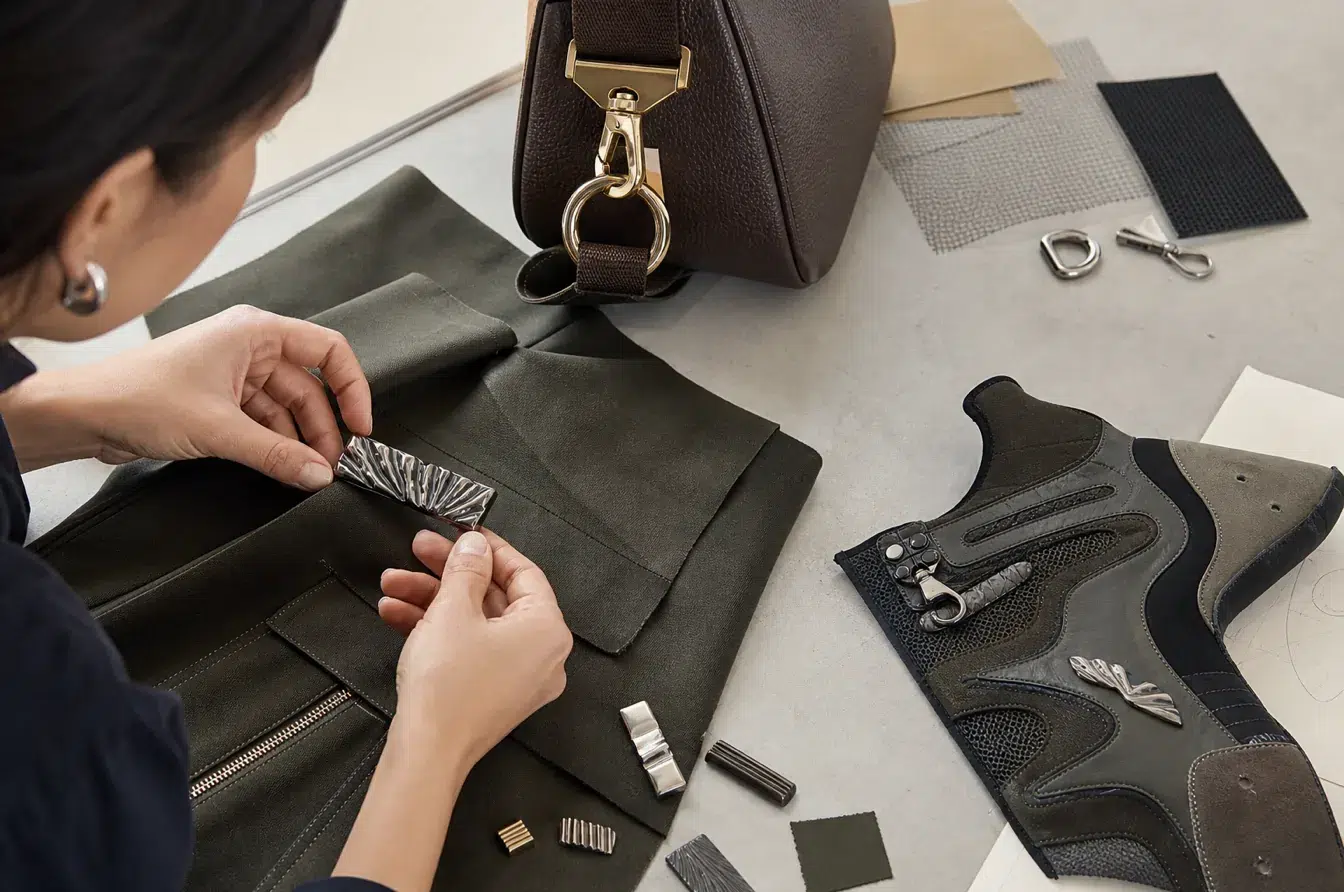
Selection should begin by separating decorative parts from functional parts. A garment logo plate may need crisp relief, low weight, smooth edges, and stable color, but it may carry almost no structural load. Zinc alloy is often efficient here because die casting can combine the logo, texture, attachment posts, and shaped border in one component. Small decorative buckles, zipper pulls, cord ends, and seasonal trims can use the same advantage, especially when the collection needs frequent design changes.
Bag hardware needs a more selective approach. A turn lock or signature buckle may benefit from the tactile warmth and mass of brass, while a strap ring, snap hook, or load-bearing connector may justify stainless steel when repeated movement, abrasion, humidity, or failure risk is high. Zinc alloy can still work well for many bag parts, but a detailed casting should not be assumed suitable for a concentrated or shock load. The review should cover the section, joint, load direction, and attachment to the bag.
Footwear hardware raises additional concerns because the part may flex with the shoe, rub against another surface, receive impact, contact sweat, or create a pressure point. Stainless steel is often the safest starting point for exposed functional hooks, rings, and closures. Zinc alloy remains useful for decorative badges and sculpted trims, while brass can support premium or heritage details when weight and patina suit the design. In every category, the part should be tested with the real fabric, leather, webbing, reinforcement, and setting method.
| Product component | Recommended starting point | Why it often fits | What to verify before approval |
|---|---|---|---|
| Garment logo plate or decorative trim | Zinc alloy | Detailed casting, broad finishes, and controlled unit cost | Weight, edge safety, attachment, wash or sweat exposure, and coating wear |
| Premium bag clasp or signature buckle | Brass or zinc alloy | Brass adds natural character; zinc supports complex sculpted forms | Operating feel, total bag weight, finish aging, and repeated cycles |
| Structural bag ring or strap connector | Stainless steel or suitable brass | Strong load path and better resistance to handling and moisture | Grade, section, joint, deformation, abrasion, and assembled load test |
| Footwear hook, ring, or closure | Stainless steel | Wear, strength, and corrosion performance in demanding contact | Smoothness, pressure points, flex, impact, sweat, and salt exposure |
| Seasonal decorative footwear badge | Zinc alloy | Fine logos and efficient high-volume die casting | Bending risk, attachment security, finish adhesion, and surface damage |
Use Mixed Materials to Protect Value Where It Matters
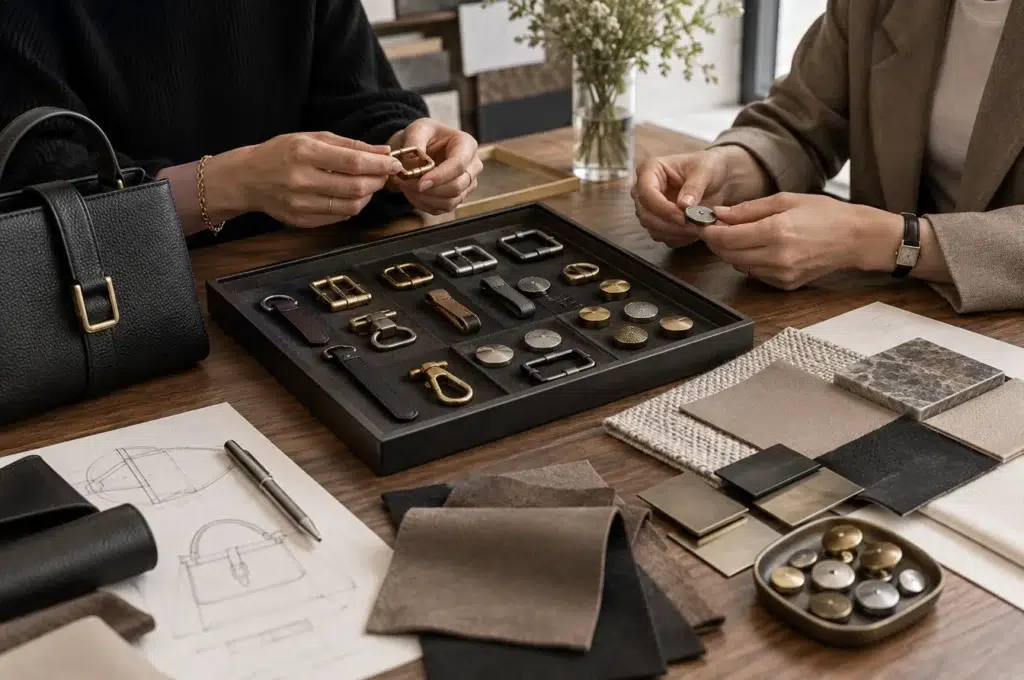
I often achieve a better result with a mixed-material hardware set than with one metal used everywhere. A brand can reserve brass for the closure the customer touches, stainless steel for the ring that carries the strap load, and zinc alloy for coordinated decorative trims. This strategy can reduce weight and cost without making the finished product feel inconsistent.
The challenge is visual matching. The same finish name can look different on zinc alloy, brass, and stainless steel because the substrates, polishing routes, undercoats, deposition processes, and surface textures are different. The full hardware family should therefore be approved together, not as isolated samples from separate suppliers. Evaluation should compare color, gloss, brushing direction, edge brightness, texture, and wear behavior on the final product. When parts touch one another, the review should also cover trapped moisture, coating coverage, and the possibility of galvanic interaction under the real service conditions.
The most demanding specification belongs where failure, discomfort, or visible aging would cost the brand most. A hidden structural component does not need a luxury polish, and a decorative logo does not need the same structural capacity as a strap connector. At the same time, saving money on a small high-load part can create returns that far exceed the material difference. Separating visual, tactile, and structural roles gives each component the right metal without buying one material story for the entire product.
How Does Each Metal Affect Casting, Stamping, Machining, and Surface Finishing?
A material can look ideal on a mood board yet become expensive or unstable when its geometry conflicts with the supplier’s real manufacturing and finishing process.
Material and process must be selected together. Zinc alloy favors pressure die casting, brass supports several forming and cutting routes, and stainless steel rewards geometry designed for stamping, forming, wire work, or machining.
Match Geometry to the Scalable Manufacturing Route
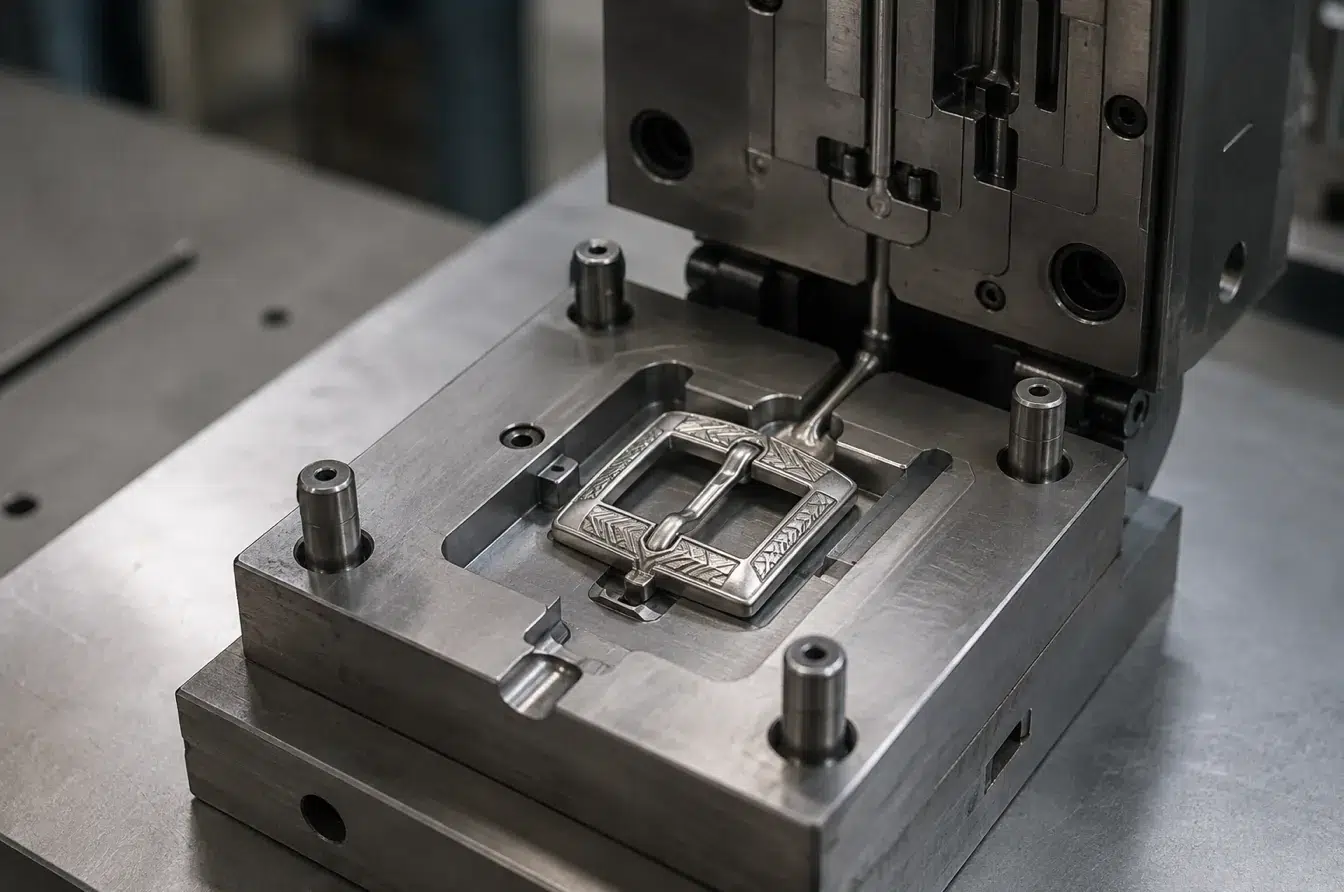
Zinc alloy offers the greatest freedom when a part needs sculpted volume, thin features, texture, lettering, recessed logos, or several functions combined in one die casting. The tool requires an upfront investment, but hot-chamber die casting can produce complex parts efficiently at suitable volumes. Design controls still include draft, parting lines, gates, ejector marks, fairly even wall sections, rounded transitions, and areas that need polishing. Thick intersections and poor metal flow can create shrinkage or porosity, and those defects may appear during polishing, plating, or later use.
Brass offers more route choices. Sheet brass can be blanked, stamped, drawn, formed, or coined for clean profiles and decorative detail. Brass rod or forged stock can be machined for precise premium components, and suitable brass grades can also be cast. This flexibility is valuable, but the grade and process must be specified because a brass chosen for easy machining may not be the best choice for deep cold forming, and a casting alloy behaves differently from wrought sheet.
Stainless steel works well in stamped sheet, formed wire, machined parts, springs, rings, hooks, and multi-part constructions. Its strength can allow a thinner section, but forming force, springback, work hardening, cutter wear, weld condition, and finishing effort can raise production cost. Stainless steel is justified where its functional performance earns those costs. When a design requires deep organic relief and frequent cosmetic changes, zinc die casting should be compared before stainless steel is forced into an inefficient route.
| Process | Zinc alloy | Brass | Stainless steel |
|---|---|---|---|
| Die casting or casting | Excellent for intricate pressure die-cast forms | Suitable grades can be cast for substantial shapes | Possible with specialist routes, but rarely the preferred choice for small intricate fashion trims |
| Stamping and forming | Limited compared with wrought sheet metals | Strong option for sheet parts, coining, drawing, and forming | Strong option for sheet and wire parts when springback and tooling are controlled |
| Machining | Useful for secondary operations after casting | Excellent with the correct machinable grade | Precise but often slower and more tool-intensive |
| Best geometry direction | Integrated sculpted form with planned walls and draft | Formed, forged, machined, or cast geometry matched to grade | Efficient sections, radii, bends, wire forms, and accessible machined features |
Specify the Surface as a Complete System
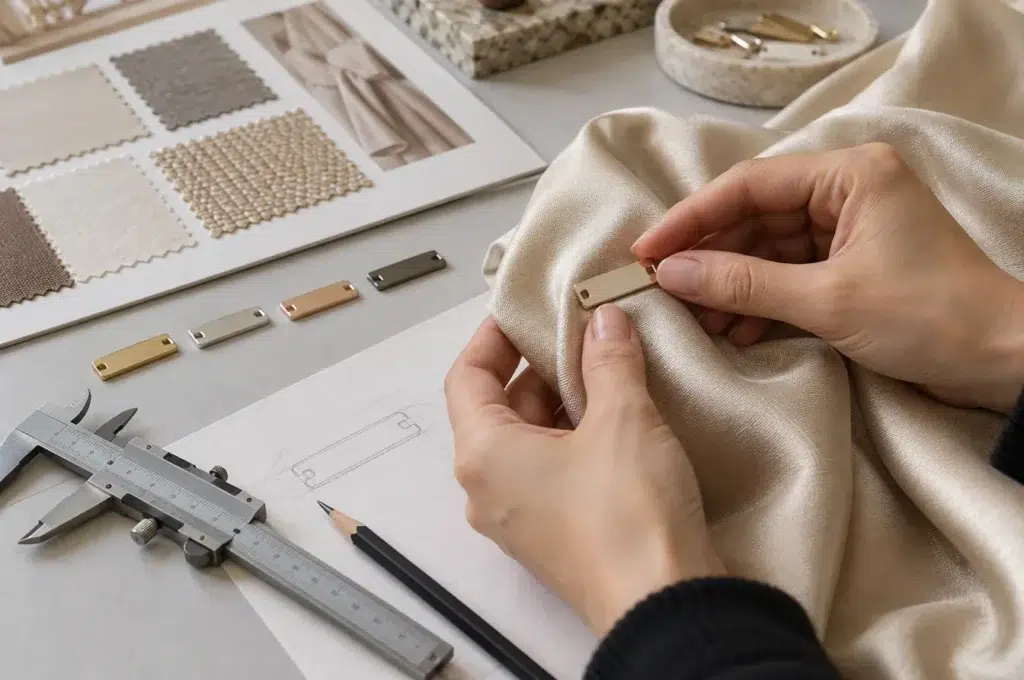
I never approve a plated sample by color name alone. The visible surface starts with base-metal quality and part geometry. It then passes through deburring, polishing or texturing, cleaning, activation, undercoats, decorative coating, topcoat, curing, handling, and packaging. A failure at any stage can change adhesion, color, gloss, corrosion behavior, or wear.
Zinc alloy accepts a wide range of decorative finishes and can reproduce cast-in textures well. For bright electroplated surfaces, however, porosity, polishing quality, and the undercoat system are critical. A cheap quote may hide weak casting control, insufficient copper or nickel underlayers, thin coverage, or poor preparation. Brass can be left natural, lacquered, antiqued, plated, or polished. Whether tarnish is intentional must be decided before the finish route is frozen. Stainless steel can often use its natural corrosion-resistant surface with polished, brushed, blasted, tumbled, or electropolished effects. PVD can add color, but the substrate finish and process control still determine the final appearance.
The drawing should mark the visible faces, wear zones, rack points, drainage needs, and permitted tool marks. Approval should record the base metal together with the finish code. “Antique brass” on zinc alloy is not the same material system as unfinished solid brass, even if their first-day colors are close. This distinction gives production, quality control, and the customer-service team a realistic expectation of how the hardware will age.
Which Material Offers the Best Corrosion Resistance, Wear Resistance, and Long-Term Durability?
Finish samples can pass a visual review and still fail early when sweat, salt, humidity, abrasion, or repeated movement reaches a weak material or coating system.
I normally choose the correct stainless grade for the highest durability demand, brass for durable character with managed tarnish, and zinc alloy when casting and coating controls match the exposure.
Separate Inherent Resistance from Coating Protection
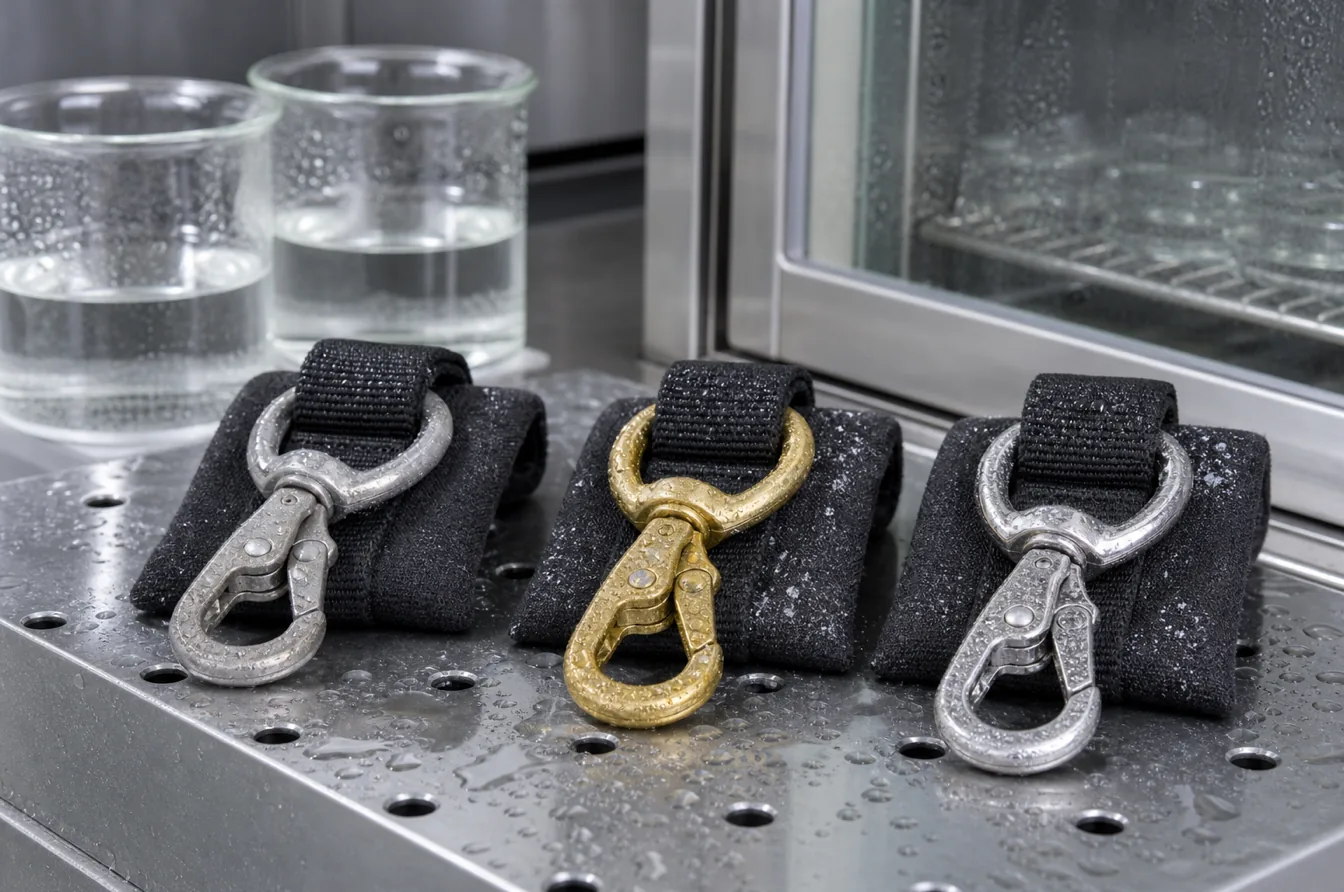
Stainless steel has an inherent corrosion advantage because a chromium-rich passive film forms on its surface and can regenerate when oxygen is available. That does not make every grade immune to every environment. Chlorides, crevices, rough surfaces, contamination, and poor grade selection can still cause staining or localized corrosion. For normal fashion use, common grades such as 304 and 316 should be compared according to the actual exposure. When salt, persistent sweat, coastal use, or aggressive cleaning is likely, I do not accept the word “stainless” without a grade and a test plan.
Brass has useful inherent atmospheric corrosion resistance, but its surface changes. It can tarnish from gold toward brown and may develop a deeper patina over time. That change should be treated as a design decision. A heritage leather product may become more attractive as the brass ages, while a bright luxury handbag may require lacquer, plating, or another controlled finish. Certain brass compositions can also face dezincification or stress-corrosion risks in specific chemical and wet environments, so the alloy and exposure still matter.
Zinc alloy can perform well in many indoor and moderate environments, but persistent moisture and severe marine conditions require more protection. In decorative fashion hardware, the coating usually carries much of the appearance requirement. Once abrasion cuts through a weak surface system, the part may dull, discolor, or show corrosion products faster than the customer expects. The casting, preparation, coating, geometry, and environment should therefore be judged together rather than calling zinc alloy inherently short-lived.
| Durability question | Zinc alloy | Brass | Stainless steel |
|---|---|---|---|
| What mainly protects appearance? | Casting quality plus conversion, plating, paint, or topcoat system | Natural alloy, intentional patina, lacquer, or plating system | Correct grade, passive surface, finish quality, and optional decorative treatment |
| Main wear concern | Coating breakthrough, edge exposure, and damage over porous areas | Scratching, denting, tarnish, and wear of lacquer or plating | Scratching, galling at moving contacts, and local staining in unsuitable conditions |
| Moisture and salt approach | Define protection and test the complete finish system | Decide acceptable tarnish and verify alloy or coating performance | Specify grade; consider higher corrosion resistance for chloride-heavy exposure |
| Best durability case | Controlled decorative part in a matched environment | Premium part where natural aging is accepted or protected | High-use structural or exposed part with the correct grade and design |
Test the Finished Component in the Real Product
I do not rely on a single salt-spray number as proof of product life. Accelerated corrosion tests can compare controlled samples, but they do not reproduce every combination of touch, flex, impact, sweat chemistry, trapped moisture, abrasion, cleaning, and mixed materials. The test plan should be built from the actual failure risks.
For a bag clasp, the test plan should cover operating cycles, contact wear, finger oils, sweat, edge abrasion, coating transfer, and whether the mechanism still feels consistent after conditioning. Footwear hardware also needs flex, impact, lace or strap abrasion, pressure-point, and salt or moisture testing. Garment trims require checks against washing or cleaning instructions, detergent, perspiration, fabric staining, pull-out, edge damage, and the effect of hardware weight after repeated use.
Inspection should cover both function and appearance. A ring may remain unbroken but deform enough to release a strap. A buckle may keep its color yet develop sharp wear at a contact edge. A brass part may be mechanically sound but show an unacceptable patina. A stainless part may resist corrosion but scratch a neighboring polished surface. Failure limits should be defined before testing, and production-intent samples should be compared with the approved master. This approach turns “durable” into a measurable product requirement instead of a material claim.
How Do Material Cost, Tooling, and MOQ Affect the Final Hardware Price?
The lowest unit quotation can become the most expensive decision after tooling, polishing, coating rejects, assembly, failures, returns, and repeat-order inconsistency are included.
Total program cost should be compared at the real order volume. Zinc alloy often wins detailed high-volume economics, while brass and stainless can justify higher processing cost through performance, longevity, or brand value.

Compare Tooling Economics and Lifecycle Cost Together
Zinc alloy often offers the lowest practical unit cost for detailed three-dimensional hardware once die-casting tooling is justified and production volume is stable. The tool can integrate logos, texture, ribs, attachment features, and decorative form, which reduces secondary operations. But the first quotation should still separate mold cost, slides or inserts, polishing, plating, assembly, inspection, packaging, sample rounds, and expected yield. A low casting price does not protect the project if porosity or surface defects create a high plating rejection rate.
Brass usually carries a higher material cost and more mass per part. Its economics depend strongly on the route. A simple stamped brass plate may be efficient at volume, while a deeply machined solid-brass clasp may consume more stock, machine time, polishing, and labor. The premium feel can justify that cost on a signature component, especially when natural brass reduces the need for a decorative coating or supports the brand story.
Stainless steel can cost more to form, machine, polish, and maintain tooling for, but it may reduce lifecycle cost where corrosion, wear, or structural failure would cause returns. A thinner efficient stainless construction can also offset some material mass. The loose-part price must be compared with the expected product lifetime, replacement risk, quality-control burden, and customer perception. This avoids paying for stainless where the function does not need it or rejecting it where failure would be expensive.
| Cost driver | Zinc alloy | Brass | Stainless steel |
|---|---|---|---|
| Typical upfront commitment | Dedicated die-casting tool for custom geometry | Stamping, forging, casting, or machining setup depending on design | Stamping tools, forming fixtures, machining setup, or multi-part assembly tools |
| Unit-cost strength | Detailed repeat parts at medium or high volume | Premium value and efficient forming or machining with the right grade | Durable functional parts with geometry matched to the process |
| Hidden cost risk | Porosity, polishing labor, coating thickness, and plating rejects | Material mass, machining waste, polish labor, and finish maintenance | Tool wear, slow machining, springback, welding, and surface finishing |
| MOQ pressure | Tool economics and finish-line minimums | Material form, special grade, finish batch, and supplier setup | Grade availability, coil or wire quantities, finish batch, and process setup |
Build the RFQ Around Decisions the Supplier Can Price
The material name alone is not a purchasing specification. A useful supplier specification includes the application, product category, dimensions, target part weight, expected load direction, attachment method, movement, contact conditions, environment, finish, color and gloss reference, order forecast, repeat plan, packaging, testing, and market-specific chemical-compliance needs. It should also state whether a patina is acceptable, whether the component touches skin, and which surfaces are cosmetic or wear-critical.
For zinc alloy, specify the alloy, die-casting route, wall guidance, tool concept, surface preparation, undercoat system, decorative coating, and inspection plan. For brass, specify the grade, wrought or cast form, production route, temper where relevant, and whether the finish should age naturally or remain controlled. For stainless steel, require the grade rather than the generic material name, plus the forming or machining route, surface finish, joining method, and any passivation or PVD requirements.
Request price tiers at realistic quantities instead of one abstract MOQ. The comparison should show tooling, sampling, unit price, finish minimum, assembly, testing, packaging, and lead time. If volume is uncertain, I may adapt an existing component with a custom logo or finish before investing in a fully custom mechanism. If the part carries a critical load or defines the brand, the correct material should be protected while lower-value features are simplified elsewhere. This produces a price that reflects a repeatable product, not only the cheapest first sample.
Conclusion
I choose zinc alloy for design freedom, brass for warm luxury, and stainless steel for demanding durability—but only after the product, process, finish, and tests agree.