- Loading...
A visually impressive buckle can still fail in development through poor load distribution, unstable finishes, weak strap connections, or incomplete production specifications.
I treat a belt buckle as an engineered product system that must connect mechanical performance, material choice, ergonomics, brand language, manufacturing, and quality control.
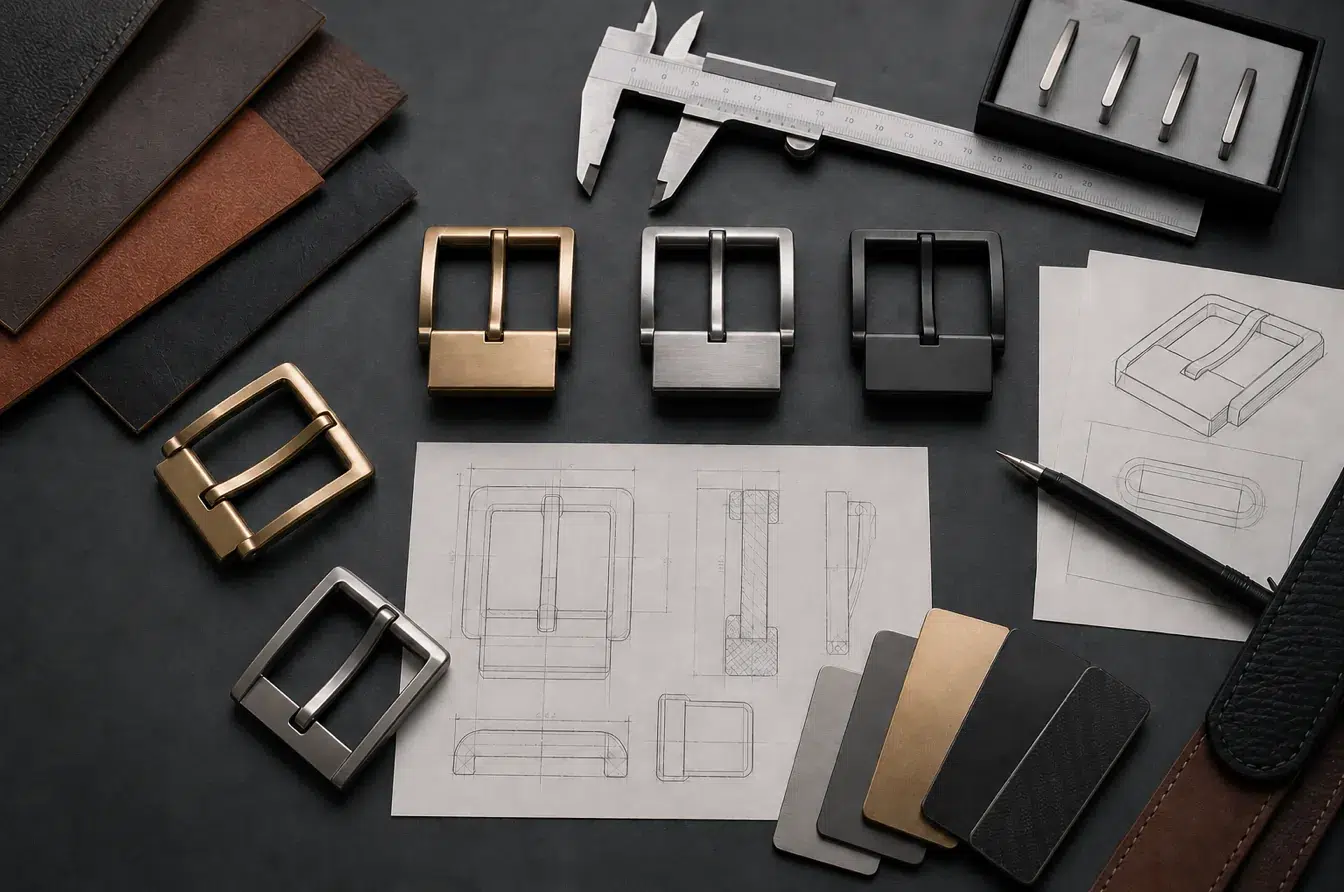
In my hardware development work, I do not approve a buckle from its front view or closing sound alone. I follow the force from strap to frame, check every moving interface, compare the substrate with the finish, and ask how the supplier will reproduce the approved sample in bulk. This method turns a small accessory into a controlled product decision rather than a late decorative choice.
How Should Product Teams Compare Belt Buckle Locking Systems and Load Paths?
A mechanism can appear reliable in hand yet slip, damage leather, jam with contamination, or release when the complete belt enters real use.
I compare buckle systems by holding logic, load path, release action, failure mode, strap compatibility, and the validation evidence required for the target application.
Separate the Holding Logic from the Product Name
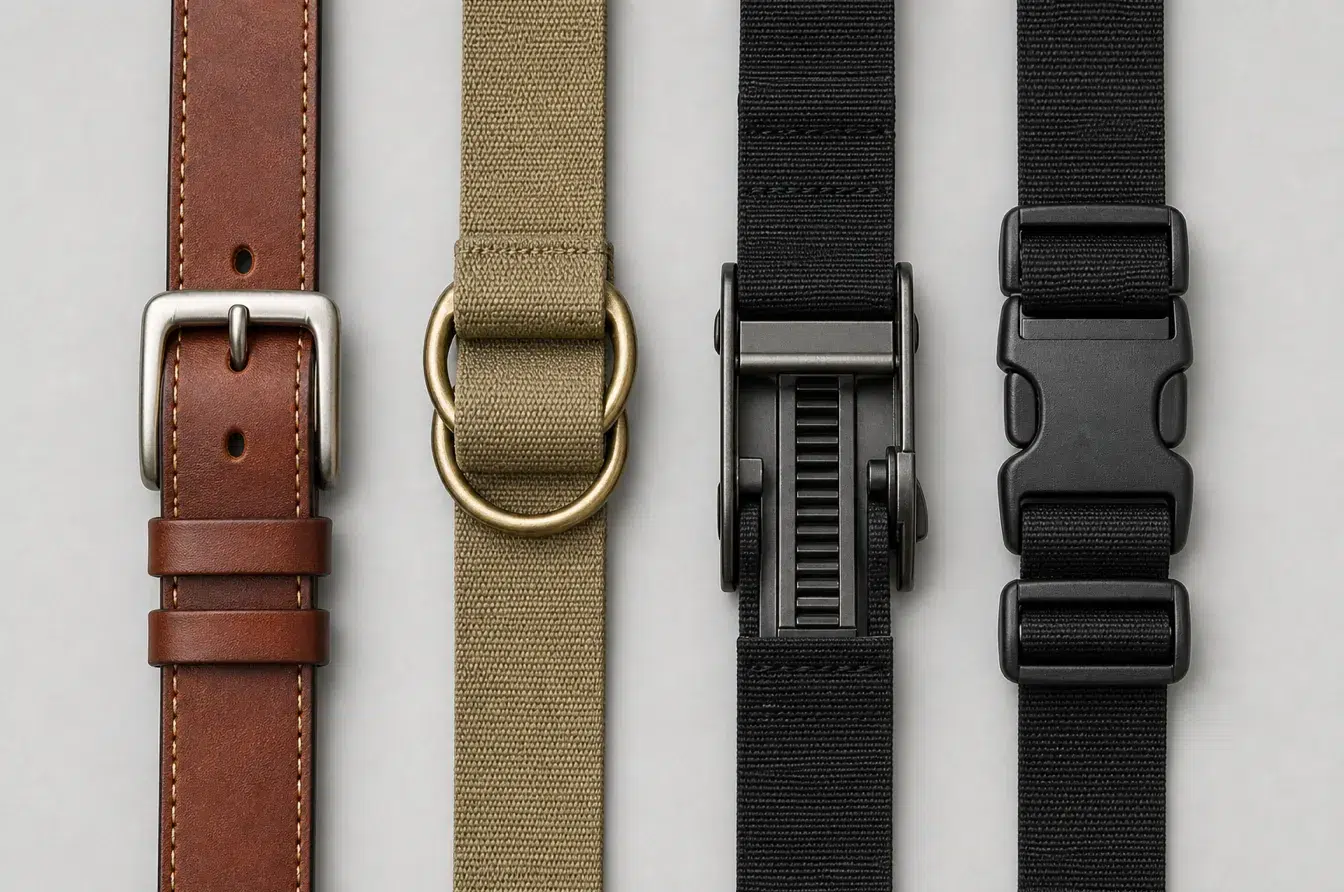
I first classify the mechanism by what physically resists strap tension. A prong buckle uses penetration. The tongue passes through a hole and creates a positive stop, but the reaction force is concentrated around a small leather area. Hole diameter, pitch, distance from the strap edge, tongue radius, leather temper, reinforcement, and repeated bending all affect service life. A wider spacing may limit fit resolution, while overly close holes can leave weak leather bridges. I therefore evaluate the hole system with the production strap, not only with a metal buckle sample.
I classify D-rings and many box buckles as friction systems. A D-ring arrangement gains holding power through friction and wrap angle. Smooth webbing, surface contamination, water, or an insufficient return path can reduce the holding ratio and allow creep. A box or clamp buckle adds normal force through a cam, pressure bar, or teeth. Strong teeth may improve initial holding but cut fibers or coatings after repeated adjustment. Weak spring force may preserve the strap but allow gradual slip. The useful design point sits between these two failures.
I treat a ratchet buckle as a pawl-and-rack mechanism. The smaller tooth pitch can give more adjustment positions than traditional holes, but it also creates critical interfaces at the pawl tip, tooth root, pivot, release lever, and return spring. I specify engagement depth, backlash, release clearance, usable track length, and cycling because a clean first click says little about tooth wear or spring fatigue.
| Holding system | Force-resisting feature | Main development value | Typical risk | Evidence I request |
|---|---|---|---|---|
| Prong buckle | Tongue bearing against a strap hole | Clear positive stop and familiar construction | Hole elongation, cracking, or tongue deformation | Assembly pull test and repeated hole cycling |
| D-ring | Friction from wrap angle and contact | Low part count and broad adjustment | Creep when wet, smooth, dusty, or incorrectly threaded | Slip testing under conditioned states |
| Box or clamp buckle | Cam pressure, bar pressure, or teeth | Hole-free adjustment and compact front | Fiber cutting, coating damage, or spring loss | Strap damage inspection after repeated loading |
| Ratchet buckle | Pawl engaging a toothed track | Fine adjustment and controlled release | Tooth wear, pivot play, or incomplete engagement | Engagement measurement and cycle testing |
| Quick-release buckle | Mechanical latches with defined release inputs | Fast, deliberate operation | False lock, accidental release, or incorrect application rating | Model-specific documentation and system testing |
Map the Complete Load Path Before Approval
I next study how frame geometry transfers force. A center-bar buckle brings the strap around the middle of the frame, so a well-proportioned assembly can keep the tension path closer to the buckle centerline. This can reduce frame rotation and distribute reactions more symmetrically across both sides. It is often useful for workwear and higher-tension products. A heel-bar buckle places the strap connection at the rear edge. It creates a familiar and visually open front, but a long or heavy frame can introduce more offset between the strap pull and the buckle body.
I do not describe every center-bar buckle as stronger. Bar diameter, frame section, material temper, weld quality, casting porosity, machining direction, tongue geometry, and strap construction can outweigh the basic layout. I approve the complete assembly because a strong frame connected to weak leather, inadequate stitching, or poorly selected webbing remains a weak product.
I apply the same rule to tactical-style quick releases. A two-sided release, angular frame, or black finish does not establish a safety level. Actual capability belongs to an exact part number and application. Visually similar products may use different materials, breaking strengths, latch designs, and certification levels, so a fashion variant cannot be treated as personal protective equipment. When a product involves EDC, rescue, K9, work positioning, or another elevated-risk application, I verify technical documentation, load direction, webbing width, adjustability, mating-part compatibility, certification scope, and the construction of the full assembly.
I also include the hidden mechanism in the load map. Pivot wear can change release motion. A spring can lose return force. Plating buildup can reduce clearance. Sand can prevent full latch engagement, and cold temperature can change polymer response. My validation plan therefore considers static load, cyclic load, contaminated operation, corrosion, temperature, false engagement, accidental contact, and release under the intended tension state. I select the tests from the product risk, not from the visual category of the buckle.
How Should Brands Specify Buckle Materials, Finishes, and Skin-Contact Performance?
Material names and finish labels sound precise, but they often hide differences in grade, process, coating structure, color, performance, and cost.
I convert material and finish intent into measurable specifications covering substrate, manufacturing route, surface preparation, appearance limits, wear performance, and destination-market requirements.
Write a Material Specification, Not a Material Mood
I specify solid brass when a product needs warm color, substantial hand feel, machining detail, and an aging story. Uncoated brass develops patina as its surface reacts with use and environment. That change may support a heritage collection, but it may conflict with a brand that expects stable shelf color. I decide whether the design requires natural aging, periodic polishing, antique finishing, lacquer, plating, or another protective system. I also check lead content requirements, alloy availability, machining waste, part weight, and the risk of color variation between batches.
I specify stainless steel when I need a cool tone, corrosion resistance, stiffness, and precise edges. I do not accept the generic word "stainless" as a complete requirement. Grade, production route, hardness condition, magnetic response where relevant, machining quality, passivation, weld state, and final surface all affect performance and price. A stamped part, cast frame, and CNC-machined component can share a material family but produce different tolerances, edge quality, and tooling economics.
I consider titanium when low mass, corrosion resistance, and premium technical positioning justify the material and processing cost. I confirm alloy, stock form, machining strategy, galling risk at moving interfaces, and the finish route. I also check whether a proposed "titanium buckle" is fully titanium or combines a titanium face with steel pins, screws, or springs.
I use carbon-fiber composite or engineering polymer when the brief values low mass, electrical nonconductivity, quiet operation, or a genuinely metal-free product concept. I then specify fiber architecture, molding route, resin or polymer grade, ultraviolet stability, creep, temperature range, impact behavior, and insert construction. Composite stiffness is directional, and a thin edge may fail differently from a metal frame. A visual carbon layer does not prove structural performance.
| Material family | Product value | Specification priorities | Supply risk | Suitable direction |
|---|---|---|---|---|
| Solid brass | Warm color, weight, machinability, patina | Alloy, lead limits, coating choice, mass | Batch color and raw-material cost | Heritage, premium casual, workwear |
| Stainless steel | Corrosion resistance, rigidity, precision | Grade, process, passivation, surface condition | Machining cost and finish variation | Formal, technical, high-contact use |
| Titanium alloy | Low mass and premium technical value | Alloy, galling control, machining, finish route | High material and processing cost | Premium travel and EDC products |
| Carbon-fiber composite | Low mass and distinctive structure | Layup, resin, edge design, inserts, impact | Hidden defects and directional behavior | Metal-free or technical concepts |
| Engineering polymer | Moldability, color, quiet operation | Resin grade, creep, UV, temperature, mold control | Aging and dimensional variation | Sport, travel, and volume programs |
Define Finish Limits and Skin-Contact Requirements
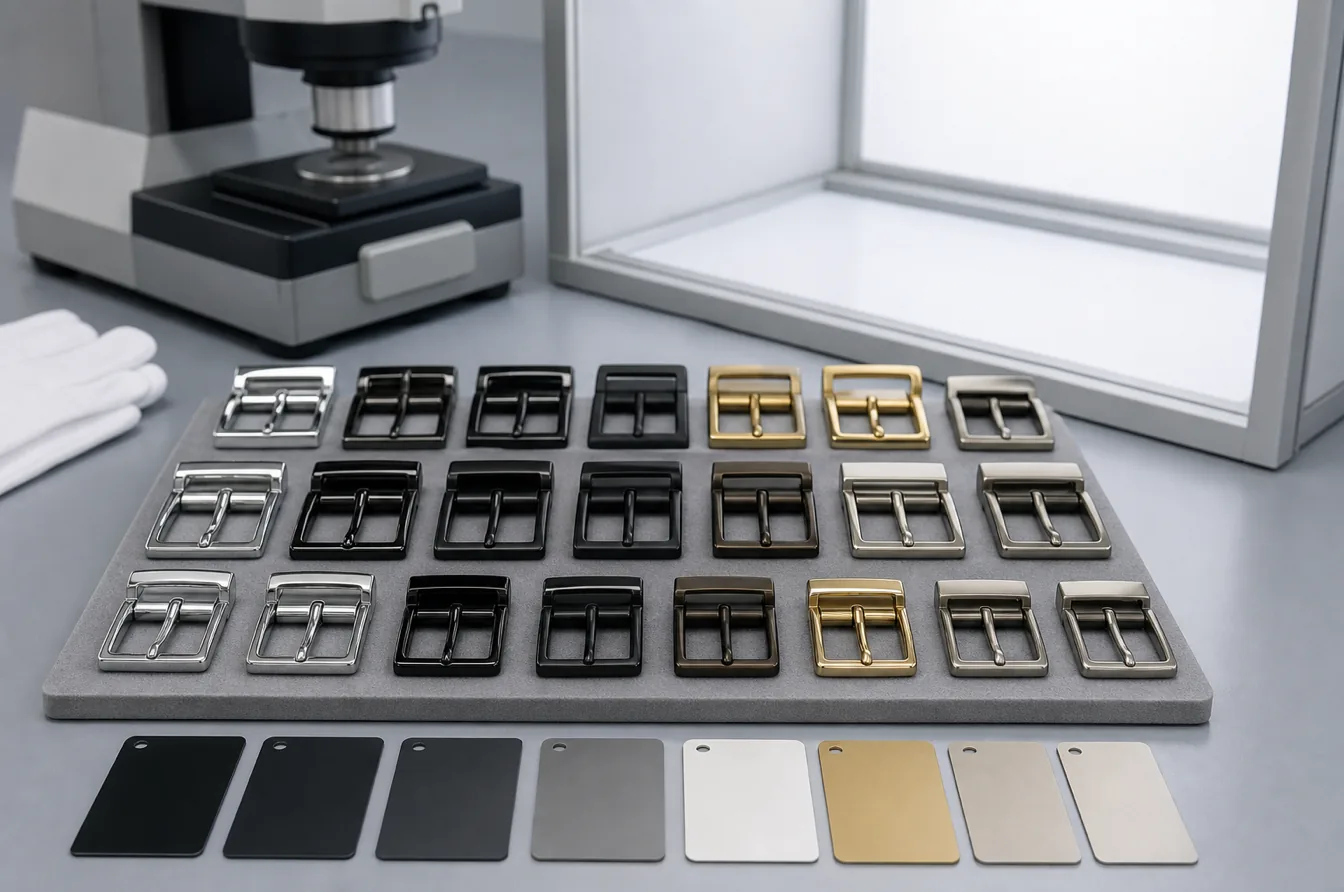
I treat a finish as a controlled stack rather than a color word. A polished surface can create a formal, jewel-like appearance, but it also reveals pits, waviness, tool marks, fingerprints, and scratches. A brushed finish reduces sharp reflection and can hide fine wear, but grain direction, line density, corner blending, and gloss must remain consistent. I put the brushing direction on the drawing and approve limit samples instead of relying on a written phrase such as "satin silver."
I use PVD when the product needs a thin decorative layer with a controlled color and improved surface performance. The coating does not correct a poor substrate. Polishing quality, cleaning, base hardness, adhesion, coating chemistry, thickness, edge geometry, and contact pressure all influence the result. Because PVD systems vary in hardness, color stability, chemical resistance, and perspiration resistance, I do not accept the process name as proof of performance. I translate the intended use into project-specific acceptance criteria for abrasion, adhesion, artificial sweat, corrosion where relevant, color difference, gloss, and edge breakthrough.
I also separate skin-contact performance from marketing language. I do not approve "hypoallergenic" only because a supplier names stainless steel, titanium, or a nickel-free topcoat. Nickel content and nickel release are not the same issue. Direct and prolonged contact becomes relevant when a finished item releases sufficient nickel ions, while some corrosion-resistant nickel-containing steels may release very little. I therefore define the actual contact area, wear condition, destination market, applicable laboratory method, and coating durability before accepting a skin-contact claim.
Before bulk production, I approve a physical master and tolerance range under controlled light. I record substrate, preparation, coating sequence, color target, gloss, protected and uncoated areas, rack marks, acceptable contact points, and prohibited defects. I also check the places where the tongue, frame, lever, or strap rubs because these zones may expose the substrate long before the front face changes.
How Can Brands Translate Military, Western, and Techwear References into Commercial Buckle Design?
Cultural references can give a collection a clear identity, but literal copying or uncontrolled decoration can create cost, usability, credibility, and production problems.
I translate each reference into measurable geometry, finish, interaction, weight, branding, and manufacturing decisions that support the intended market without becoming costume.
Convert Cultural Language into Measurable Design Cues
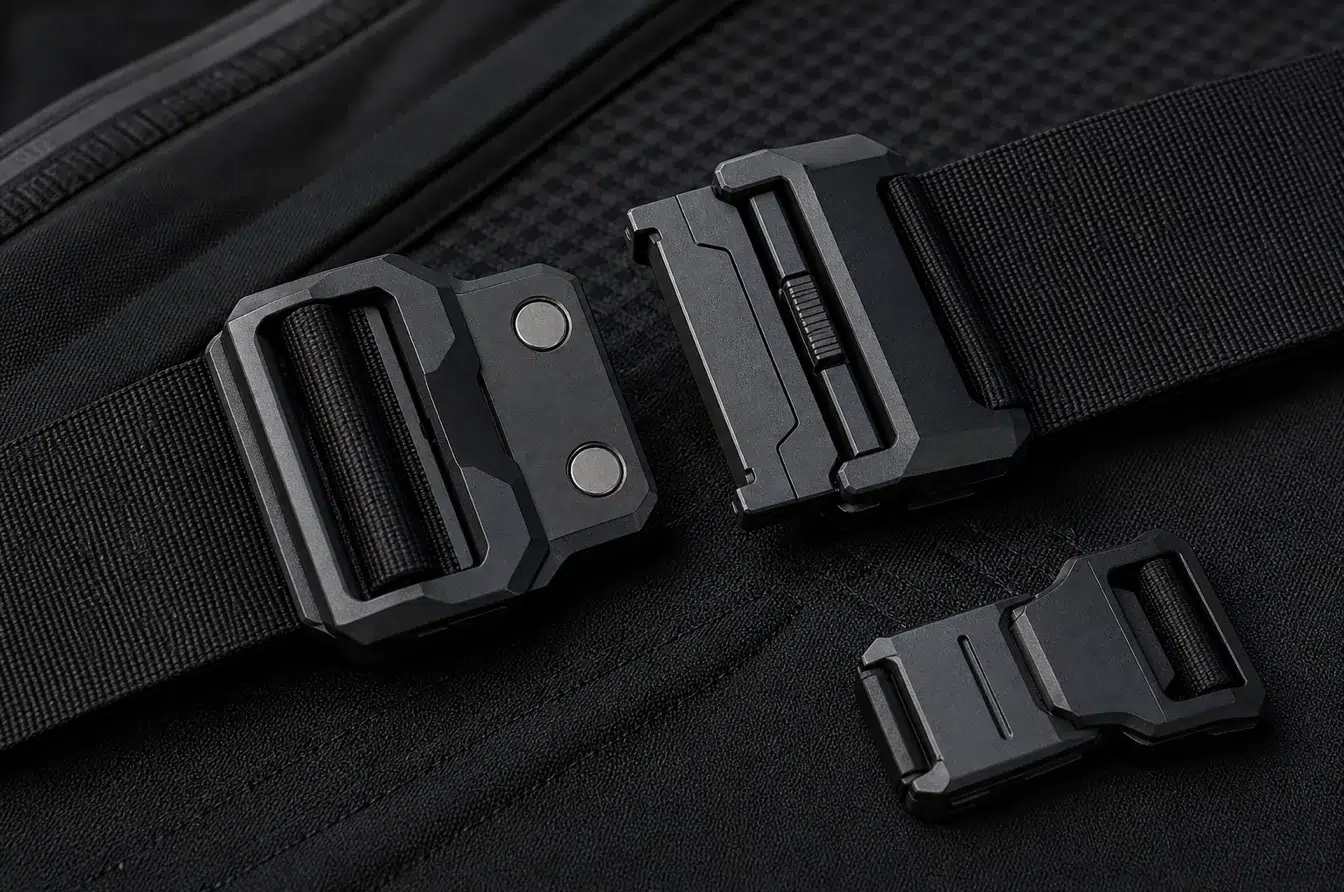
I read military hardware through standardization, compact geometry, controlled finish, fast adjustment, and reliable operation. A military reference does not require oversized logos or decorative complexity. It can appear through a flat box frame, restrained matte surface, consistent webbing path, clear tactile feedback, and parts that are easy to issue across a size range. When I build the brief, I specify which functional codes must remain and which visual details should be softened for a fashion or lifestyle product.
I translate Western trophy buckles through narrative surface area. A broad plate provides room for relief, engraving, stones, lettering, border systems, ranch motifs, or award language. The development risk comes from scale. Excess mass can rotate the belt and create pressure. Shallow relief may lose visual power after polishing and plating, while deep undercuts can complicate casting, finishing, and cleaning. I define the focal hierarchy, maximum weight, back curvature, edge radius, attachment location, relief depth, polishing zones, and contrast finish before the first tool is cut.
I interpret motorcycle influence through robust tactile forms, visible metal mass, glove-friendly interaction, and high-contrast symbols. I control sharp edges, snag risk, coating wear, and logo scale so the part feels deliberate rather than exaggerated. For modern techwear, I use reduced external geometry, concealed mechanics, low profile, quiet operation, and clear one-handed action. The common mistake is to design only the visual code. A buckle that looks tactical but has weak engagement damages the brand more than a conventional mechanism with honest performance.
| Reference | Useful design code | Commercial translation | Main production risk | Approval focus |
|---|---|---|---|---|
| Military | Standardized, compact, functional | Flat frame, controlled finish, direct adjustment | Costume-like detailing or false capability | Operation, consistency, restrained branding |
| Western trophy | Narrative plate and visible craft | Relief, engraving, contrast finish, personalization | Excess weight, flooded detail, uncomfortable back | Balance, relief retention, edge comfort |
| Motorcycle | Bold metal, tactile control, durability | Strong silhouette and glove-friendly scale | Sharp edges, snagging, oversized logos | Handling, wear zones, controlled aggression |
| Techwear | Hidden mechanism and low visual noise | Compact quick action and dark finish system | False lock or unclear release | Engagement feedback and accidental-release control |
Control Narrative Without Losing Manufacturability
I convert the style board into a development sheet before asking for quotations. I mark the buckle’s visual priority, functional priority, target mass, strap width, overall envelope, attachment system, finish zones, logo process, relief direction, and allowable draft. This prevents a supplier from solving an unclear design through uncontrolled thickness or heavy polishing.
For cast trophy and heritage buckles, I review wall thickness, draft, parting lines, gate position, ejector evidence, polishing access, and the way plating will soften fine details. I enlarge or simplify features that will disappear in bulk. For stamped or machined military forms, I review bend radii, tool access, corner deformation, visible seams, and burr control. For black technical finishes, I identify high-contact edges where bright substrate may appear and decide whether the wear is acceptable, disguised, or prevented through geometry.
I treat magnetic-mechanical closures as interaction systems. Magnets can guide mating parts and improve alignment, but a mechanical feature should create secure engagement. Depending on the mechanism, deliberate opening may use tilting, rotating, sliding, or another controlled motion. I prototype that movement with both hands, gloves, strap tension, poor visibility, and nearby equipment. I also check false engagement, pinch points, magnetic debris, unintended opening, and the ability to confirm closure by sound or touch.
I include commercial boundaries in the same brief. Custom relief, multiple finishes, stones, complex assembly, and low-volume personalization can increase tooling, labor, rejection risk, and lead time. I ask the supplier to separate tooling cost, unit cost, finishing cost, assembly cost, and packaging protection. I also check whether symbols, insignia, or cultural references require permission or a more original interpretation. This process protects both manufacturability and brand credibility while keeping the design language clear.
How Should Buckle Geometry and Strap Connections Be Validated for Ergonomics and Durability?
Fit and comfort cannot be approved from a flat drawing because buckle curvature, adjustment range, strap thickness, posture, and connection geometry interact as one system.
I validate ergonomics through measurable adjustment, contact geometry, movement trials, assembly conditioning, and repeat testing across the intended product size and material range.
Engineer Fit as a Measurable System
I begin with adjustment resolution and usable range. Traditional holes create discrete positions, while a ratchet track can divide the same range into smaller increments. That can improve fit control, but only when the track starts, ends, and engages correctly across the brand’s sizing system. I define the pitch, minimum engagement, number of usable teeth, reserve length beyond the normal fit point, and safe distance from the track edge. I then compare these values with strap cut lengths, customer size labels, buckle take-up, and the intended overlap.
I assess curvature as contact geometry. A broad, gently curved back can follow the body and reduce a concentrated pressure point. A flat plate may bridge across the front and load its corners, while an excessive curve may fit one body shape and pinch another. I include buckle width, total thickness, folded strap, keeper, waistband, and clothing layers in the stack. I also review lever position and tongue projection so the mechanism does not create a hidden pressure point.
I use controlled wear trials to expose these interactions. I include standing, sitting, bending, squatting, driving posture, and repeated adjustment. I select participants or body forms across the intended size range and record pressure complaints by location rather than accepting a general statement that the buckle feels comfortable. I also inspect fabric snagging, edge marking, buckle rotation, strap wrinkling, keeper migration, and unintentional release.
| Ergonomic variable | Design decision | Failure to avoid | Validation method |
|---|---|---|---|
| Adjustment pitch | Distance between holes or ratchet teeth | Fit steps that are too coarse or unstable | Range and repeat-adjustment trial |
| Usable adjustment length | Start, end, and reserve positions | Edge loading or insufficient size coverage | Size-system mapping |
| Back curvature | Radius across buckle width | Corner pressure, rocking, or pinching | Seated and movement trials |
| Total stack thickness | Buckle, strap fold, keeper, clothing | Bulge, restricted movement, or lever pressure | Full-assembly fit check |
| Edge and control geometry | Radii, lever recess, tongue projection | Snagging, abrasion, or accidental operation | Contact and movement inspection |
Validate the Connection, Not Only the Buckle
I treat the buckle-to-strap connection as part of the structural system. Chicago screws support modularity because the buckle can be replaced and the strap can be shortened or serviced. The holes also concentrate stress, and the screws can loosen if length, seating, thread fit, or tightening control is wrong. I specify leather thickness, hole diameter, edge distance, spacing, reinforcement where required, screw material, head profile, assembled length, and a retention method compatible with the intended repair strategy.
I use stitching when the product needs a permanent and refined folded connection. Stitching can distribute load over a wider area, but each needle hole also interrupts the leather. Excessive stitch density can create a perforation line. Thread material, size, stitch length, backtacking, fold geometry, edge distance, and abrasion exposure all require control. I inspect the fold after conditioning because dry sample-room leather may behave differently after humidity, flexing, and use.
I use clamps or toothed plates when the brief needs fast assembly or buckle exchange without a stitched fold. The holding force depends on contact area, tooth geometry, strap compressibility, surface friction, and assembly pressure. Soft leather may creep, coated leather may crack, and webbing can be cut by aggressive teeth. I test the actual production materials at their thickness and temper limits rather than relying on one ideal sample.
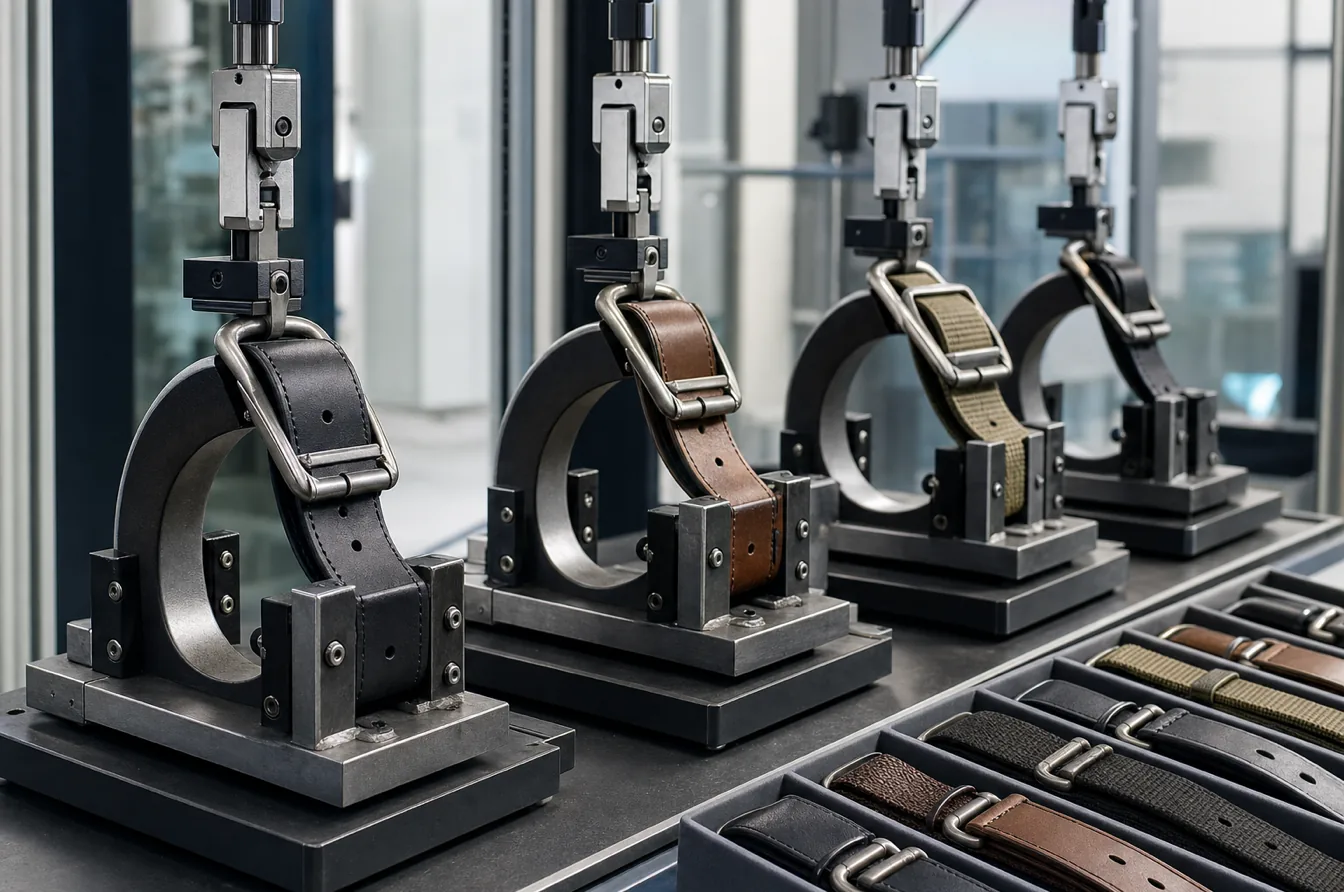
My connection plan includes initial pull strength, repeated loading, flexing, humidity or sweat conditioning where relevant, screw-loosening checks, strap damage inspection, and buckle replacement cycles for serviceable designs. I record whether failure occurs in the metal, connector, stitching, hole, coating, leather, or webbing. I also review repair access, spare-part availability, common-tool service, and the risk of damaging the strap during disassembly. This approach links durability with lifecycle value instead of treating repairability as a late sustainability claim.
How Should Brands Build a Production-Ready Buckle Selection and Quality-Control Matrix?
A strong concept can still fail at quotation or bulk production when the application, test level, tolerances, finish limits, and supplier responsibilities remain unclear.
I use a selection matrix and control package to connect product category, mechanism, material, finish, risk, cost, testing, inspection, maintenance, and after-sales requirements.
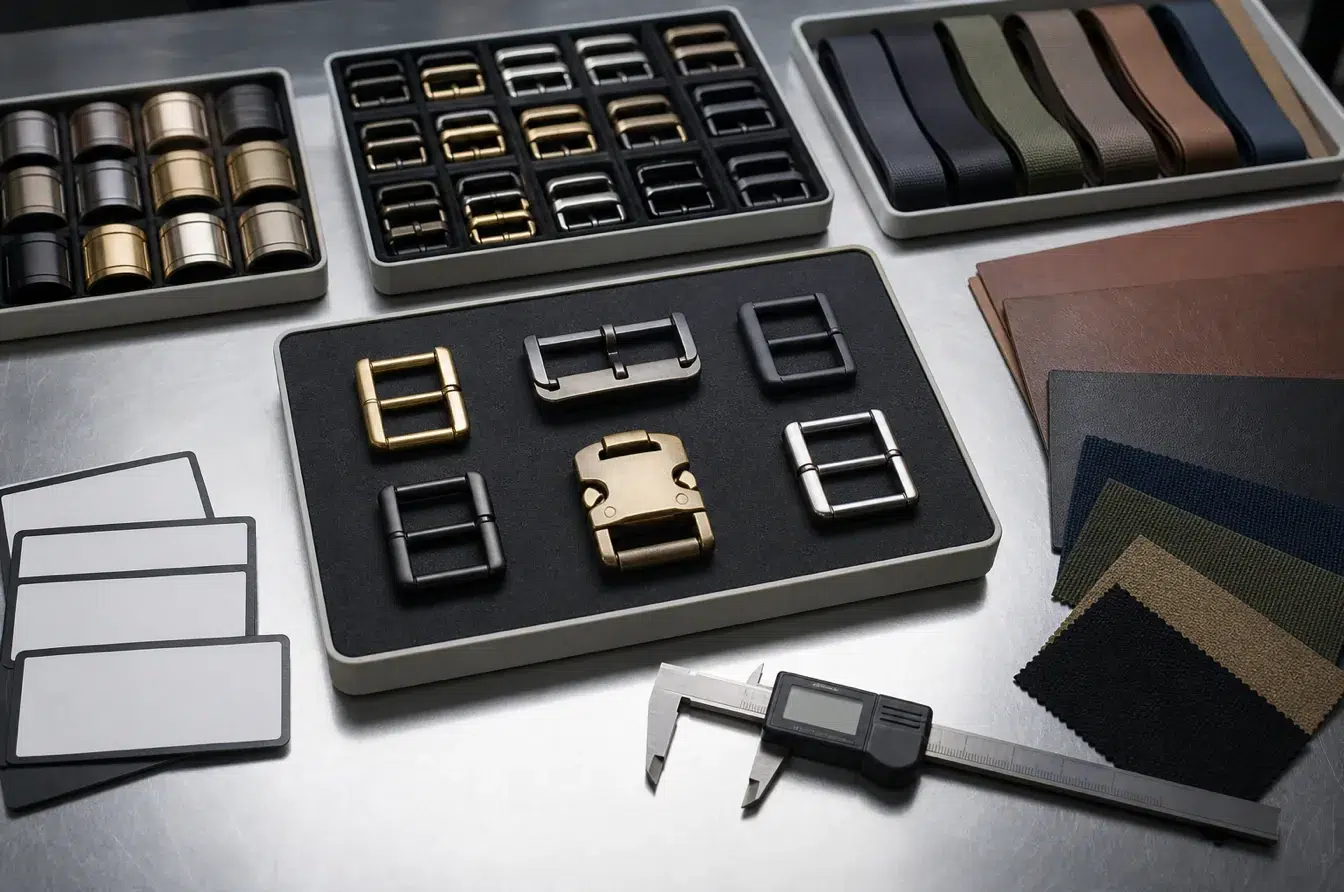
Build the Application Matrix Before the RFQ
I start the matrix with product use rather than buckle appearance. A dress belt needs a low profile, controlled finish, clean leather interface, and stable color across a collection. A workwear belt needs a robust load path, thicker strap compatibility, abrasion resistance, and a repairable attachment. A Western trophy belt needs relief retention, balanced mass, back comfort, and controlled personalization. A travel product may prioritize low weight, fine adjustment, and a genuinely metal-free construction, but I verify every pin, screw, spring, and decorative insert before describing it that way. An EDC or outdoor belt needs deliberate operation under contamination, gloves, movement, and repeated loading, but the required validation still depends on the actual risk level.
I add brand and commercial inputs beside the engineering requirements. These include target customer, target retail price, expected annual volume, launch date, strap supplier, approved colors, logo process, tooling budget, target unit cost, MOQ, sampling rounds, packaging method, spare-part policy, and destination markets. This prevents the team from selecting a mechanically attractive buckle that cannot meet the collection cost or timeline.
I also manage metal color as a product-system decision rather than personal styling advice. I define how polished silver, brushed steel, warm brass, antique brass, gunmetal, and black relate across belts, bags, footwear, or other hardware in the same collection. Exact finish matching may not be possible across brass, zinc alloy, stainless steel, aluminum, and coated polymer, so I establish an intentional hierarchy and approve acceptable cross-material limits.
| Product direction | Mechanism priority | Material and finish direction | Critical validation | Commercial checkpoint |
|---|---|---|---|---|
| Dress belt | Low profile and familiar operation | Polished or fine-brushed metal | Edge comfort, finish consistency, leather marking | Collection color match and target cost |
| Workwear belt | Stable load path and serviceability | Brass or corrosion-resistant steel | Assembly pull, cycling, abrasion | Replacement hardware availability |
| Western trophy belt | Plate balance and secure attachment | Cast or fabricated metal with contrast detail | Weight, relief retention, back curvature | Tooling, polishing labor, personalization MOQ |
| Travel belt | Low mass and fine adjustment | Titanium, composite, or polymer system | Full material audit and adjustment cycling | Claim accuracy and component availability |
| EDC or outdoor belt | Deliberate quick operation | Technical metal, polymer, or mixed system | Contamination, temperature, accidental release | Model rating and application boundaries |
Turn the Approved Sample into a Supplier and QC Package
I do not treat an approved sample as a complete specification. A supplier can reproduce its appearance while changing hidden material, spring force, plating structure, screw length, or assembly method. I create a controlled package with the drawing, revision number, bill of materials, material grades, manufacturing routes, critical dimensions, tolerances, finish stack, color and gloss limits, approved contact marks, logo artwork, assembly sequence, and packaging protection.
I identify critical-to-quality points by risk. For a prong buckle, these may include frame alignment, tongue diameter, tongue clearance, hole compatibility, and burrs. For a ratchet buckle, they may include tooth pitch, engagement depth, release travel, spring return, and track retention. For a quick-release system, they may include mating compatibility, positive locking, release input, strap routing, and model identification. I distinguish measurements from functional checks so inspectors do not replace a required cycling or pull test with a visual inspection.
I use an approved master sample together with boundary samples for color, gloss, texture, polishing, engraving, plating buildup, scratches, pits, rack marks, and edge exposure. I agree on inspection method, lighting, viewing distance, sampling plan, defect classification, test frequency, report format, and traceability before bulk production. The exact limits must fit the product risk and order size; copying generic tolerances or AQL levels without review can hide the wrong defects.
I also require change control. Material substitutions, coating suppliers, tooling repairs, spring changes, revised molds, and process transfers need written approval when they can affect function or appearance. First-bulk inspection should confirm both the visible part and the hidden construction against the approved package. For repeat orders, I compare new results with the original baseline rather than allowing gradual drift.
Finally, I include lifecycle information in the product package. I define approved cleaning guidance, replaceable parts, screw or track specifications, repair limits, and end-of-life separation where practical. A buckle that can be serviced without destroying a good strap can improve after-sales value and extend product life. This is strongest when spare parts, documentation, and disassembly were planned before launch, not added after returns begin.
Conclusion
I approve a buckle when engineering, design intent, supplier capability, bulk controls, and lifecycle planning support the same product promise.