- Loading...
Brass hardware looks simple, but poor material choices can make a premium product feel weak, light, or unreliable.
Brass hardware is valued because it combines density, corrosion resistance, castability, machinability, and a warm surface character that develops with use.
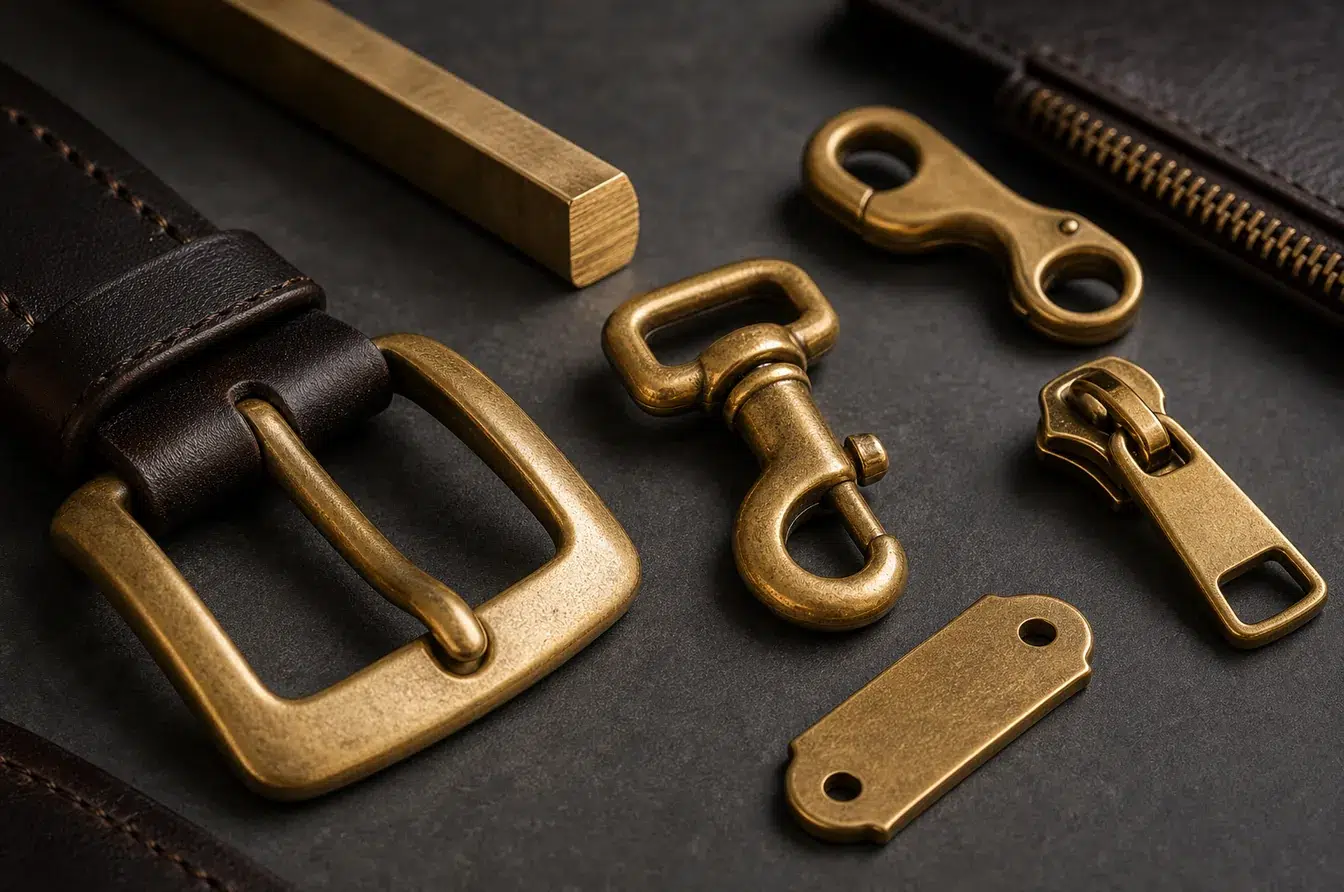
I see brass as both an engineering material and a design language. When I choose it for bag locks, belt buckles, zipper pulls, clasps, or decorative plates, I am not only choosing a golden color. I am choosing weight, surface aging, machining behavior, casting detail, and long-term repairability.
What Makes Brass Hardware Different at the Material Level?
A buckle can look beautiful in CAD, but the alloy decides how it feels, wears, and survives impact.
Brass is mainly a copper-zinc alloy. Its properties change when the copper-zinc ratio changes, so designers should treat "brass" as a family of materials, not one fixed metal.
Copper, Zinc, and the Balance of Strength
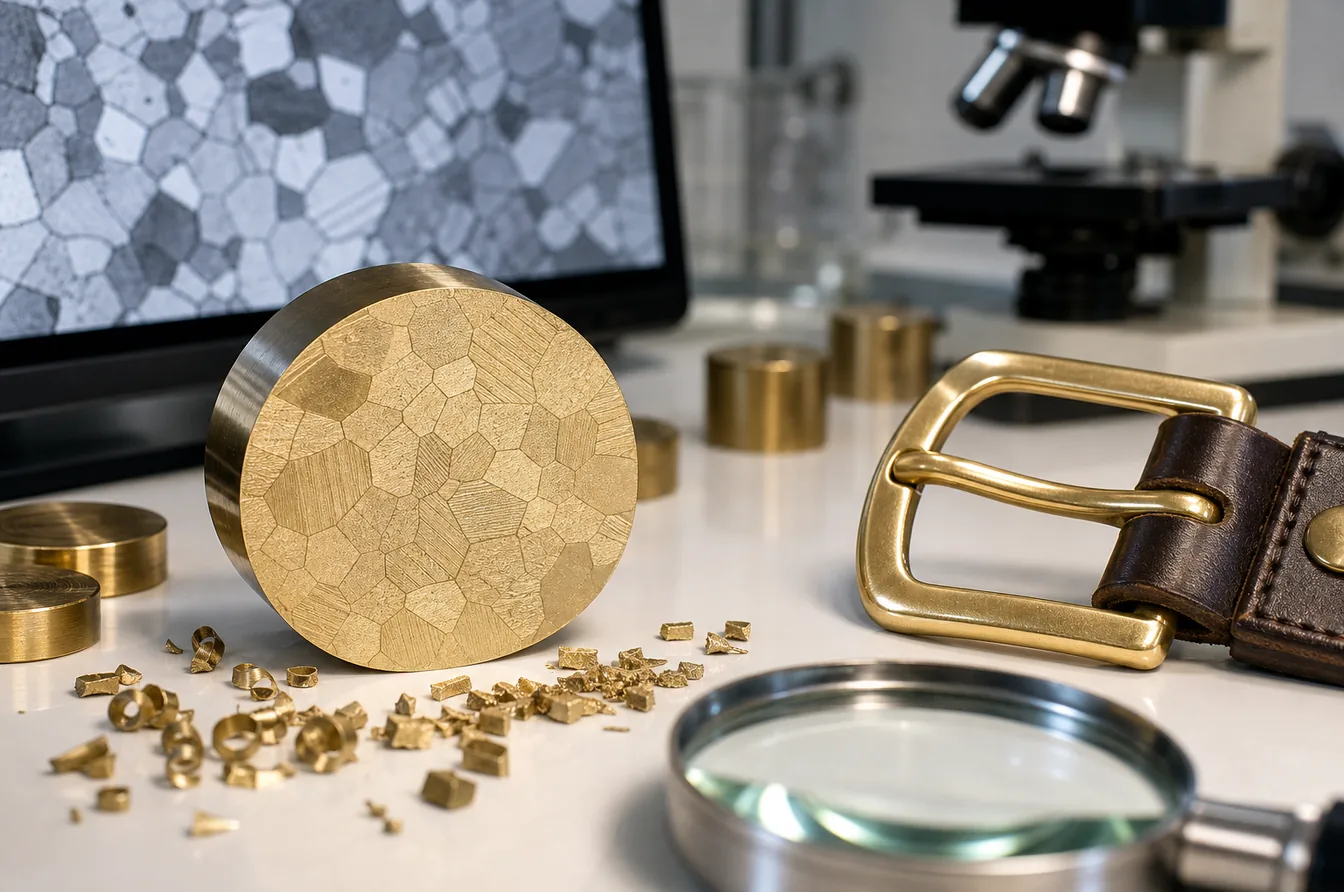
The soul of brass is the balance between copper and zinc. A 70/30 brass, often called cartridge brass in many industrial contexts, is usually strong, ductile, and suitable for forming. A 65/35 brass moves closer to the boundary where strength rises, but cold formability becomes more limited. This is why I never select brass only by color. I first ask what the part must do.
If a brand needs a flat stamped plate, I look for ductility. If a lock body needs casting detail and enough strength, I pay more attention to casting behavior and post-machining. If a buckle tongue must flex slightly and return, I care about elasticity, grain condition, and thickness.
The terms alpha brass and beta brass help explain this. Alpha brass is generally more workable at room temperature because it has a single-phase structure. Alpha-beta brass includes both phases, which can make it stronger and more suitable for hot working, but less friendly for deep cold forming. In practical sourcing, this means a supplier’s "brass" quote is not enough. I want alloy grade, process route, hardness, and finish plan.
| Brass Type | Typical Zinc Range | Practical Meaning | Common Hardware Use |
|---|---|---|---|
| Alpha brass | Up to about 35% zinc | Good ductility and cold workability | Stamped plates, trim, thin decorative parts |
| Alpha-beta brass | About 32-39% zinc | Stronger, better for hot working | Forged or hot-worked parts |
| Higher-zinc beta-rich brass | Above about 39% zinc | Harder, lower room-temperature ductility | Selected casting or hot-worked components |
Density, Melting Range, and the Feeling of Quality
Brass has a density around 8.4 to 8.7 g/cm3, depending on composition. This high density gives small hardware a serious hand feel. In leather goods, that weight can be a silent quality signal. A solid brass buckle feels grounded. A thin zinc alloy part may look similar in a photo, but in the hand it often feels less stable.
The relatively low melting range of many brasses, often around 900 to 940 C, also helps casting. Molten brass can fill detailed cavities better than many higher-melting engineering metals. This is useful for decorative hardware with raised logos, sculpted edges, rope textures, or vintage relief details.
But the same material can fail if the geometry is careless. I avoid sharp internal corners, thin unsupported arms, and decorative grooves placed directly across stress paths. Brass is tough, but it is still a metal with grain structure, casting shrinkage risk, and possible stress concentration. Good brass hardware starts in the alloy, but it succeeds in the drawing.
How Should I Read Lead-Free Brass and Compliance Claims?
A beautiful brass part can still create risk if its chemistry is not controlled and documented.
Lead improves machinability, but modern hardware programs often need stricter lead control, clearer testing, and more responsible alloy selection.
Why Lead Was Used, and Why It Became a Problem
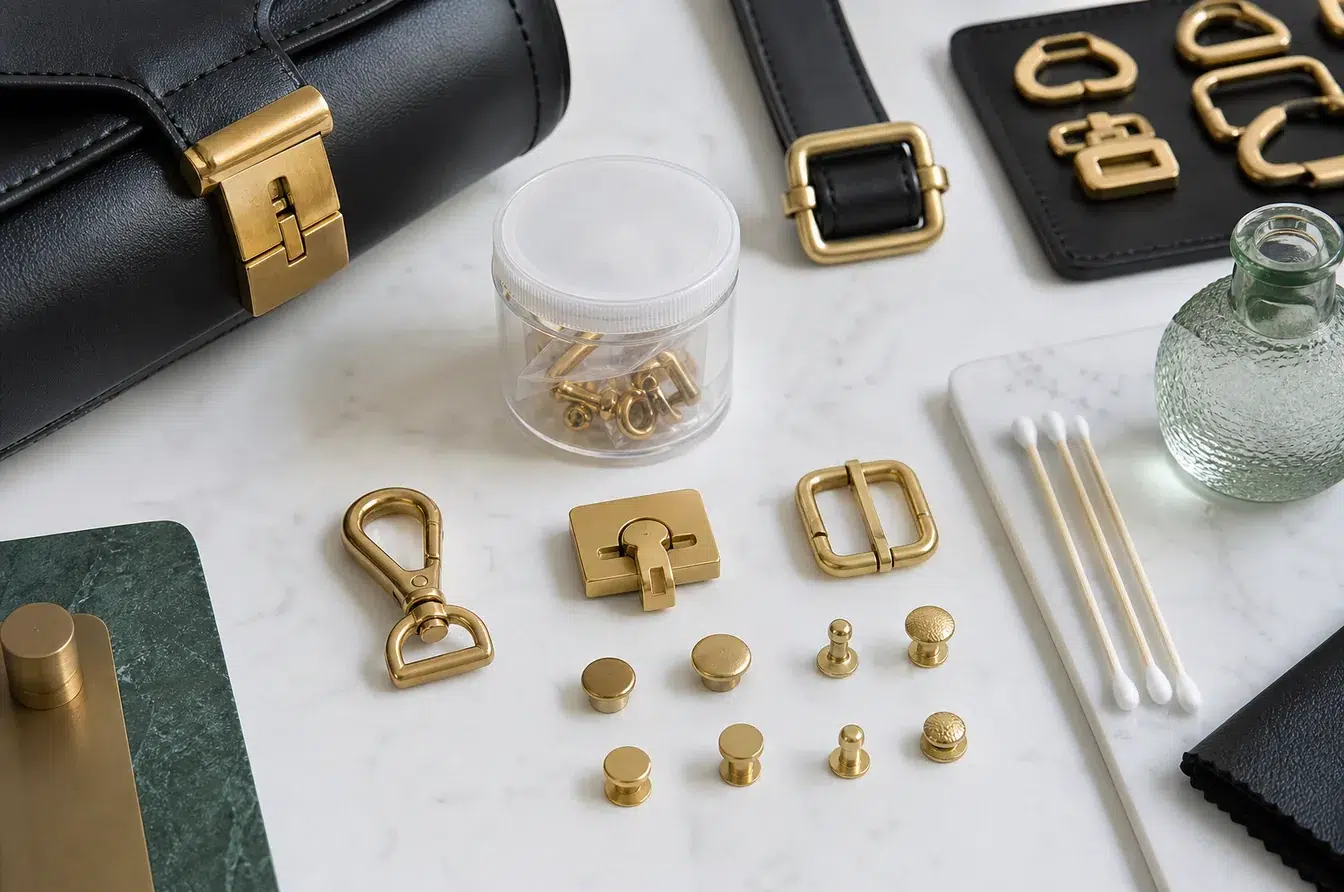
Traditional free-cutting brass often used lead because lead acts like a built-in machining aid. It forms tiny soft particles in the copper-zinc matrix. During cutting, those particles help break chips and reduce tool friction. This makes drilling, turning, threading, and milling faster and cleaner.
That advantage is real, but it creates a safety and compliance issue. Hardware used near skin, children’s products, accessories, footwear, and consumer goods may be subject to different lead rules depending on market, product category, coating, and exposure route. I do not treat one number as universal. For example, U.S. children’s product rules use a 100 ppm total lead limit for accessible components, while paint and similar surface coatings use a 0.009% limit, which equals 90 ppm. Drinking-water plumbing has another "lead free" definition based on weighted wetted surfaces.
For fashion hardware, I prefer to set the requirement with the test lab before production. The purchase order should define whether the target is total lead, extractable lead, coating lead, or a brand-specific restricted substance list. A vague "lead free" claim is not enough.
| Compliance Context | Common Limit Logic | Why It Matters |
|---|---|---|
| Accessible children’s product component | Often 100 ppm total lead in the U.S. | Relevant if the product is designed for children |
| Paint or similar surface coating | 90 ppm lead in the U.S. CPSC rule | Relevant for coated surfaces defined as paint-like coatings |
| Drinking-water plumbing | 0.25% weighted average on wetted surfaces in the U.S. | Relevant to plumbing, not normal fashion hardware |
| Brand RSL for accessories | Brand-specific | Often stricter than general legal minimums |
Bismuth, Virgin Metal, and the Cost of Cleaner Brass
Bismuth is one substitute used in some lead-free copper alloys. Like lead, it can improve machinability because it forms discrete low-shear particles that help cutting. It does not behave exactly like lead, and it can create its own processing challenges, but it gives alloy designers a route toward safer machinable brass.
Lead-free brass is rarely a free upgrade. It can increase raw material cost, tool wear, machining time, and scrap control requirements. A supplier may need sharper tooling, better coolant control, slower feed rates, and more careful quality checks. This is one reason cleaner brass hardware costs more than generic brass hardware.
I also pay attention to recycled versus virgin input. Brass is highly recyclable, which is a major sustainability advantage. But when a program needs very low lead content, uncontrolled scrap can introduce chemistry risk. For high-compliance hardware, I prefer suppliers who can separate scrap streams, provide mill certificates, and control incoming metal. In some cases, virgin metal is easier to document because its impurity profile is more predictable.
Which Manufacturing Process Fits the Hardware Design?
The wrong process can make brass hardware expensive, unstable, or visually disappointing.
Casting, die casting, CNC machining, forging, and stamping all create different grain structures, tolerances, surfaces, and cost curves.
Sand Casting, Die Casting, and the Logic of Shape
Sand casting is one of the oldest ways to make brass hardware, and it still has a place when the design needs volume, texture, and craft character. A pattern is made first. Sand mixed with clay and moisture is packed around the pattern to form a mold. The gating system controls how molten brass enters the cavity, how air escapes, and how shrinkage is managed. After cooling, the casting is removed, trimmed, cleaned, and finished.
The sand mixture matters. Too little moisture can make the mold weak. Too much moisture can create gas problems. Clay improves bonding, but the mold still needs permeability. I see sand casting as a conversation between detail and tolerance. It can create beautiful organic surfaces, but it usually needs more finishing work than precision machining.
Die casting is different. It suits larger volumes and tighter repeatability, especially when the geometry can justify tooling cost. For brass, the high temperature and tooling wear must be considered, so die casting is not always the cheapest option. Zinc alloy die casting is much easier and cheaper, which is why many low-cost "brass color" parts are actually zinc alloy with plating.
| Process | Best For | Strength | Detail | Cost Pattern |
|---|---|---|---|---|
| Sand casting | Sculptural or vintage hardware | Medium to good | Organic detail | Lower tooling, more finishing |
| Die casting | High-volume repeatable parts | Depends on alloy and design | High | High tooling, lower unit cost |
| CNC machining | Tight tolerance custom hardware | High if stock is sound | Sharp mechanical detail | Higher unit cost |
| Cold forging | Compact strong parts | High | Moderate | Tooling needed |
| Stamping | Thin plates and flat trims | Good for sheet parts | Flat or shallow relief | Efficient at volume |
CNC, Forging, and Stamping for Precision Hardware
CNC machining is the route I choose when tolerance and clean edges matter more than low unit price. It works well for custom lock components, precision pivots, screw-fit parts, and small batches. The limitation is material waste and machining time. A complex buckle carved from solid brass can be beautiful, but the cost must match the product tier.
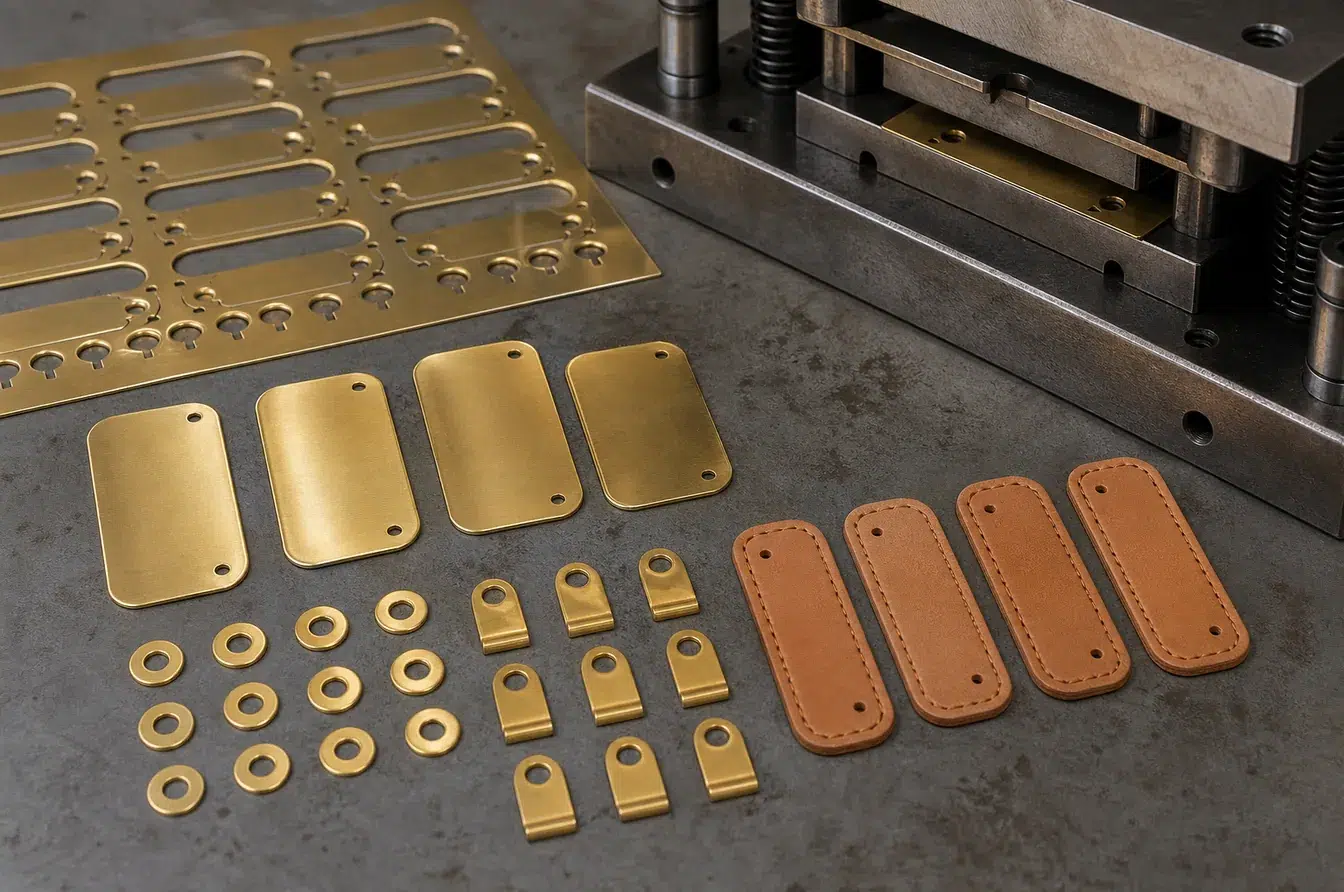
Cold forging and hot forging can improve strength because the metal flow follows the part shape. This is valuable for hooks, rings, and load-bearing hardware. Stamping works well for thin components such as logo plates, washers, decorative tabs, and leather reinforcement pieces. It is efficient, but the design must respect bend radius, burr direction, springback, and edge finishing.
I usually decide the process by asking four questions. Does the part carry load? Does it need sharp tolerance? Does it need sculptural depth? What volume will the brand actually reorder? A process that is perfect for 50,000 pieces may be painful for 300 pieces. A process that is perfect for a prototype may be too slow for production.
How Do Patina and Coatings Change Brass Hardware?
Brass does not stay visually neutral. It either ages, or we engineer the surface to resist aging.
Patina, lacquer, polishing, brushing, and PVD all change the way brass hardware looks, feels, and performs over time.
Natural Patina as a Design Feature
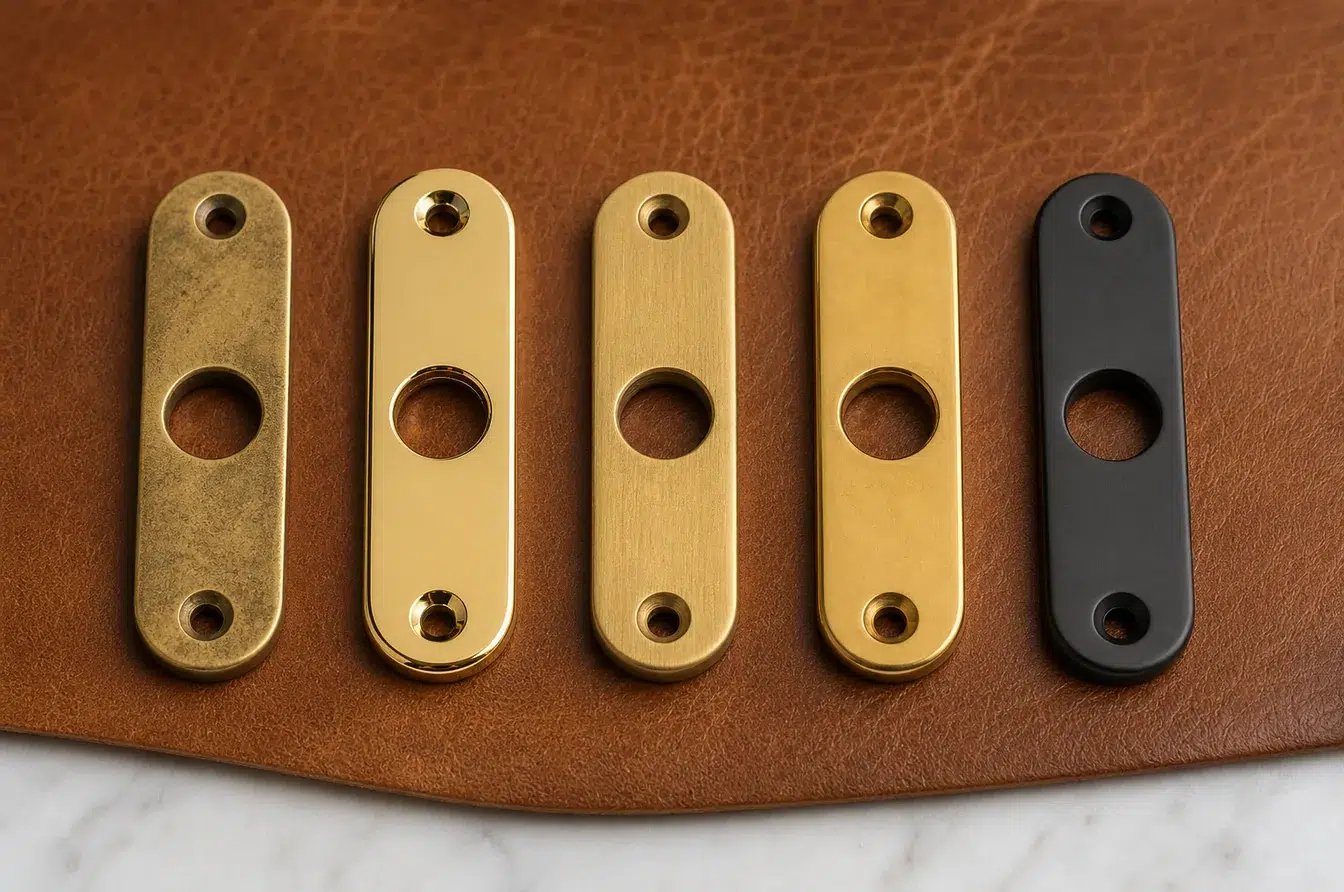
Uncoated brass reacts with air, moisture, skin oils, salts, and handling. Over time, the bright yellow tone can darken into honey, brown, or antique brass. In outdoor or marine-like conditions, copper compounds may create greenish patina. Some leather goods customers love this because the hardware records use. It feels personal and honest.
But patina must match the brand promise. If a customer expects a permanent mirror gold finish, natural oxidation may feel like a defect. If the product is sold as heritage leather goods, controlled aging can become a core value. I like to define this before sampling. The product page, care card, and finish specification should say whether the brass is intended to age.
Microstructure also affects durability. Brass has grains, phases, and sometimes inclusions. Compared with many zinc alloy castings, solid brass often gives better toughness and better resistance to brittle fracture, especially in small load-bearing details. This is why a brass buckle can survive drops and repeated stress better than a cheap plated zinc alloy buckle with a weak corner. The difference is not only weight. It is material behavior.
Lacquer, Brushing, Polishing, and PVD
Clear lacquer is used when the brand wants brass to remain bright. It seals the surface and slows oxidation. The risk is wear. Once the lacquer scratches or chips, oxidation can appear unevenly. For high-touch parts, lacquer should be tested with abrasion, sweat, humidity, and flexing around assembled edges.
Polishing gives a reflective luxury surface. It shows form beautifully, but it also reveals scratches. Brushing hides small marks better and gives a more technical look. Hand brushing can add craft value, but it must be controlled so every batch keeps the same direction and depth.
PVD, or physical vapor deposition, can add a hard decorative coating. It is often used when the desired color is consistent gold, gunmetal, black, or champagne with better wear resistance than ordinary plating. But PVD is not magic. The base polishing, cleaning, adhesion layer, coating thickness, and geometry all matter. Deep recesses, sharp corners, and moving contact zones still need testing.
| Finish | Visual Result | Main Advantage | Main Risk |
|---|---|---|---|
| Raw brass | Natural aging | Authentic patina | Uneven darkening |
| Polished brass | Bright gold shine | High-end reflection | Scratches visible |
| Brushed brass | Satin directional texture | Hides small marks | Batch consistency |
| Clear lacquer | Fresh brass look | Slows oxidation | Chipping or uneven wear |
| PVD coating | Controlled color and hardness | Strong wear resistance | Needs excellent pretreatment |
How Should I Choose, Test, and Maintain Brass Hardware?
Good brass hardware is not bought by appearance alone. It is specified, tested, and maintained.
I check material, weight, magnetism, surface finish, corrosion behavior, assembly stress, and care expectations before approving brass hardware for production.
Comparing Brass with Bronze, Stainless Steel, and Zinc Alloy
Brass competes with other metals, and each one has a place. Bronze can offer excellent wear resistance and a deeper historical character, but it may cost more and look less bright. Stainless steel is strong and corrosion resistant, but it feels cooler, harder, and less warm in luxury leather goods. Zinc alloy is cost-effective and easy to die cast, but it usually cannot match solid brass in density, patina, or long-term toughness.
I use the table below during early material discussions. It prevents emotional decisions based only on color samples.
| Material | Weight Feel | Strength and Toughness | Corrosion Resistance | Cost | Best Use |
|---|---|---|---|---|---|
| Solid brass | Heavy and premium | Good, especially in well-designed parts | Good, but can dezincify in harsh conditions | Medium to high | Luxury bag hardware, buckles, locks |
| Bronze | Heavy and traditional | Very good wear behavior | Very good in many environments | High | Bearings, heritage hardware, marine-style parts |
| Stainless steel | Medium-heavy | Very high | Excellent | Medium to high | Functional hardware, outdoor use, modern designs |
| Zinc alloy | Light to medium | Lower toughness, risk of brittle failure | Depends on plating | Low | Low-cost decorative parts, complex die-cast shapes |
Simple Identification and Practical Care
There are a few basic checks I use before deeper lab testing. First is weight. Solid brass feels heavier than zinc alloy for the same volume. Second is magnetism. Brass is not ferromagnetic, so a strong magnet should not stick to true solid brass. This test is only a first screen because some plated steel parts or mixed assemblies can confuse the result.
Third is edge inspection. If a part is only brass plated, worn corners may reveal a different base metal. Fourth is sound. Solid brass often gives a denser, clearer sound when tapped compared with many zinc alloy castings. None of these replace lab analysis, but they help sourcing teams catch obvious mismatches before they approve samples.
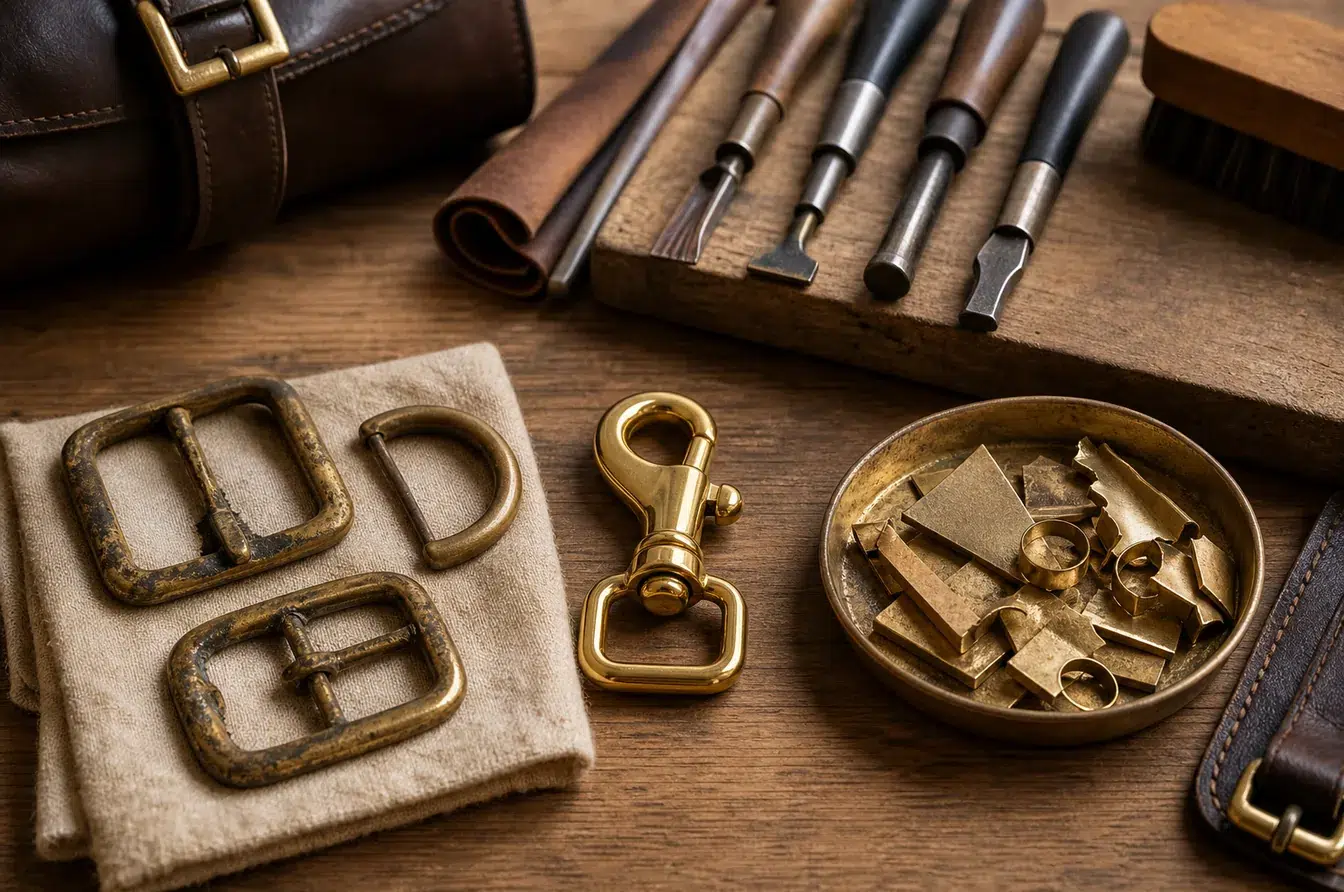
For maintenance, I separate two goals. If the customer wants bright gold, use a soft cloth and a brass-safe cleaner, then remove residue completely. Avoid harsh abrasives near leather because polishing paste can stain. If the customer wants patina, clean gently and avoid sealing the surface. For a more even antique tone, handling, air exposure, and mild cleaning are better than aggressive chemical aging unless the factory controls the process.
Brass also fits circular design. It can be recycled without losing its basic metal value, and scrap separation is easier because brass is non-ferromagnetic. For premium products, that matters. A well-made brass part can be repaired, refinished, reused, or recycled. That is a different sustainability story from a thin plated part designed only to survive one selling season.
Conclusion
I choose brass when hardware needs weight, durability, controlled aging, and a material story that supports real product value.