- Loading...
I have seen promising hardware projects stall when a tooling charge appears late, because the quotation never explained what must exist before production.
Custom fashion hardware usually requires a mold or tooling fee because a dedicated production asset must be designed, machined, tested, and approved before a unique part can be manufactured repeatedly. The fee covers this upfront development work, while the unit price covers normal production.
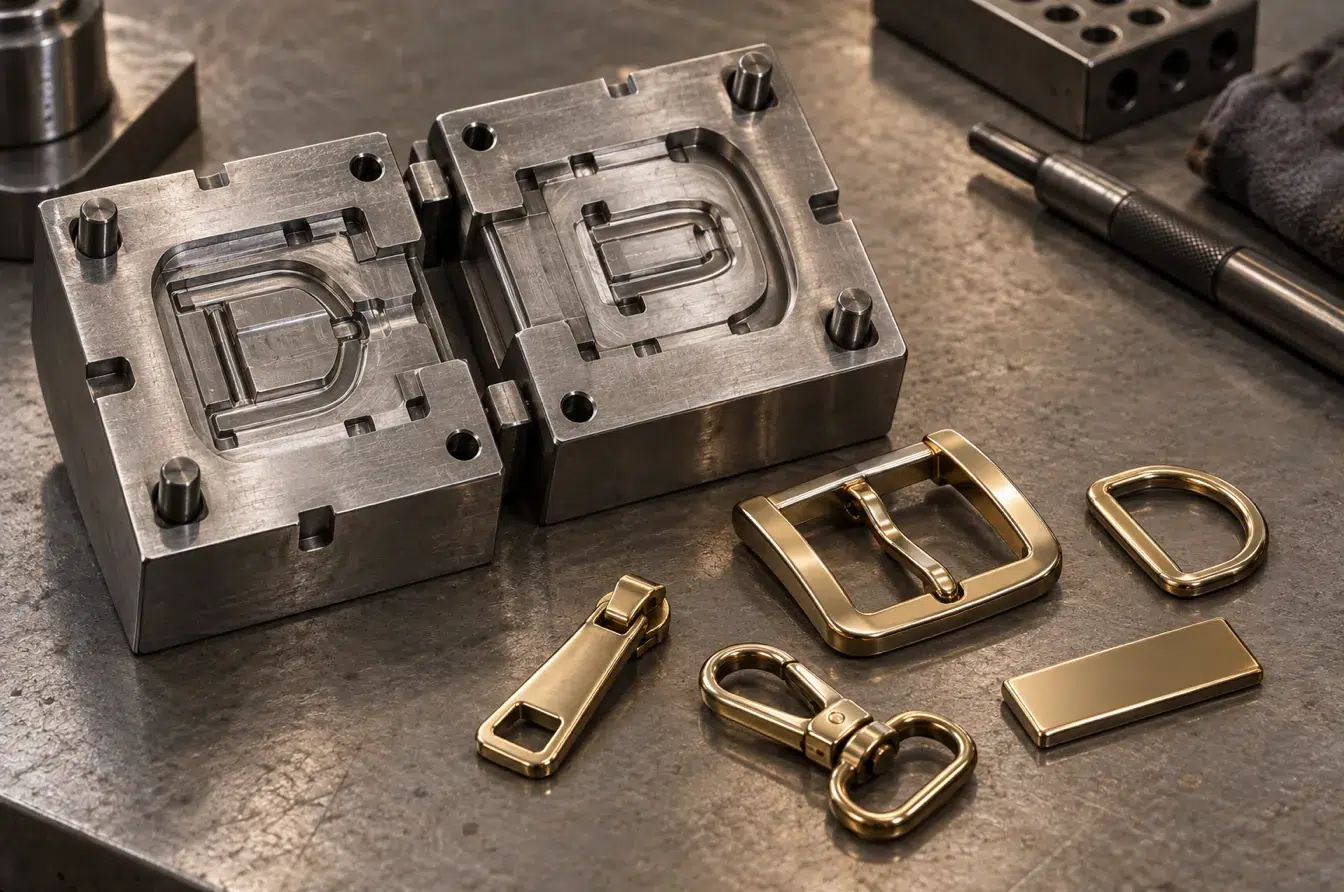
The word “mold” can make the charge sound simpler than it is. Fashion hardware may be die-cast, stamped, formed, injected, engraved, machined, or assembled from several components. Each route needs a different combination of dies, cavities, inserts, fixtures, drawings, trials, and approval samples. Understanding that production route makes the quotation easier to evaluate and prevents confusion about cost, ownership, and future reuse.
What Does a Mold or Tooling Fee Cover in Custom Fashion Hardware Production?
A tooling charge feels arbitrary when it appears as one line with no explanation of the work behind it.
The fee normally covers the project-specific asset and development steps needed to convert approved artwork or geometry into a repeatable manufacturing process. Depending on the product, this may include tool design, machining, assembly, trial runs, dimensional correction, and the first production-representative samples.
The Fee Creates a Repeatable Production Asset
A concept drawing does not directly produce a buckle, zipper pull, button, clasp, cord end, logo plate, ring, hook, or decorative trim. The design must first be translated into production geometry. Critical features include the external shape, thickness, holes, strap bars, attachment points, logo depth, edge radii, mating surfaces, and any clearance needed for moving parts.
The factory then selects a manufacturing route and designs the tool around that route. A die-cast part needs a cavity that accounts for metal flow, shrinkage, part removal, and trimming. A stamped part needs dies that cut and form sheet metal in controlled stages. A molded resin or rubber component needs a cavity and feed system suitable for the selected material. A multi-part closure may also require gauges or assembly fixtures so that each component aligns and functions consistently.
The tooling fee pays for creating this repeatable capability. It is separate from the metal, resin, polishing, coating, assembly labor, inspection, and packaging consumed by every production unit.
| Cost element | Main purpose | Typical cost behavior |
|---|---|---|
| Tool engineering | Converts the approved design into manufacturable geometry | Usually charged during initial development |
| Mold, die, insert, or fixture | Reproduces the defined shape or controls assembly | Usually project-specific and reusable |
| Trial production | Reveals filling, forming, fit, release, and appearance issues | May be included or quoted separately |
| Sample correction | Adjusts dimensions, logo detail, clearance, or function | Depends on the agreed revision scope |
| Unit production | Covers material, processing, finishing, assembly, and packing | Repeats with every order quantity |
The Charge Often Includes More Than a Metal Block
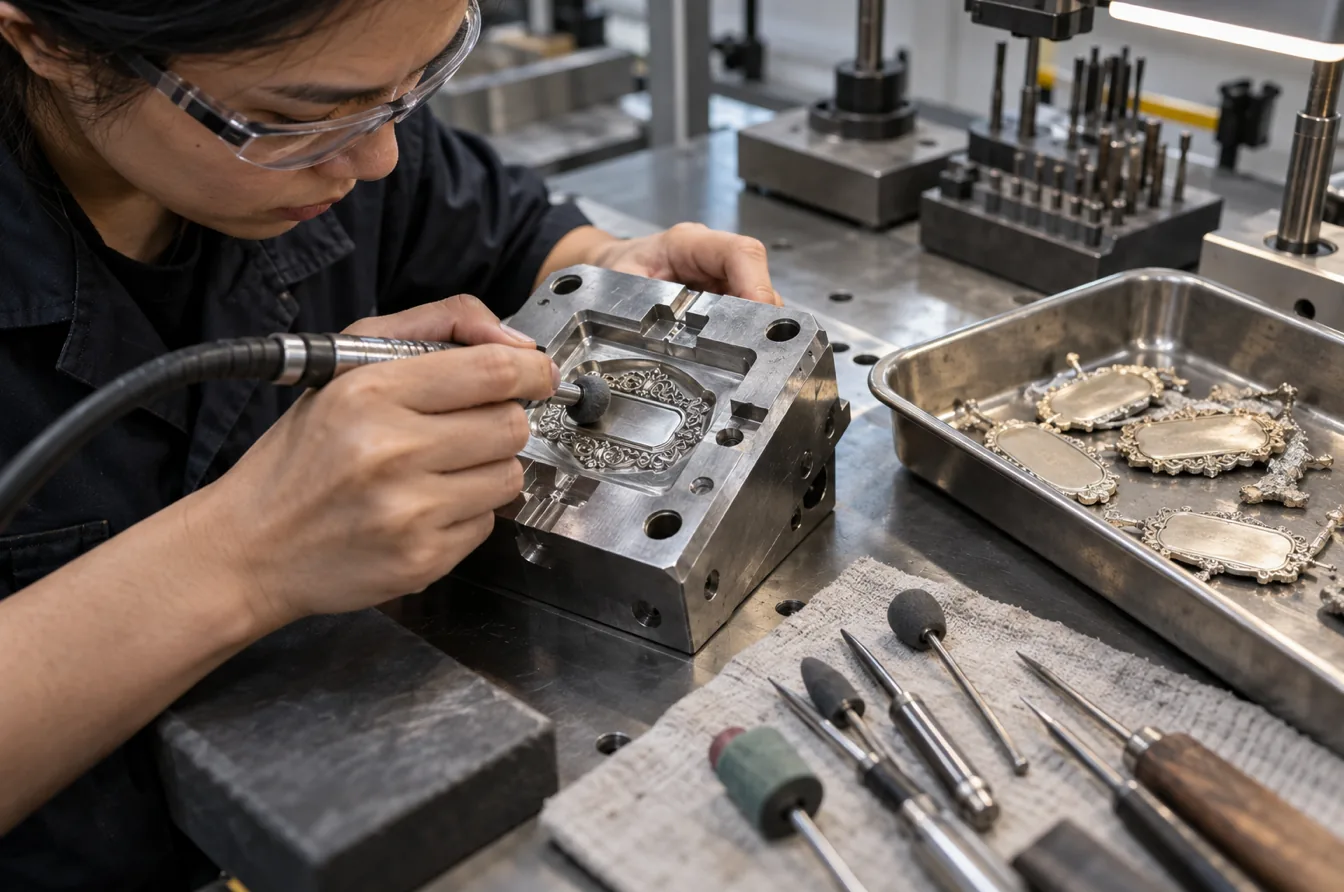
Machining the physical tool is only one stage. Before cutting begins, drawings may need cleanup, dimensions may need confirmation, and decorative artwork may need conversion into controlled relief. The toolmaker must decide where the part separates from the mold, how it will be removed, where excess material will be trimmed, and which surfaces must remain free from visible tool marks.
After machining, the tool must be assembled and tried under production-like conditions. The first parts may reveal incomplete filling, distortion, flash, weak details, rough edges, poor alignment, or interference between moving components. Correction may involve polishing a cavity, adjusting an insert, changing a clearance, refining a feed position, or revising the part geometry. Another trial then confirms whether the correction works.
A transparent quotation should distinguish the tool from related development charges. Artwork preparation, prototype printing, repeated sample revisions, special inspection, and finish development are not always included in the same fee. Clear separation prevents a mold charge from becoming a vague container for unrelated costs and makes competing quotations easier to compare.
How Do Product Design, Material, Size, and Complexity Affect Tooling Costs?
Small hardware is not automatically inexpensive to tool, and visible size alone is a poor guide to development effort.
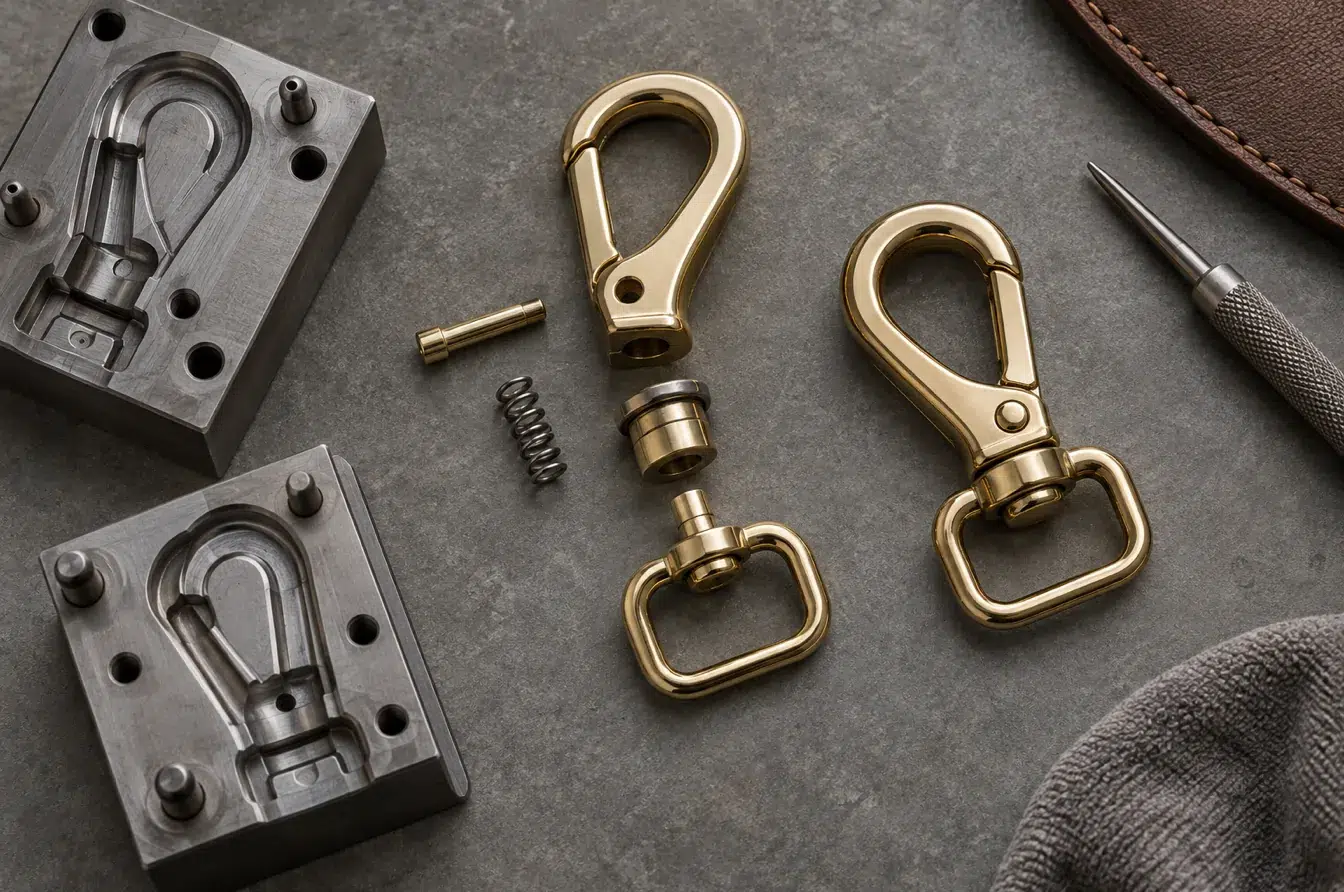
Tooling cost is driven by the manufacturing route, geometry, detail, material behavior, number of components, cavity arrangement, expected production life, and correction work. A compact locking clasp can demand more engineering and machining than a larger flat logo plate with simple edges.
Manufacturability Matters More Than Visual Scale
Fine lettering, narrow slots, deep relief, thin sections, hidden attachment features, sharp internal corners, and moving mechanisms increase the work required to build and prove a tool. Decorative details must survive casting or molding, polishing, and coating without becoming blurred. Functional dimensions must also remain stable enough for straps, sliders, pins, springs, rivets, or mating components to fit after finishing.
Multi-part hardware introduces another layer of cost. Each part may need its own tool, and the completed assembly may need gauges or fixtures. A hinged buckle, turn lock, swivel hook, or concealed clasp therefore cannot be evaluated as a single exterior shape. The tooling plan must cover every component and the relationships between them.
Tool life also matters. A tool designed for a limited launch quantity may use a different construction from one intended for repeated seasonal production. More durable tool materials, replaceable inserts, additional cavities, and easier maintenance can increase the initial charge but may reduce interruption and replacement risk over the program’s lifetime.
| Design factor | Why it affects tooling | Question for quotation review |
|---|---|---|
| Fine logo or texture | Requires precise machining and protection through finishing | What minimum detail can remain clear after polishing and coating? |
| Moving or mating parts | Adds clearance, alignment, and functional trial work | Which dimensions control movement and assembly? |
| Multiple components | May require several tools and an assembly fixture | Is every component included in the tooling price? |
| High cavity count | Increases tool size, balance, and manufacturing complexity | How many production cavities are being supplied? |
| Long expected tool life | May require stronger materials and serviceable inserts | What construction and maintenance plan support the forecast volume? |
Material and Process Determine the Tooling Route
“Custom metal hardware” covers several very different processes. Zinc-alloy components are often shaped by die casting. Brass or steel plates may be stamped, formed, forged, machined, or produced through another route selected for the geometry and volume. Plastic, resin, silicone, or rubber details normally require injection or compression tooling. A standard blank with a flat logo may need only an engraving setup or holding fixture rather than a new shape-forming mold.
Changing the base material can therefore change more than the raw-material price. The original tool may have been designed around a particular flow behavior, forming force, shrinkage allowance, wall thickness, or release condition. Moving the same visual design to another material may require different geometry, a new tool, or even a completely different manufacturing process.
Size still influences cost because larger tools consume more material and machine time, but it should be reviewed together with complexity. The most useful quotation explains why the selected process suits the design, which tool is required, how many parts it produces per cycle, and which design features create the largest cost or risk.
When Is New Tooling Required Instead of Using an Existing Mold?
An existing mold can reduce cost and lead time, but only when its geometry and production route still match the required part.
New tooling is generally required when the custom shape, structural dimensions, attachment system, logo relief, material route, or functional interface cannot be produced by an available tool. Existing tooling may remain usable when the geometry is unchanged and customization is limited to color, plating, printing, or laser marking.
Geometry Changes Decide Whether a Tool Can Be Reused
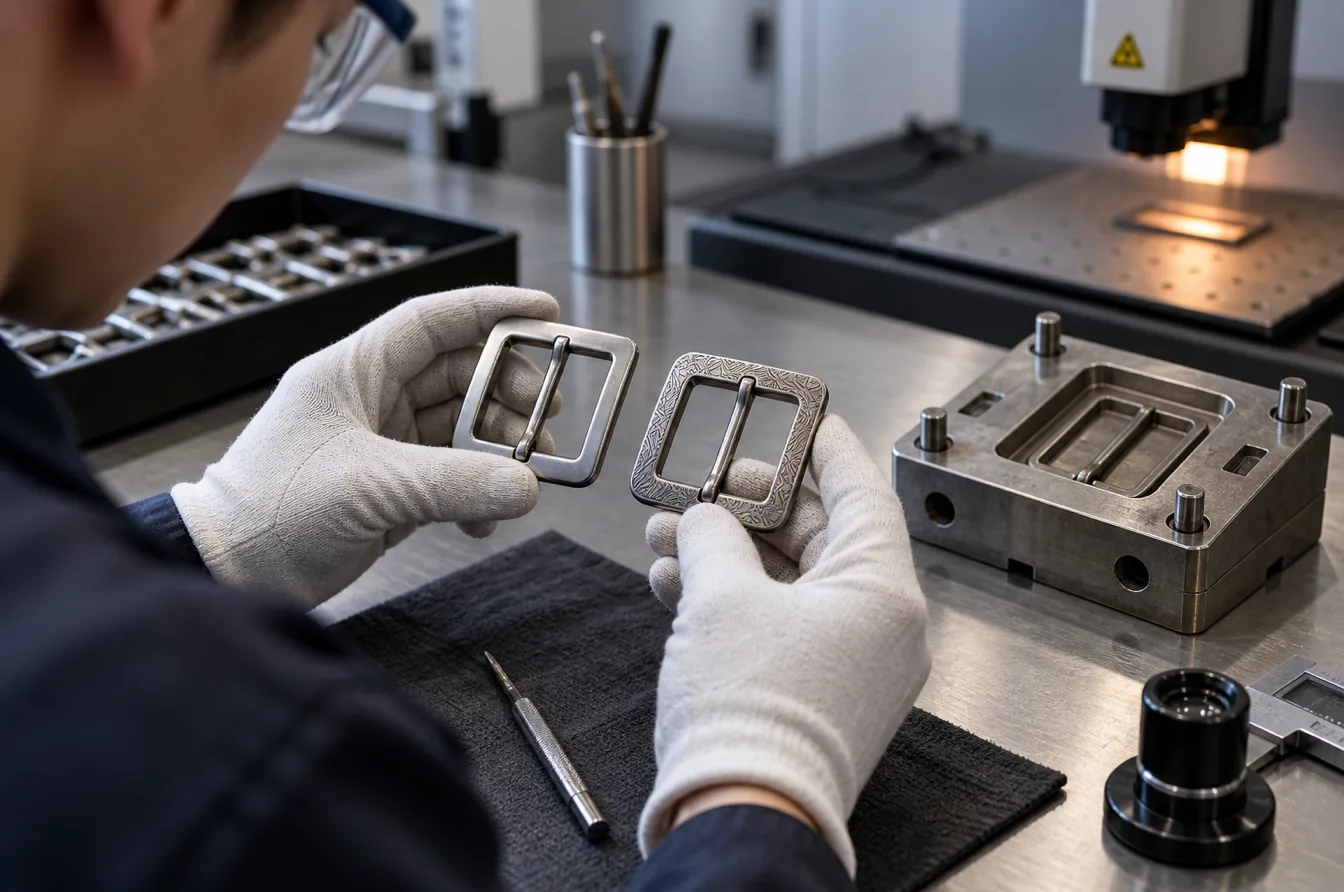
A mold is a physical record of an approved design. Its cavities, cutting edges, inserts, and forming surfaces reproduce fixed dimensions. Changes to overall size, strap-bar width, hole position, wall thickness, logo depth, curvature, locking geometry, or mating clearance can affect whether the original tool still produces an acceptable part.
Some corrections are possible through tool modification or a replaceable insert. Others require a new tool because material has already been removed from a critical area or because the revised geometry changes the production route. The decision should come from a documented tool review rather than an assumption that a “minor” visual change will be simple.
A color change is different. When the substrate, geometry, polish, and process remain compatible, a new plating color, paint color, or molded material color may not require a new shape-forming tool. However, the new finish still needs approval because coating thickness, gloss, and friction can affect appearance or function even when the mold remains unchanged.
| Requested change | Likely tooling effect | Additional approval need |
|---|---|---|
| Plating or paint color only | Existing tool may remain usable | Finish sample and assembled color review |
| Flat laser-marked logo | May use a standard blank and fixture | Artwork position and marking sample |
| Raised, recessed, or cut-out logo | Often changes the forming cavity or die | Tool drawing and physical sample |
| Different size or strap opening | Often requires tool modification or replacement | Fit, load path, and assembly check |
| New mechanism or attachment | Usually requires dedicated engineering and tooling | Functional cycling and mating-part review |
| Different material route | May require a different tool and process | Material, geometry, finish, and performance review |
Open Molds and Hybrid Customization Can Be Strategic
An open mold is an existing design that a supplier can offer to more than one customer. It can be useful for early collections, small quantities, hidden components, or designs where function matters more than a proprietary silhouette. Standard rings, sliders, snaps, eyelets, and buckle frames can often be combined with a selected finish or a separately branded element.
Hybrid customization creates a middle path between completely standard and fully private hardware. A catalog buckle may receive a custom laser mark. A standard zipper slider may be paired with a private pull tab. One signature logo plate or puller may be repeated across several bags, garments, shoes, belts, or small leather goods. This concentrates tooling investment in the most visible component and avoids creating a separate mold for every style.
The tradeoff is exclusivity. An open-mold shape can appear in other product lines, while private tooling provides stronger control over silhouette, detail, and structural identity. The correct choice depends on visibility, function, forecast volume, development timing, and the importance of owning a distinctive component.
Can a Mold or Tooling Fee Be Refunded, Credited, or Waived?
Refund language can sound generous, but the commercial conditions determine whether the tooling cost truly disappears or merely moves elsewhere.
A tooling fee may be non-refundable, credited after an agreed order volume, amortized through the unit price, or absorbed when existing supplier-owned tooling is used. None of these arrangements is automatic. The quotation must state the trigger, amount, timing, ownership result, and consequences of cancellation or design revision.
Different Payment Models Allocate the Same Risk Differently
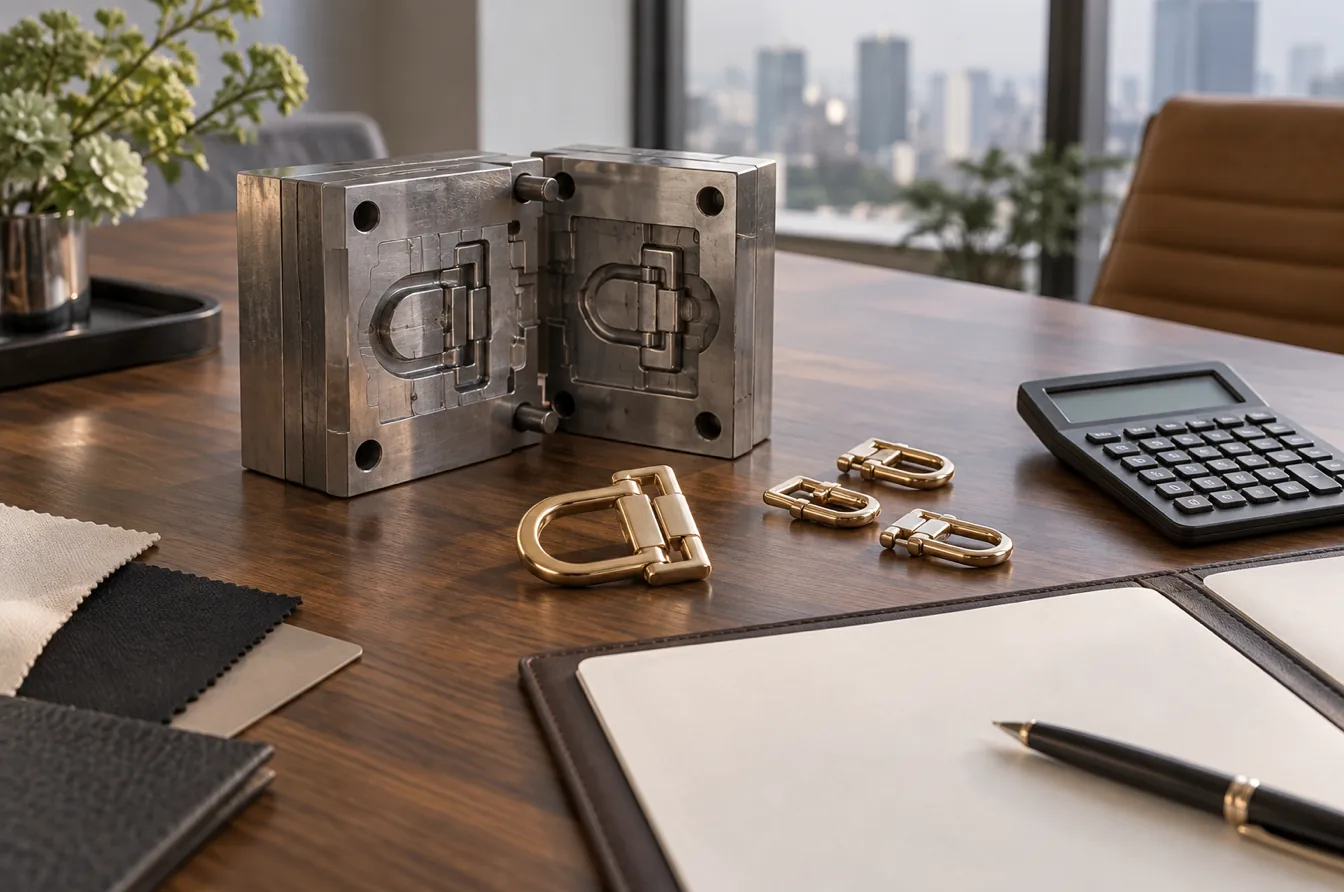
In a direct tooling model, the buyer pays the development cost before the tool is built. This keeps the tooling line visible and can support lower unit pricing on later production, but ownership and reuse rights still need written definition. The fee may remain non-refundable because the asset is unique and the development work cannot be recovered from another project.
A credit model links all or part of the fee to an agreed cumulative order quantity. The supplier still receives funds before development, then applies a credit after the specified volume is reached. The agreement should identify the exact part number, qualifying orders, deadline, credit method, and treatment of partial achievement. A verbal promise to “refund later” is too open to interpretation.
An amortized model places tooling recovery inside the unit price. This reduces the initial payment but may create a higher piece cost. The surcharge needs a defined amount, volume, and end point; otherwise, the tool may be paid for repeatedly without a clear transfer of rights.
| Commercial model | Upfront effect | Point requiring written clarity |
|---|---|---|
| Separate non-refundable fee | Highest cost visibility at development | Ownership, included revisions, and reuse rights |
| Volume-based credit | Initial fee paid, then credited after a trigger | Eligible quantities, timing, and credit document |
| Amortized unit surcharge | Lower initial payment but higher piece price | Total tool value, surcharge end point, and title transfer |
| Supplier-owned open tooling | No dedicated tool charge for the shape | Non-exclusive use and limits on modification |
| Shared or standardized tooling | Cost spread across products or parties | Access, exclusivity, scheduling, and future changes |
Lifetime Program Cost Is More Useful Than the First Invoice
The lowest upfront fee is not always the lowest-cost structure. A product expected to repeat for several seasons may benefit from a separate tool charge and a clear reuse arrangement. A short test launch may be better served by open hardware, surface customization, or an amortized model that protects early cash flow.
Cost comparison should include the forecast quantity, likely reorder frequency, number of colorways, number of products sharing the component, hardware MOQ, expected storage, and probability of a design update. Standardizing one signature puller or logo plate across a collection can spread the development cost without increasing the garment or bag quantity solely to absorb hardware inventory.
Cancellation and revision terms also matter. If the project stops after the tool has been machined, the development cost has already been incurred. If an approved design changes, the original fee may not cover a new cavity or replacement die. Commercial flexibility is valuable, but it must be connected to a defined production plan rather than treated as a general promise.
Who Owns the Mold, and Can It Be Reused for Future Orders?
Payment, ownership, physical possession, exclusive use, and transfer rights are related, but they are not the same commercial term.
Tool ownership and future reuse should be agreed before development begins. The written record should identify the physical tool, approved design revision, permitted users, storage location, maintenance responsibility, retention period, reorder conditions, and the process for releasing or transferring the asset.
Ownership Must Be Defined More Precisely Than “Buyer-Paid”
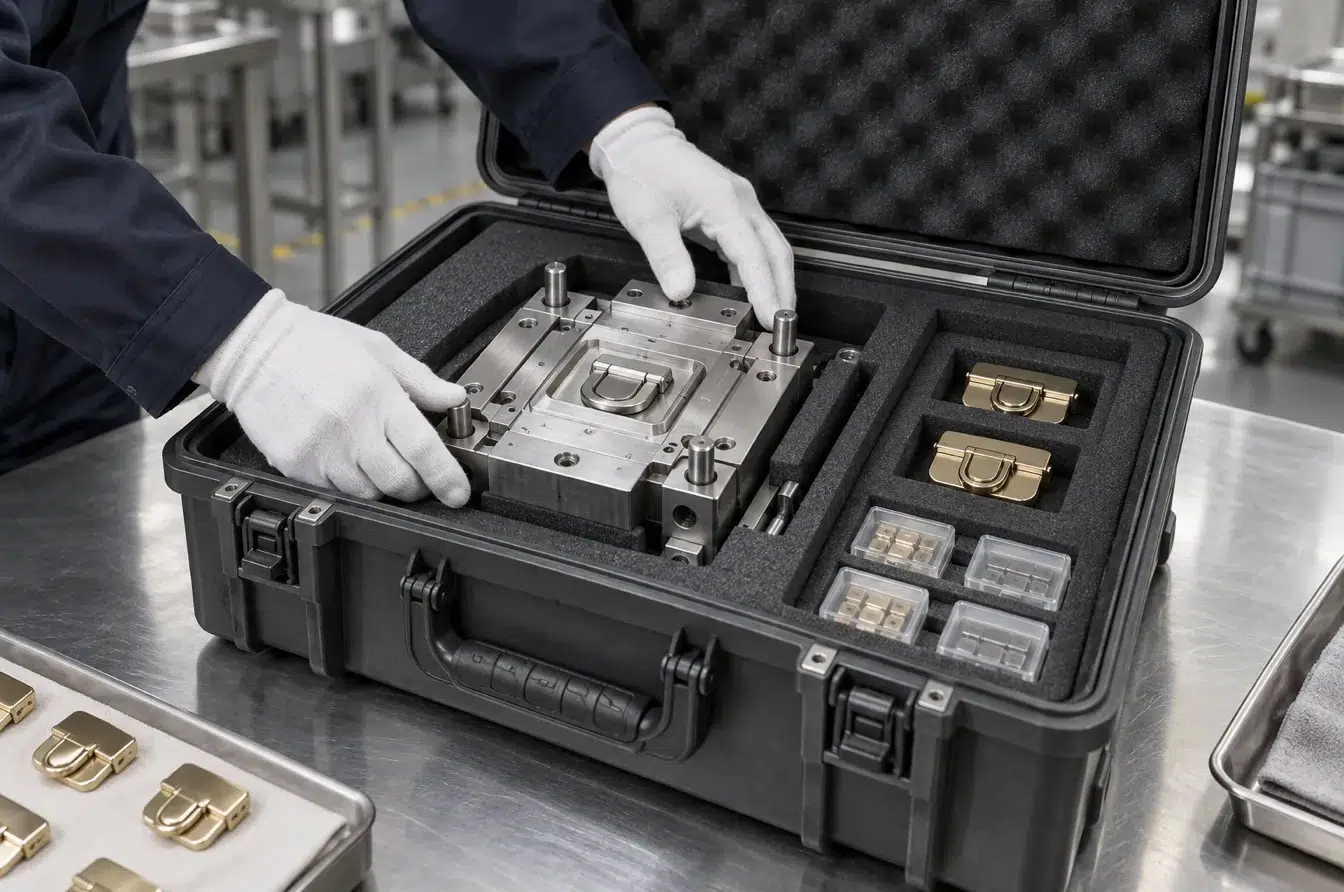
A supplier may keep a buyer-owned tool on the factory floor because that is the most efficient location for production. Physical custody does not by itself confirm or cancel ownership. The order documents need to state when title transfers, whether the tool is exclusive to one design owner, and whether it may be used for any other customer, sample, exhibition, or internal development.
The term “tool” should also be defined. The physical mold base, cavities, inserts, master model, gauges, fixtures, and spare components may not all follow the same ownership arrangement. Part drawings, tooling drawings, and process records are separate assets. A factory may be able to release the physical mold while retaining information needed to run it successfully elsewhere.
Clear identification improves control. A tool number, part number, design revision, ownership mark, photographs, and storage record connect the physical asset to the commercial agreement. This becomes important when several similar molds are stored at the same facility or when a project is inactive for an extended period.
| Tooling term | What should be defined | Risk if omitted |
|---|---|---|
| Legal ownership | Owner and transfer milestone | Payment may not establish title |
| Exclusive use | Permitted products and users | Private geometry may be reused elsewhere |
| Physical custody | Storage site and responsible party | The asset may be difficult to locate or inspect |
| Retention period | Active and inactive storage duration | An unused tool may be discarded without notice |
| Maintenance | Cleaning, repair, wear, and damage responsibility | Reorders may require unexpected restoration cost |
| Release and transfer | Notice, packing, freight, and documentation | Moving production may be delayed or impractical |
| Drawings and records | Access to part, tool, and process information | The physical tool may be unusable at another facility |
Reuse Is Conditional, Not Automatic
A well-maintained tool can support repeat orders, but the new order must remain compatible with the original design and production system. Reuse is most straightforward when the part revision, material, finish allowance, cavity configuration, equipment, and factory remain unchanged. A new color or finish may be possible without new tooling, while a change in material, geometry, interface, or production location may require technical review.
Tool condition also affects reuse. Cavities, cutting edges, pins, slides, inserts, and fixtures can wear, corrode, become damaged, or fall out of adjustment during production and storage. The agreement should distinguish routine maintenance from repair caused by misuse, design change, long inactivity, or operation beyond the intended service life.
Transfer to another factory is not always plug-and-play. Machine size, mounting pattern, feed system, process settings, auxiliary equipment, and inspection methods may differ. Portability therefore depends on both legal permission and technical compatibility. A complete handover includes the identified physical tool, available drawings, revision history, sample standard, maintenance record, and enough process information for the receiving facility to evaluate and qualify the tool safely.
Conclusion
A tooling fee is justified when it creates a defined, repeatable production asset with transparent scope, approved performance, fair commercial terms, and controlled future use.