
- Loading...
I have seen polished catalogs create false confidence because attractive samples reveal very little about the process that must reproduce them at scale.
Verify a custom fashion hardware supplier by testing… how the team reviews a controlled brief, proposes manufacturable solutions, manages tooling, documents revisions, and reproduces an approved sample in pilot and bulk production. Development capability is demonstrated through relevant evidence and repeatable controls, not through product range or promises.

Fashion hardware and trims cover very different products: buckles, zipper pulls, buttons, rivets, eyelets, hooks, rings, clasps, cord ends, labels, patches, tapes, elastics, and mixed-material decorations. A supplier may understand one category deeply and still struggle with another. A useful qualification process therefore follows the actual development path from design intent to repeat production. It asks for evidence at every handoff and makes vague answers difficult to hide.
What Evidence Shows That a Supplier Has Developed Similar Fashion Hardware and Trims?
A large showroom can look convincing, but product variety alone does not reveal who engineered the items or how consistently they were produced.
Relevant evidence connects a comparable component to its material, manufacturing route, finish, attachment method, application, and production result. A strong supplier can explain what made the project difficult, how the risks were resolved, and which controls carried the approved result into later orders.
Compare Process Matches, Not Just Product Photos
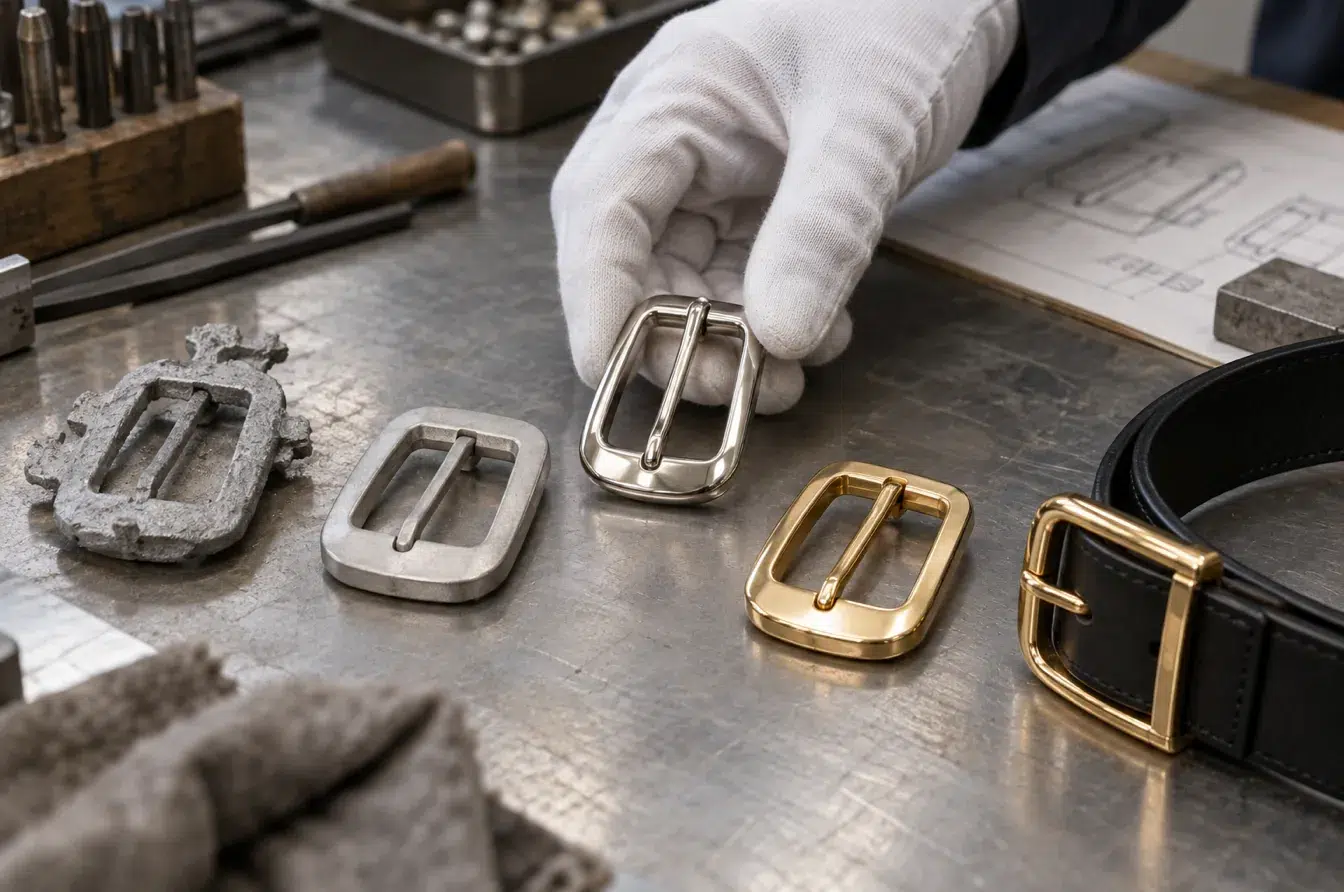
Visual similarity is only the first screening point. Two buckles can look almost identical while requiring different knowledge because one is die-cast zinc alloy with a plated finish and the other is stamped brass with formed strap bars. The critical match is the combination of geometry, material, process, finish, assembly, and intended use.
A useful case review begins with a comparable part and follows it through production. The supplier should be able to identify how the shape was formed, how the logo detail was protected during polishing, how the finish was approved, how mating dimensions were checked, and what changed between the first sample and the final version. For textile trims, the same logic applies to fiber, weave or molding route, color development, hand feel, attachment, and behavior during garment processing.
Confidentiality may prevent a factory from showing recognizable brand work. That limitation is reasonable, but it should not prevent a technically specific explanation. Process descriptions, anonymized drawings, sample-stage photographs, tool references, inspection records, or non-branded demonstration pieces can still show whether the experience is real.
| Evidence area | Strong evidence | Weak evidence |
|---|---|---|
| Product relevance | Comparable material, process, finish, and end use | A visually similar item from another category |
| Development history | Clear explanation of revisions and solved problems | A finished sample with no development record |
| Production knowledge | Identified equipment, tooling, sequence, and control points | General statements about advanced technology |
| Repeat experience | Records or retained standards from repeat runs | One hand-finished presentation sample |
| Technical ownership | Named responsibility for design, tooling, finishing, and inspection | No clear answer about who performed each step |
Verify the Factory’s Real Role in the Supply Chain
The company receiving an inquiry may be a manufacturer, a converter, a sourcing office, or a coordinator using several specialist factories. None of these structures is automatically unsuitable. The important question is whether the supplier understands and controls the complete process instead of hiding the parts performed elsewhere.
Verification should focus on the exact route required by the proposed product. A live walkthrough can follow raw material receiving, tooling or sample preparation, forming, trimming, polishing, color or finish processing, assembly, inspection, and packing. Work-in-process parts are often more informative than a clean showroom because they reveal which operations are active and how the stages connect.
When outside specialists are involved, the supplier should state which processes are external, how specifications are transferred, who approves the external output, and who owns corrective action when something fails. A managed specialist network can be effective, but an undisclosed handoff creates risk. Product knowledge may be lost, finish references may change, and delivery timing may depend on a facility that was never included in the original evaluation.
The strongest evidence is therefore not a claim that everything is made under one roof. It is a transparent process map with clear responsibilities, visible approval points, and records that remain connected to the same part number and revision.
How Should a Supplier Evaluate Your Design, Material, Finish, and Performance Requirements?
An incomplete brief invites assumptions, and an instant quotation can conceal more development risk than a slower response filled with precise questions.
A capable supplier converts the initial brief into a structured technical review covering geometry, tolerances, material, surface appearance, attachment, end use, production quantity, and required performance. Missing or conflicting inputs are listed before pricing and sampling rather than silently replaced by factory defaults.
Use the RFQ as a Controlled Capability Test
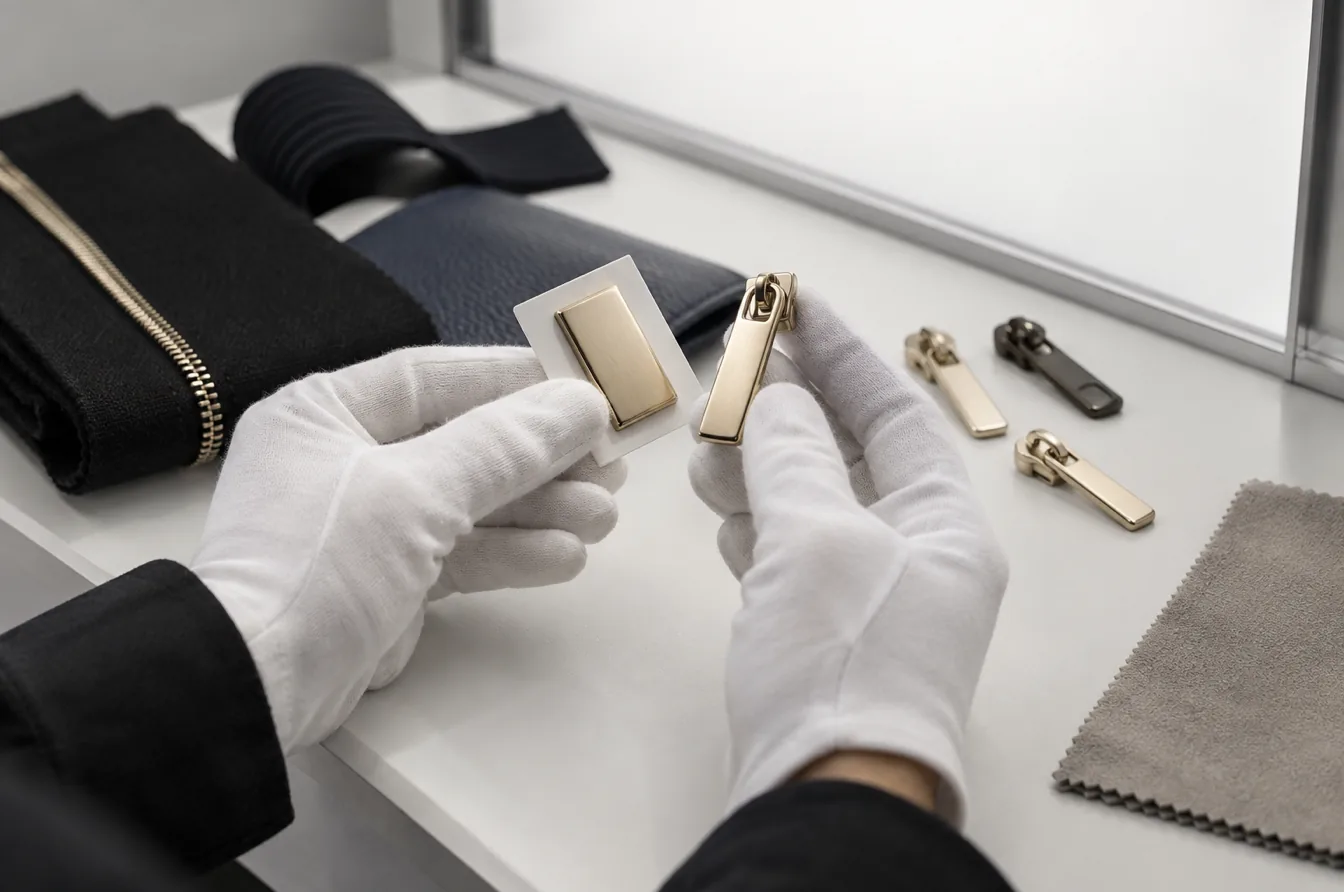
The same RFQ package should be issued to every candidate so that the responses can be compared on a common basis. The package can include a 2D drawing, 3D file when available, overall dimensions, critical tolerances, logo artwork, target material, finish direction, mating components, intended application, forecast quantity, and development timing. Reference samples and photographs help communicate visual intent, but they should not replace measurable information.
The supplier’s questions are part of the evaluation. A strong response may identify a missing strap thickness, an unclear attachment method, a logo depth that could soften after finishing, a corner that may create a polishing problem, or a tolerance that conflicts with the selected process. These observations show that the brief has been read as a manufacturing problem rather than treated as a request for a quick unit price.
A weak response often confirms every request without discussing tradeoffs. That behavior becomes expensive later because unresolved details move into tooling and sampling. The commercial quotation may appear fast, but the development calendar becomes a sequence of corrections that could have been identified before any physical work began.
| Brief input | Capable supplier response | Warning sign |
|---|---|---|
| Drawing and dimensions | Identifies critical, reference, and mating dimensions | Quotes without confirming unclear measurements |
| Material direction | Explains suitable options and process implications | Substitutes a general material name without explanation |
| Finish target | Requests a physical or controlled visual reference | Promises an exact match from a screen image alone |
| Logo artwork | Reviews line width, relief, position, and finishing effect | Accepts low-resolution artwork without questions |
| End use | Connects application conditions to structure and finish | Treats every fashion application as equivalent |
| Quantity and timing | Separates development, tooling, sampling, and production | Gives one undivided lead time with no dependencies |
Evaluate the Quality of Manufacturability Feedback
Good manufacturability feedback protects the design intent while explaining where production physics creates limits. The purpose is not to simplify every component into a generic catalog item. It is to identify which features must remain, which can be adjusted without changing the design language, and how each option affects appearance, function, cost, and repeatability.
For metal hardware, useful feedback may address wall thickness, release direction, parting lines, undercuts, corner radii, logo relief, polishing access, plating buildup, spring clearance, or tolerance stack-up. For woven, molded, printed, or mixed-material trims, the review may address yarn or substrate behavior, minimum detail, color interaction, shrinkage, bond area, sewing margin, flexibility, and compatibility with the final application.
The response should also connect the component to the product around it. A zipper pull cannot be evaluated without the slider interface. A buckle needs the real strap width and thickness. A snap requires the cap, socket, stud, post, fabric layers, and setting method to work as a system. Decorative hardware exposed to garment washing needs a different development discussion from an item attached after all wet processing is complete.
Written alternatives make the review auditable. A concise option table showing the original request, identified risk, proposed revision, and expected consequence is stronger than a verbal statement that a design is “difficult.” It also lets design, sourcing, and production teams approve the same interpretation before the project advances.
Which Design, Tooling, Prototyping, and Manufacturing Capabilities Should a Supplier Control?
Ownership of machinery is useful, but equipment alone does not prove that design decisions remain controlled from concept through finished production.
The supplier should control the information and approval points connecting design review, process selection, tooling, prototypes, finishing, assembly, inspection, and repeat production. A process may be internal or external, but its specification, responsible party, output check, and corrective-action path must remain visible.
Examine the Complete Capability Chain
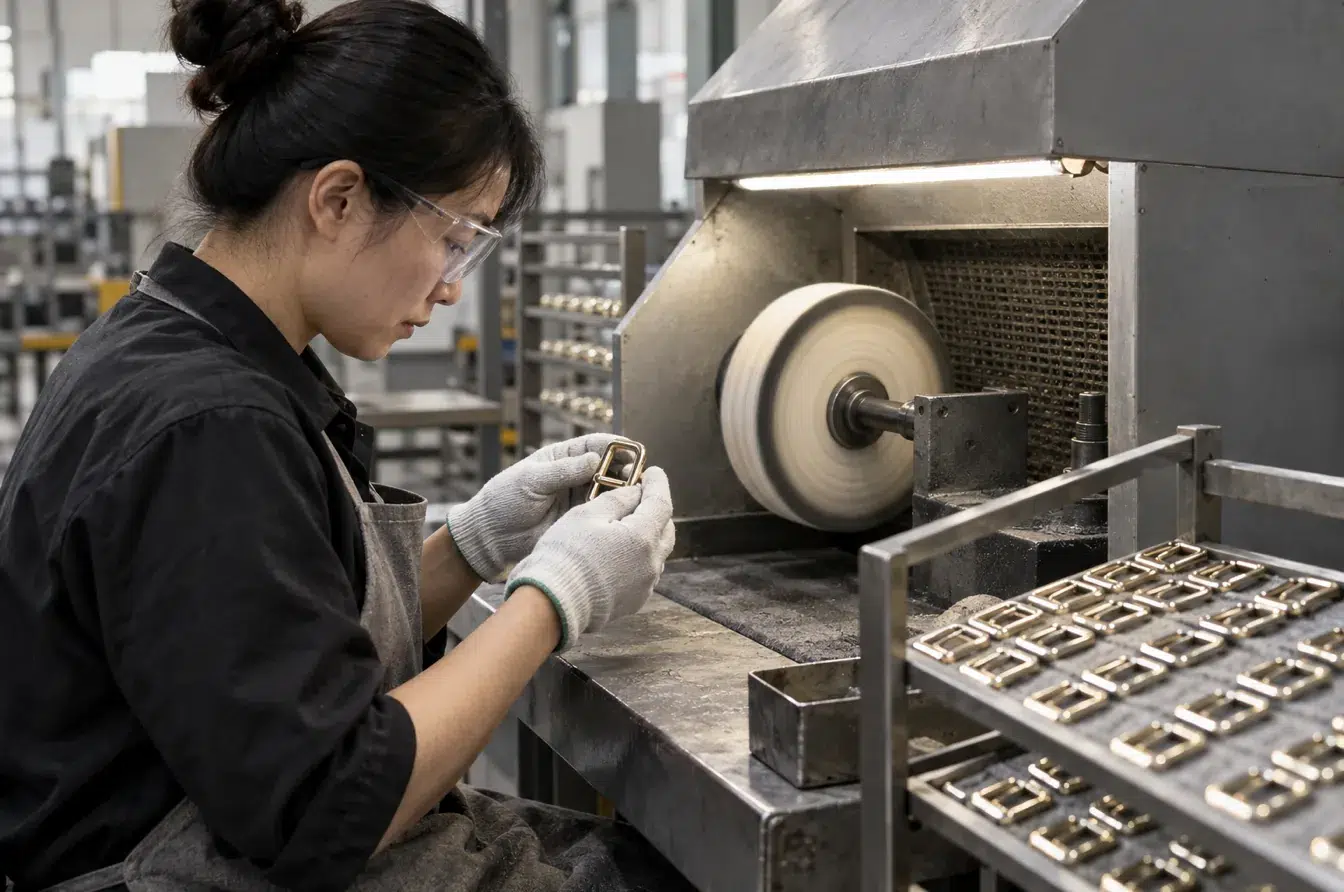
Development capability is a chain, and its strength is limited by the least-controlled stage. A team may produce excellent drawings but lack finish development knowledge. Another factory may operate strong forming equipment but depend on an outside toolmaker that receives incomplete revisions. Qualification should therefore examine how information travels, not only which machines appear on an equipment list.
The design stage should convert artwork and product context into controlled geometry. Process engineering should select a route suited to material, shape, quantity, surface requirement, and functional need. Tooling should reproduce the geometry under realistic production conditions. Prototyping should answer defined questions rather than merely create an attractive object. Finishing and assembly should maintain critical dimensions and visible details. Inspection should use the same approved references established during development.
Named ownership matters at each stage. A project coordinator may manage communication, but technical decisions still need responsible specialists who can explain the reasoning. When every question is routed through a salesperson and returns as a simple yes or no, the engineering chain is difficult to verify.
| Capability stage | Evidence to review | Decision it should control |
|---|---|---|
| Design interpretation | Controlled drawing, artwork review, open-item list | What the approved design actually means |
| Process selection | Material and manufacturing-route explanation | How the part will be produced repeatedly |
| Tooling | Tool proposal, trial plan, revision record | How geometry and cycle conditions are established |
| Prototyping | Sample purpose and production-intent method | Which risks each sample is meant to resolve |
| Finishing and assembly | Approved references and process checkpoints | How appearance, fit, and function are maintained |
| Inspection | Defined characteristics, methods, and records | How conformity is judged before shipment |
Treat Tooling and External Handoffs as Separate Qualification Gates
Custom buckles, clasps, zipper pulls, buttons, hooks, rings, logo plates, and molded trims often require dedicated molds, dies, inserts, gauges, fixtures, or finishing racks. The supplier should explain what is required, why it is required, which design revision will be used, how trials will be evaluated, and what kinds of changes can be made after the first trial.
Commercial terms are part of process control. The written record should distinguish tooling ownership from physical storage, exclusive use, maintenance responsibility, modification charges, retention period, and transfer conditions. A tooling invoice by itself does not define these rights. Unclear terms can create dependence even when the first production order is successful.
External handoffs deserve the same level of detail. When polishing, coating, dyeing, printing, or another specialist operation is subcontracted, the receiving party needs the correct drawing, finish standard, quantity, handling instructions, and revision. The main supplier should inspect the returned work before it enters the next stage and remain responsible for resolving nonconformity.
The best structure is not necessarily the one with the fewest suppliers. It is the one in which the development owner can trace every important decision from the original brief to the finished part. Transparent handoffs preserve accountability; hidden handoffs make failures difficult to investigate and repeat orders difficult to stabilize.
What Can the Sampling and Revision Process Reveal About a Supplier’s Problem-Solving Ability?
One beautiful sample may be hand-corrected, but a controlled sequence of samples shows whether the supplier can learn, document, and reproduce.
Sampling should move through defined questions: geometry and concept, functional fit, material and finish, pre-production readiness, and production output. Each round needs a revision record, acceptance decision, and current specification so that improvement becomes part of the process rather than remaining in individual memory.
Define What Every Sample Must Prove
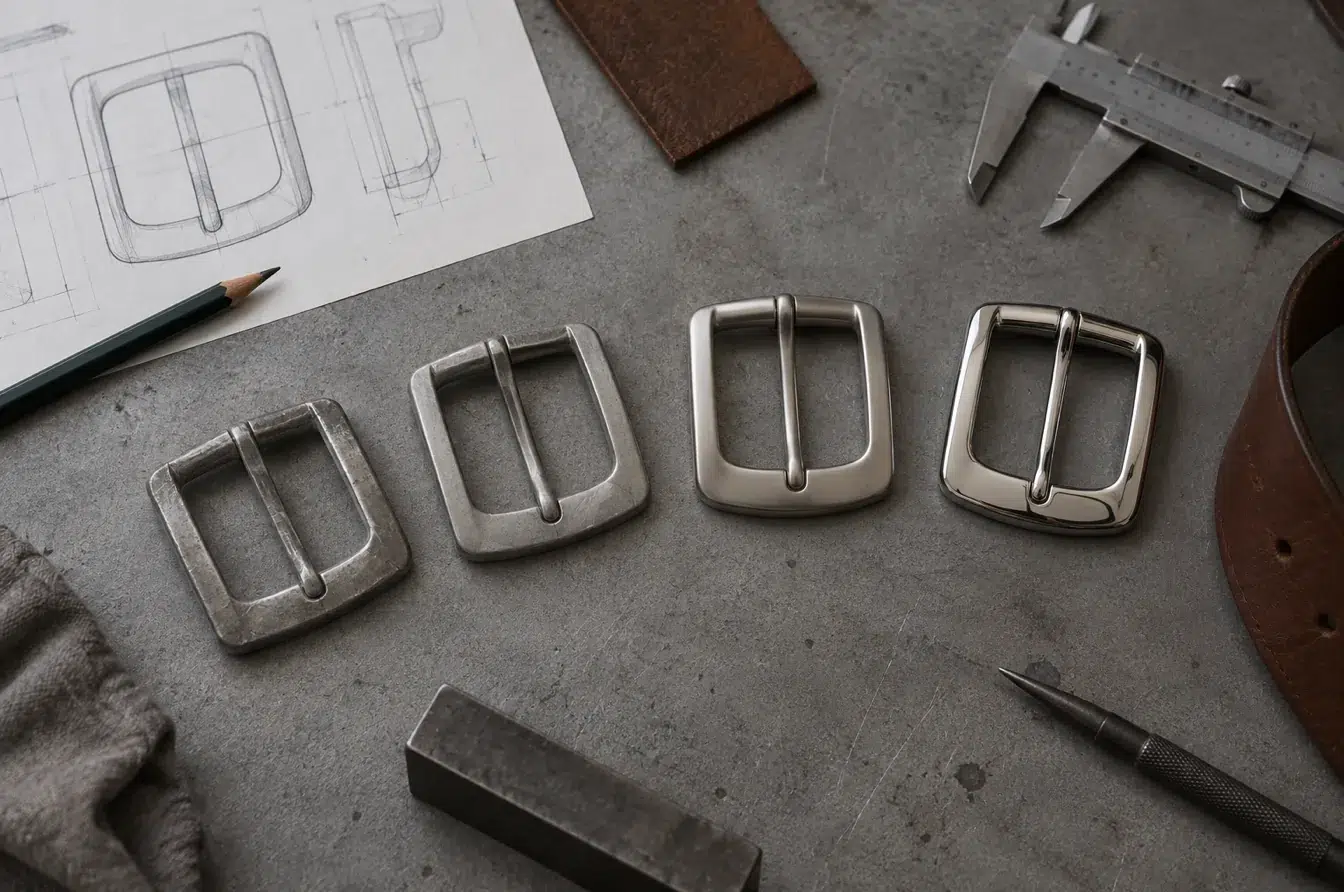
Sample names are less important than sample purposes. An early prototype may confirm scale, silhouette, logo placement, or interaction with a garment. A later functional sample may use the intended material and mechanism. A finish sample may establish color, gloss, texture, and visible workmanship. A pre-production sample should represent the approved production route closely enough to become the reference for bulk release.
Every sample request should state which questions are open and which characteristics are already locked. Without that separation, a supplier may change material while adjusting dimensions, or change polishing while correcting a logo. The next sample may look better, but the cause of the improvement remains unclear and a previously approved feature may drift.
Revision control provides the evidence. The record should identify the sample number, drawing revision, material, finish reference, observed issue, requested change, supplier response, responsible reviewer, and approval status. Annotated photographs can support the record, but the final decisions need to be reflected in the current specification rather than left across scattered messages.
| Sample stage | Main question | Required record |
|---|---|---|
| Concept or prototype | Are scale, form, and design direction correct? | Open issues and geometry comments |
| Functional sample | Do fit, movement, attachment, and interaction work? | Functional observations and mating-part results |
| Finish approval | Are color, gloss, texture, and logo clarity acceptable? | Controlled finish reference and visible limits |
| Pre-production sample | Does the production-intent route meet the locked specification? | Complete approval record and current revision |
| Production sample | Does normal output reproduce the approved standard? | Comparison results and release decision |
Use Problems to Evaluate the Supplier’s Method
A failed sample is not automatically evidence of a weak supplier. Custom development exists because the first interpretation may reveal conflicts between geometry, material, tooling, finish, or application. The more useful question is how the supplier responds after a problem appears.
A mature response begins by defining the nonconformity. The team separates symptoms from causes, checks the current drawing and process record, identifies the stage where variation entered, proposes a correction, and states how the next sample will confirm the change. When several causes are possible, only one controlled variable should be changed at a time where practical. This creates knowledge that can later protect bulk production.
Weak problem-solving relies on repeated remakes without a documented explanation. Statements such as “the next one will be better” do not identify whether the issue came from the tool, material, polishing, coating, assembly, handling, or inspection. The project may eventually receive an acceptable sample, but the factory still may not know how to reproduce it.
Communication behavior is also revealing. A supplier that acknowledges uncertainty, requests missing information, and confirms findings after investigation is safer than one that agrees with every request immediately. Accurate limits and reasoned alternatives are development skills. Constant reassurance without evidence transfers unresolved risk into the production order.
How Can You Verify That Approved Samples Will Be Reproduced Consistently in Bulk Production?
Sample approval reduces design uncertainty, but it does not prove that normal operators, cavities, batches, and production speeds will deliver the same result.
The approved component must be converted into a locked production standard and verified through a controlled pilot or production-intent run. Consistency depends on connected drawings, materials, finish references, process settings, inspection methods, defect limits, and revision records—not on the physical sample alone.
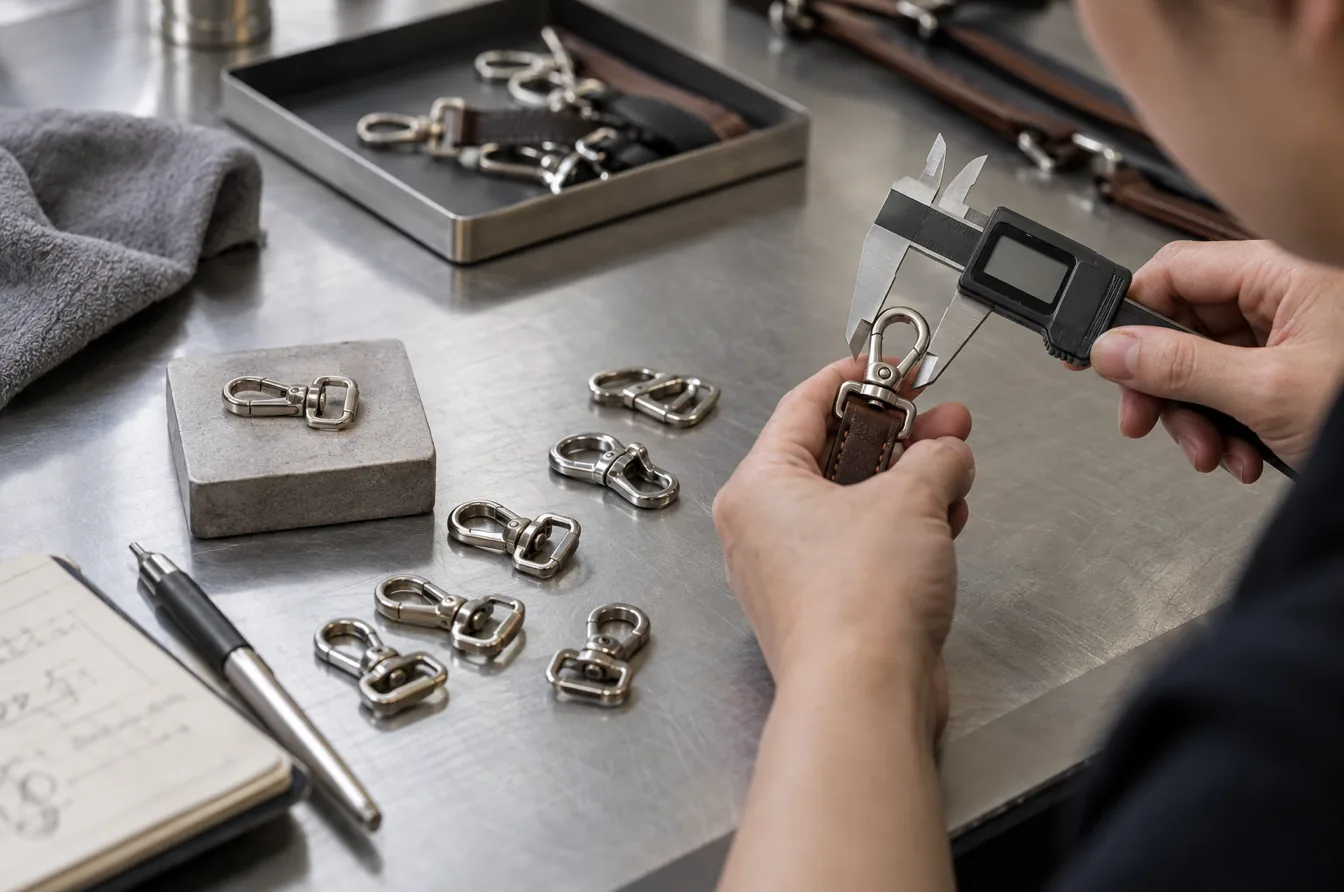
Convert the Approved Sample Into a Production Standard
A physical sample captures the combined result of many decisions, but it cannot explain them all. It may show the preferred gold tone without identifying the base material, surface preparation, finish sequence, gloss range, or accepted visual variation. It may fit the intended strap without recording the dimensions and tolerances that created that fit.
The production standard should therefore combine the retained sample with controlled documents. These normally include the current part drawing, material identification, artwork revision, finish reference, attachment or assembly instructions, mating components, key dimensions, functional checks, approved packaging, and the characteristics that require inspection. Photographs can identify viewing angles and defect zones, while limit samples can show the boundary between acceptable and unacceptable appearance.
Revision status must be unambiguous. The tool, sample, drawing, purchase order, inspection sheet, and packing label should point to the same part number and current revision. If production receives an old drawing while quality control holds a newer sample, both teams may follow their records correctly and still produce a dispute.
| Control element | Purpose | Bulk-production risk when missing |
|---|---|---|
| Retained approved sample | Preserves the overall visual and tactile target | Appearance becomes dependent on memory |
| Current drawing and tolerances | Defines measurable geometry | Fit and assembly vary between runs |
| Material and finish record | Locks the intended construction and surface | Substitution or shade drift enters unnoticed |
| Process and assembly instructions | Preserves the approved manufacturing route | Operators reproduce the look inconsistently |
| Inspection method and limits | Aligns production and acceptance decisions | Factories and buyers judge defects differently |
| Revision and part identification | Connects all records to one approved version | Obsolete information reaches production |
Validate Repeatability With a Pilot Run and Supplier Scorecard
A pilot run is more predictive than another hand-made sample because it uses normal production equipment, operators, process speed, batch handling, finishing flow, assembly, inspection, and packing. The quantity only needs to be large enough to expose normal variation across the relevant process. The purpose is to learn whether the approved result survives production conditions before a larger commitment begins.
Pilot inspection should compare parts across the run rather than selecting only the most attractive pieces. Important checks depend on the product but may include dimensions, weight, mating fit, movement, pull or holding behavior, edge condition, logo clarity, color and gloss consistency, coating coverage, assembly orientation, attachment performance, and packing protection. Parts from different cavities, racks, positions, or production intervals can be compared when those variables affect the process.
The supplier’s response to a pilot issue completes the evaluation. A controlled system identifies affected material, contains it, investigates the cause, corrects the process, verifies the correction, and updates the relevant instructions or checkpoints. Simple sorting may remove visible defects from one lot, but it does not prevent the same cause from returning.
An ongoing scorecard keeps the qualification current after approval. Useful measures include technical response quality, sample accuracy, revision discipline, on-time completion, pilot consistency, bulk defect patterns, corrective-action speed, and repeat-order stability. A supplier can perform well in one category and poorly in another, so performance should remain linked to the specific product family and process rather than becoming a permanent company-wide label.
Conclusion
Reliable development capability appears when relevant experience, disciplined engineering, transparent process control, documented sampling, and production repeatability all support the same approved component.