- Loading...
Premium apparel can lose value when the hardware feels light, rough, or inconsistent. I have seen one small metal part change how buyers judge the whole garment.
High-end custom apparel hardware connects engineering, material choice, surface finish, and brand identity. It turns small functional parts into visible and touchable brand signals that support garment structure, quality, durability, and long-term product value.
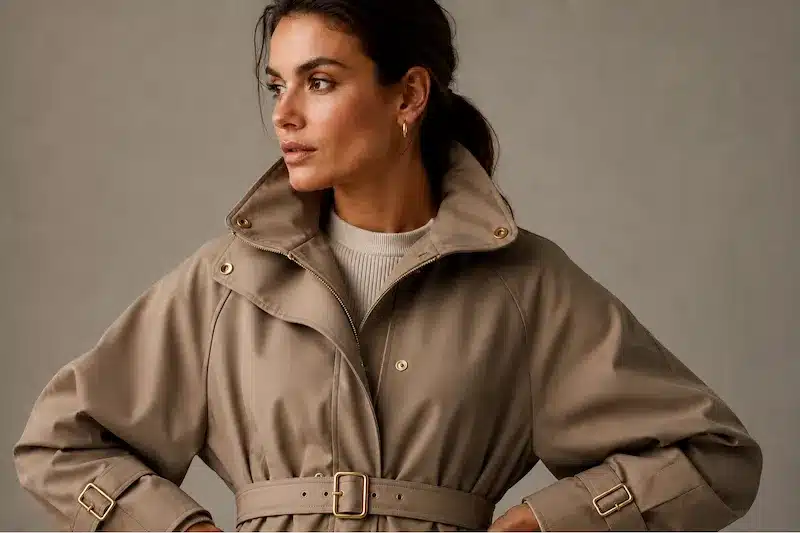
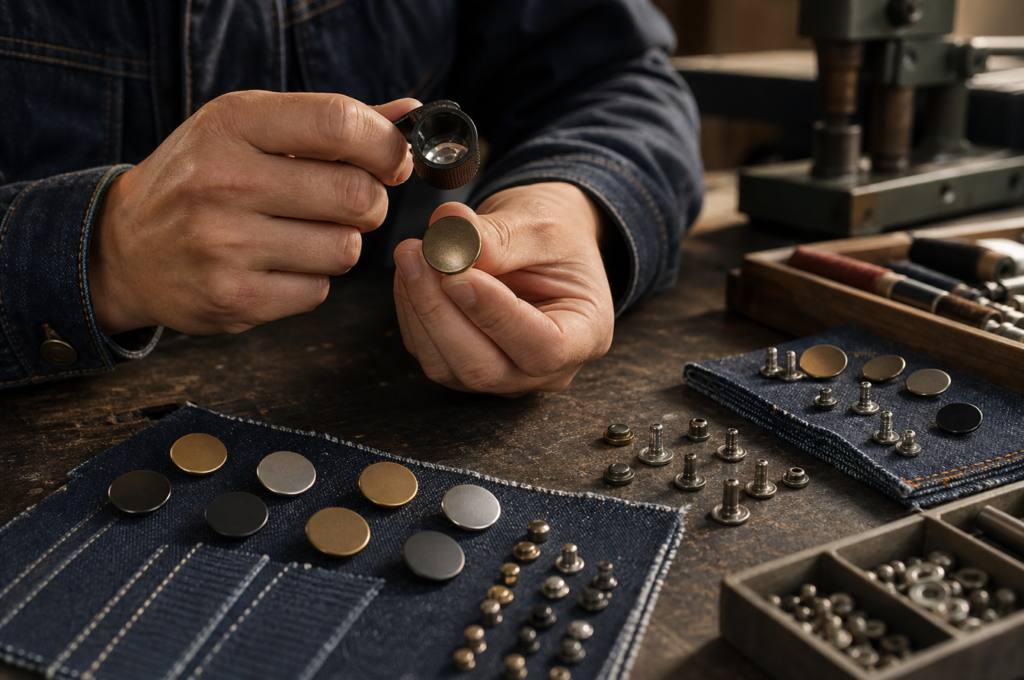
I used to think metal hardware was mainly about decoration. After working with apparel, bag, footwear, and accessory teams, I started to see it differently. A metal snap, button, buckle, logo plate, hook, or adjuster can shape the way a garment looks and feels. It can also affect how long the garment lasts. This is why I see premium apparel hardware as a quiet language. It does not need to explain itself. It speaks through weight, edge quality, shine, texture, fixing strength, and consistency. When these details work together, the garment feels more complete. When one detail fails, the customer may feel that the product does not match its price.
How Do Small Details Make Premium Apparel Feel Truly Premium?
Premium apparel does not only come from fabric and cutting. It also comes from the small parts that the hand touches and the eye notices.
Small hardware details make apparel feel premium by improving touch, weight balance, surface quality, garment structure, and visual consistency1. These details help buyers feel that the product is well designed and carefully produced.

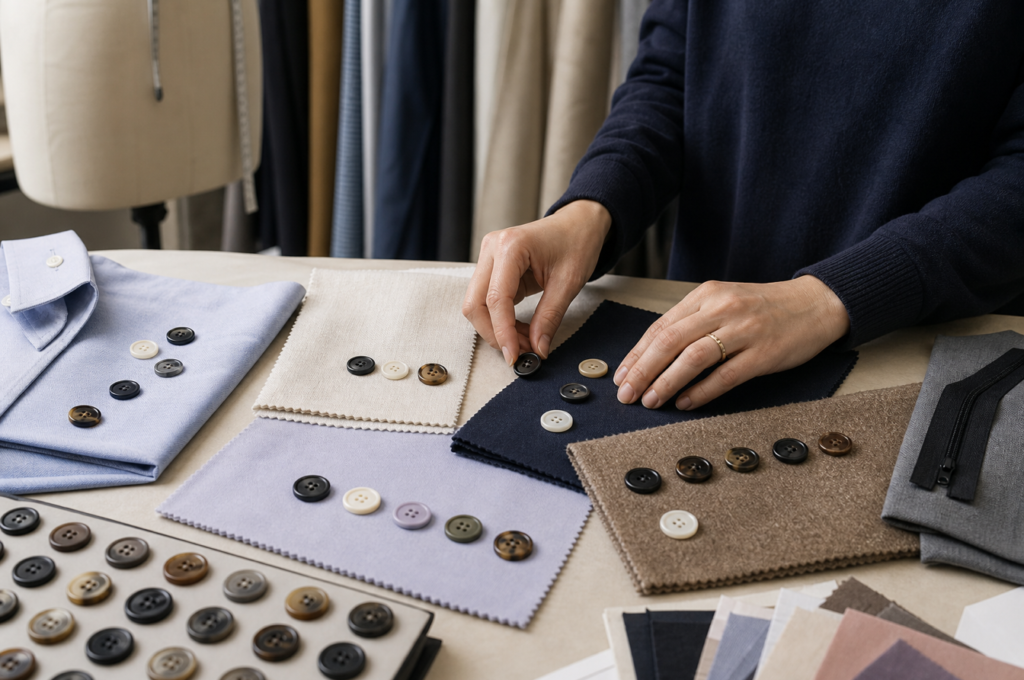
I often see apparel teams focus on fabric, pattern, and silhouette first. This is correct, but it is not enough. A premium jacket with a rough snap can feel unfinished. A luxury coat with a thin and weak metal button can lose its authority. A refined blouse with a sharp-edged metal trim can damage the fabric or create discomfort. These small points are easy to ignore during early design, but they become very clear when the garment is worn, touched, packed, photographed, and sold.
I look at premium hardware through both visual and physical experience. The surface should match the garment story. The weight should not pull the fabric down.2 The edge should be smooth enough to protect delicate textiles.3 The fixing method should stay stable after movement and washing.4 The hardware should also keep a similar look across bulk production. If one batch is warm gold and the next batch is pale gold, the brand image becomes weaker.
| Detail | What I Check | Why It Matters |
|---|---|---|
| Weight | Heavy, medium, or lightweight structure | Prevents fabric pulling and improves comfort |
| Edge quality | Rounded, polished, or sharp edges | Protects silk, wool, lining, and skin |
| Surface feel | Smooth, brushed, matte, or textured | Creates the first touch impression |
| Color tone | Gold, silver, gunmetal, antique, custom tone | Supports brand mood and product level |
| Fixing strength | Sewing, rivet, snap, screw, or prong | Decides real use performance |
| Batch consistency | Sample-to-bulk and reorder color match | Protects long-term brand standards |
I have learned that premium feeling is not created by one large design move. It is built by many small decisions that stay consistent. This is why I treat each hardware part as a small product, not a small accessory.
How Can Metal Hardware Become a Brand Signature Instead of Just a Functional Part?
A metal part can close, hold, or adjust a garment. It can also become a physical sign of the brand.
Metal hardware becomes a brand signature when its shape, finish, logo, weight, and placement repeat across products in a clear and controlled way. It helps customers recognize the brand through both sight and touch.5
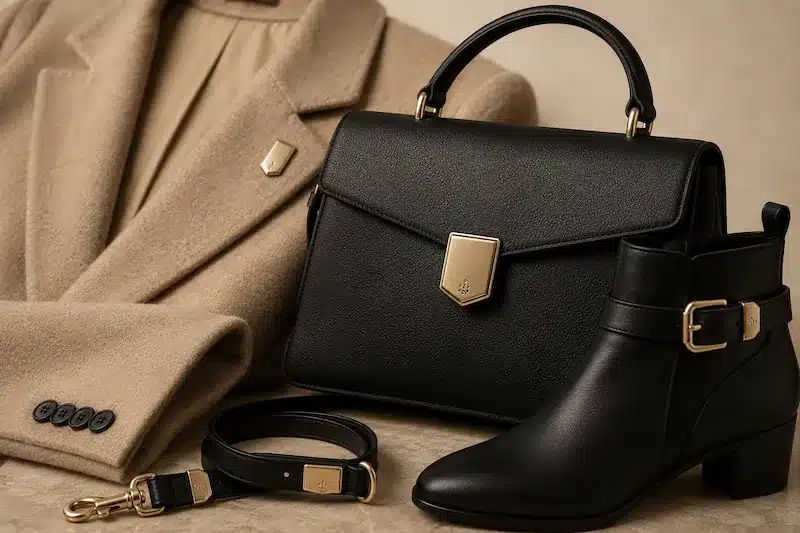
I see custom metal hardware as one of the most practical ways to build brand memory. A garment label is often hidden. A hangtag is removed after purchase. A logo print may fade with time. Metal hardware can stay with the product during its full life.6 It can sit on a cuff, pocket, waist tab, collar, belt, strap, or front closure. It becomes part of the daily experience of the customer.
A brand signature does not always need a large logo.7 It can come from a special shape, a controlled metal tone, a repeated corner radius, a specific brushed texture, or a small engraved mark. Some brands look more modern with clean gunmetal hardware. Some brands feel more classic with polished gold or antique brass. Some brands need very minimal hardware with almost no logo. The key is not decoration. The key is control.
| Brand Hardware Element | How It Builds Identity | Practical Production Concern |
|---|---|---|
| Custom logo plate | Creates direct visual recognition | Logo depth and edge quality must be controlled |
| Branded snap button | Adds identity to functional closure | Snap force and plating durability must be tested |
| Signature buckle shape | Makes the product line recognizable | Shape must be wearable and scalable |
| Repeated metal tone | Builds visual unity across categories | Color standard must be fixed by reference sample |
| Custom puller or tab | Improves daily interaction | Grip, weight, and finish must match use |
| Small engraved mark | Adds subtle premium detail | Engraving clarity depends on material and finish |
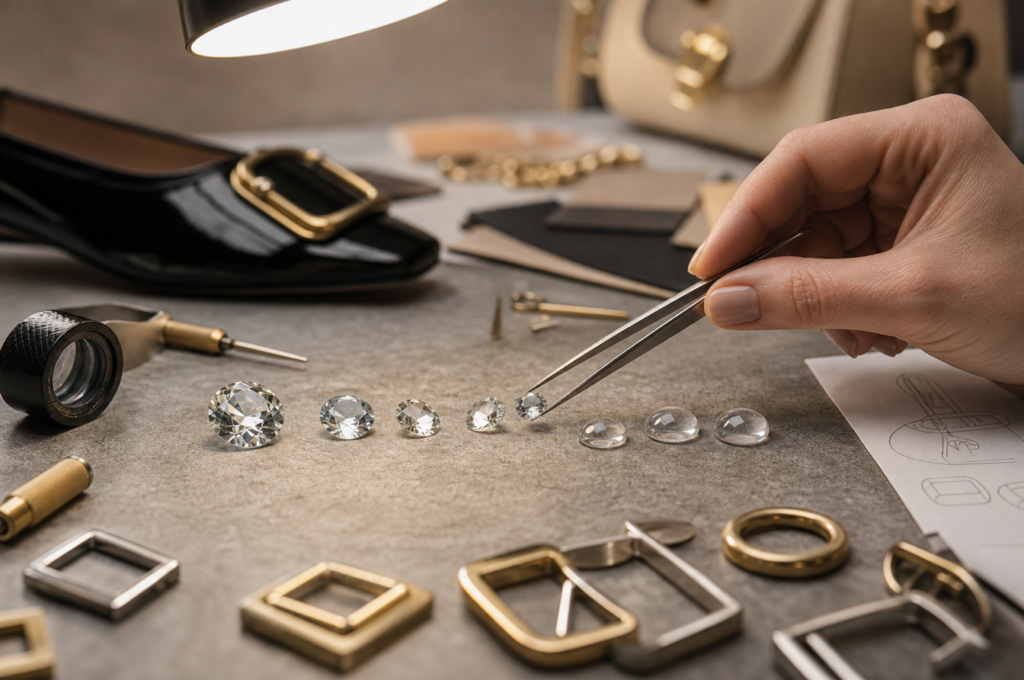
I also believe that apparel hardware should connect with other product categories when the brand has a wider line. A metal logo plate used on a jacket can inspire the plate on a handbag. A buckle shape used on outerwear can connect with footwear or pet accessories. This creates a stronger visual language.8 It makes the brand feel planned instead of random.
What Makes Custom Apparel Hardware Look and Perform Better from an Engineering View?
Good hardware is not only about a beautiful sample. It is about material, structure, fabric compatibility, and stable mass production.
Custom apparel hardware performs better when the material, edge treatment, fixing method, tolerance, and surface finish are designed around the garment fabric and real use conditions. Engineering turns a good-looking part into a reliable production part.
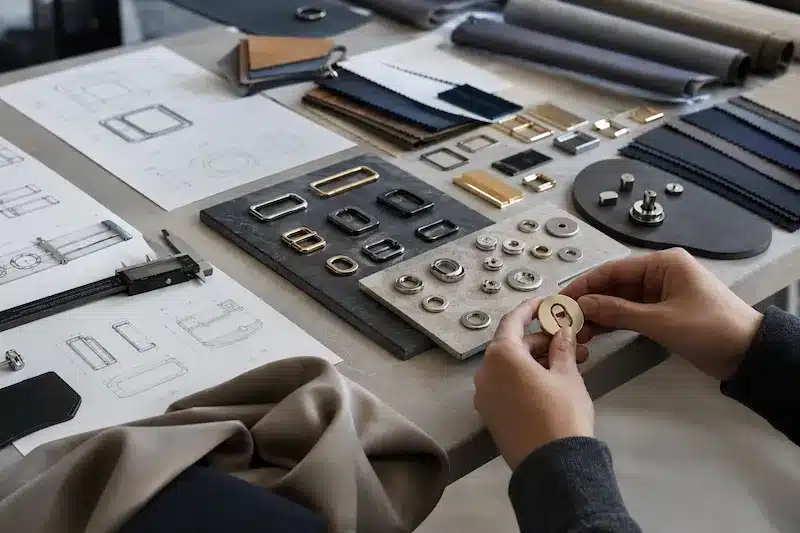
I usually start with material selection. Brass is one of the most useful materials for premium custom hardware. It has good workability, and it works well with many plating finishes.9 It can support detailed shapes, clean logo work, and refined surface treatment. This is why brass is often used for higher-positioned fashion hardware. Stainless steel has a different value. It is strong, clean, and resistant to corrosion.10 It can be useful for minimalist styles, technical apparel, or products that need better resistance in humid or harsh environments. Aluminum can help when the garment uses thinner fabric and the hardware must stay light.11 Hollow structures can also reduce weight while keeping a strong visual size.
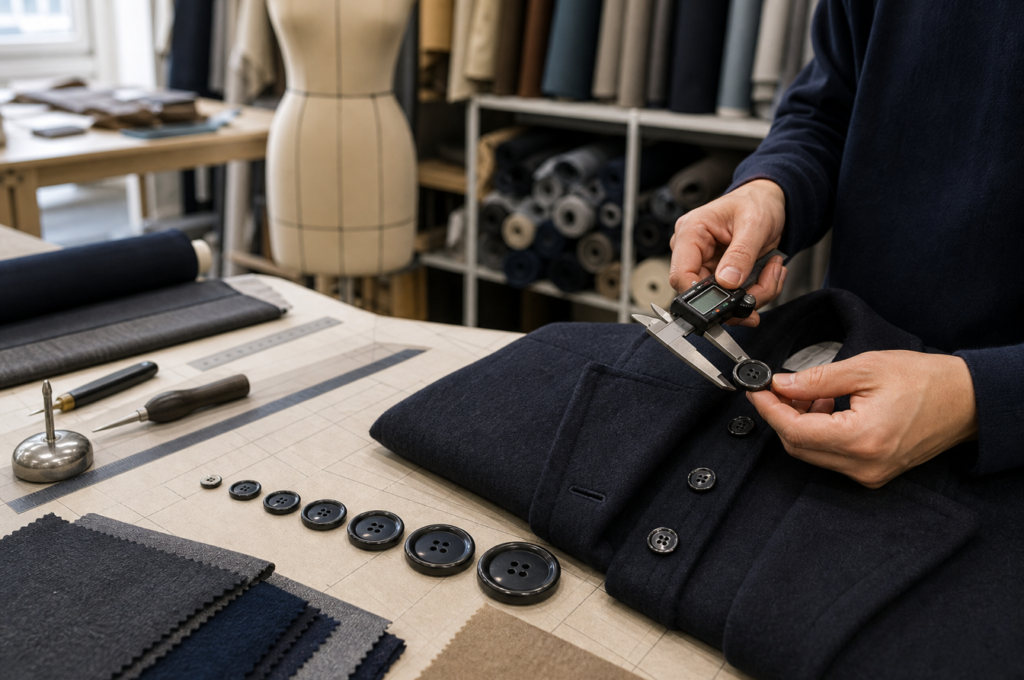
The next step is fabric interaction. Metal hardware cannot be designed alone. It must be designed with the textile. A sharp edge may scratch silk. A heavy plate may pull down fine wool. A snap with too much force may tear lightweight fabric during use.12 A rivet with the wrong post length may not lock well. These problems are not only quality problems. They are engineering problems.
| Material / Structure | Main Advantage | Best Use | Key Risk |
|---|---|---|---|
| Brass | Good shaping and plating compatibility | Premium logo plates, buttons, buckles | Higher cost and weight |
| Stainless steel | Strong and corrosion-resistant | Minimalist hardware, technical lines | Harder to process for fine details |
| Aluminum | Lightweight and clean | Thin garments, lightweight trims | Surface may need stronger protection |
| Zinc alloy | Flexible shape and lower cost | Decorative parts, fashion buckles | Weight and plating control need attention |
| Hollow structure | Large look with lower weight | Coat buttons, statement parts | Strength must be tested |
| Rounded edge design | Safer for fine fabrics | Silk, wool, lining areas | Extra polishing control needed |
I have seen many hardware issues come from poor early assessment. The part looks good in a 3D render, but it fails when installed on fabric. This is why I prefer to check fabric thickness, stress direction, fixing method, and user movement early. Better engineering does not remove beauty. It protects beauty in real use.
How Do Finishes Communicate Value from Polished Gold to Brushed Gunmetal?
Surface finish is one of the fastest ways for hardware to express price level, style, and brand emotion.
Finishes communicate value through color, shine, texture, and touch.13 Polished gold may feel classic and luxurious, while brushed gunmetal can feel modern, technical, and quiet. The best finish must also stay durable in real use.
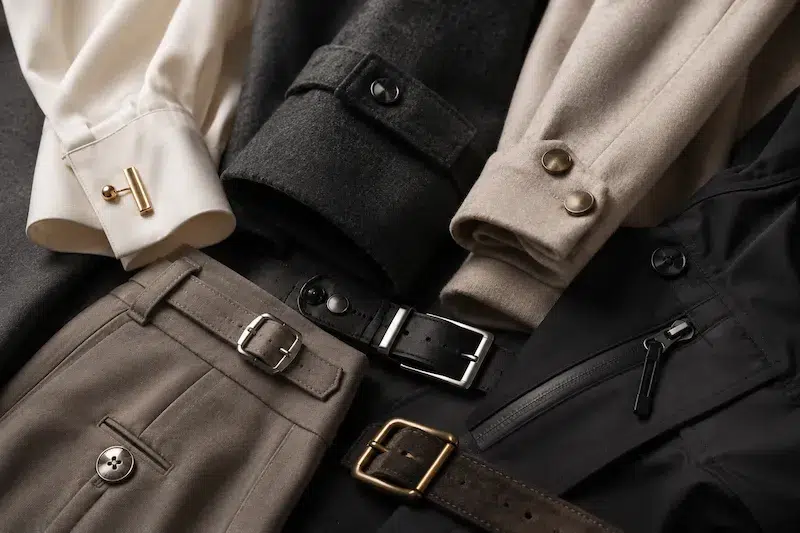
I treat finish selection as both a design decision and a production decision. A polished gold finish can look rich and formal. It reflects light and attracts attention. It can work well for premium outerwear, uniforms, and statement hardware. A satin finish feels softer. It can make the same metal part look more calm and refined. A brushed finish creates direction and texture. It often feels modern and more industrial. Gunmetal can give a technical or minimal feeling. Antique brass can make the product feel vintage, heritage, or handcrafted.
The challenge is consistency. A beautiful finish in one sample is not enough. The finish must be controlled across batches, sizes, and reorder cycles. In plating, small changes in process conditions can affect color.14 The base material, polishing level, plating thickness, sealing method, and cleaning process can all change the final look.15 This is why I do not choose finishes only from photos. I prefer physical samples and approved color standards.
| Finish | Visual Message | Good For | Production Concern |
|---|---|---|---|
| Polished gold | Bright, classic, luxury | Logo plates, buttons, premium trims | Scratches and fingerprints may show |
| Satin gold | Soft, refined, modern | Outerwear, women’s apparel, quiet luxury | Color tone must stay stable |
| Brushed gunmetal | Technical, modern, understated | Minimalist apparel, sports-luxury lines | Brush direction must be consistent |
| Antique brass | Vintage, heritage, warm | Workwear, denim, outdoor-inspired apparel | Aging effect must be controlled |
| Polished silver | Clean, sharp, bright | Uniforms, fashion jackets, labels | Mirror surface needs good polishing |
| Matte black | Modern, simple, strong | Technical apparel, streetwear | Coating adhesion must be tested |
| Enamel filled | Colorful, branded, decorative | Logo plates, statement hardware | Filling quality and edge cleanliness matter |
I also look at durability. A finish must handle rubbing, sweat, moisture, packing, and daily touch.16 A very beautiful finish that oxidizes too quickly can damage brand trust. A coating that chips after use can make the garment feel low quality. So I always ask what the product will experience. A runway piece, a daily jacket, and a performance garment do not need the same finish logic.
How Can I Build Custom Hardware from Sketch to Production Without Losing Brand Standards?
Custom hardware becomes risky when the sample looks perfect, but the bulk production looks different.
To build custom hardware that matches brand standards, I start with clear design files, material decisions, 3D development, prototype testing, approved samples, tolerance control, and bulk inspection. Each step protects the link between concept and production.
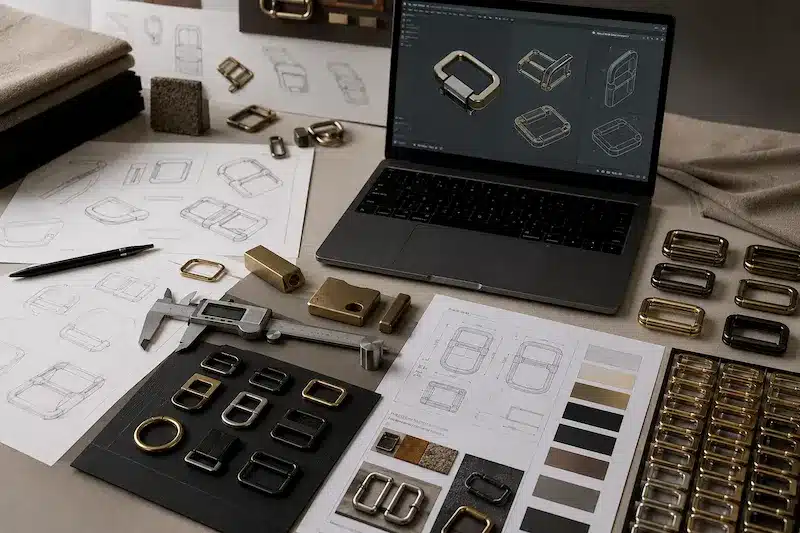
I see custom hardware development as a controlled path. It should not be a loose exchange of pictures and rough ideas. A sketch is a good start, but it needs to become a clear technical direction. I need to understand the size, thickness, logo position, installation method, edge style, surface finish, and final use. Then I can move into 3D CAD development. A 3D file helps me check proportion and structure before physical sampling.17 It can reduce repeated sample changes and save time.18
After the 3D direction is approved, prototype sampling can test real weight, touch, edge quality, and installation. This is where many hidden problems appear. A logo may be too shallow. A corner may feel too sharp. A plate may be too heavy for the fabric. A snap may open with too much force. These issues are easier to fix before bulk production than after.19
| Development Stage | Main Task | What I Confirm |
|---|---|---|
| Concept / sketch | Understand design intent | Shape, style, use, and brand mood |
| Technical review | Check production feasibility | Material, size, thickness, fixing method |
| 3D CAD | Build digital structure | Proportion, logo depth, edge radius |
| Prototype | Make physical sample | Weight, touch, installation, appearance |
| Finish approval | Confirm surface standard | Color, shine, texture, durability |
| Pre-production sample | Lock final reference | Sample-to-bulk standard |
| Bulk production | Control repeatability | Tolerance, finish, assembly, packaging |
| Final inspection | Protect delivery quality | Visual, functional, and dimensional checks |
I pay special attention to the gap between sample and bulk. Many brands fear the same thing: the sample is perfect, but the bulk order looks downgraded. This usually happens when standards are not locked clearly. I prefer to keep approved physical samples, clear color references, measurement points, and inspection rules.20 This creates a closed loop. It helps protect the brand from hidden production drift.
What Future Trends Will Shape High-End Apparel Hardware Next?
Premium hardware is moving toward cleaner materials, smarter identity, and stronger cross-category brand systems.
Future high-end apparel hardware will focus more on recycled metals, lower-impact finishing, digital traceability, anti-counterfeit details, NFC identity, and unified design systems across apparel, bags, footwear, and accessories.
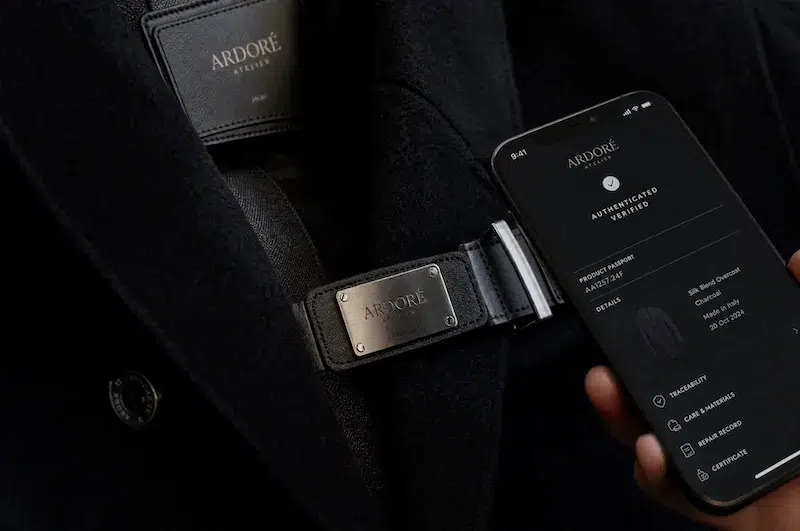
I see two strong directions in the future of apparel hardware. The first direction is sustainability. More brands are asking about recycled brass, recycled zinc alloy, lower-impact plating, safer coatings, and clearer material records.21 This does not mean every product must use the same eco solution. It means brands want more transparency and better control. Recycled metal still needs stable quality. Eco-friendly plating still needs durability. A sustainable claim is only useful when the product can pass real use and quality tests.22
The second direction is smart identity. Metal hardware is a good carrier for traceability and anti-counterfeit functions because it stays on the product.23 A logo plate can include micro laser marking. A premium tag can carry a hidden code. Some hardware can even integrate NFC for authentication, care information, repair records, or brand content. This can be useful for limited collections, uniforms, luxury apparel, and products that need stronger control after sale.
| Future Direction | Possible Value | Practical Challenge |
|---|---|---|
| Recycled brass | Supports responsible material use | Supply stability and proof documents |
| Lower-impact plating | Improves environmental story | Durability must stay strong |
| Micro laser anti-counterfeit | Helps protect brand identity | Marking must be readable and subtle |
| NFC logo plate | Supports authentication and interaction | Cost and structure need early planning |
| Digital sample records | Improves repeat order control | Data must match physical standards |
| Cross-category hardware system | Unifies apparel, bags, shoes, and pet products | Design language must stay flexible |
| Repair-friendly hardware | Extends product life | Installation method must allow service |
I also believe brands will use hardware in a more strategic way. Apparel, bags, shoes, and pet products can share a connected visual system. The same metal tone, shape language, and logo detail can travel across product lines. This makes the brand easier to recognize.24 It also makes development more efficient. I do not see hardware only as supply. I see it as engineering support, design support, and brand support.
Conclusion
I see custom apparel hardware as the physical proof of brand quality. When engineering and identity work together, premium apparel becomes more durable and more recognizable.
-
"The influence of the feel of product packaging on the perception of …", https://www.academia.edu/47946494/The_influence_of_the_feel_of_product_packaging_on_the_perception_of_the_oral_somatosensory_texture_of_food. Research on product perception and haptic evaluation supports that tactile qualities, perceived weight, surface finish, and visual appearance can influence judgments of product quality and value. Evidence role: expert_consensus; source type: paper. Supports: Small hardware details can make apparel feel more premium by influencing tactile and visual quality cues.. Scope note: The evidence is likely to address consumer product perception broadly rather than apparel hardware specifically. ↩
-
"Fabric and Garment Drape Measurement – Part 1 – Academia.edu", https://www.academia.edu/84570591/Fabric_and_Garment_Drape_Measurement_Part_1. Textile and apparel engineering sources describe drape and garment behavior as dependent on fabric weight, stiffness, and applied loads, supporting the view that heavy attachments can alter how a garment hangs. Evidence role: mechanism; source type: education. Supports: Hardware weight must be matched to the garment so it does not distort fabric hang or comfort.. Scope note: Such sources may explain the mechanical principle of fabric deformation rather than provide direct tests of metal apparel hardware. ↩
-
"[PDF] Microscopic evaluation of the surface of selected nylon fabric before …", https://krex.k-state.edu/bitstreams/3d5aaad4-958d-47ca-b63e-e59677af1dbc/download. Textile abrasion and snagging literature shows that rough or sharp contact surfaces can damage fibers and fabrics, providing a material basis for specifying smooth hardware edges near delicate textiles. Evidence role: mechanism; source type: paper. Supports: Smooth hardware edges help reduce the risk of fabric damage, especially on delicate textiles.. Scope note: The support may come from general textile damage and abrasion studies rather than studies limited to buttons, snaps, or trims. ↩
-
"[PDF] Durability.pdf – aatcc", https://www.aatcc.org/wp-content/uploads/2020/02/Durability.pdf. Apparel testing standards and textile-care guidance commonly assess dimensional stability, seam or attachment strength, and laundering durability, supporting the need to evaluate fastenings after wear movement and washing. Evidence role: general_support; source type: institution. Supports: Hardware fixing methods should remain stable during use and laundering.. Scope note: Standards may define test methods and performance factors rather than set universal pass/fail requirements for every garment category. ↩
-
"Can visual language convey tactile experience? A study of the …", https://pmc.ncbi.nlm.nih.gov/articles/PMC9807036/. Research on multisensory branding and haptic perception supports that visual and tactile product cues can contribute to brand recognition and consumer evaluation. Evidence role: expert_consensus; source type: paper. Supports: Repeated metal hardware details can help customers recognize a brand through sight and touch.. Scope note: The evidence would support the sensory-branding mechanism generally, not prove that every metal hardware design improves recognition. ↩
-
"The Importance of Testing for Zippers, Buttons, and Fasteners", https://contractlaboratory.com/the-final-stitch-the-importance-of-testing-for-zippers-buttons-and-fasteners/. Apparel testing and textile durability literature treats fasteners, buttons, snaps, and plated components as functional trims whose attachment strength, corrosion resistance, and finish durability are evaluated across garment use and laundering. Evidence role: general_support; source type: paper. Supports: Metal hardware can remain with an apparel product over long-term use when properly specified and tested.. Scope note: Such sources establish that hardware durability is a recognized production concern, but they may not demonstrate that all metal hardware remains intact for a garment’s entire life. ↩
-
"[PDF] Brand New: How Visual Context Shapes Initial Response To Logos …", https://scholarcommons.sc.edu/cgi/viewcontent.cgi?article=7180&context=etd. Branding research on distinctive brand assets indicates that non-name and non-logo cues, including shapes, colors, and other recurring design elements, can function as identifiers when consistently associated with a brand. Evidence role: expert_consensus; source type: paper. Supports: A brand signature can be built through repeated design cues rather than only through a large logo.. Scope note: The source would support the principle of non-logo brand cues generally, not the effectiveness of a specific hardware shape or finish. ↩
-
"Standing out while fitting in: An objective measure of visual branding …", https://journals.sagepub.com/doi/10.1177/14707853241291443. Design-management and brand-identity literature describes consistent visual elements across products and touchpoints as a means of creating coherent brand identity and recognition. Evidence role: general_support; source type: education. Supports: Coordinating hardware elements across product categories can strengthen a brand’s visual language.. Scope note: This provides contextual support for cross-category consistency, but it does not directly measure the effect of coordinated metal hardware across apparel, bags, footwear, or accessories. ↩
-
"[PDF] Lectures on Materials Science for Architectural Conservation", https://www.getty.edu/conservation/publications_resources/pdf_publications/pdf/torraca.pdf. A metallurgical reference on brass supports that copper-zinc alloys are generally valued for machinability/formability and are commonly finished by electroplating; this supports the material-property basis for using brass in decorative apparel hardware rather than proving its market position as “premium.” Evidence role: general_support; source type: encyclopedia. Supports: Brass has good workability and compatibility with many plating finishes, making it useful for custom fashion hardware.. Scope note: The source would support brass material properties and finishing compatibility, but not directly verify fashion-industry positioning. ↩
-
"Case Study: How Chromium Protects Steel – UMich MSE", https://mse.engin.umich.edu/internal/demos/case-study-how-chromium-protects-steel. A materials-science or institutional reference on stainless steel supports that chromium-containing steels form a passive oxide layer associated with corrosion resistance and retain useful mechanical strength; this substantiates the functional rationale for stainless steel hardware in humid or demanding conditions. Evidence role: mechanism; source type: institution. Supports: Stainless steel is strong and corrosion-resistant, which can make it suitable for apparel hardware used in humid or harsh environments.. Scope note: The evidence would explain stainless steel’s general corrosion-resistance mechanism, not evaluate any specific apparel component design. ↩
-
"[PDF] ALUMINUM", https://dunand.northwestern.edu/refs/files/AMP-MMC.pdf. A materials reference giving aluminum’s low density relative to common structural metals supports the claim that aluminum can reduce component weight; the citation would provide general material context rather than garment-specific performance data. Evidence role: statistic; source type: education. Supports: Aluminum is useful where apparel hardware needs to be lightweight, especially on thinner fabrics.. Scope note: The source would support aluminum’s low density, but fabric suitability still depends on the finished component geometry and attachment method. ↩
-
"Quantitative Assessment of Woven Fabric Surface Changes During …", https://pmc.ncbi.nlm.nih.gov/articles/PMC12348827/. Textile-testing and garment-engineering sources on fabric abrasion, tensile/tear strength, and fastener pull-through support that fabric damage depends on surface contact, load, and attachment forces; this provides a technical basis for evaluating hardware against the textile rather than in isolation. Evidence role: mechanism; source type: paper. Supports: Hardware edge shape, weight, and fastening force can damage delicate or lightweight fabrics if not engineered for the textile.. Scope note: Such sources would support the general damage mechanisms, while the exact failure threshold varies by fabric construction, finish, hardware geometry, and use conditions. ↩
-
"Touch influences perceived gloss – PMC – NIH", https://pmc.ncbi.nlm.nih.gov/articles/PMC4768155/. A peer-reviewed study on product/material perception can support that visual and tactile surface properties such as color, gloss, roughness, and texture influence perceived quality and value; the evidence is contextual because it addresses perception mechanisms rather than garment hardware specifically. Evidence role: expert_consensus; source type: paper. Supports: Finishes communicate value through color, shine, texture, and touch.. Scope note: Contextual support; most perception studies examine products or materials broadly, not necessarily apparel hardware. ↩
-
"[PDF] Electroless Plating – sciphilconf.berkeley.edu", https://sciphilconf.berkeley.edu/index.jsp/mL527F/602626/Electroless%20Plating.pdf. Electroplating literature explains that bath composition, current density, temperature, pH, agitation, and time can affect deposit structure and appearance, including color; this supports the process-sensitivity claim, although effects vary by metal system and coating chemistry. Evidence role: mechanism; source type: paper. Supports: In plating, small changes in process conditions can affect color.. Scope note: The exact visual effect depends on the specific plating metal, electrolyte, and finishing system used. ↩
-
"[PDF] Preliminary Study of the Metal Finishing Category: 2015 Status Report", https://19january2021snapshot.epa.gov/sites/static/files/2016-07/documents/metal-finishing-study-2015-status-report_jun-2016.pdf. Finishing and coating references describe how substrate preparation, surface roughness, coating thickness, post-treatment, and cleaning influence the appearance and performance of plated or coated surfaces; this supports the claim as a general finishing principle rather than proof for every hardware material. Evidence role: mechanism; source type: research. Supports: The base material, polishing level, plating thickness, sealing method, and cleaning process can all change the final look.. Scope note: General support; the relative importance of each factor differs by alloy, plating stack, and coating method. ↩
-
"EN ISO 12947-2 Textiles – Part 2: Determination of Sample Distortion", https://www.eurolab.net/en/testler/tekstil-testleri/en-iso-12947-2-tekstiller-martindale-yontemiyle-kumaslarin-asinma-direncinin-belirlenmesi-bolum-2-numune-bozulmasinin-belirlenmesi/. Textile and coating test standards commonly assess abrasion resistance, corrosion or humidity exposure, and perspiration effects, supporting the need to evaluate finishes against rubbing, moisture, sweat, and handling; the support is standards-based and does not establish a single universal test for all garment hardware. Evidence role: general_support; source type: institution. Supports: A finish must handle rubbing, sweat, moisture, packing, and daily touch.. Scope note: Standards vary by product category, substrate, coating, and intended use; no single test covers all listed conditions. ↩
-
"Computer-aided design – Wikipedia", https://en.wikipedia.org/wiki/Computer-aided_design. A neutral CAD reference can support that three-dimensional computer-aided design models are used to represent product geometry and evaluate form, fit, and structure before physical manufacture. Evidence role: mechanism; source type: encyclopedia. Supports: A 3D file helps check proportion and structure before physical sampling.. Scope note: The source would support the general engineering function of CAD, not the specific workflow or results of this article. ↩
-
"[PDF] The Economies and Dimensionality of Prototyping – MIT", https://web.mit.edu/~mcyang/www/papers/2018-tiongEtal.pdf. Engineering and product-development literature on digital prototyping can support that CAD-based review and virtual prototyping may reduce physical iteration cycles and shorten development time by identifying design issues earlier. Evidence role: general_support; source type: paper. Supports: Using 3D CAD can reduce repeated sample changes and save time.. Scope note: This evidence would be contextual because actual time savings depend on the product, process controls, and supplier capability. ↩
-
"[PDF] B. Boehm and V. Basili, "Software Defect Reduction Top 10 List …", https://www.cs.cmu.edu/afs/cs/academic/class/17654-f01/www/refs/BB.pdf. Design-for-manufacturing and quality-management sources can support the principle that detecting and correcting design or process defects earlier in development is generally less costly and less disruptive than correcting them after production has begun. Evidence role: expert_consensus; source type: institution. Supports: Hardware design and usability issues are easier to fix before bulk production than after.. Scope note: The source would support the general cost-of-change principle rather than proving it for every hardware accessory case. ↩
-
"46 CFR § 164.019-13 – Production quality control requirements.", https://www.law.cornell.edu/cfr/text/46/164.019-13. Quality-management standards and inspection guidance can support that documented specifications, reference samples, defined measurements, and inspection criteria are used to control conformity and reduce variation in production. Evidence role: expert_consensus; source type: institution. Supports: Approved samples, color references, measurement points, and inspection rules help control sample-to-bulk consistency.. Scope note: The source would substantiate the quality-control practice in general, not verify that the described supplier applies it in a specific order. ↩
-
"Circular Fashion | Circular Economy for the Fashion Industry", https://www.ellenmacarthurfoundation.org/topics/fashion/overview. Institutional reports on fashion circularity and product sustainability document increasing attention to recycled inputs, safer chemistry, and material traceability in apparel supply chains. Evidence role: general_support; source type: institution. Supports: Brands are increasingly seeking recycled metals, lower-impact finishing, safer coatings, and clearer material records for apparel hardware.. Scope note: Such sources support the broader industry direction, but may not specifically quantify demand for recycled brass or zinc-alloy hardware. ↩
-
"Green Guides | Federal Trade Commission", https://www.ftc.gov/news-events/topics/truth-advertising/green-guides. Standards and conformity-assessment guidance indicate that environmental claims should be substantiated and should not substitute for product performance, safety, or durability requirements. Evidence role: expert_consensus; source type: government. Supports: Sustainability claims for apparel hardware should be supported by documentation and should remain compatible with durability and quality testing.. Scope note: This supports the principle of substantiated environmental claims and performance testing, but specific hardware test requirements vary by material, finish, and intended use. ↩
-
"Radio-frequency identification – Wikipedia", https://en.wikipedia.org/wiki/Radio-frequency_identification. Research on RFID/NFC and product authentication describes persistent product identifiers as a mechanism for traceability and anti-counterfeiting when tags or codes remain attached to the item through its lifecycle. Evidence role: mechanism; source type: paper. Supports: Durable, product-attached hardware can serve as a carrier for traceability and anti-counterfeit identifiers.. Scope note: The evidence typically addresses RFID/NFC tags or identifiers in general; it may not prove that all metal apparel hardware is technically suitable without design measures for readability, durability, and user access. ↩
-
"[PDF] Brand Logo Shape and Brand Personality – PDXScholar", https://pdxscholar.library.pdx.edu/cgi/viewcontent.cgi?article=1835&context=honorstheses. Brand-management literature identifies consistent visual identity elements across touchpoints as contributors to brand recognition and coherent brand associations. Evidence role: expert_consensus; source type: paper. Supports: Consistent hardware details across product categories can improve brand recognition by reinforcing a coherent visual identity.. Scope note: This supports the general branding mechanism, but it does not directly measure the recognition effect of metal hardware details across apparel, bags, footwear, and pet products. ↩