- Loading...
A luxury shoe can look beautiful, but weak hardware can quickly reduce comfort, durability, and perceived value. I have seen this detail change buyer trust.
Metal hardware shapes luxury shoe performance by supporting structure, fit, comfort, adjustment, durability, and brand identity. The right metal, finish, geometry, installation method, and testing process help footwear feel premium and perform reliably in real use.
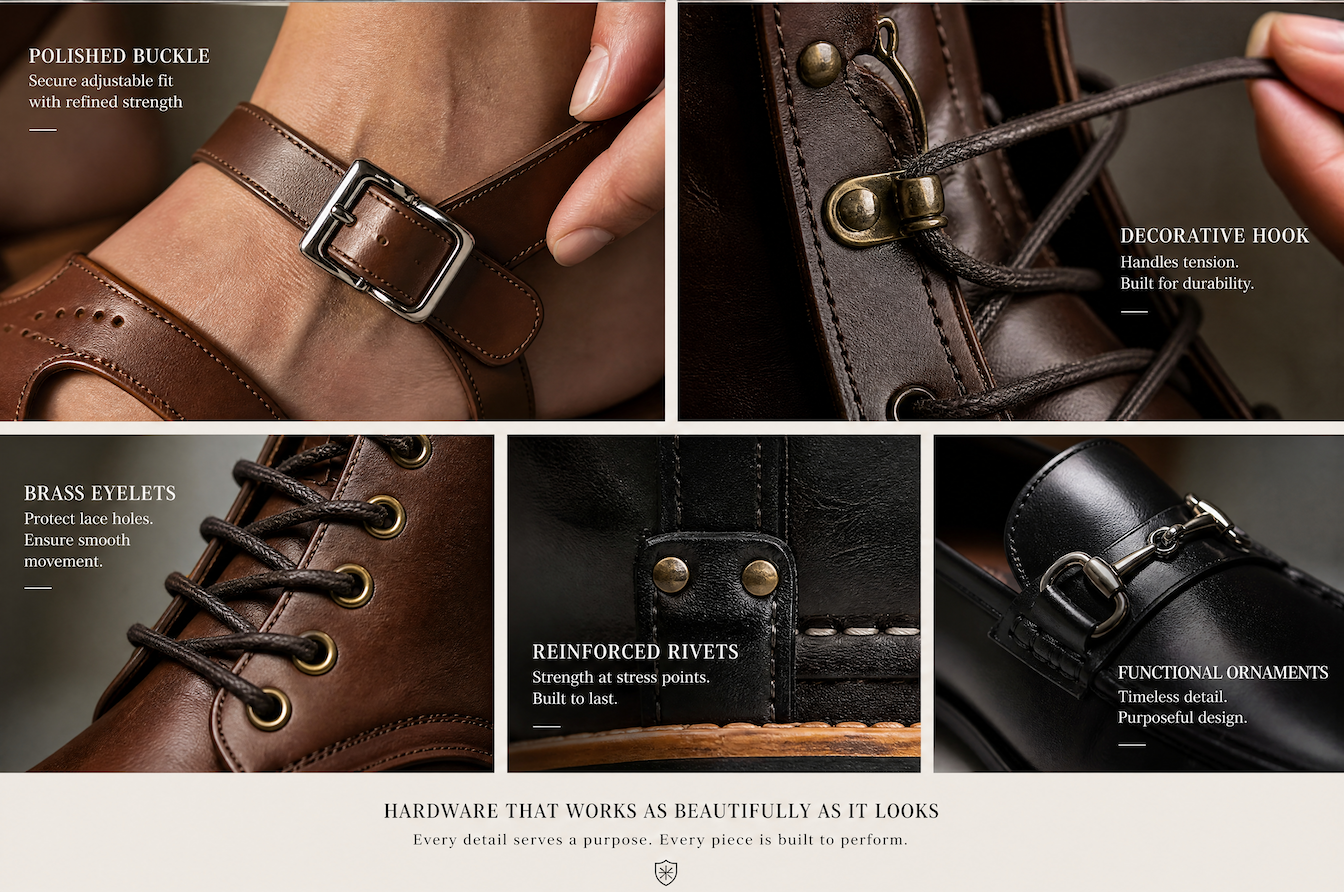
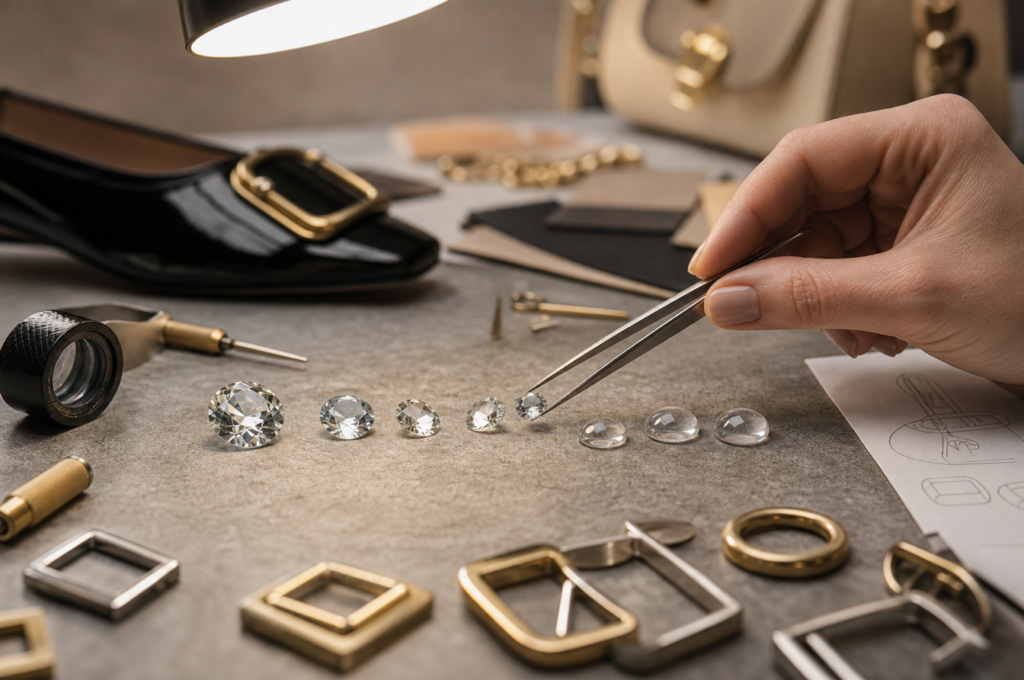
I used to see shoe hardware as decoration. Then I started to work closer with footwear-related metal parts, including buckles, eyelets, hooks, rivets, lace tips, studs, and logo details. I realized that hardware is not only a visual add-on. It is part of how the shoe works. A sandal buckle must hold the strap under movement. A boot hook must handle repeated lacing force. An eyelet must protect the lace hole and the upper material. A logo plate must look beautiful without hurting comfort. This is why I now see luxury shoe hardware as a bridge between design beauty and industrial performance. It can define a brand code, but it must also survive walking, bending, friction, pressure, and weather.
Why Can a Small Metal Detail Change the Value of a Luxury Shoe?
A small metal part can change how a customer reads the whole shoe. If it feels weak, the shoe may feel less premium.
A small metal detail changes shoe value because it affects first impression, touch, balance, structure, and brand memory.1 High-quality hardware can make a shoe feel more refined, while poor hardware can make even good leather feel less valuable.
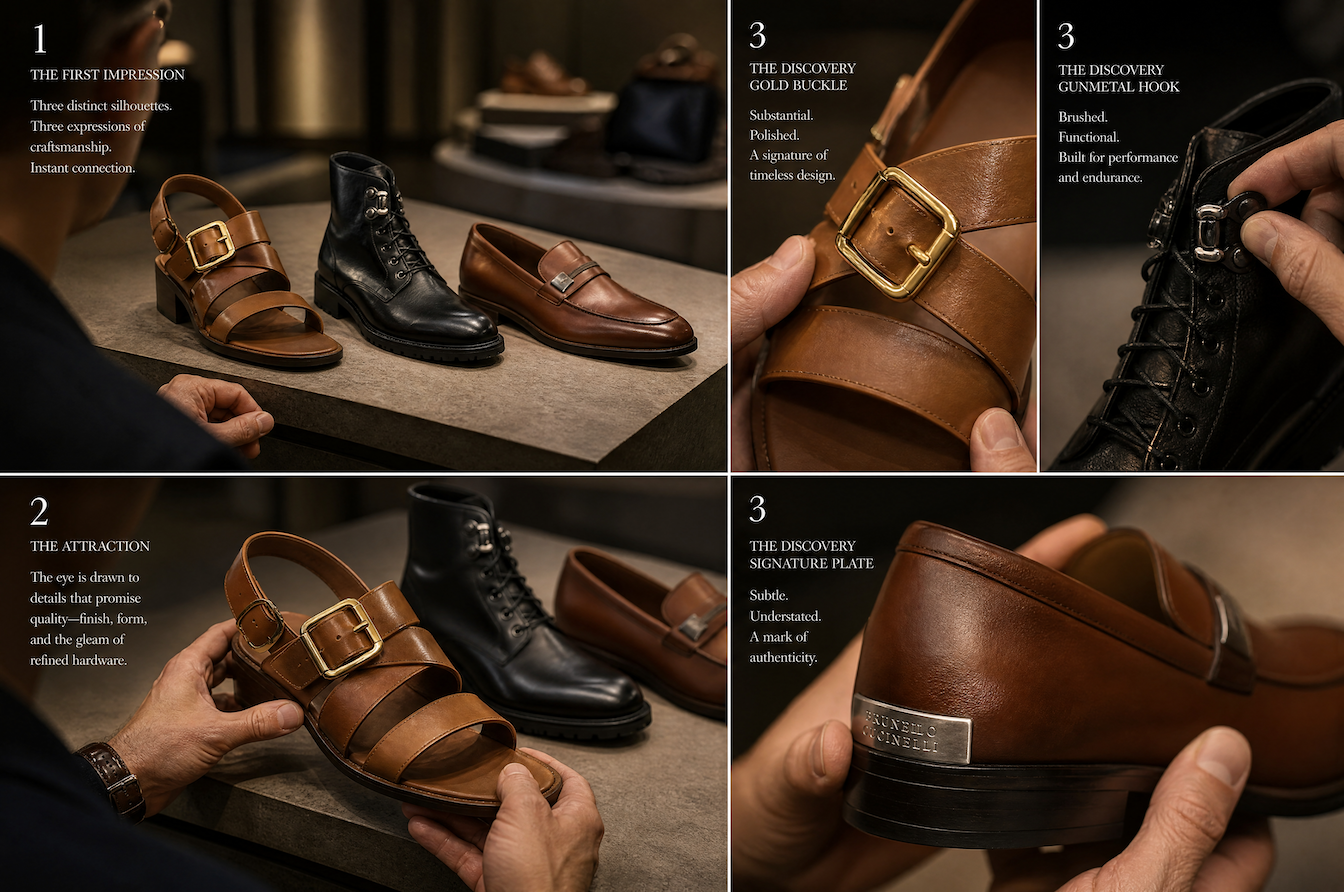
I often see buyers judge luxury shoes through small details. They may first notice the leather, shape, or stitching. Then their eyes move to the buckle, eyelet, logo ornament, lace tip, or decorative stud. These parts are small, but they can act like design codes.2 A polished gold buckle can make a sandal feel dressy. A brushed gunmetal hook can make a boot feel technical. A clean logo plate can make a loafer feel more branded. These details help customers understand the price level without reading a long explanation.
Metal hardware also has physical value. It adds weight, sound, touch, and structure.3 The customer can feel whether the buckle is firm. They can see whether the plating is smooth. They can notice whether the edges are rounded. If the hardware looks thin, rough, or unstable, the whole shoe can feel less trustworthy.
| Hardware Detail | What It Communicates | Risk If Poorly Made |
|---|---|---|
| Buckle | Adjustment, style, premium touch | Weak frame or rough pin can reduce trust |
| Eyelet | Structure and lace-hole protection4 | Poor edge can cut laces or damage upper |
| Hook | Technical function and boot identity | Weak attachment can fail under tension |
| Rivet | Reinforcement and design detail | Loose rivet can create quality complaints |
| Lace tip | Refined finishing and touchpoint | Poor plating can chip or scratch |
| Logo ornament | Brand identity and visual memory | Blurry logo weakens brand value |
| Decorative stud | Fashion attitude and texture | Sharp edges can hurt comfort |
I treat shoe hardware as a visible promise. It tells customers that the shoe is not only designed for photos. It is also built to be worn.
How Should Brands Choose Metals for Strength, Comfort, and Premium Touch?
The metal choice decides how the hardware feels, how much weight it adds, and how well it performs during wear.
Brands should choose shoe hardware metals based on strength, weight, corrosion resistance, surface finish needs, and compatibility with leather, fabric, or synthetic uppers. Brass supports premium detail, stainless steel supports durability, and aluminum helps reduce weight.
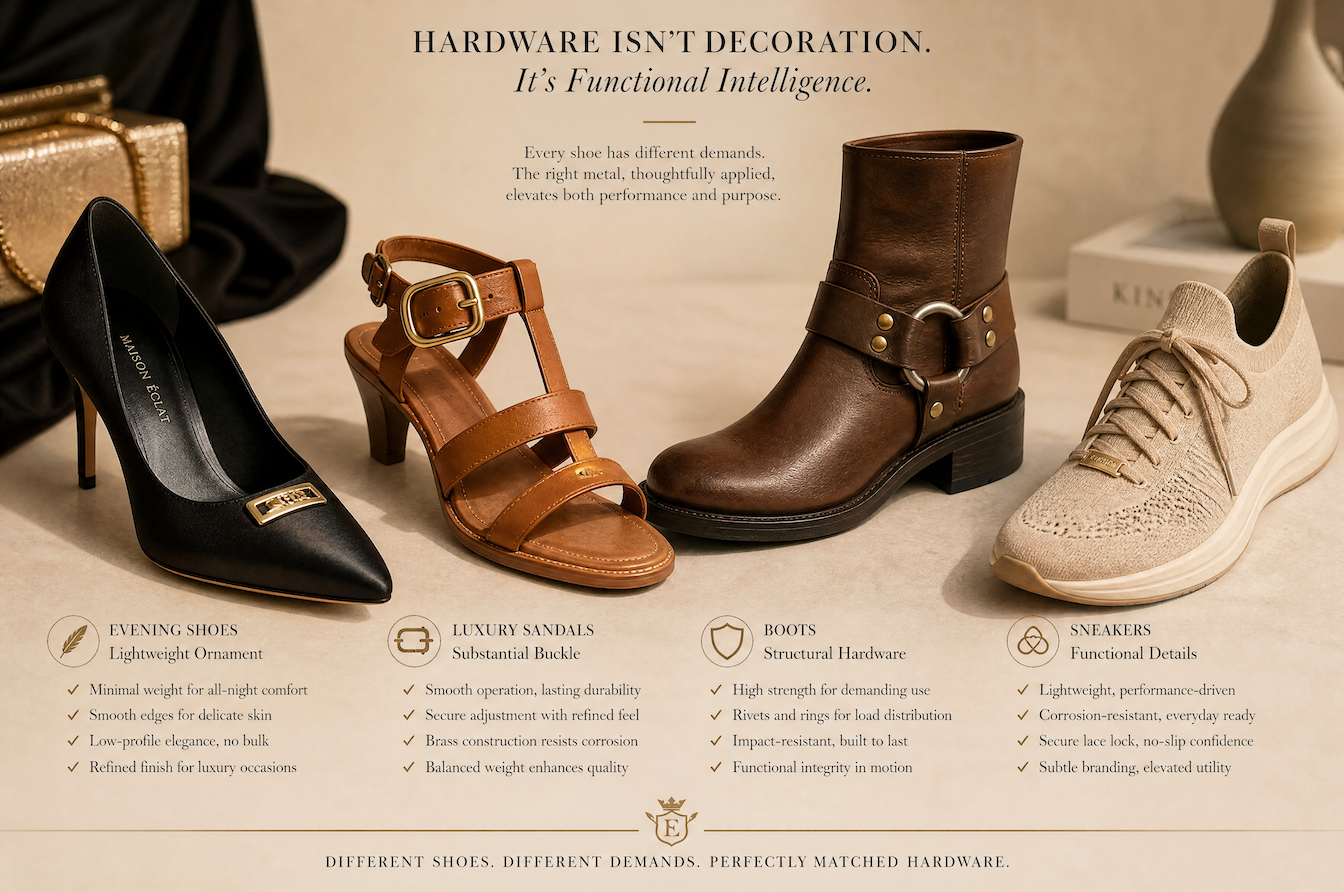
I usually begin material selection by looking at the shoe category. A delicate evening shoe does not need the same hardware logic as a hiking-inspired boot. A sandal buckle must feel smooth against the foot and hold the strap. A boot eyelet must resist repeated pulling. A sneaker ornament may need a strong visual effect with low weight. This is where the metal decision becomes important.
Brass is very useful for luxury shoe hardware because it supports refined shapes, clean polishing, and many plating finishes.5 It can work well for buckles, ornaments, logo pieces, and premium details. Stainless steel has stronger corrosion resistance.6 It can suit technical footwear, wet-use products, or structural parts that need strength. Aluminum can help when the hardware must look large but stay light.7 Zinc alloy can support complex shapes and cost control, but weight and surface stability need attention.
| Metal | Main Strength | Best Footwear Use | Key Concern |
|---|---|---|---|
| Brass | Fine detail, premium touch, strong plating compatibility | Luxury buckles, logo ornaments, lace tips | Higher cost and heavier weight |
| Stainless steel | Strong and corrosion-resistant | Hooks, technical closures, wet-use footwear | Harder to shape for very fine designs |
| Aluminum | Lightweight and clean | Large decorative parts, lightweight sneakers | Surface protection must be planned |
| Zinc alloy | Flexible shape and cost control | Fashion ornaments, complex decorative parts | Weight and plating stability need control |
| Iron | Strong and cost-friendly | Hidden structure or basic trims | Rust protection is critical |
| Recycled metal options | Supports responsible sourcing | Sustainability-focused footwear lines | Material proof and consistency must be checked |
I also check how the metal interacts with the upper material. Leather, suede, coated fabric, mesh, and synthetics all react differently to pressure and friction.8 A heavy metal plate can pull a soft upper. A sharp edge can damage delicate leather. A poor plating layer can transfer color or react with moisture. Good material choice is not only about the metal itself. It is about the relationship between metal, shoe upper, wearer movement, and brand position.
How Should Hardware Geometry and Size Match the Shoe Structure?
A shoe part can look beautiful in a drawing, but it must still match the foot, upper, strap, and movement.
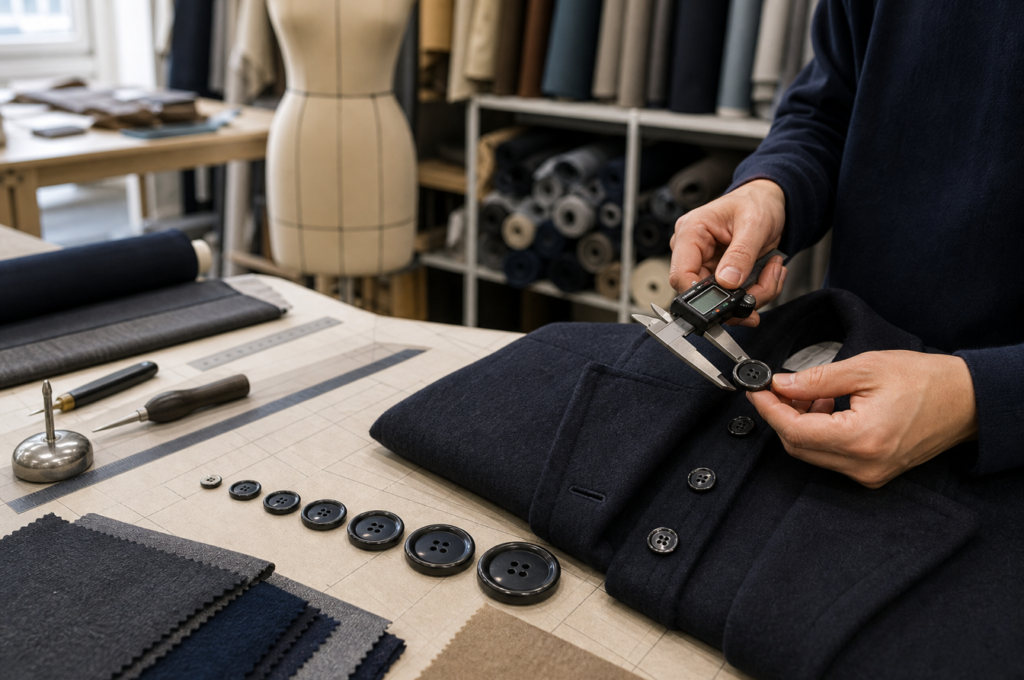
Shoe hardware size and geometry should match the strap width, upper thickness, stress direction, foot movement, and installation method.9 Correct proportion helps the shoe look balanced, feel comfortable, and avoid assembly problems in production.
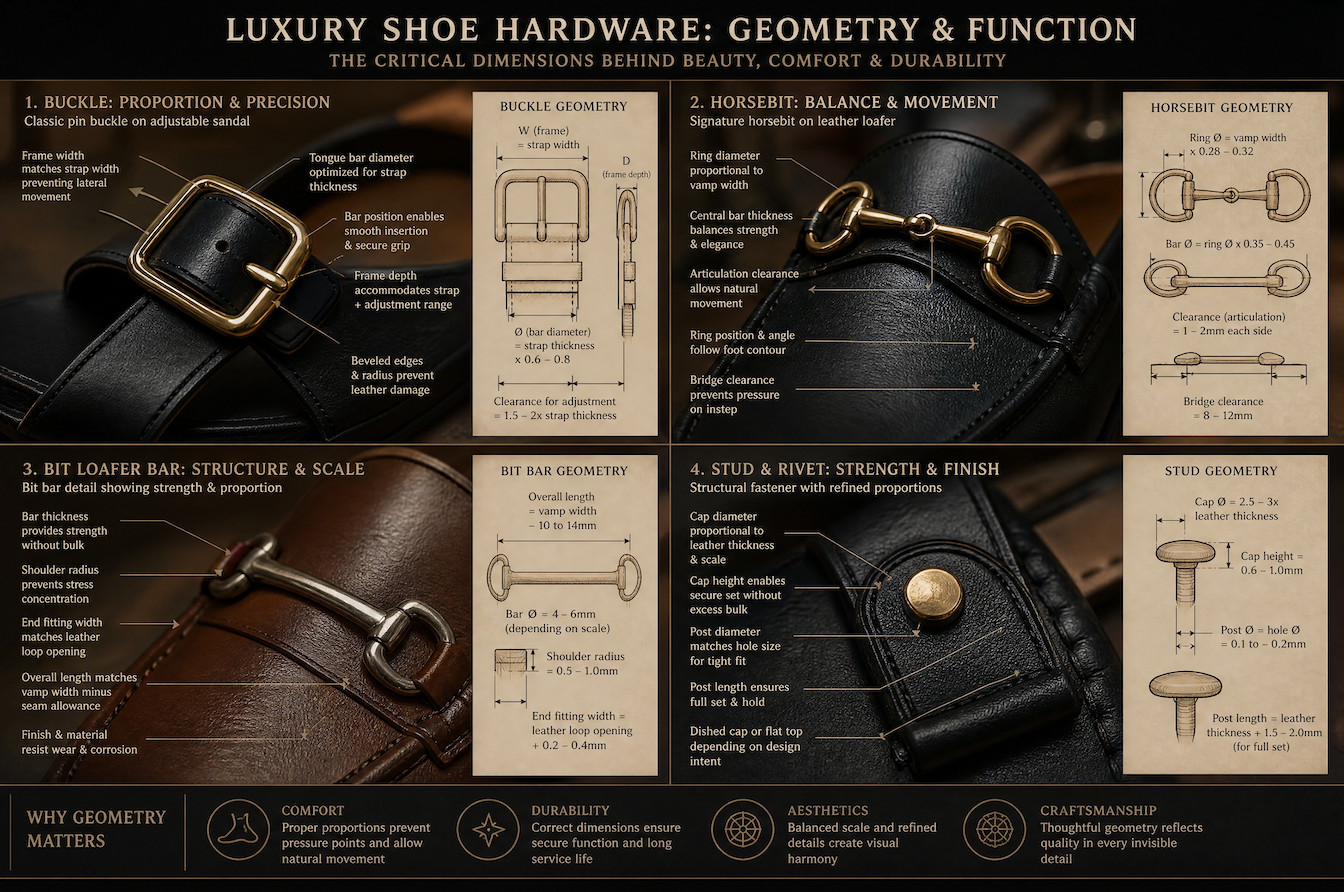
I always check hardware geometry before judging the finish. A buckle may have a beautiful shape, but if the inner bar does not match the strap width, the strap may twist10. An eyelet may look clean, but if the hole size does not match the lace and upper thickness, the lace area may wear out11. A logo plate may look premium, but if it is too thick or too heavy, it can create pressure on the foot. A decorative stud may look attractive, but if the back structure is rough, it can affect comfort.
3D CAD helps a lot in this stage.12 It allows me to define the shape, curve, hole position, edge radius, and installation logic before physical sampling. I can also check where the hardware may create production difficulty. A good design should not only look nice in a render. It should be installable on the shoe upper and stable in daily use.
| Hardware Type | Geometry Question | Why It Matters |
|---|---|---|
| Buckle | Does the bar fit the strap width? | Prevents strap twisting and uneven pressure |
| Eyelet | Does the hole fit lace and upper thickness? | Protects lace movement and upper strength |
| Hook | Does the hook angle support lacing force? | Prevents lace slipping or hook deformation |
| Rivet | Does the post length match material layers? | Avoids loose fixing or pressure points |
| Logo plate | Does the curve match the shoe surface? | Improves comfort and visual fit |
| Lace tip | Does the opening fit lace thickness? | Prevents slipping or weak crimping |
| Decorative stud | Is the back smooth enough? | Protects wearer comfort |
I like to test hardware on real upper materials early. A table sample is helpful, but it cannot show real bending, foot pressure, lace tension, or strap movement. A shoe is a moving product. The hardware must be designed for motion, not only for appearance.
Why Does Surface Finishing Decide the First Impression of Luxury Footwear?
Surface finish is the fastest signal of luxury. It tells customers whether the hardware feels refined, modern, vintage, or technical.
Surface finishing decides first impression because it controls color, shine, texture, touch, and perceived quality13. Polished finishes feel dressy, satin finishes feel refined, brushed finishes feel modern, and antique finishes can support heritage footwear stories.14
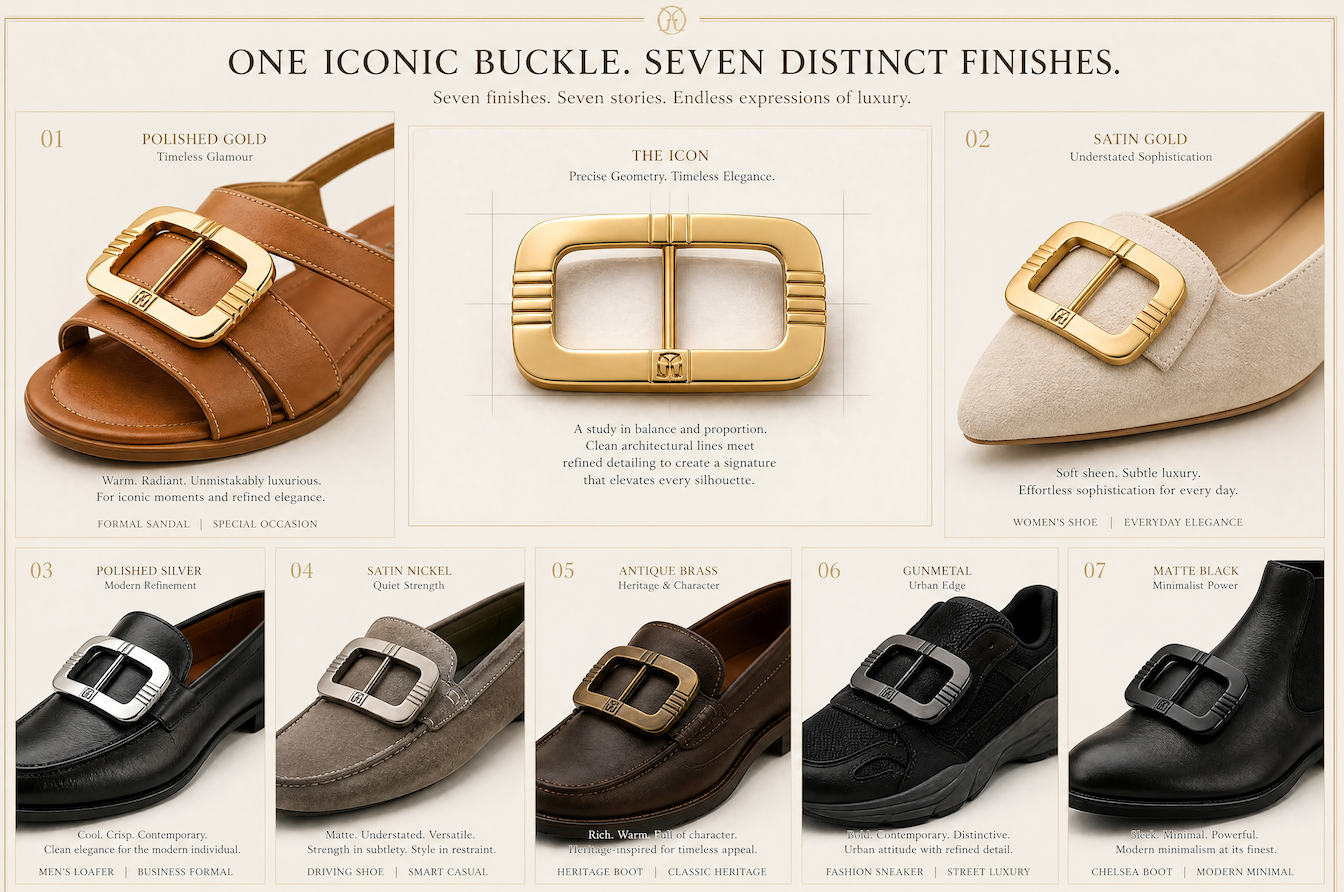
I treat surface finishing as part of the brand language. A polished gold buckle can feel formal and luxury. A satin silver eyelet can feel clean and refined. A brushed gunmetal hook can feel technical and modern. Antique brass can create a heritage or workwear feeling. Matte black can support streetwear or minimalist footwear. The same buckle shape can tell a very different story after the finish changes.
The challenge is not only choosing a beautiful finish. The challenge is keeping it consistent. Sample-to-bulk color difference15 is one of the most frustrating issues in footwear hardware. A small change in plating tone can make a shoe look mismatched. Gloss difference can also affect product value. This is why physical reference samples, plating standards, and batch inspection are important.
| Finish | Brand Feeling | Best Footwear Match | Production Concern |
|---|---|---|---|
| Polished gold | Dressy, luxury, eye-catching | Sandals, loafers, statement shoes | Scratches and fingerprints may show |
| Satin gold | Soft, refined, quiet luxury | Premium women’s shoes, soft leather styles | Tone must stay stable |
| Polished silver | Clean, sharp, modern | Formal shoes, sneakers, logo details | Mirror quality needs good polishing |
| Brushed gunmetal | Technical, modern, controlled | Boots, sneakers, outdoor-inspired footwear | Brush direction must be consistent |
| Antique brass | Vintage, heritage, warm | Boots, leather shoes, workwear styles | Aging effect must be controlled |
| Matte black | Minimal, urban, strong | Streetwear, technical shoes, dark uppers | Coating adhesion must be tested |
| Rose gold | Warm, soft, fashion-driven | Women’s footwear and accessories | Color shift must be controlled |
I also look at durability. Shoe hardware faces friction, dust, moisture, sweat, and repeated contact16. A finish that looks perfect before wear may fail if the protection layer is weak. Luxury finishing must be beautiful, but it also needs mechanical integrity. It should stay stable through real movement.
How Can Better Hardware Testing Reduce Returns, Complaints, and Brand Risk?
Many footwear problems appear only after wearing. Hardware testing helps find those problems before they reach customers.
Better hardware testing reduces returns and complaints17 by checking pull strength, abrasion resistance, plating durability, corrosion risk, edge safety, installation stability, and upper material compatibility before bulk production.
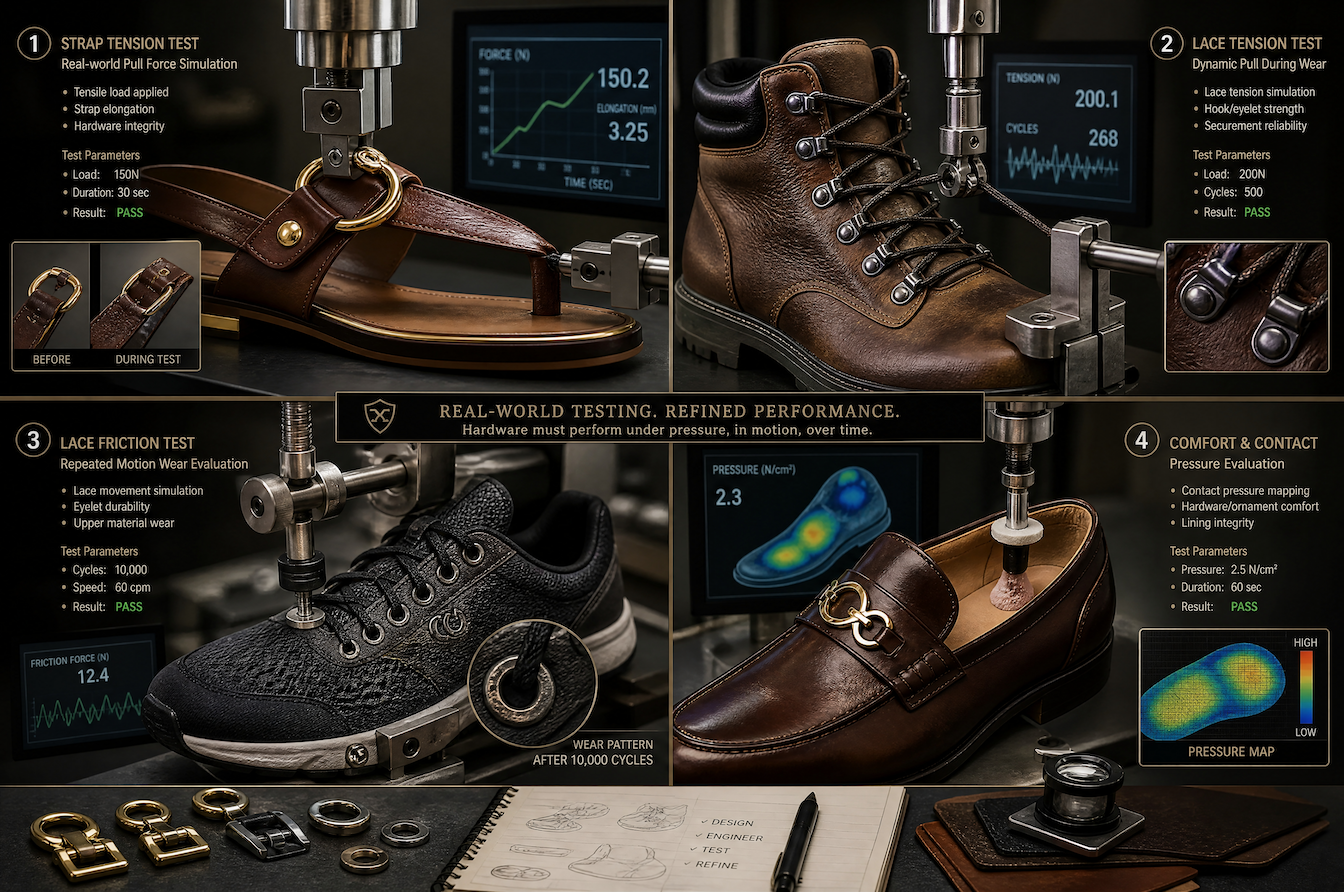
I never trust appearance alone for shoe hardware. A buckle may look perfect but fail under strap tension. An eyelet may look clean but cut the lace after repeated movement18. A hook may look strong but bend when the wearer pulls the laces. A logo ornament may look premium but create pressure against the foot. These risks can become returns, negative reviews, or brand complaints if they are not tested early.
Testing should be connected with the real shoe structure. The hardware should be installed on the actual upper material.19 It should be tested under the expected force and movement. For sandals, buckle adjustment and strap pulling are important. For boots, hook strength and lace tension matter. For sneakers, eyelet durability and lace friction matter. For luxury dress shoes, plating, surface polish, and comfort contact are important.
| Test Area | What I Check | Risk It Reduces |
|---|---|---|
| Pull strength | Buckle, hook, eyelet, rivet attachment | Loose parts and functional failure |
| Abrasion test | Surface under friction | Plating loss and visible wear |
| Corrosion check | Moisture, sweat, and environment response | Rust, discoloration, and staining |
| Edge safety | Rounded edges and smooth contact points | Leather damage and wearer discomfort |
| Installation test | Fit with upper material and lining | Assembly problems and weak fixing |
| Flex movement | Behavior during walking and bending | Cracking, loosening, or pressure points |
| Color consistency | Sample-to-bulk and batch matching | Visual mismatch and buyer rejection |
| Comfort check | Back structure and contact areas | Complaints during wear |
I also pay attention to the gap between prototype, sample, and bulk production. Many brands fear this gap. A prototype can look right, but bulk parts may drift in size, color, shine, or fit. Clear specifications, approved samples, tolerance control, and inspection rules help reduce this risk.20 A technical hardware partner should not only make parts. They should help protect the shoe from hidden production problems.
Conclusion
I see luxury shoe hardware as engineered brand language. When material, geometry, finish, testing, and production control work together, beauty becomes performance.
-
"Visual Design Cues Impacting Food Choice: A Review and Future …", https://pmc.ncbi.nlm.nih.gov/articles/PMC7589873/. Research in consumer perception and product design indicates that visual and tactile product cues can shape perceived quality and value, supporting the claim that small hardware details influence how a shoe is evaluated. Evidence role: expert_consensus; source type: paper. Supports: Small metal footwear details can influence perceived shoe value through first impression, tactile response, balance, structure, and brand memory.. Scope note: Such research usually addresses product perception broadly rather than footwear hardware specifically. ↩
-
"Effects of Design Aesthetics on the Perceived Value of a Product", https://pmc.ncbi.nlm.nih.gov/articles/PMC8359925/. Design semiotics literature describes product features, materials, and forms as signs that communicate meanings such as status, function, and brand identity, giving contextual support to the statement that footwear hardware can operate as a design code. Evidence role: mechanism; source type: paper. Supports: Small footwear hardware elements can communicate style, function, price level, or brand meaning as design codes.. Scope note: The evidence is likely to support the communication mechanism generally, not each listed shoe component individually. ↩
-
"Hand-Feel Touch Cues and Their Influences on Consumer … – PMC", https://pmc.ncbi.nlm.nih.gov/articles/PMC6678767/. Studies on haptic perception and material evaluation show that weight, surface feel, and other sensory properties influence judgments of product quality, while construction references identify metal fittings as structural components in apparel and footwear. Evidence role: general_support; source type: paper. Supports: Metal footwear hardware contributes both sensory cues and structural functions that affect how the product is experienced.. Scope note: A single source may not cover both sensory perception and footwear structure; two complementary sources may be needed. ↩
-
"(PDF) Accessories used on Leather Products – Academia.edu", https://www.academia.edu/3664708/Accessories_used_on_Leather_Products. Footwear and garment construction references define eyelets or grommets as reinforced rings inserted into holes to protect surrounding material from tearing or wear under lacing tension, directly supporting the stated protective function. Evidence role: definition; source type: education. Supports: Eyelets provide structure and protect lace holes in footwear. ↩
-
"Conservation and restoration of copper-based objects – Wikipedia", https://en.wikipedia.org/wiki/Conservation_and_restoration_of_copper-based_objects. Materials references describe brass as a copper–zinc alloy valued for workability, machinability, polishability, and decorative applications, supporting its use in finely shaped and finished hardware. Evidence role: general_support; source type: encyclopedia. Supports: Brass supports refined shapes, clean polishing, and multiple decorative finishes, making it useful for premium shoe hardware.. Scope note: This supports the material properties of brass generally; it does not directly evaluate brass in luxury shoe hardware specifically. ↩
-
"Case Study: How Chromium Protects Steel – UMich MSE", https://mse.engin.umich.edu/internal/demos/case-study-how-chromium-protects-steel. Metallurgical sources explain that stainless steels resist corrosion because chromium forms a passive oxide layer on the surface, which supports their use where moisture exposure is expected. Evidence role: mechanism; source type: education. Supports: Stainless steel offers stronger corrosion resistance for footwear hardware exposed to moisture or wet-use conditions.. Scope note: The support is strongest when comparing stainless steel with ordinary carbon steel or iron; corrosion performance still varies by stainless grade and environment. ↩
-
"Reference Tables | NIST", https://www.nist.gov/ncnr/sample-environment/sample-mounting/reference-tables. Reference data on engineering metals show that aluminum has a much lower density than steel, brass, or zinc alloys, supporting its selection when a visibly large component must minimize added mass. Evidence role: statistic; source type: government. Supports: Aluminum is appropriate for large-looking shoe hardware when reducing weight is important.. Scope note: Low density supports the weight argument, but surface durability and alloy choice must be assessed separately for actual shoe hardware. ↩
-
"Prospective validity assessment of a friction prediction model based …", https://pmc.ncbi.nlm.nih.gov/articles/PMC10847959/. Footwear and textile-material studies report that leather, coated fabrics, meshes, and synthetic upper materials differ in mechanical behavior, abrasion response, and frictional performance, providing contextual support for evaluating hardware contact with each upper type. Evidence role: general_support; source type: paper. Supports: Different shoe upper materials respond differently to pressure and friction from metal hardware.. Scope note: Such sources usually compare material behavior broadly; they may not test the exact metal trims or shoe designs discussed in the article. ↩
-
"[PDF] M. Tech. Leather & Footwear Technology REGULATIONS – 2023", http://cac.annauniv.edu/uddetails/udpg_2023/Tech/M.Tech%20Leather%20&%20Footwear%20Technology.pdf. Footwear design and engineering references describe shoe components as needing to be matched to foot anatomy, material thickness, attachment method, and mechanical loading; this supports the principle that hardware geometry should be specified in relation to the shoe structure and use conditions. Evidence role: expert_consensus; source type: education. Supports: Shoe hardware size and geometry should match the strap width, upper thickness, stress direction, foot movement, and installation method.. Scope note: The source may support the general design principle rather than every listed hardware variable individually. ↩
-
"[PDF] AC 43.13-1B – Acceptable Methods, Techniques, and Practices …", https://www.faa.gov/documentlibrary/media/advisory_circular/ac_43.13-1b_w-chg1.pdf. Mechanical design sources on straps, buckles, and webbing explain that load alignment and component width affect strap tracking and twisting, providing support for the claim that a mismatched buckle bar can cause strap distortion. Evidence role: mechanism; source type: paper. Supports: If a buckle’s inner bar does not match the strap width, the strap may twist.. Scope note: General strap and buckle mechanics may be used as contextual evidence if footwear-specific testing is unavailable. ↩
-
"Effects of a wrapping closure lacing system on wearing comfort, lock …", https://pmc.ncbi.nlm.nih.gov/articles/PMC13033706/. Studies and technical references on footwear materials and lacing systems describe repeated lace motion, local stress concentration, and abrasion around eyelets as contributors to wear, supporting the need to match eyelet hole size to lace and upper construction. Evidence role: mechanism; source type: paper. Supports: An eyelet hole that does not match the lace and upper thickness may accelerate wear in the lace area.. Scope note: The evidence may describe abrasion and stress around eyelets generally, not a specific threshold for each lace diameter or upper thickness. ↩
-
"(PDF) The advanced approach to the shoe design using 3d CAD", https://www.academia.edu/41564073/The_advanced_approach_to_the_shoe_design_using_3d_CAD. Computer-aided design literature in product and footwear development reports that CAD enables digital definition of geometry, curvature, hole placement, and assembly relationships before prototyping, supporting its use for early evaluation of hardware design. Evidence role: general_support; source type: research. Supports: 3D CAD helps evaluate shoe hardware geometry before physical sampling.. Scope note: This supports CAD’s role in design and prototyping workflows generally; it does not prove that CAD eliminates the need for physical shoe testing. ↩
-
"Surface properties and the perception of color – PMC – NIH", https://pmc.ncbi.nlm.nih.gov/articles/PMC7888285/. Research on material experience and product perception describes visual and tactile surface attributes—such as gloss, color, roughness, and texture—as cues that shape users’ judgments of product quality and character. Evidence role: mechanism; source type: paper. Supports: Surface finishing influences color, shine, texture, touch, and perceived quality.. Scope note: This supports the general perceptual mechanism, not footwear hardware specifically. ↩
-
"On the Questionable Appeal of Glossy/Shiny Food Packaging – PMC", https://pmc.ncbi.nlm.nih.gov/articles/PMC8145111/. Studies in product semantics and material experience show that surface appearance and texture can carry cultural and emotional associations that influence how products are interpreted by users. Evidence role: general_support; source type: paper. Supports: Different surface finishes can communicate different brand or style meanings, such as luxury, refinement, modernity, or heritage.. Scope note: The source would provide contextual support for finish-related associations, but may not directly validate each listed footwear style association. ↩
-
"Color difference – Wikipedia", https://en.wikipedia.org/wiki/Color_difference. Color-management literature and colorimetry standards describe the use of reference standards, measured color differences, and tolerances to control variation between approved samples and production lots. Evidence role: expert_consensus; source type: institution. Supports: Sample-to-bulk color difference is a significant production-control issue that requires standards and measurement.. Scope note: This supports the need to control sample-to-production color variation generally; it does not prove that footwear hardware makers experience it as one of their most frustrating issues. ↩
-
"Personal protective equipment — Test methods for footwear – ISO", https://www.iso.org/obp/ui/en/#!iso:std:73221:en. Footwear and coating test standards commonly assess abrasion, corrosion, perspiration resistance, and related durability factors, indicating that footwear components are expected to encounter mechanical wear and moisture or sweat exposure during use. Evidence role: expert_consensus; source type: institution. Supports: Shoe hardware finishes must withstand friction, dust, moisture, sweat, and repeated contact during use.. Scope note: Standards establish relevant test exposures and durability concerns, rather than documenting the exact conditions for every shoe hardware application. ↩
-
"Footwear Testing – Quality Control & Assurance – QIMA", https://www.qima.com/consumer-products/lab-testing/footwear. Footwear testing standards and quality-assurance literature describe pre-production tests for attachment strength, abrasion, corrosion, and fit as methods for identifying defects before products reach consumers; this supports the rationale for reducing failure-related complaints, but does not quantify return-rate reductions for this specific article or brand. Evidence role: general_support; source type: institution. Supports: Better hardware testing can reduce returns and complaints by identifying functional and durability problems before bulk production.. Scope note: Contextual support only; a specific reduction in returns would require company- or study-level return data. ↩
-
"Shoe Lace Against Eyelets Abrasion Tester GT-KC03 – YouTube", https://www.youtube.com/watch?v=X7kYThy7rp0. Footwear lace and eyelet abrasion test methods assess damage caused by repeated friction between laces and eyelets, supporting the mechanism that an apparently smooth eyelet can still abrade or cut a lace over time; the source would support the failure mode rather than prove that every eyelet design has this defect. Evidence role: mechanism; source type: institution. Supports: An eyelet that appears visually acceptable may damage or cut a shoelace after repeated movement because of friction and abrasion.. Scope note: Supports the physical mechanism of lace abrasion, not the incidence rate in commercial shoes. ↩
-
"Universal Tensile Testing Machine for Footwear (Double Column)", https://www.amade-tech.com/product/universal-tensile-testing-machine-for-footwear-double-column/. Footwear component test methods commonly evaluate fasteners, eyelets, rivets, or attachments in relation to the assembled material system, supporting the practice of testing hardware on the actual upper material; this evidence is methodological and may not prescribe the same procedure for every shoe type. Evidence role: expert_consensus; source type: institution. Supports: Shoe hardware testing is more reliable when the hardware is installed on the actual upper material rather than assessed only as a standalone part.. Scope note: Methodological support; exact test setup depends on the hardware type, upper material, and applicable standard. ↩
-
"Statistics – Wikipedia", https://en.wikipedia.org/wiki/Statistics. Quality-management and statistical process-control sources describe specifications, approved reference samples, tolerances, and inspection plans as controls for limiting production variation and nonconformity; this supports the manufacturing principle, though it is not direct evidence about shoe hardware unless the source is footwear-specific. Evidence role: expert_consensus; source type: institution. Supports: Clear specifications, approved samples, tolerance control, and inspection rules help reduce prototype-to-bulk production variation.. Scope note: General manufacturing support unless a footwear-specific quality-control source is used. ↩