- Loading...
Jeans can feel unfinished when their smallest metal parts do not match the garment story, price point, and production method.
Custom jeans rivets reinforce stress points, carry brand identity, and help designers control material mood, logo expression, garment durability, and sourcing cost in one compact hardware decision.
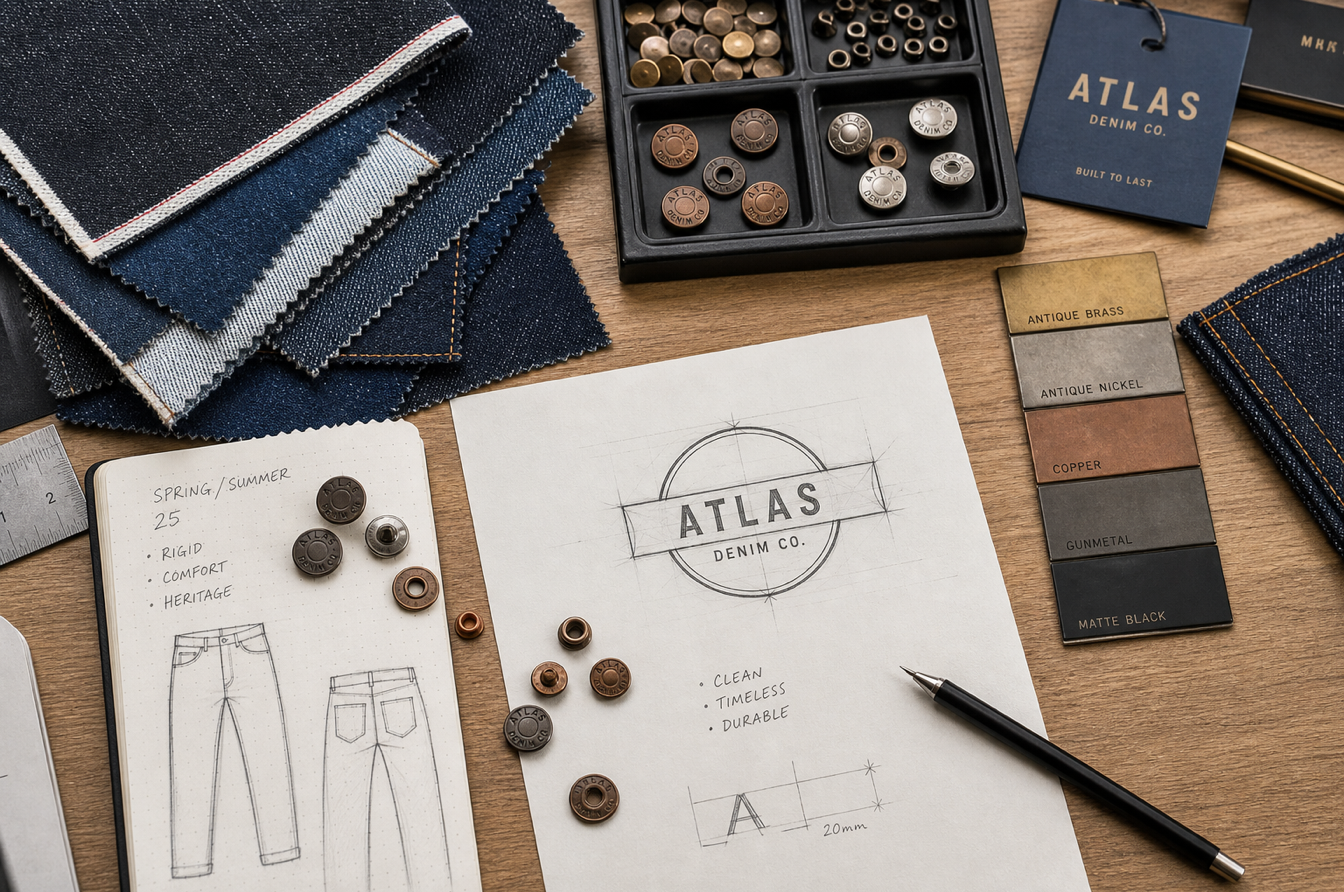
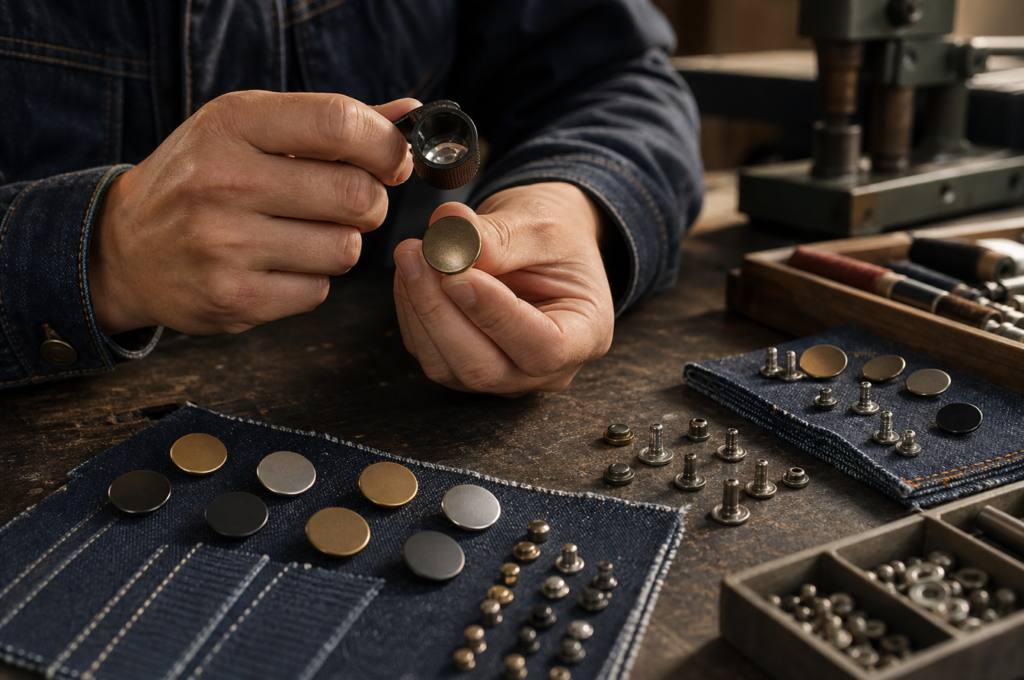
I see rivets as small notes in denim design. They sit at pocket corners, fly bottoms, belt areas, and sometimes jacket or accessory panels, but they influence how a garment is read. A basic rivet says utility. A shaped, plated, and branded rivet says the brand has made a deliberate decision. For Lustrim, that is where precision hardware becomes elevated design.
How Did Rivets Move From Workwear Reinforcement To Denim Identity?
Rivets started as protection, but today they also guide the eye and mark the brand’s design language.
Custom denim rivets still protect high-tension areas, but their role has expanded into visual anchoring, category consistency, and quiet brand recognition across jeans, jackets, bags, belts, shoes, and caps.
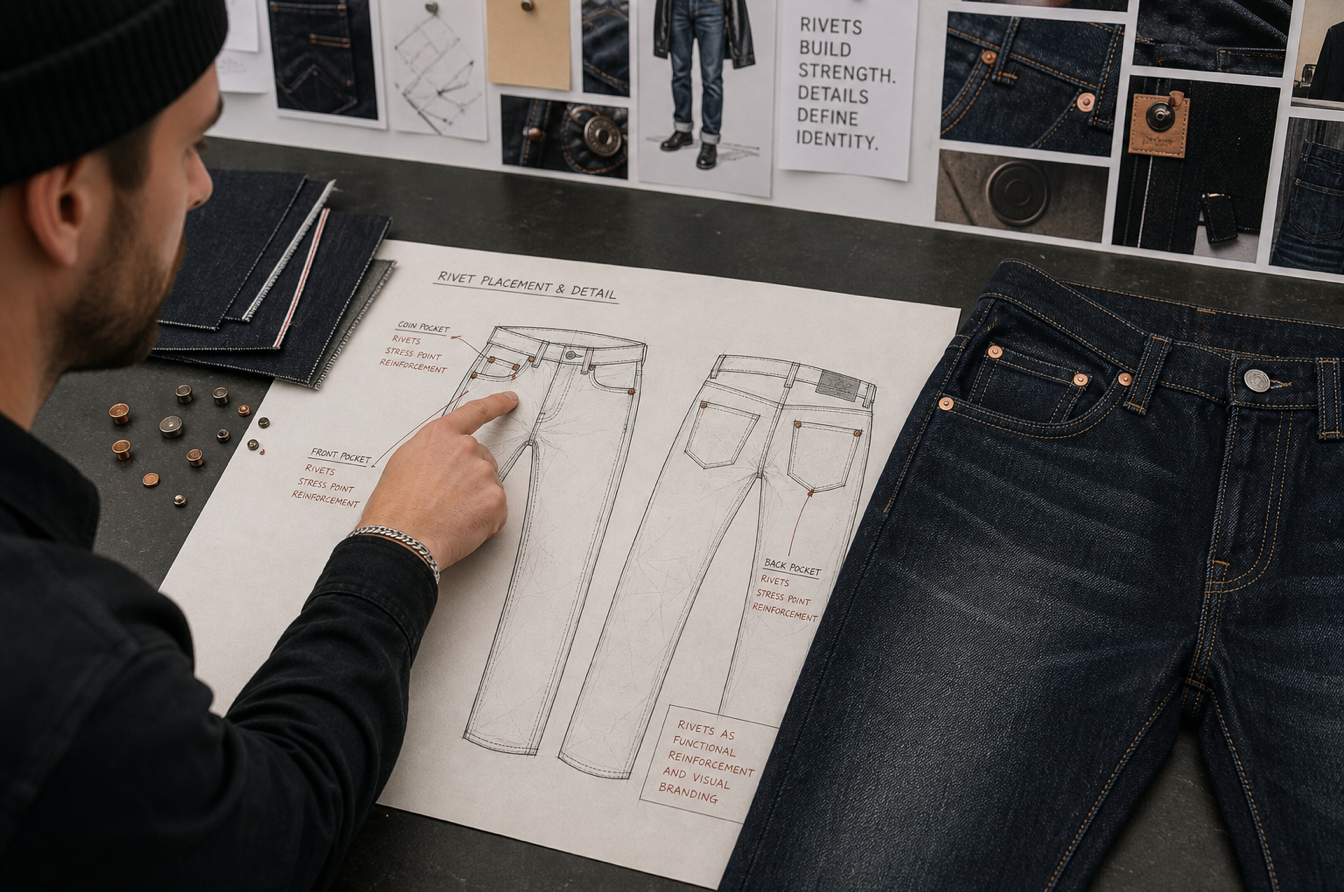
The Original Function Was A Stress Defense
When I review a pair of jeans, I still begin with the old workwear logic. Rivets were placed where fabric and seams face repeated pulling, friction, and body movement. The most classic locations are pocket corners, coin pockets, and the lower part of the fly area. These points can tear because the wearer uses them every day. Hands pull at pockets. Wallets and tools create pressure. Thick denim resists movement, but the seam thread still needs help.
That is why the rivet became part of the soul of denim. It does not only decorate the garment. It tells the buyer that the designer understands stress, wear, and service life. Even on a fashion jean, the best rivet placement should make structural sense. If a rivet is moved only for decoration, I check whether it may scratch skin, catch on furniture, or weaken a seam. Good hardware design respects function first, then turns function into style.
| Rivet Location | Original Purpose | Modern Design Value |
|---|---|---|
| Front pocket corner | Prevent pocket seam tearing | Frames the pocket shape |
| Coin pocket edge | Support small pocket use | Adds vintage detail |
| Fly bottom | Reinforce a high-tension seam | Gives a workwear signal |
| Jacket pocket | Hold thicker layers together | Extends denim identity |
The Modern Rivet Became A Visual Anchor
In modern garment design, a rivet works like a visual anchor. It gives the eye a fixed point on a large surface of fabric. On dark indigo denim, a brass or antique copper rivet creates warmth. On black stretch denim, a gunmetal rivet can make the product feel sharper and more technical. On washed blue jeans, a dull nickel rivet may feel more casual and worn in. These small choices influence the whole garment mood.
I also like rivets because they can connect product categories. A brand can use a similar rivet language on jeans, denim shirts, caps, leather belts, canvas backpacks, and jackets. The hardware may change in size or attachment method, but the logo treatment, plating tone, and edge shape can remain consistent. This creates recognition without making the garment loud. The customer may not name the rivet as the reason for a higher perceived value, but the detail still helps the garment feel intentional.
Which Rivet Materials And Finishes Best Match The Garment Story?
The wrong material can make a good design feel cheap, heavy, weak, or visually disconnected from the garment.
Zinc alloy, brass, copper, stainless steel, and aluminum each offer different tradeoffs in molding detail, cost, corrosion resistance, weight, vintage mood, and production flexibility.
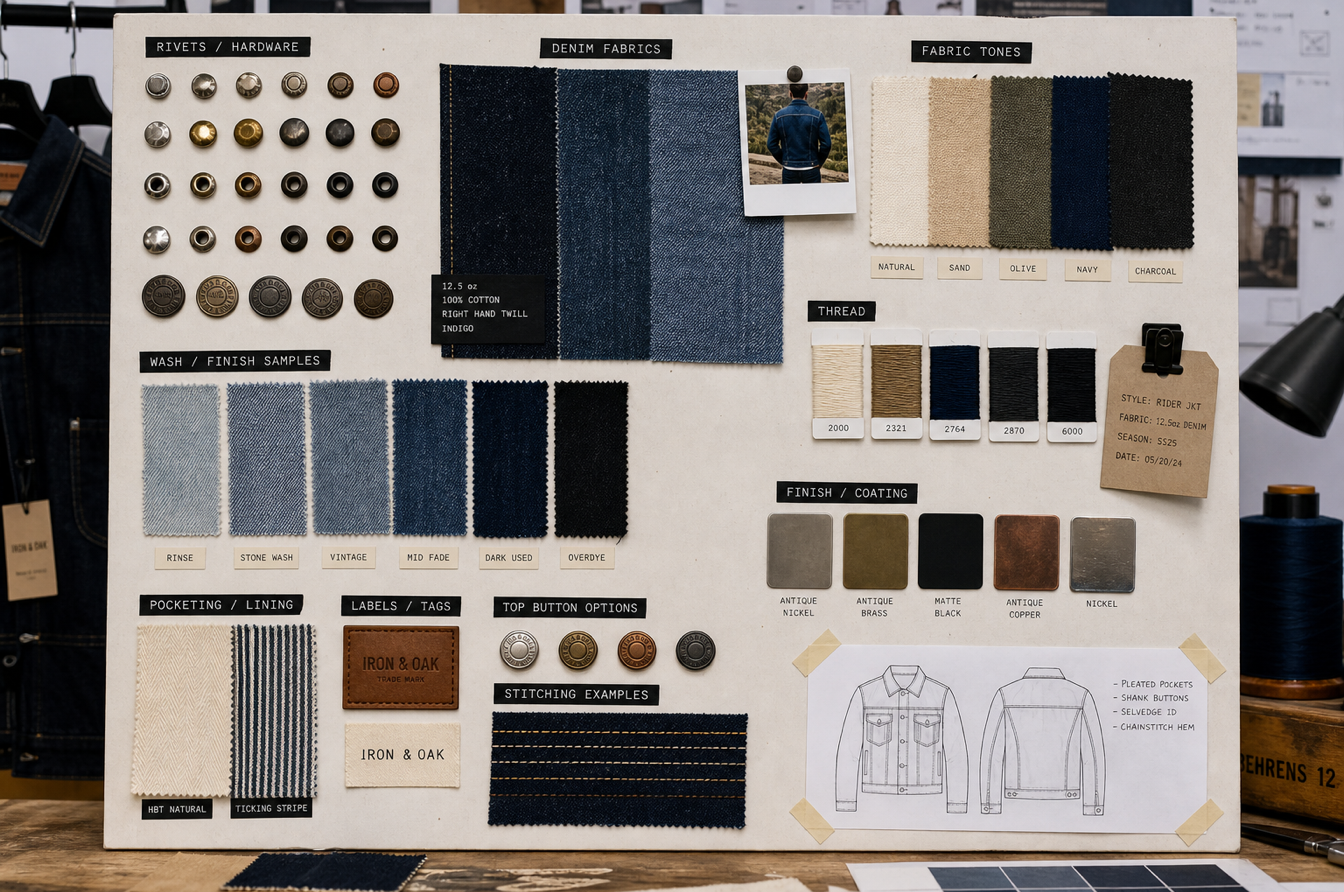
Material Choice Controls Both Shape And Performance
I usually start material selection by asking what the rivet must do visually and mechanically. Zinc alloy is a strong option when the design needs complex shapes, raised logos, or irregular edges. It is cost effective, easy to cast, and friendly for decorative forms. For many fashion brands, zinc alloy gives the best balance between design freedom and budget control.
Brass and copper feel more classic. They have good ductility, and they age in a way that fits heritage denim, workwear, and vintage collections. A copper rivet on raw denim can develop character as the garment fades. Brass can give a warmer luxury signal, especially when paired with leather patches or antique hardware. Stainless steel is a different language. It is highly corrosion resistant and feels clean, hard, and industrial. I use it when the brand wants a technical, minimal, or long-lasting image. Aluminum is useful when weight matters, especially for lightweight garments, caps, bags, or products where a heavy metal detail would feel uncomfortable.
| Material | Main Strength | Best Use Case |
|---|---|---|
| Zinc alloy | Complex shape and cost control | Custom decorative rivets |
| Brass | Warm classic look and ductility | Premium vintage denim |
| Copper | Heritage mood and aging character | Raw denim and workwear |
| Stainless steel | Corrosion resistance | Minimal or industrial collections |
| Aluminum | Lightweight feel | Caps, thin garments, and bags |
Finish Turns Metal Into A Design Vocabulary
Surface finish is where the rivet begins to speak. Gold plating can lift a jean toward fashion or luxury. Silver or nickel can feel clean, commercial, and easy to match. Antique bronze and antique copper support workwear, retro outdoor, and heritage stories. Gunmetal is useful when the designer wants a darker, more urban tone. I often compare finish chips directly against the final fabric, because denim wash changes everything. A finish that looks perfect on a white table can disappear on black denim or look too bright on a faded wash.
Painted finishes also deserve attention. Matte paint creates a quieter and more modern mood, while glossy paint can look sharper and more graphic. But paint brings durability questions, especially around washing, abrasion, and repeated contact with hands or surfaces. I prefer to define the target wash standard early. If the garment is enzyme washed, stone washed, or heavily rinsed, the rivet finish must be tested with the same process. A beautiful finish is only useful if it survives the real garment route.
How Should Rivet Structure, Shape, And Installation Be Engineered?
A rivet is small, but its structure must work with fabric thickness, logo position, tooling, and assembly pressure.
Most jeans rivets use a cap and nail system. The final quality depends on cap geometry, nail length, fabric compression, installation force, and machine precision.
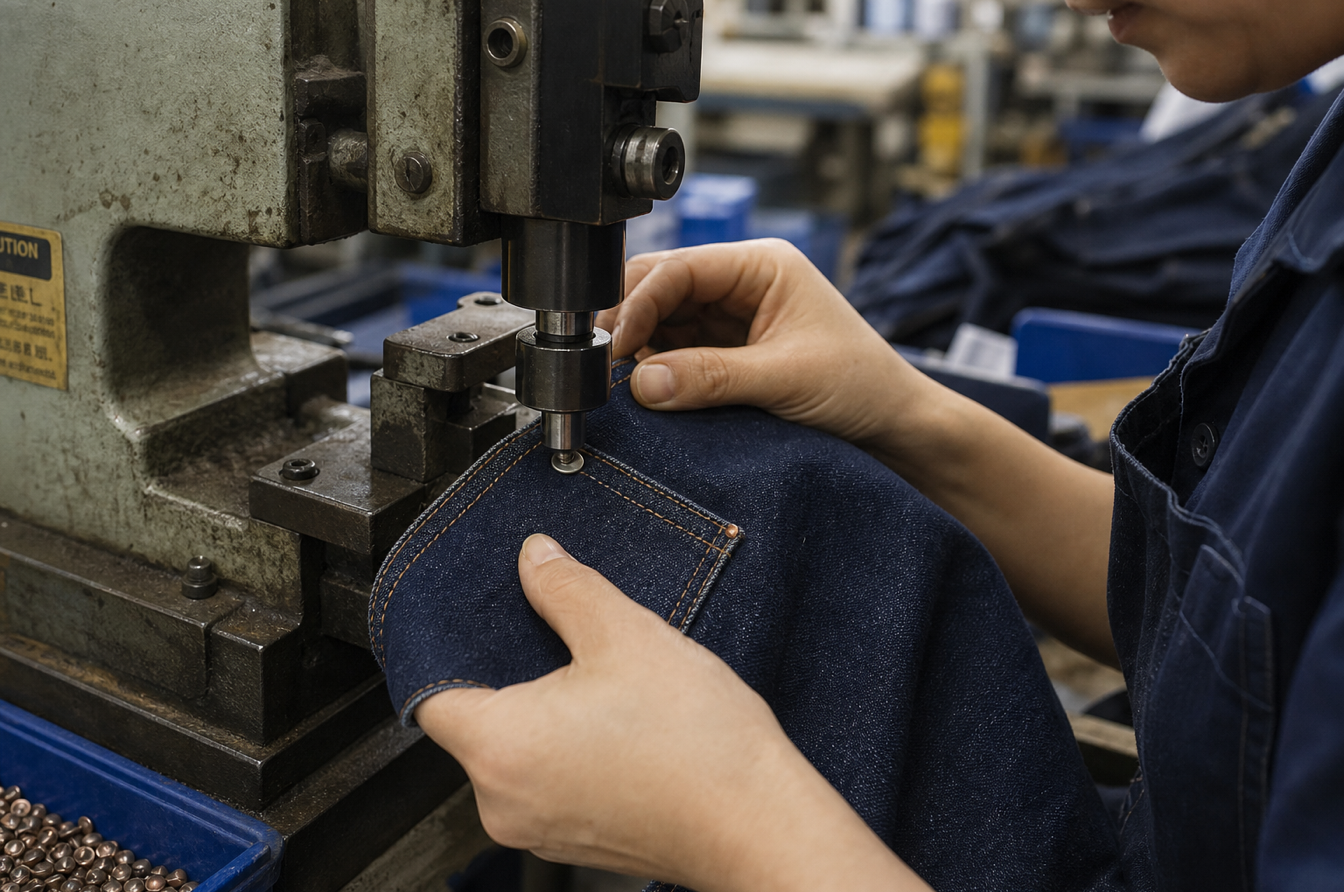
Part A And Part B Must Bite Cleanly
A standard jeans rivet has two main parts. Part A is the cap, which is the visible face. Part B is the nail, which passes through the fabric and locks into the cap. The connection must be firm enough to resist pulling, but it should not crush the fabric or create a sharp back. This is where small engineering details matter. Nail length must match the total fabric thickness. Thick pocket corners may include denim layers, pocket bag fabric, seam allowance, and sometimes reinforcement tape. A nail that is too short will not bite properly. A nail that is too long may bend, split, or leave an uncomfortable back side.
The cap design also affects installation. A convex cap has a full rounded surface and a smooth touch. It is common because it looks strong and feels comfortable. A concave cap creates depth and can protect a center logo or hold side lettering. Arc shapes and irregular shapes can create a more unique brand mark, but they need better tooling control. When shape becomes more complex, I always check edge smoothness, rotational alignment, and how the rivet will look after being pressed in mass production.
| Shape | Visual Effect | Engineering Note |
|---|---|---|
| Convex | Smooth and rounded | Easy to wear and install |
| Concave | Dimensional and detailed | Good for protected logo areas |
| Arc | Softer custom profile | Needs stable tooling |
| Irregular | Strong brand distinction | Requires alignment control |
Installation Method Decides Speed And Consistency
Manual tools are useful for sampling, small runs, and early design checks. They allow a developer to test position, size, and fabric thickness without waiting for a full machine setup. For a start-up brand or a small capsule collection, manual installation can be enough at the beginning. But the result depends heavily on operator skill. Uneven pressure can cause tilted caps, weak locking, fabric damage, or inconsistent back shape.
For bulk production, I prefer stamping machines or dedicated rivet machines. They control pressure, speed, and vertical alignment more consistently. This matters when thousands of garments must look the same. A machine also reduces hand fatigue and improves efficiency, especially when several rivets are used on each garment. Still, machines are not magic. The tooling die must match the rivet head, the nail length must match the fabric stack, and the operator must keep the placement guide stable. Before bulk production, I like to run a small installation test on final fabric and final wash conditions. It is much cheaper to adjust a die or nail length before production than to reject finished garments.
How Can A Logo Become Durable Detail On A Custom Rivet?
A logo on a rivet must be readable, washable, and suitable for the scale of the metal surface.
Embossing, debossing, engraving, printing, and epoxy doming all create different logo effects, and each one has its own durability and style logic.
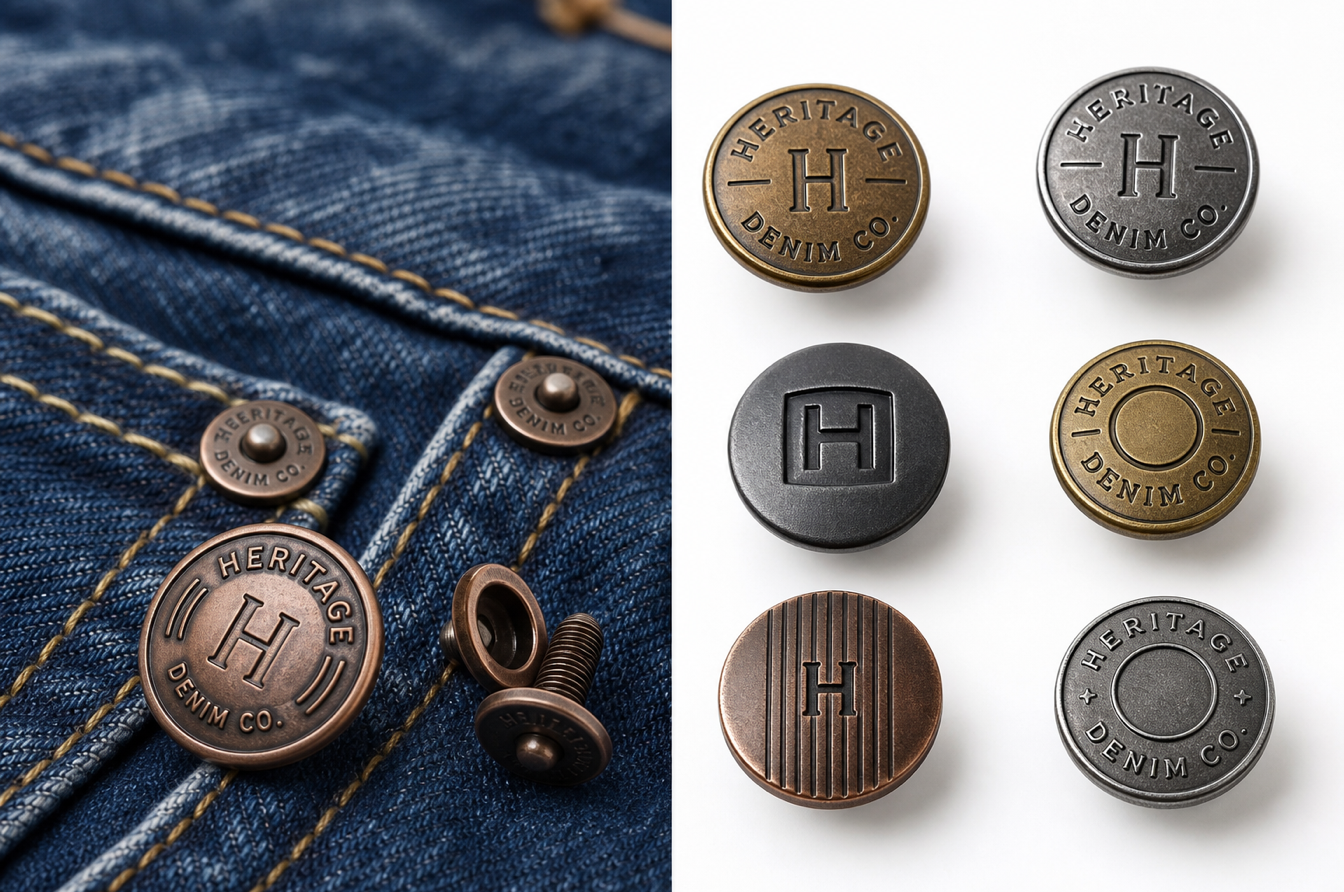
Raised And Recessed Logos Change The Touch
Embossed logos rise above the rivet surface. They create a clear three-dimensional presence and work well when a brand wants the hardware to be noticed. On a convex cap, an embossed mark can catch light and make the logo visible even at a small size. This is useful for jeans, jackets, and bags where hardware is part of the brand identity. The risk is that very fine letters may lose clarity if the surface is too small or the plating is too thick.
Debossed logos are recessed into the surface. They feel more subtle and refined. I often recommend debossing for mid to high-end brands that want quiet recognition instead of obvious decoration. A debossed mark can also hold dark enamel, paint, or shadow, depending on the finish. It works especially well on concave rivets, where the protected area helps the logo stay cleaner over time. For both embossed and debossed logos, the original artwork should be prepared as a clean vector file. AI, PDF, or another editable vector format helps the tooling team keep edges sharp and avoid distortion.
| Logo Method | Best Feeling | Main Checkpoint |
|---|---|---|
| Embossed | Strong and tactile | Fine detail after plating |
| Debossed | Subtle and premium | Depth and edge clarity |
| Side logo | Technical and discreet | Alignment around the cap |
| Symbol mark | Fast recognition | Minimum size and spacing |
Engraving, Printing, And Epoxy Need Different Quality Tests
Laser or mechanical engraving is a good choice when the design needs fine detail and long-term durability. Engraving cuts into or marks the surface, so it can survive normal handling better than many surface-only decorations. It is useful for small initials, serial-style marks, or precise brand symbols. Mechanical engraving can feel deeper and more permanent, while laser engraving can handle fine and clean artwork.
Printing gives more color freedom. Screen printing and pad printing can place colored logos on the rivet surface, so they suit modern collections, youth lines, or brands with strong color systems. But printed details must be tested carefully. Washing, rubbing, and chemical exposure can reduce color strength. If the logo needs gloss and protection, epoxy dome coating can help. Epoxy creates a clear raised cover over the logo, adding shine and reducing direct wear. The look is more polished and less traditional, so I would use it when the design wants a clean graphic effect rather than a rugged heritage mood.
How Do Small Rivets Support Brand Premium And Supply Chain Decisions?
Custom rivets are tiny, but they can influence price perception, minimum order strategy, and supplier collaboration.
A well-planned rivet program can strengthen brand memory, support personalized storytelling, and reduce development risk through clear artwork, sampling, timing, and expert support.
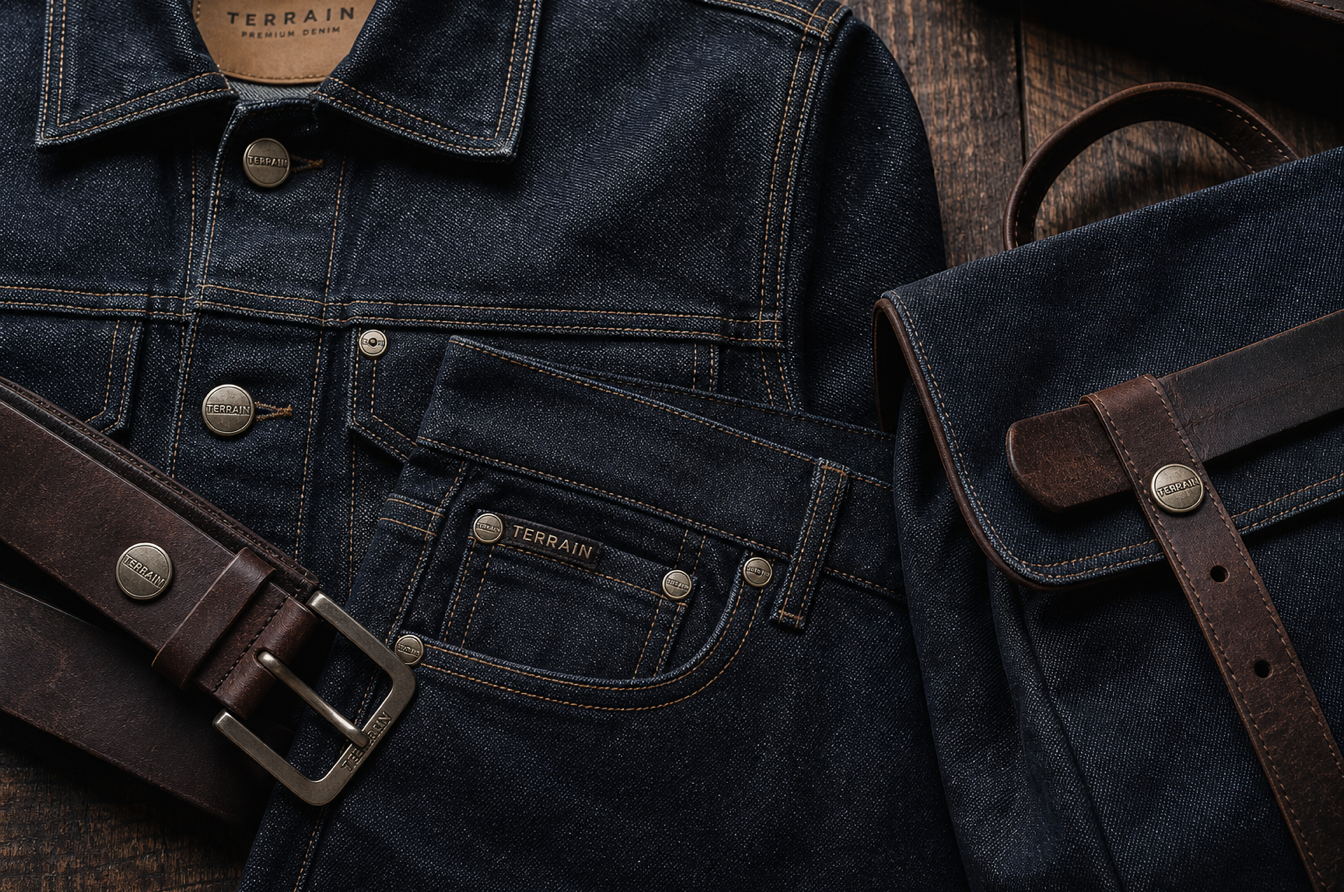
Premium Value Comes From Consistent Small Decisions
Brand premium is rarely built by one large detail. It is built by many small decisions that feel consistent. Rivets are one of those decisions. A custom rivet can carry initials, a short slogan, a symbolic mark, or a shape that repeats across the collection. It becomes a quiet marketing tool. The customer may notice it when folding the jeans, checking the pocket, or comparing the garment with a lower-priced product. That moment supports the feeling that the product was designed with care.
Size and thickness are also part of the value signal. For jeans, many rivets sit around 8 mm to 12 mm, but the right choice depends on fabric weight, pocket size, wash, and target market. A small 8 mm rivet can look refined on slim or lightweight denim. A 10 mm rivet is often balanced for everyday jeans. A 12 mm rivet can feel stronger on heavy workwear or oversized silhouettes. I also check the edge height and back comfort, because a premium detail should never feel rough in daily wear.
| Design Factor | Practical Question | Brand Impact |
|---|---|---|
| Size | Does it fit the pocket scale? | Controls visual balance |
| Thickness | Does it feel solid but comfortable? | Signals quality |
| Finish | Does it match fabric tone? | Builds collection mood |
| Logo | Is it readable at small scale? | Supports memory |
A Good Supplier Makes The Process Easier
The business side matters as much as the design side. A flexible minimum order quantity can help new brands test a custom rivet without locking too much cash in inventory. A 100 piece starting quantity is friendly for sampling, launch capsules, influencer batches, and early market tests. It lets the brand learn before scaling. Once the design is proven, the same specification can move into larger production with less uncertainty.
I like to keep the development process clear. First, prepare vector artwork such as AI or PDF. Second, confirm material, size, finish, logo method, and installation requirement. Third, make samples, often within about 10 to 15 days depending on tooling and finish. Fourth, move to bulk production, often around 15 to 20 days after approval. Quality control should include appearance, plating, logo clarity, nail fit, installation strength, and wash resistance. A supplier who offers product expert support, free design adjustment, and storage service can reduce the operating burden for the brand. This is especially helpful when the team is managing several hardware items at the same time, such as buttons, snaps, buckles, zipper pulls, and rivets.
Conclusion
The right rivet protects denim, sharpens identity, and turns a small metal part into a lasting brand decision.