- Loading...
A lapel pin may look small, but a weak pin can make an organization feel less official. I have seen this detail affect trust quickly.
Custom lapel pins turn a logo into a physical symbol of identity, honor, and belonging. A well-designed pin can support authority, strengthen group culture, improve recognition, and become a long-term keepsake for members, guests, employees, and partners.
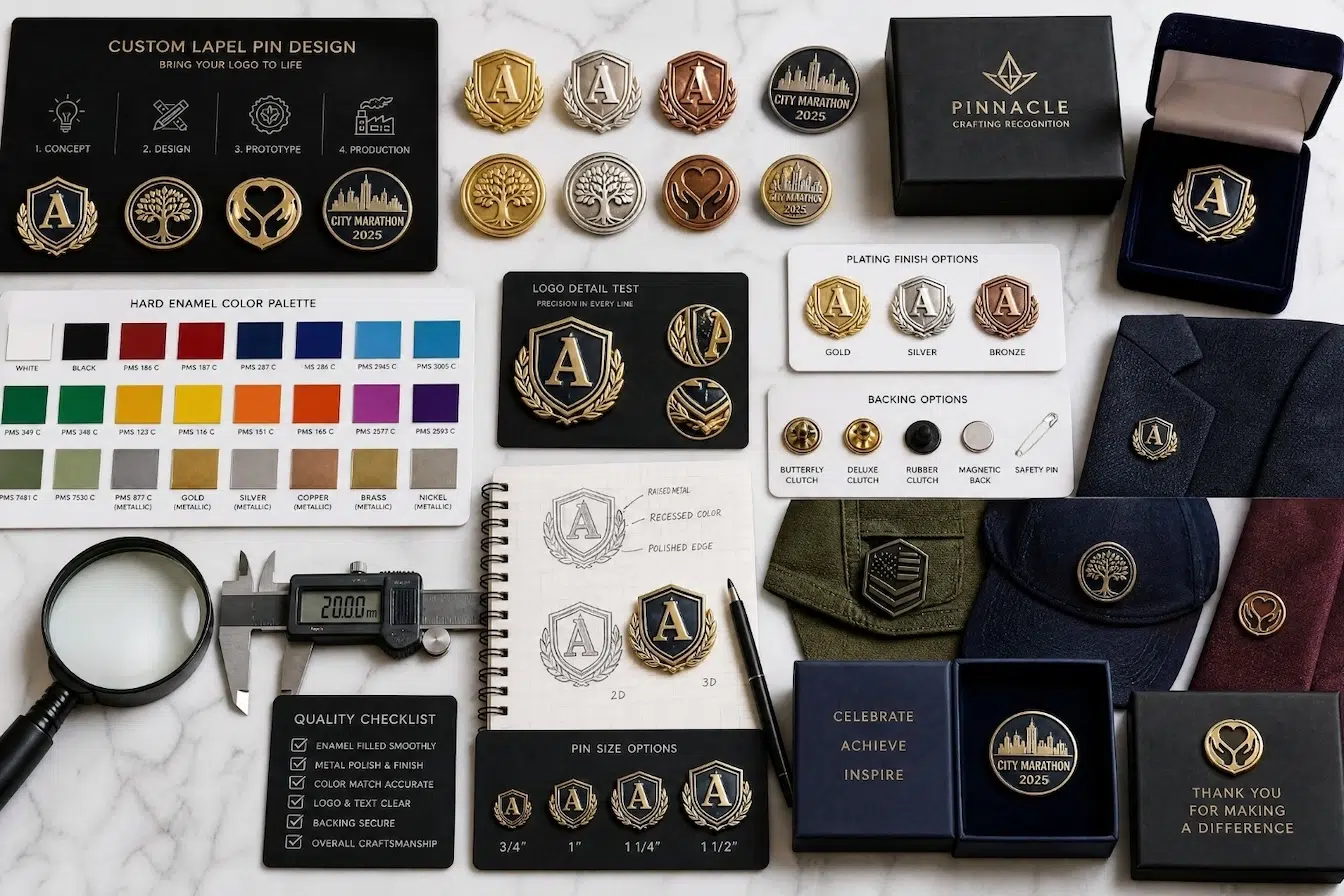
I used to see lapel pins as simple decorative items. Then I started to look closer at how organizations use them. A pin can sit on a suit, uniform, tie, shirt, cap, or gift box. It can identify a team member. It can mark service years. It can honor achievement. It can support a charity campaign. It can also become a small object that people keep for many years. This is why I now see a custom lapel pin as more than a logo badge. I see it as a moving brand asset. It travels with the wearer. It creates conversation. It shows status without using many words. When design, material, craft, packaging, and quality control work together, a small pin can become an institutional totem.
How Can a Small Badge Carry Authority, Belonging, and Trust?
A badge is small, but people read it fast. If it feels official1, the organization behind it also feels more serious.
A custom lapel pin carries authority and belonging by turning membership, honor, and shared values into a visible object. It helps people recognize who belongs to the group2 and what the organization stands for.

I often think about a lapel pin as a physical sign of “I am part of this.” It may represent a company, school, association, hotel, club, charity, government office, or event team. When someone wears the pin, the organization becomes visible in public. This makes the pin useful in business events, summits, anniversaries, school reunions, award programs, and service recognition plans.
A good pin can also support internal culture.3 A service-year pin can tell employees that loyalty is noticed. A performance recognition pin can make achievement visible. A membership pin can make a person feel included. These are not only emotional details. They are also organizational tools. A pin can help create pride, memory, and social connection.4
| Use Case | What the Pin Represents | Strategic Value |
|---|---|---|
| Corporate membership | Team identity and role | Builds trust in formal meetings |
| Anniversary event | Shared history and memory | Creates a lasting keepsake |
| Service award | Loyalty and contribution | Supports employee recognition |
| Charity campaign | Public support and awareness | Helps spread the cause |
| School or alumni pin | Belonging and tradition | Strengthens community connection |
| Government or institution pin | Authority and official status | Creates formal recognition |
| Brand partnership pin | Shared value and collaboration | Supports co-brand storytelling |
I see a lapel pin as a small tool with a long life. A poster may disappear after an event. A digital banner may be forgotten. A pin can stay in a drawer, on a jacket, or in a collection box for years. This makes it valuable when the design has real meaning.
When Does a Logo Become a Totem Through a Custom Lapel Pin?
A logo becomes more powerful when people do not only see it, but also wear it and keep it.
A logo becomes a totem when a lapel pin connects the symbol with shared memory, status, achievement, or belief.5 The pin turns a flat visual mark into a personal object with meaning.

I believe a strong custom lapel pin should not only copy a logo. It should translate the logo into a small metal object. This translation is important. A flat logo may work well on a website or business card, but it may not work at pin size. Thin lines may disappear. Small text may become unreadable.6 Complex gradients may not transfer well into enamel or metal.7 The design must be simplified without losing identity.
A totem also needs meaning. For example, a company may use one pin for general members and another pin for leadership. A school may create special pins for alumni years. A charity may use a symbol that people can wear to show support.8 A hotel group may use pins to show service level or department identity. In each case, the pin carries more than decoration. It carries a story.
| Design Layer | How It Adds Meaning | Practical Question |
|---|---|---|
| Logo shape | Builds instant recognition | Can the shape stay clear at small size? |
| Metal border | Gives structure and authority | Should the edge feel classic or modern? |
| Enamel color | Connects with brand identity | Can the color match the brand standard? |
| Surface texture | Adds emotional tone | Should the pin feel polished, matte, antique, or soft? |
| Award level | Creates hierarchy | Do we need gold, silver, bronze, or year marks? |
| Back stamp | Adds hidden official detail | Should the back include date, event, or serial mark? |
| Packaging card | Gives context | Does the recipient understand what the pin means? |
I like pins that can be explained in one short sentence. “This pin marks five years of service.” “This pin is for founding members.” “This pin supports the annual charity campaign.” A clear meaning makes the pin stronger. It also makes people more willing to wear it.
How Do Shape, Color, and Detail Affect First Impressions in Lapel Pin Design?
A pin has very little space. Every shape, color, and line must earn its place.
Shape, color, and detail affect first impressions9 because they decide whether the pin looks official, memorable, readable, and well made. Strong lapel pin design keeps the core symbol clear and removes details that do not help recognition.
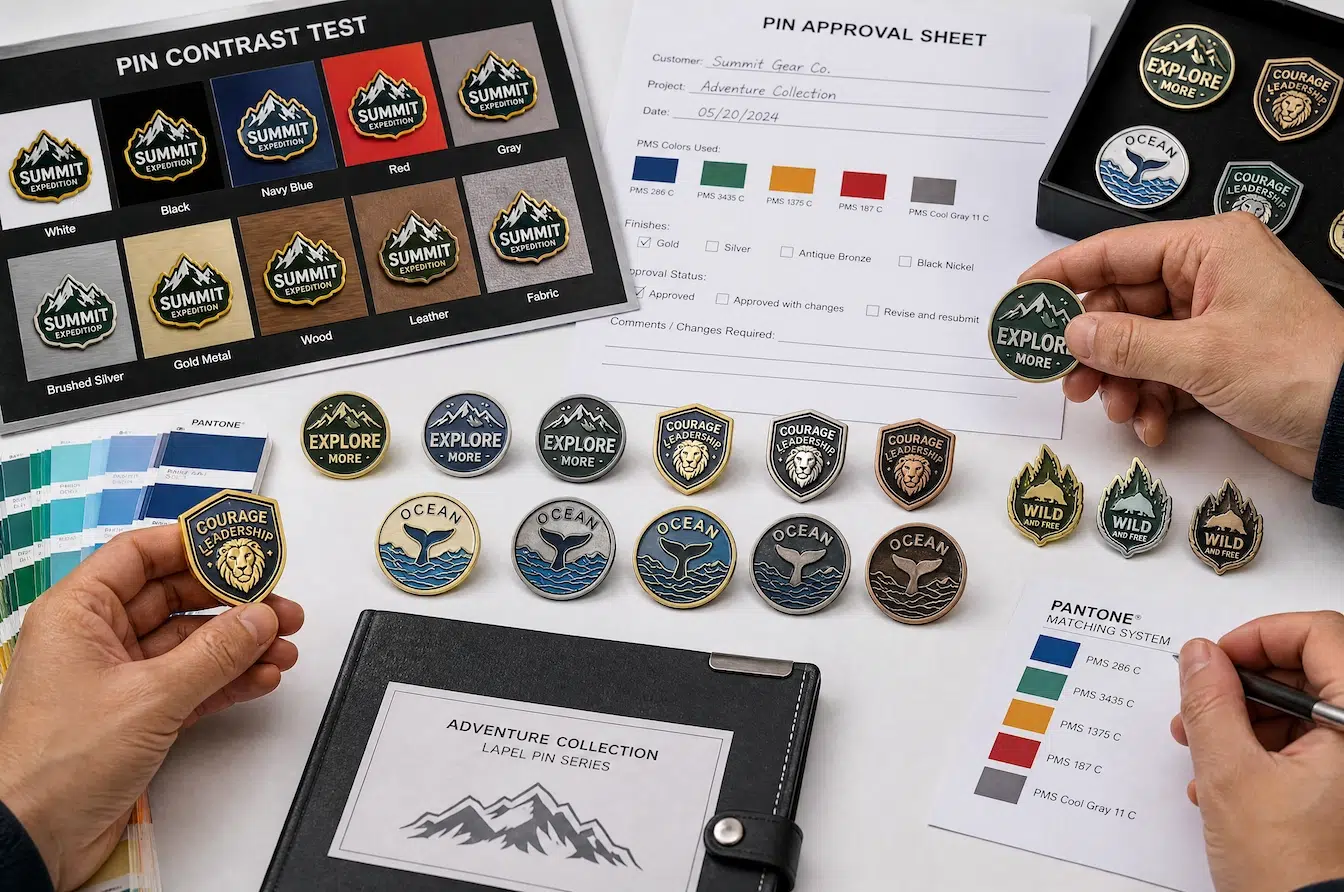
I always start with recognition. A lapel pin is usually seen from a distance first. Then it is viewed closely.10 This means the design must work in two stages. From far away, the viewer should understand the main shape or color. From close range, they should notice the logo detail, enamel quality, metal edge, or texture.
Shape is the first signal. A round pin may feel classic and official. A shield shape may feel institutional and protective. A custom outline may feel more creative and brand-specific. Color is the second signal. Deep blue can feel stable. Red can feel active.11 Black and gold can feel formal. White and silver can feel clean. Detail is the third signal. Too much detail can make the pin look crowded. Too little detail can make it feel generic.
| Design Choice | Visual Effect | Best Practice |
|---|---|---|
| Round shape | Classic, balanced, official | Good for institutions and service awards |
| Shield shape | Authority, protection, tradition | Good for schools, clubs, and official groups |
| Custom outline | Unique and brand-specific | Good when the logo shape is strong |
| Limited colors | Clean and easy to read | Use 2 to 4 main colors when possible |
| Strong metal border | Adds definition and structure | Helps separate color areas |
| Simplified text | Improves readability | Avoid very small letters |
| Clear contrast | Makes the pin visible | Match enamel colors carefully |
I also consider brand color accuracy. If a client has a Pantone standard, the enamel color should be matched as closely as possible. Some colors may shift slightly after production because enamel, plating, and lighting affect the final look.12 This is why I prefer physical sample approval before bulk production. A good pin does not need to be complex. It needs to be clear, balanced, and suitable for the organization.
What Craft Turns a Lapel Pin into a Lasting Symbol?
The craft decides whether a pin feels like a cheap giveaway or a serious official object13.
Enamel, metalwork, plating, and surface texture turn a lapel pin into a lasting symbol by controlling color depth, touch, shine, durability, and visual authority. The best craft should match the purpose of the pin.
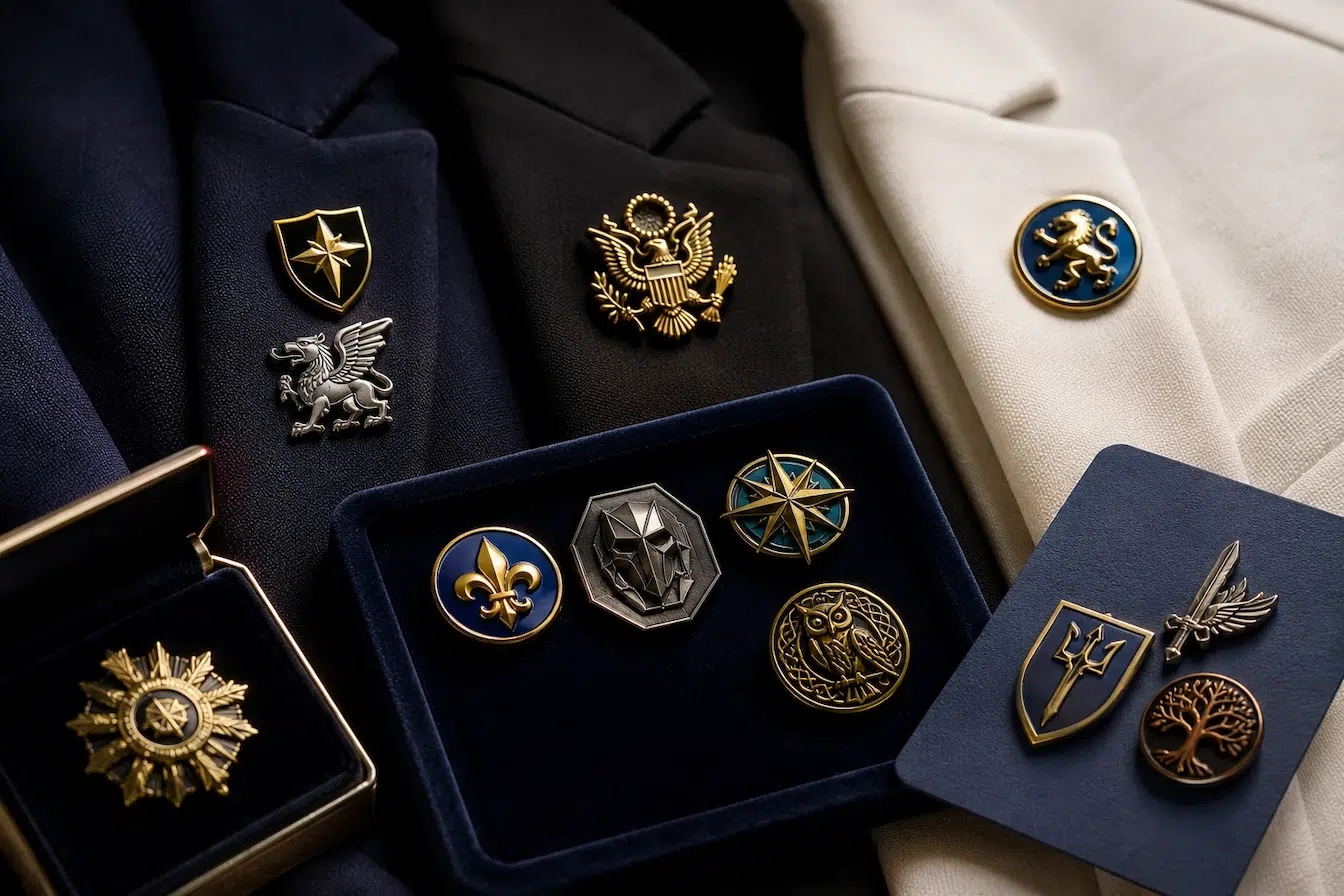
I often choose craft based on the role of the pin. Hard enamel is one of the best options for high-end business pins and long-term recognition pins. It has a smooth surface because the enamel is polished level with the metal lines14. It feels clean, hard, and almost jewel-like. This makes it suitable for official membership, leadership pins, anniversary pins, and award pins.
Soft enamel gives a more textured feeling. The enamel sits lower than the metal lines15, so the pin has a raised-and-recessed surface. It offers strong color and good value. It is useful for events, campaigns, promotional programs, and creative merchandise. Die-struck pins use metal depth and shadow without enamel, or with very limited color. They can feel traditional, formal, and authoritative. 3D molded pins work well when the design needs sculpture, depth, or a special shape.
| Craft Type | Surface Feeling | Best Use | Key Concern |
|---|---|---|---|
| Hard enamel | Smooth, flat, polished, durable | Premium awards, official pins, long-term use | Higher cost and longer process |
| Soft enamel | Textured, colorful, dimensional | Events, campaigns, creative merchandise | Surface is less flat |
| Die-struck metal | Classic, clean, formal | Authority pins, traditional logos, service awards | Limited color expression |
| 3D molded pin | Sculptural, deep, detailed | Mascots, emblems, special symbols | Mold design must be clear |
| Antique plating | Vintage, serious, heritage | Clubs, schools, historical themes | Aging effect must stay balanced |
| Sandblasted texture | Matte, refined, controlled | Minimal and formal designs | Contrast must be planned |
| Black nickel plating | Modern, strong, bold | Fashion, creative groups, premium badges | Dark tones can reduce detail visibility |
I also pay attention to plating. Gold, silver, nickel, black nickel, antique brass, antique copper, and rose gold all create different feelings. The wrong plating can make the design feel off-brand. The right plating can make the same logo feel more official, modern, warm, or collectible.16
How Can Quality Control, Packaging, and Batch Consistency Make Every Pin Feel Official?
A pin must feel official not only in the first sample, but also in every piece delivered.
A lapel pin feels official when color, plating, shape, backing, packaging, and inspection remain consistent across the full batch. Quality control protects the meaning of the pin and the trust of the organization.
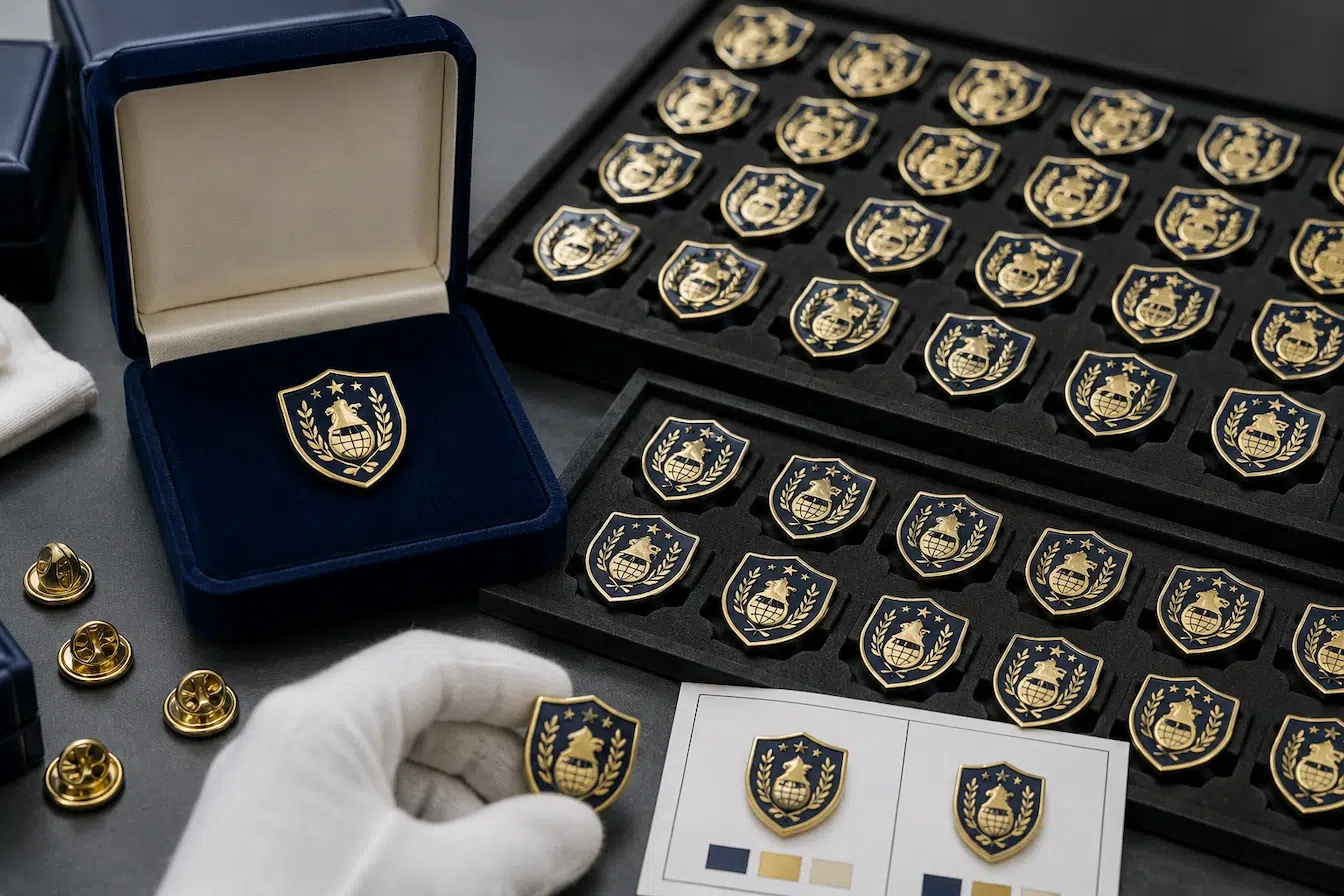
I have seen many problems appear after sample approval. The sample looks good, but the bulk batch may show color shift, plating marks, enamel overflow, rough edges, weak pin backs, or mixed packaging quality. For an ordinary giveaway, some small variation may be tolerated. For an official institutional pin, the standard must be higher. The pin may represent an award, membership, leadership role, or anniversary. It should not look careless.
Quality control should cover both appearance and function.17 The front should be clean. The logo should be clear. The enamel should stay inside the metal lines. The plating should be even. The edge should feel safe. The back attachment should be stable. The pin should not fall off during normal wearing. Packaging also matters.18 A backing card can explain the meaning. A velvet box can make an award pin feel more important. A simple paper card can work for event distribution.
| Quality Area | What I Check | Why It Matters |
|---|---|---|
| Enamel fill | Clean color areas, no overflow | Keeps the design sharp |
| Plating | Even tone, no obvious marks | Builds official appearance |
| Logo clarity | Readable text and symbol | Protects brand recognition |
| Edge quality | Smooth border and corners | Improves touch and safety |
| Back attachment | Butterfly clutch, magnet, safety pin, screw back | Controls wearing security |
| Color match19 | Brand color and batch consistency | Protects visual standards |
| Packaging | Card, pouch, box, or gift set | Increases perceived value |
| Final inspection | Count, defects, packing accuracy | Reduces delivery problems |
I also think about batch consistency. If the same organization orders pins every year, the new batch should not look very different from the last one. This needs clear reference samples, plating standards, color records, and inspection rules. A pin is small, but inconsistency is easy to see20 when many people wear it together.
Conclusion
I see custom lapel pins as small official symbols. When meaning, design, craft, and quality work together, a logo becomes something people proudly wear.
-
"[PDF] Student Dress Restrictions in Constitutional Law and Culture", https://journals.law.harvard.edu/crcl/wp-content/uploads/sites/80/2019/03/AhrensSiegel.pdf. Bickman’s field experiments on authority cues found that people were more likely to comply with requests made by a person wearing an authority-associated uniform than by a person in ordinary clothing, supporting the broader claim that official visual markers can influence perceived authority. Evidence role: mechanism; source type: paper. Supports: Official-looking visual markers can make an organization or representative seem more serious or authoritative.. Scope note: The evidence concerns uniforms and authority cues generally, not lapel pins specifically. ↩
-
"[PDF] A Cultural Perspective on Intergroup Relations and Social Identity", https://scholarworks.gvsu.edu/cgi/viewcontent.cgi?article=1119&context=orpc. Social identity theory describes how people categorize themselves and others into social groups and derive part of their identity from group membership, providing theoretical support for the role of visible markers in signaling belonging. Evidence role: expert_consensus; source type: paper. Supports: Visible symbols can help signal group membership and belonging.. Scope note: The theory supports group-identification mechanisms in general, but it does not directly test custom lapel pins. ↩
-
"The impact of recognition, fairness, and leadership on employee …", https://pmc.ncbi.nlm.nih.gov/articles/PMC11717283/. Research on employee recognition and organizational commitment indicates that recognition practices are associated with morale, engagement, and attachment to the organization, supporting the claim that symbolic awards can contribute to internal culture. Evidence role: general_support; source type: paper. Supports: Recognition items such as service or performance pins can support internal organizational culture.. Scope note: The evidence usually addresses recognition programs broadly rather than lapel pins as a specific recognition medium. ↩
-
"Autobiographical Memory, Personality, and Facebook Mementos", https://pmc.ncbi.nlm.nih.gov/articles/PMC7909184/. Studies of material culture and mementos describe how physical objects can preserve autobiographical memory, reinforce identity, and mediate social relationships, offering contextual support for the claim that meaningful pins can carry pride and connection over time. Evidence role: general_support; source type: paper. Supports: Meaningful physical objects can support memory, identity, pride, and social connection.. Scope note: This support is contextual because it concerns meaningful objects and keepsakes broadly, not lapel pins alone. ↩
-
"Totem – Wikipedia", https://en.wikipedia.org/wiki/Totem. Anthropological accounts of totemism describe material symbols as markers of collective identity, affiliation, and shared meaning, supporting the article’s use of “totem” for a worn organizational emblem; the support is conceptual rather than evidence about lapel pins specifically. Evidence role: definition; source type: encyclopedia. Supports: A logo can function like a totem when a lapel pin connects the symbol with shared memory, status, achievement, or belief.. Scope note: The source would support the symbolic concept of totems, not directly prove that a logo pin functions as one in every organization. ↩
-
"Smaller visual angles show greater benefit of letter boldness than …", https://pubmed.ncbi.nlm.nih.gov/31421483/. Research on visual acuity and typographic legibility shows that recognition decreases when letter size, stroke width, and visual detail fall below perceptual thresholds, supporting the need to simplify marks for very small applications; the evidence concerns visual perception generally rather than lapel-pin production specifically. Evidence role: mechanism; source type: paper. Supports: Thin lines and small text in a logo may become unclear or unreadable when reduced to lapel-pin size.. Scope note: The source would explain legibility limits in small visual formats, not provide manufacturing rules for every pin process. ↩
-
"Vitreous enamel", https://en.wikipedia.org/wiki/Vitreous_enamel. Museum and reference sources on enamelwork describe enamel as colored glass or vitreous powder fused to metal, often applied in defined areas, which contextualizes why continuous digital gradients may require simplification or alternative production methods; this does not assess all modern pin-printing techniques. Evidence role: mechanism; source type: institution. Supports: Complex digital gradients may not translate cleanly into traditional enamel or metal lapel-pin production.. Scope note: The source would support the material-process constraint for enamel generally, while some contemporary printing or plating methods may reproduce gradients differently. ↩
-
"List of awareness ribbons – Wikipedia", https://en.wikipedia.org/wiki/List_of_awareness_ribbons. Historical accounts of awareness ribbons and other wearable cause symbols document their use to signal solidarity, remembrance, or support for social and charitable causes, supporting the claim that a charity can use a wearable emblem to express affiliation; the evidence is contextual and not limited to lapel pins. Evidence role: historical_context; source type: encyclopedia. Supports: Charities can use wearable symbols to let people visibly show support for a cause.. Scope note: The source would support wearable symbols for causes broadly, not prove effectiveness for a specific charity pin campaign. ↩
-
"Visual perception: Colour brings shape into stark relief", https://pubmed.ncbi.nlm.nih.gov/35349812/. Research on visual perception and design evaluation indicates that color, shape, and visual complexity influence rapid recognition and aesthetic judgment, supporting the claim that these elements affect initial impressions of a small object. Evidence role: general_support; source type: paper. Supports: Shape, color, and detail affect first impressions of a lapel pin.. Scope note: The evidence is likely to be contextual from visual perception or graphic-design studies rather than research specifically on lapel pins. ↩
-
"[PDF] Size of letters required for visibility as a function of viewing distance …", https://www.govinfo.gov/content/pkg/GOVPUB-C13-ff8dc22d75e66f29ebdb2bb2085ee683/pdf/GOVPUB-C13-ff8dc22d75e66f29ebdb2bb2085ee683.pdf. Human visual-acuity and legibility research shows that viewing distance strongly affects the amount of detail that can be resolved, providing a basis for designing small objects to be recognizable at a distance and readable up close. Evidence role: mechanism; source type: research. Supports: A lapel pin design should work at both distant and close viewing ranges.. Scope note: This supports the visual mechanism behind distance-dependent recognition, not a lapel-pin-specific viewing behavior study. ↩
-
"Feeling Blue or Seeing Red? Similar Patterns of Emotion … – PMC", https://pmc.ncbi.nlm.nih.gov/articles/PMC7027086/. Empirical studies of color emotion and color associations report recurring links between hues and affective impressions, such as blue with calmness or stability and red with arousal or activity. Evidence role: expert_consensus; source type: paper. Supports: Specific colors can evoke different perceived qualities, such as stability or activity.. Scope note: Color associations vary by culture, context, and individual experience, so the source should be used as contextual support rather than a universal rule. ↩
-
"CIECAM02", https://en.wikipedia.org/wiki/CIECAM02. Color science references explain that perceived color depends on material properties, surface finish, and illumination, which supports the claim that manufactured enamel and plated finishes may appear different under production and viewing conditions. Evidence role: mechanism; source type: institution. Supports: Production materials and lighting conditions can cause final pin colors to appear different from the intended standard.. Scope note: This supports the general color-appearance mechanism; a separate manufacturing source would be needed to quantify shifts for a specific enamel or plating process. ↩
-
"Material Considerations in Product Design: A Survey on Crucial …", https://www.academia.edu/9403632/Material_Considerations_in_Product_Design_A_Survey_on_Crucial_Material_Aspects_Used_by_Product_Designers. Research on materials experience in product design supports the idea that material properties such as finish, texture, and perceived quality contribute to users’ judgments of an object’s meaning and value. Evidence role: expert_consensus; source type: paper. Supports: Craft and material finish influence whether a pin is perceived as inexpensive merchandise or as a formal official object.. Scope note: The source would support the general design principle rather than lapel pins specifically. ↩
-
"Cloisonné – Wikipedia", https://en.wikipedia.org/wiki/Cloisonn%C3%A9. References on enamelwork and cloisonné describe enamel being applied within metal boundaries and finished by grinding or polishing to create a smooth surface, providing contextual support for the described hard-enamel finish. Evidence role: mechanism; source type: encyclopedia. Supports: Hard enamel pins have a smooth surface because the enamel is polished level with the surrounding metal lines.. Scope note: Traditional enamelwork sources may describe the broader technique rather than modern lapel-pin manufacturing terminology. ↩
-
"Champlevé – Wikipedia", https://en.wikipedia.org/wiki/Champlev%C3%A9. Descriptions of recessed-cell enamel techniques such as champlevé explain that enamel is placed into depressions or cells in metal, which supports the principle behind a raised-metal, recessed-color surface. Evidence role: mechanism; source type: encyclopedia. Supports: Soft enamel pins have a raised-and-recessed surface because the enamel sits below the metal outlines.. Scope note: This would be contextual support for the surface structure and may not directly use the commercial term “soft enamel pin.” ↩
-
"Warmth perception in association with colour and material", https://www.academia.edu/129671947/Warmth_perception_in_association_with_colour_and_material. Studies in product semantics and material perception show that surface materials, colors, and finishes can alter perceived meanings such as modernity, warmth, quality, and value, offering contextual support for the branding effect of plating choices. Evidence role: general_support; source type: paper. Supports: Different plating choices can change how the same logo is perceived in terms of officialness, modernity, warmth, or collectibility.. Scope note: The evidence would support material and finish perception broadly, not prove that each named plating produces the specific listed impression in every pin design. ↩
-
"[PDF] STANDARDIZED PRODUCT CHARACTERISTICS", https://www.nist.gov/system/files/documents/2019/04/05/08d_standardized-product-characteristics_mark_nielsen.pdf. A manufacturing quality-control source should support that inspection commonly verifies both visual conformity and functional performance against specified requirements before release. Evidence role: expert_consensus; source type: institution. Supports: Quality control for lapel pins should check both appearance and function.. Scope note: This would support the general inspection principle rather than lapel-pin-specific acceptance criteria. ↩
-
"(PDF) Consumer perceptions of product packaging – Academia.edu", https://www.academia.edu/91077358/Consumer_perceptions_of_product_packaging. Packaging research supports that package design and presentation can influence perceived value, quality judgments, and purchase or acceptance expectations; the evidence is contextual because studies usually examine consumer goods rather than institutional lapel pins. Evidence role: general_support; source type: paper. Supports: Packaging affects how a lapel pin is perceived and can contribute to perceived importance or value.. Scope note: Most packaging studies address retail products, so the source would support the broader perception mechanism rather than proving effects for lapel pins specifically. ↩
-
"Colors – JHU Brand Guidelines – Johns Hopkins University", https://brand.jhu.edu/visual-identity/colors/. Brand-identity guidance from universities or institutions commonly treats consistent use of official colors as part of maintaining visual identity and recognition; this supports the relevance of color matching for institutional pins. Evidence role: expert_consensus; source type: education. Supports: Matching brand colors and maintaining batch consistency protects institutional visual standards.. Scope note: Brand guidelines support the importance of color consistency generally, not a specific tolerance level for enamel or plating production. ↩
-
"Comparison of the CIELab and CIEDE2000 color difference formulas", https://pubmed.ncbi.nlm.nih.gov/26412001/. Color-science sources on CIE color-difference metrics explain that measured color differences can correspond to human perceptibility thresholds, providing context for why batch color variation may be visible when items are compared side by side. Evidence role: mechanism; source type: research. Supports: Small batch inconsistencies can become visually noticeable when multiple pins are worn or viewed together.. Scope note: Perceptibility depends on lighting, viewing conditions, surface finish, and observer sensitivity, so the source would not define a universal acceptance limit for all pins. ↩